

Fastest Mail In The West: The History Of The Pony Express
It's hard to imagine, but there was a time when express mail was delivered by a fast horse and rider through the Old West. Learn more about the Pony Express and its inaugural ride on April 3, 1860.
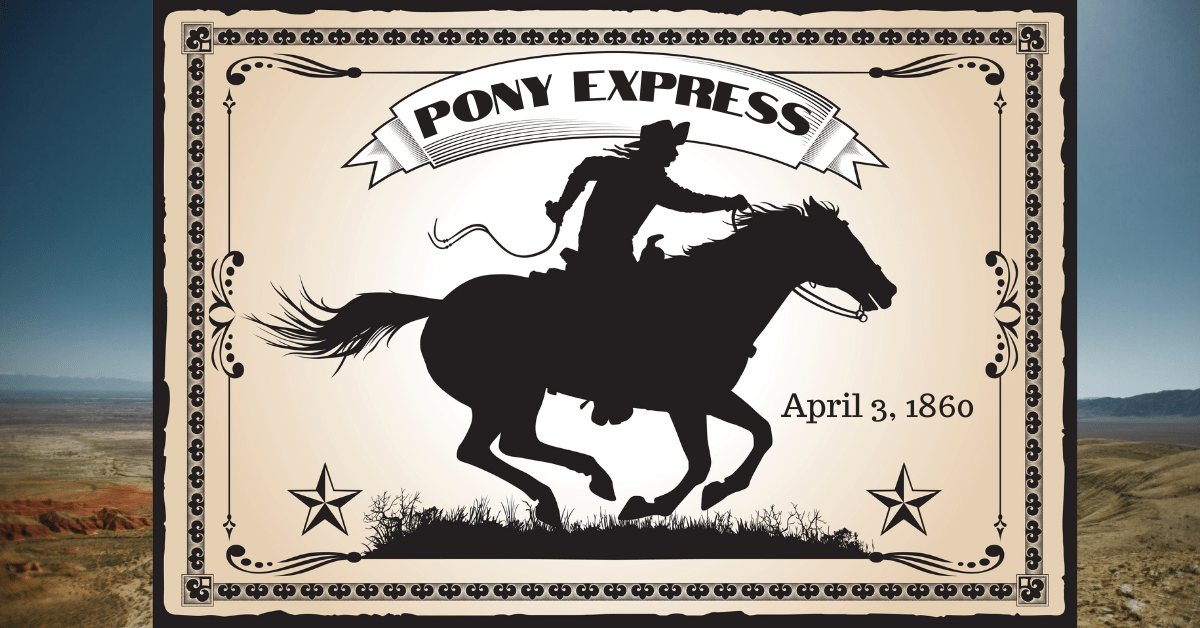
Quick Reference: The Pony Express
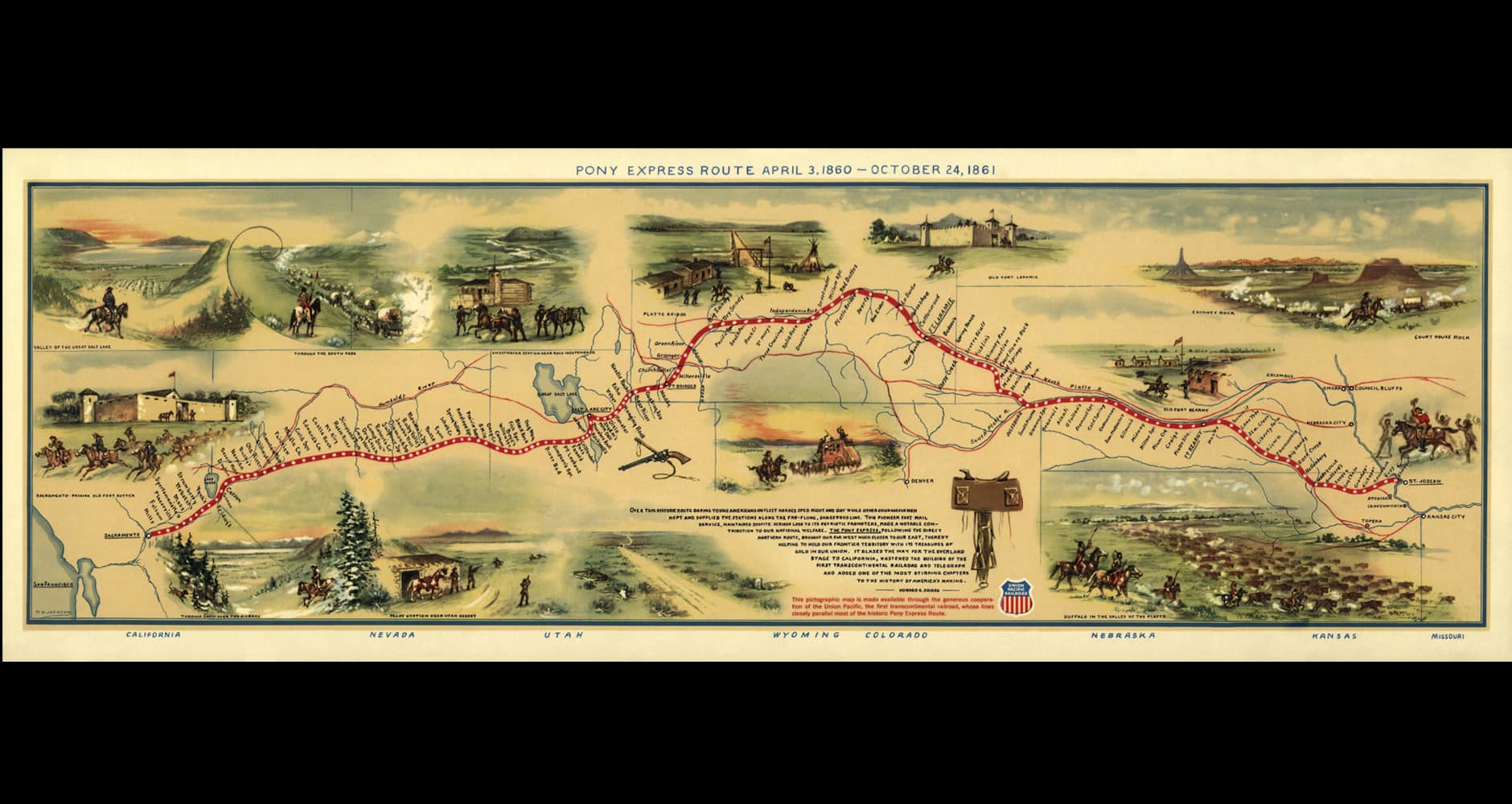
- Route: St. Joseph, MO to Sacramento, CA, 1,966 miles, in 10 days.
- Inaugural ride: April 3, 1860, 7:15 p.m. from St. Joseph. Arrived in San Francisco 11 days later to fireworks.
- Service life: 18 months. Ended October 1861 when the transcontinental telegraph connected.
- Riders: 183 men. Issued a firearm, a knife, a Bible, and a canteen. Took an oath against profanity, drink, and fighting.
- Horses: about 500. Stations every 10 to 15 miles, 157 stations total. Horses changed at each station.
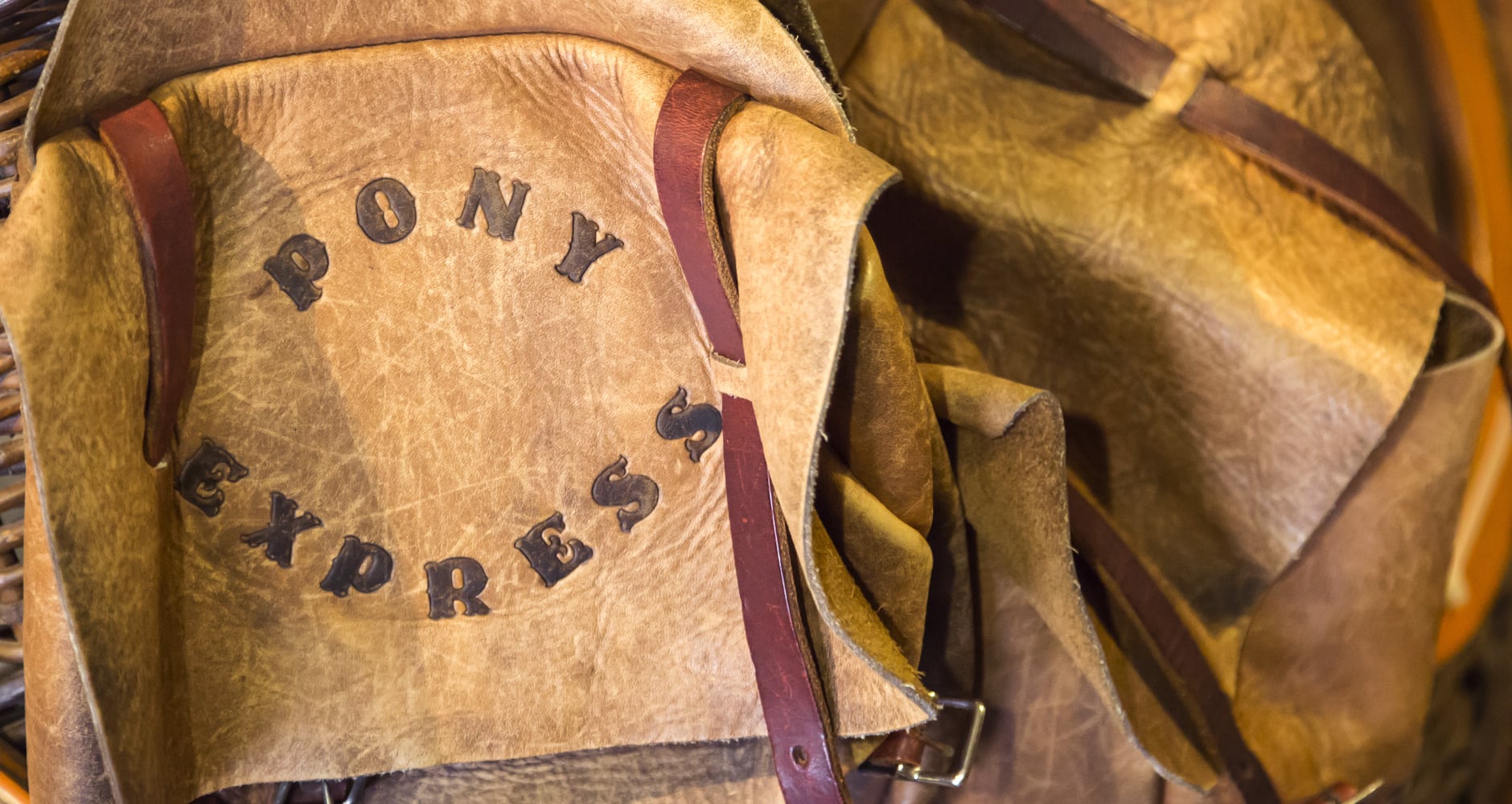
- Mail tool: the mochila, a leather sheet draped over the saddle with four padlocked cantinas. Cost $1 to $5 per half ounce.
In this era of instantaneous email, texts, Skype, and FaceTime, it is tough to imagine the days when stagecoaches and trains delivered information across the country. Today, while we fondly refer to the U.S. Mail as “snail mail,” it is hardly a snail’s pace. Express mail will deliver your packages via airplanes and trucks overnight. There was a time when, if you needed your message to get there as quickly as possible, you enlisted the help of the Pony Express. Letters could arrive in Sacramento, California, from St. Joseph, Missouri, a distance of some 1,966 miles, in a blisteringly fast 10 days, using nothing but horses and riders. The Britannica entry on the Pony Express covers the broad strokes; here are the details.
When Was The Pony Express Founded?
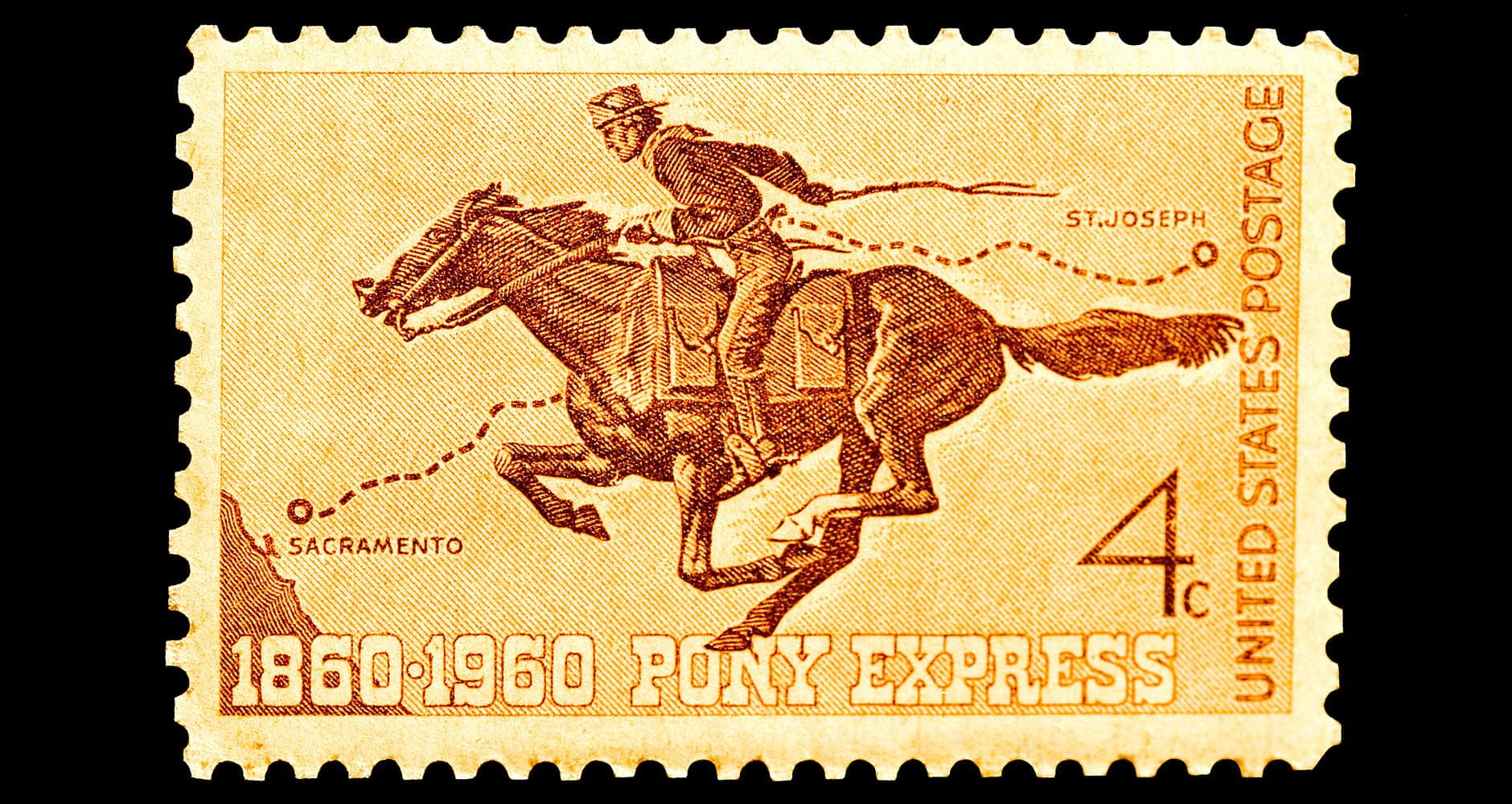
The Pony Express was founded over 150 years ago by a team of investors familiar with delivering freight: William Hepburn Russell, Alexander Majors, and William B. Waddell. They formed the Leavenworth & Pikes Peak Express Company (later known as the Pony Express), in answer to the need for a new, faster overland mail route, one that could feed the communications needs of the California Gold Rush, as well as those of settlers emigrating westward to Utah and over the Oregon Trail.
In 1858, the Postmaster General of the United States began scaling back mail service in the West, thanks to the increasing dependence on telegraph lines. Russell, Majors, and Waddell saw this as an opportunity to start an express courier service.
The Inaugural Ride of the Pony Express
The inaugural ride began on April 3, 1860, and left St. Joseph, Missouri at 7:15 p.m. with the boom of a cannon. Eleven days later, at about midnight, the mail arrived in San Francisco to cheering crowds, fireworks, and a band playing.
The mail was carried in padlocked pouches called cantinas stitched onto a broad piece of leather. This device was known as a mochila and was draped over the saddle, the rider sitting atop it, his weight holding it in place. Only authorized persons had the keys to the locked cantinas.
The logistical requirements for the Pony Express were more than just putting a rider on a fast horse and handing him a pouch of mail. Relay stations had to be built or adapted from existing structures every 10 to 15 miles along the route. The distance between stations was calculated on how long a horse could travel at a full gallop over the given terrain before tiring. Some of the original 157 stations are still standing as tourist attractions, such as Hollenberg Station near Hanover, Kansas. These stations had to have stables, provisions, and fresh horses ready. Some 500 horses were purchased to supply the service. Horses were normally changed at every relay point, but sometimes riders would ride two legs of the journey before another rider would take over.
Riders Take An Oath
The 183 Pony Express riders employed by Russell, Majors, and Waddell traveled light. They were each issued a firearm, a knife, the Bible, and a canteen of water. They took a solemn oath of loyalty to refrain from profane language, intoxicating beverages, and fighting with any other employee. It was said that almost none of the riders seemed to honor their oath, and in the short time the service was active, they gained a reputation as a headstrong and coarse group of men. Should a horse turn up lame and have to be put down, the rider was expected to take up the mochila and walk to the next relay station. Most famously, “Buffalo Bill” Cody (William F. Cody) claimed to have ridden for the Pony Express as a 14-year-old; historians today doubt the story but the legend stuck.
An Expensive Trip
Like today’s express delivery services, the Pony Express was expensive. The overhead costs of maintaining the relay stations, the wages of the riders ($50 per month), and the upkeep of the horses and stables required that deliveries of mail, telegrams, and small parcels were charged between $1 and $5 per half ounce. A standard mochila, when full, weighed about 20 pounds. In today’s dollars, the cheapest letter cost roughly $30; the priciest, around $150.
When Did The Pony Express Service End?
The Pony Express was in business for merely 18 months. The service ended in October 1861 when a key section of the first transcontinental telegraph line was completed between Western Missouri and Salt Lake City, linking networks that for the first time allowed instantaneous communication between Washington, D.C., or New York City and San Francisco. Mail continued, of course, on trains, but the need for speedy communication was now left to the telegram.
Despite its short run, the Pony Express has come to epitomize the American spirit and continues to be a symbol of the Old West. The idea of daring riders traveling their network of relay stations on horseback through a wild and untamed country to deliver the mail should give us all pause when we think about how technology has changed communications forever.
There are still men and women who move items from one end of the country to the other, between relay points, who are the modern-day equivalent of the Pony Express and who deserve our thanks.
Pony Express by the Numbers
| Fact | Detail |
|---|---|
| Operating dates | April 3, 1860 to October 26, 1861 (18 months total) |
| Route | St. Joseph, Missouri to Sacramento, California; approximately 1,900 miles (NPS Pony Express National Historic Trail) |
| Relay stations | 150 to 190 stations, spaced roughly 10 to 15 miles apart for horse changes; home stations 65 to 100 miles apart for rider exchanges |
| Riders employed | About 80 riders in regular rotation at any one time; total hired over the 18 months estimated at around 183 |
| Mail pouch weight limit | 20 pounds of mail per mochila (saddlebag); total horse load including rider and equipment was limited to 165 pounds |
| Typical delivery time | 10 days coast to coast under the published schedule; most runs completed in 8 to 9 days |
| Comparison: previous fastest route | 25 days by Overland stagecoach; several months by sea around Cape Horn |
| Fastest recorded delivery | 7 days, 17 hours, carrying President Lincoln’s inaugural address in March 1861 |
| Horses used | About 400 horses, primarily Mustangs and Morgans; selected for speed and stamina over long distances |
| Total mail carried | About 35,000 pieces over roughly 616,000 combined miles ridden during 308 runs in each direction |
| Why it ended | The Pacific Telegraph Company completed the transcontinental telegraph line on October 24, 1861; the Pony Express ceased operations two days later on October 26 |

Pony Express FAQ
When did the Pony Express run?
April 3, 1860, to late October 1861, just 18 months. The transcontinental telegraph put it out of business.
How long was the Pony Express route?
1,966 miles, from St. Joseph, Missouri, to Sacramento, California. A relay ride covered the distance in about 10 days.
How much did it cost to send a letter by Pony Express?
$1 to $5 per half ounce, depending on the period and urgency. In today’s dollars, $30 to $150 per letter.
Did Buffalo Bill ride for the Pony Express?
William F. “Buffalo Bill” Cody claimed he did as a teenager, and his Wild West Show built on the legend. Historians have not been able to verify the claim and most doubt it. But the story stuck.
What ended the Pony Express?
The first transcontinental telegraph line, completed in October 1861, allowed near-instant communication coast to coast. The Pony Express folded within days.
Can I still see Pony Express stations today?
Yes. Hollenberg Station in Kansas, Patee House in St. Joseph, and the Pony Express National Museum (also St. Joseph) are all open to visitors. The route is preserved as a National Historic Trail.
Was the Pony Express profitable?
No. The owners lost an estimated $200,000 (about $7 million today) over 18 months. The hope was a federal mail contract that never came.
Learn more about the Pony Express by visiting the Pony Express National Museum website. For more American history reading, see our companion guides: the year without a summer, the history of April Fools’ Day, and what the Pilgrims really ate.



Edward Higgins
Edward Higgins is a freelance writer, artist, home chef, and avid fly fisherman who lives outside of Portland, Maine. He studied at Skidmore College and Harvard University. His article 10 Best Edible Insects appears in the 2020 Farmers' Almanac.
- Edward Higgins

- Edward Higgins
- Edward Higgins
- Edward Higgins





We are planning an outdoor “Baby shower” in MI, mMay 1st. Ideas of weather????
Hi Josie1234, It looks good! Check out our long-range weather forecast for your Zone here: https://www.farmersalmanac.com/long-range-weather-forecast