

American Flag Etiquette: Rules for Display and Care
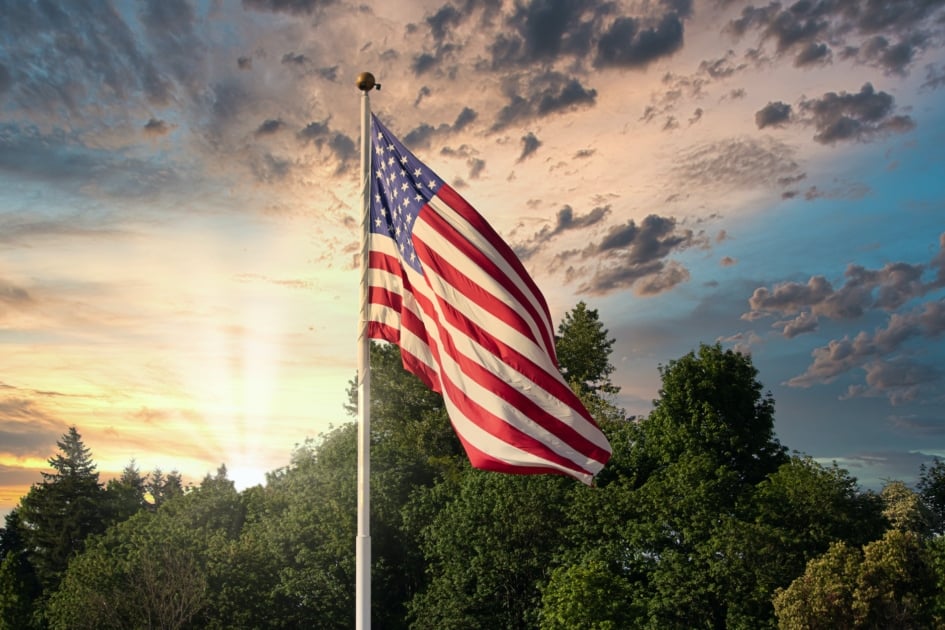
Quick Reference: American Flag Etiquette
- The source: most rules come from the US Flag Code, Title 4, Chapter 1 of the United States Code.
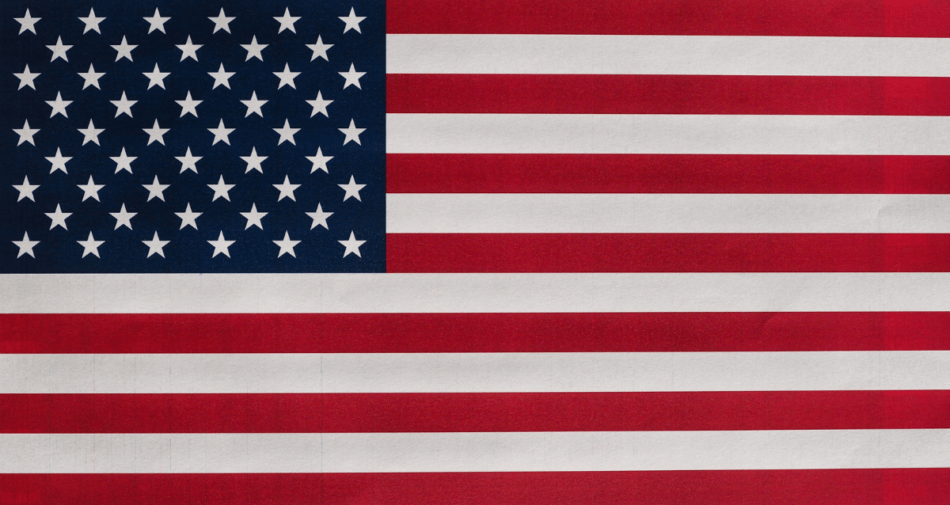
- Two parts: the Union (50 white stars on blue) and 13 red and white stripes for the original colonies.
- Which way it faces: the Union goes uppermost and to the flag’s own right, that is the observer’s left.
- Holding it: use your left hand on the staff, keep the flag aloft, and never let it touch the ground.
- Half-staff: raise the flag to the top first, then lower it to half-staff; on Memorial Day, half-staff runs from sunrise until noon.
- Retiring it: a worn flag is retired with respect, preferably by ceremonial burning, or hand it to a local Legion or VFW post.
Whether you call it Old Glory, the Stars and Stripes, or the Star-Spangled Banner, most of the rules, customs, and traditions that govern how you display the American flag come from a single law: the US Flag Code, found in United States Code Title 4, Chapter 1. This guide walks you through how to hold the flag, how to fold it, how to fly it at half-staff, and how to retire it, along with the details of the flag itself and the days it should fly.
The military follows the Flag Code closely, so if a question ever stumps you, any active or retired serviceperson you know is likely to have the answer. What follows is a plain-English overview of the main points, kept as a handy reference you can come back to.
Where the Flag Rules Come From
The Flag Code did not appear overnight. It grew out of the National Flag Conference held in Washington in 1923, when veterans groups and civic organizations agreed on a common set of customs. Congress adopted those customs as federal law on June 22, 1942. Today they live in Title 4 of the US Code, the same document linked above.
One point worth knowing up front: the Flag Code reads as guidance rather than a list of punishments. It says how a respectful citizen should treat the flag, but it carries no fines or penalties for ordinary people. Think of it as the shared etiquette of a living country, not a rulebook with a ticket at the end. For a plain summary of the same customs, the federal government keeps a public guide to US flag rules and holidays.
Two Parts Of The Flag
1) The Union
The Union is the blue field on the flag, which today holds 50 white stars. Each star stands for one of the United States, though no single star by its location or position represents any specific state. When a new state joins, a new star is added, always on July 4th.
The current 50-star flag has flown since July 4, 1960, the first Independence Day after Hawaii was admitted as the 50th state on August 21st, 1959. That makes today’s design one of the longest-serving versions in the flag’s history.
2) The Stripes
Thirteen horizontal stripes, alternating red and white, run across the flag. They represent the original 13 colonies that declared independence from Great Britain in 1776. A red stripe sits at the very top and another at the very bottom. Seven red stripes and six white stripes also give you a memory trick for the year of the nation’s founding (“76“).
Respect For The Flag
The flag of the United States should always be treated with deference, respect, and reverence. The Flag Code holds many rules for its display, and most are common sense built on one idea: the flag should be given the place of honor when shown with other flags or banners.
The flag represents a living country, and good etiquette comes from treating the symbol as if it were a living thing. It stands for the freedoms and ideals that founded the nation, the ones we continue to hold dear.
Letting the flag become damaged, neglected, or mishandled is a sign of disrespect. For that reason, citizens should stand at attention and salute when the flag passes in a parade or is being hoisted or lowered.

How to Hold a Flag:
- Use your left hand to hold the flag’s staff, which allows your right hand to be free for salutes, via the American Legion. You may also use a flag holder, which supports the end of the staff at your waist.
- Keep the flag aloft: Make sure that no part of the American flag touches the ground.
- Allow the flag to fly freely. Do not hold the flag horizontal or flat (unless you are folding it, see below).
How to Fold a Flag:
The traditional fold ends in a snug triangle that shows only the blue Union with its white stars, echoing the tricorn hats worn by soldiers of the Revolution. It takes two people and a few minutes. The video below walks through the motion, and the steps beneath it lay out each fold.
How to Fold an American Flag
The ceremonial triangular fold takes two people and produces a compact triangle showing only the blue starred canton. It involves 13 folds.
- Hold the flag waist-high between two people, parallel to the ground, right side up, stars facing upward.
- Fold the lower half of the striped section lengthwise over the blue field.
- Fold lengthwise again so the blue field is on the outside and the flag is now one-quarter its original width.
- Begin triangular folding at the striped (open) end: bring the bottom corner to the upper edge, making a triangle. Tuck the outer point back parallel to form a second triangle.
- Continue making triangular folds across the full length of the flag until only the blue canton (stars) remains visible and the shape is a compact tricorn-hat triangle.
- Tuck the remaining edge securely into the pocket of the fold.
The 13 folds correspond to the 13 original colonies. The American Legion and military honor guards use a traditional script that assigns a symbolic meaning to each fold, from “symbol of life” (fold 1) to “In God We Trust” (fold 13). This script is ceremonial tradition, not U.S. law.
- Hold the flag with a partner at waist-height.
- Fold the flag in half vertically.
- Fold the flag in half again vertically so that the stars are visible on the left side.
- Make a small triangle shape on the striped end by bringing the folded edge up to meet the top edge.
- Continue folding the triangular shape upon itself as you move towards the stars (as shown in the video above).
- When you get to the final fold, make a triangle fold from the stars’ side, mirroring the stripes’ side.
- Tightly tuck the new fold within the flap, creating a triangular bundle.
Some Flag Don’ts:
- The flag of the United States of America should never be dipped to any person or thing. It should not be carried flat or horizontally. Regimental colors, state flags, and organizational or institutional flags or banners may be dipped as a sign of honor, but not the American flag.
- The flag should never be displayed with the Union down, except as a signal of dire distress in instances of extreme danger to life and property.
- The flag should never touch the ground or anything beneath it.
- The flag should never be fastened, displayed, used, or stored in such a way that it can be easily torn, soiled, or damaged.
- The flag should never be used as wearing apparel, bedding, or drapery. It should never be festooned, drawn back, nor up in folds, but always allowed to fall free.
- The flag should never be marked up or written on in any way, embroidered on articles like cushions to sit on or handkerchiefs, or printed on anything disposable, such as paper plates or napkins.
- No part of the flag should ever be used as a costume or athletic uniform, though a flag patch may be affixed to the uniform of military personnel, firefighters, police officers, and members of patriotic organizations. A flag lapel pin is a special case; it is technically considered a replica of the flag and should be worn on the left lapel, near the heart.
How To Properly Display The Flag
- The most common way to display a flag is on a flagpole or staff. The flag should always be hoisted briskly and lowered ceremoniously. It is customary to fly the flag from sunrise to sunset, and not in bad weather. All-weather flags are available, and if the flag is properly illuminated, it may be displayed at night for a patriotic effect.
- No other flag or banner should be flown on a flagpole above the United States flag. (The one exception is a church pennant, which may be flown on a ship during church services by naval chaplains at sea for the personnel of the navy.) In all situations, the flag of the United States of America should hold the position of greatest honor when displayed with other flags or banners; for example, at the center or highest point when a number of flags of states, localities, or pennants of societies are grouped and displayed from staffs. If displayed with another flag against a wall from crossed staffs, the flag of the United States should be on the right (the flag’s own right), and its staff should be in front of the other flag.
- When displayed horizontally or vertically against a wall, the Union should be uppermost and to the flag’s own right, that is the observer’s left. A good rule of thumb is that, just as we read from left to right, the static displayed flag should always be “read” by the viewer from left to right, with the Union first. The exceptions to this rule are when a flag is seen moving forward in a procession or battle, or on a vehicle. Even though the Union may appear to the viewer’s right, the sense is that the flag in motion is waving free with the blue field of the Union still leading the way. On flag shoulder patches on military uniforms, the flag may seem “backward” to some, but it is done that way to represent the flag moving forward into battle, Union first (on the flag’s own right), and stripes trailing. Another way to look at it is that on the right shoulder sleeve of a military uniform, the viewer is seeing the reverse side of the flag.
- When the flag of the United States of America is displayed on a motorcar, the staff should be affixed firmly to the chassis or clamped to the right fender.
- When the flag is used to cover a casket, it should be placed so that the Union is at the head and over the left shoulder. The flag should not be lowered into the grave or allowed to touch the ground.
- When the flag of the United States is shown at half-staff, it should be hoisted to the top of the staff first, then ceremoniously lowered to half-staff.
- When displayed over a street, it should be suspended vertically with the Union to the north in an east and west street, or to the east in a north and south street.
- On a platform, it should be above and behind the speaker, with the Union uppermost and to the observer’s left.
- When flags of other nations are displayed together with the flag of the United States during peacetime, they should be flown on separate staffs of equal height, at the same level, and of equal size.
- The flag of the United States should also be hoisted first and lowered last.
Flying the Flag at Half-Staff
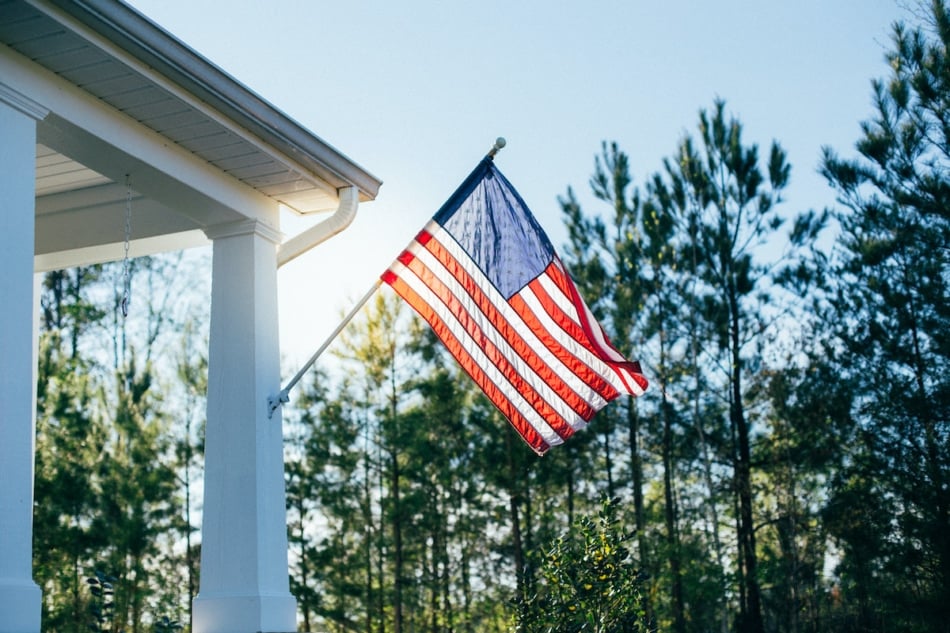
Half-staff (half-mast on a ship) is the nation’s way of showing mourning. The rule is simple in practice: raise the flag briskly to the peak of the staff, pause, then lower it slowly to the halfway point. At day’s end, raise it back to the top before taking it down. That order matters, since the flag is honored on the way up before it is lowered in grief.
The President orders the flag to half-staff nationwide, and a state governor may order it for their own state. Beyond those proclamations, the Flag Code names a handful of standing half-staff days each year.
- Memorial Day traditions call for half-staff from sunrise until noon, then a brisk raise to full staff until sunset.
- Peace Officers Memorial Day, May 15, unless it falls on the third Saturday in May, which is Armed Forces Day.
- Patriot Day, September 11, in memory of those lost in the 2001 attacks.
- National Pearl Harbor Remembrance Day, December 7.
- Upon the death of a national or state figure, for the period set by presidential or gubernatorial proclamation.
The Flag Should Be Displayed On All Days
You may fly the flag every day of the year. It is especially fitting on these days:
- New Year’s Day, January 1
- Inauguration Day, January 20
- Martin Luther King Jr.’s birthday, third Monday in January
- Lincoln’s Birthday, February 12
- Washington’s Birthday, third Monday in February
- Easter Sunday (variable)
- Mother’s Day, second Sunday in May
- Armed Forces Day, third Saturday in May
- Memorial Day (half-staff from sunrise until noon only, then raised briskly to the top of the staff until sunset), the last Monday in May
- Flag Day, June 14
- Father’s Day, third Sunday in June
- Independence Day, July 4
- Labor Day, first Monday in September
- Constitution Day, September 17
- Columbus Day, second Monday in October
- Navy Day, October 27
- Veterans Day, November 11
- Thanksgiving Day, fourth Thursday in November
- Christmas Day, December 25, and such other days as may be proclaimed by the President of the United States
- The birthdays of states (date of admission)
- State holidays

How to Properly Dispose of a Worn or Damaged Flag
The proper way to dispose of or retire a flag is preferably by burning. This burning should be done ceremoniously, with great respect and discretion. Burning a flag in public can be read as a sign of rebellion or protest, so retirement is meant to be quiet and dignified. It is customary to collect the ashes of a burnt flag and bury them with honor.
If a home ceremony is not practical, you do not have to do it yourself. Many American Legion and VFW posts, Boy Scout and Girl Scout troops, and some municipal offices collect worn flags and hold formal retirement ceremonies, often around Flag Day in June. Nylon and polyester flags call for extra care, since they can give off fumes when burned, which is one more reason many folks hand the job to a local post.
The best way to show respect for your old flag after retiring it is to proudly hoist a new one. You honor the flag by always showing it at its best: clean, with bright colors, waving majestically over the land of the free and the home of the brave.
American Flag Etiquette: Frequently Asked Questions
What is the US Flag Code?
The US Flag Code is the set of customs for displaying and handling the American flag, found in Title 4, Chapter 1 of the United States Code. It grew out of the 1923 National Flag Conference and was adopted as federal law on June 22, 1942. It reads as guidance for respectful citizens and carries no fines or penalties for ordinary people.
Which way should the flag face when displayed on a wall?
Whether it hangs horizontally or vertically, the blue Union should be uppermost and to the flag’s own right, which is the observer’s left. A simple memory aid: just as you read from left to right, a still flag should be read from left to right, with the Union first.
When is the American flag flown at half-staff?
The President can order half-staff nationwide and a governor can order it for their state. Standing half-staff days include Memorial Day (sunrise to noon), Peace Officers Memorial Day on May 15, Patriot Day on September 11, and National Pearl Harbor Remembrance Day on December 7. Always raise the flag to the top first, then lower it to half-staff.
Can I fly the American flag at night?
Custom is to fly the flag from sunrise to sunset. You may fly it around the clock if it is properly illuminated after dark. It is also traditional to take the flag down in bad weather, unless it is an all-weather flag made for the elements.
How do you properly dispose of a worn flag?
A worn flag is retired with respect, preferably by ceremonial burning done quietly and with discretion, after which the ashes are collected and buried. If a home ceremony is not practical, many American Legion and VFW posts, Scout troops, and municipal offices collect worn flags and hold formal retirement ceremonies.
Why does the flag patch look backward on military uniforms?
On the right shoulder, the flag is worn with the Union facing forward, so the stars lead and the stripes trail. The idea is a flag carried into battle, streaming behind as the wearer advances. It is not reversed by mistake; you are essentially seeing the reverse side of a flag moving forward.
What do the stars and stripes represent?
The 50 white stars on the blue Union stand for the 50 states, with no single star tied to a specific state. The 13 red and white stripes represent the original 13 colonies that declared independence in 1776. Seven red and six white stripes also serve as a memory trick for the founding year, “76.”


Edward Higgins
Edward Higgins is a freelance writer, artist, home chef, and avid fly fisherman who lives outside of Portland, Maine. He studied at Skidmore College and Harvard University. His article 10 Best Edible Insects appears in the 2020 Farmers' Almanac.
- Edward Higgins

- Edward Higgins
- Edward Higgins
- Edward Higgins





Unless you are a trump magot . The flag goes upside down. We are under attack by the most unscrupulous humans
Flag day or not, it’s about the peoplès freedom not a darnn flag. As long as that moron is in the white house serving Russia, MY FLAG DOES NOT FLY , IT’S IN THE GROUND UPSIDE DOWN
Praying for you
I don’t pray for stupidity and treason
Another communist leaving comments against Our President and Country, it’s Treason
I was a Navy reservist in the 60ths and went on a 2 week cruise on a DE in Lake Erie and my job while underway was to dip the ensign when we passed a foreign Vessel so I disagree with this articles author. TY j
Does anyone know WHY we used red, white and blue? (Other than the obvious ‘because is was adapted from the British flag) And what each color represents. So much of the facts of history seems to be lost these days. Sometimes the stories become harder to find as we delete our history.
Charles Thomson, secretary of the Continental Congress suggested the following symbolism: “White signifies purity and innocence, Red, hardiness & valour, and Blue…signifies vigilence [sic], perseverence [sic] & justice.”
No “pride” flag should be flown at any government facility, especially the White House.
You failed to mention that the Texas flag may be displayed at the same height or above the American flag. Texans know this. I’m not sure others do. It is because we were our own nation and still have the right to present our flag. As many Texans do. Thank you for the information about the flag.
This is only partially true. ALL state flags may be displayed at the same height as the American flag, but none of them may be displayed higher than the American flag.
Burning US flag when worn or torn, you failed to mention that the BLUE field should burn first and the the rest of the flag consumed by the burning. ALWAYS with respect.
how to fold the flag
Twice today I have seen decorative items using a depiction of the flag. One has a painting of the flag with a dirt bike going through the middle. The other is a door mat with a rendering of the flag (all brown in color) with “let’s go brandon” under the flag. I thought this was disrespectful, am I wrong as these are not “real” flags as someone stated. Thank you for your time.
I’m a senior citizen and have proper respect for the flag. However I do not want to treat it as a “life” because it wasn’t created by God, it was created by man. (Or woman). It should not be an “idol” nor treated like one. It represents the country, I’ve seen people wear “flag” bathing suits, jackets, t shirts, jeans, and many other articles of clothing. That is against the code of the flag. There are beer cans, toilet paper, paper plates and party items for 4 th of July parties, welcome mats where you wipe your feet on the American flag, and beach towels that look like a giant flag that you can lay down on. The list goes on and on. All are against the code of the American flag!!! And most of the reopening who ignore all this disrespect, will be the first to condemn anyone who chooses to kneel in respect, rather than stand at the playing of the Star Spangled Banner. Hmm. Hypocrites? No knowledge of flag codes?
Anyone who chooses to kneel, or not salute the flag at all have that right. Those who use the flag in a way that violates the code should be reprimanded. But then, how do you correct millions????
agree
I learned a lot while reading this. Thank you!