

Seeds vs. Transplants: How to Decide What to Sow and What to Buy in 2026
We take a look at transplant vs. seeds, and which may be the better option for your spring garden.
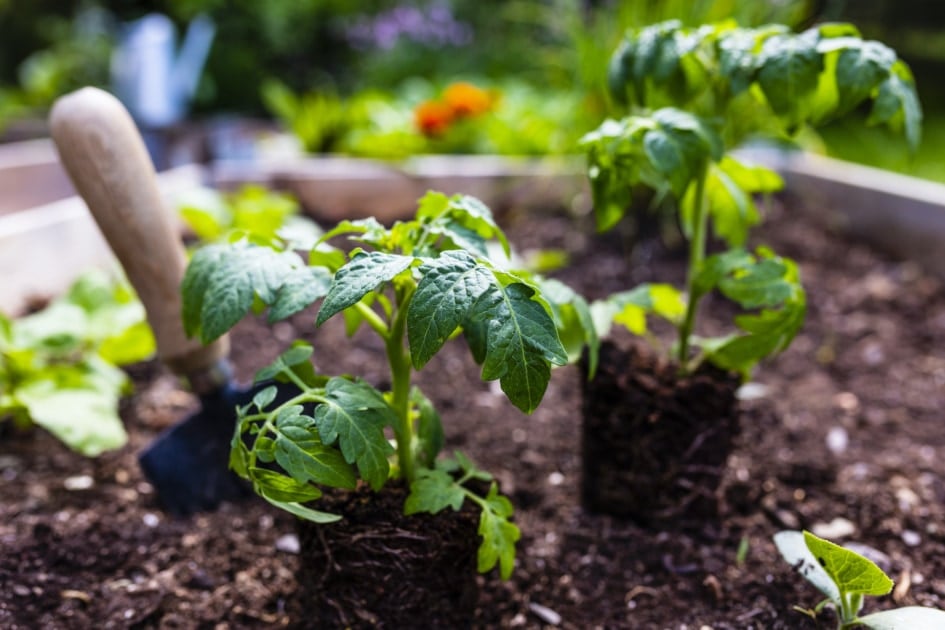
Quick Reference: Seeds vs. Transplants
- Best from seed: peas, beans, corn, radishes, carrots, beets, lettuce, spinach, sunflowers, zinnias, marigolds, morning glory.
- Best from transplant: tomatoes, peppers, eggplants, sweet potatoes, most annual flowers in cold climates (impatiens, begonias, geraniums).
- Cost: a $2 seed packet yields 20 to 200 plants; a single $2 transplant yields one plant. Seeds cost 10 to 100x less per plant.
- Time savings from transplants: 4 to 8 weeks head-start, meaningful in USDA zones 3 to 5 where the growing season is under 130 days.
- Rule of thumb: if the crop matures in under 60 days and the seeds are large enough to see, direct-sow. If the seed needs 90+ days from germination to bloom or fruit, transplant.
- Compromise: start seeds indoors 6 to 10 weeks before the last frost date. Almanac’s seed-starting chart gives the exact date for every crop.
Browse through your local garden center in spring and you may be perplexed by the choice between growing vegetables and flowers from seeds, or transplanting green and growing plants that are already several inches high. This guide walks through the six questions every gardener should ask before deciding, then finishes with a crop-by-crop table drawn from Cornell University Cooperative Extension and Missouri Botanical Garden trial data.
Many gardeners end up with a mix of plants and seeds: tomato plants and cucumber seeds, pots of burgeoning begonias and envelopes of tiny marigold seeds. Purchasing impatiens and other annual flowers already blooming in plastic pots remedies the northern gardener’s impatience for color. But could you get the same amount of blooms for a fraction of the cost by buying seeds? Or would a shorter growing season prevent seeds sown in the Northeast or Upper Midwest from ever catching up to those flowering annuals started in professional greenhouses when the snow was still falling outside?
The Seeds vs. Transplants Cost Math
A quick tally from the 2026 nursery pricing at Home Depot, Lowe’s, and independent garden centers puts a 4-pack of tomato transplants at roughly $5 to $8, or $1.25 to $2 per plant. A packet of 30 heirloom tomato seeds runs $3.50, or under 12 cents per potential plant. For a 20-plant home garden, transplants cost $25 to $40; seed costs $7 to $10 counting starter mix and cell trays.
Cornell Cooperative Extension’s long-running variety trials also show that transplants gain roughly 3 to 5 weeks of early production over direct-sown tomatoes in zones 4 to 6, with no yield difference over the full season. The University of Minnesota Extension reports the same 3 to 5 week head-start for peppers and eggplants. Below zone 4, transplants are the only realistic path for warm-season crops; above zone 7, the growing season is long enough that direct-sown warm crops usually catch up.
Questions To Ask Yourself
A combination of transplanting and direct seeding is probably optimal, as long as you choose the best method for each individual crop or flower variety. Here are the points to consider when asking yourself the age-old gardening question: to seed or not to seed?
1. What’s Your Budget?
There is no doubt about it, seeds are much cheaper than plants. You can usually buy a whole packet of seeds for less than the cost of one plant. But that is not a savings if the seeds fail to germinate, fail to thrive in your garden, or do not produce a single blossom before the first frost. Also consider a plant’s yield. One kohlrabi or turnip plant or seed produces exactly one kohlrabi or turnip. Spending $2 for a pack of seeds nets you dozens of the vegetables. A $2 kohlrabi or turnip plant will produce one rather expensive kohlrabi or turnip.
2. How Long is Your Growing Season?
In many parts of the Northeast and Upper Midwest, it can snow in mid-April and freeze in October. That does not give plants requiring a long growing season enough time to produce if sown directly in the garden. That is why tomatoes, which can take four or five months to produce fruit from the day they are planted from a seed, are best handled as transplants. This goes for peppers and eggplants too. These plants are tender and cannot be outside until all danger of frost has passed, which really shortens their outdoor growing season in say, Minnesota. With flowers, people who live in colder climates tend to want the instant color that comes with purchasing and transplanting all but the fastest-growing annuals.
Check Our Average Frost Dates Calendar
In an area with a longer growing season, one advantage to direct sowing is the ability to stagger your plantings. Plant one row of green beans every ten days and the plants from the seeds planted later will be producing when the first plants to mature reach the end of their productivity.
Living in a more temperate climate does not mean you have to start everything from seeds, however. You may choose to start long-season crops with plants rather than seeds simply for convenience sake, or for an earlier, and perhaps longer, harvest.
3. How Fast-Growing is This Crop?
A truly fast-growing plant sown directly in the garden will catch up with transplants quickly. By August you probably will not see any difference between a zucchini you planted from seed and one you started from a plant purchased at the garden center.
4. Does The Plant Tolerate Root Disturbance?
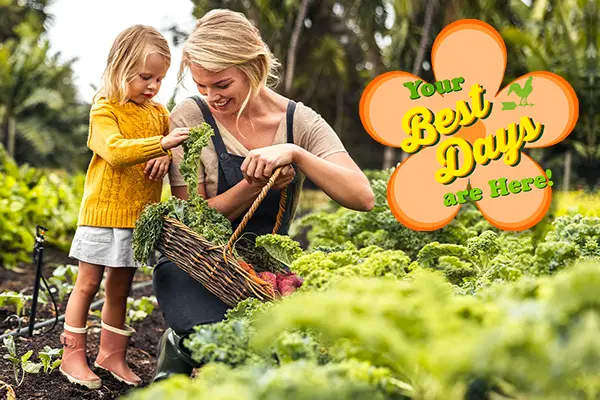
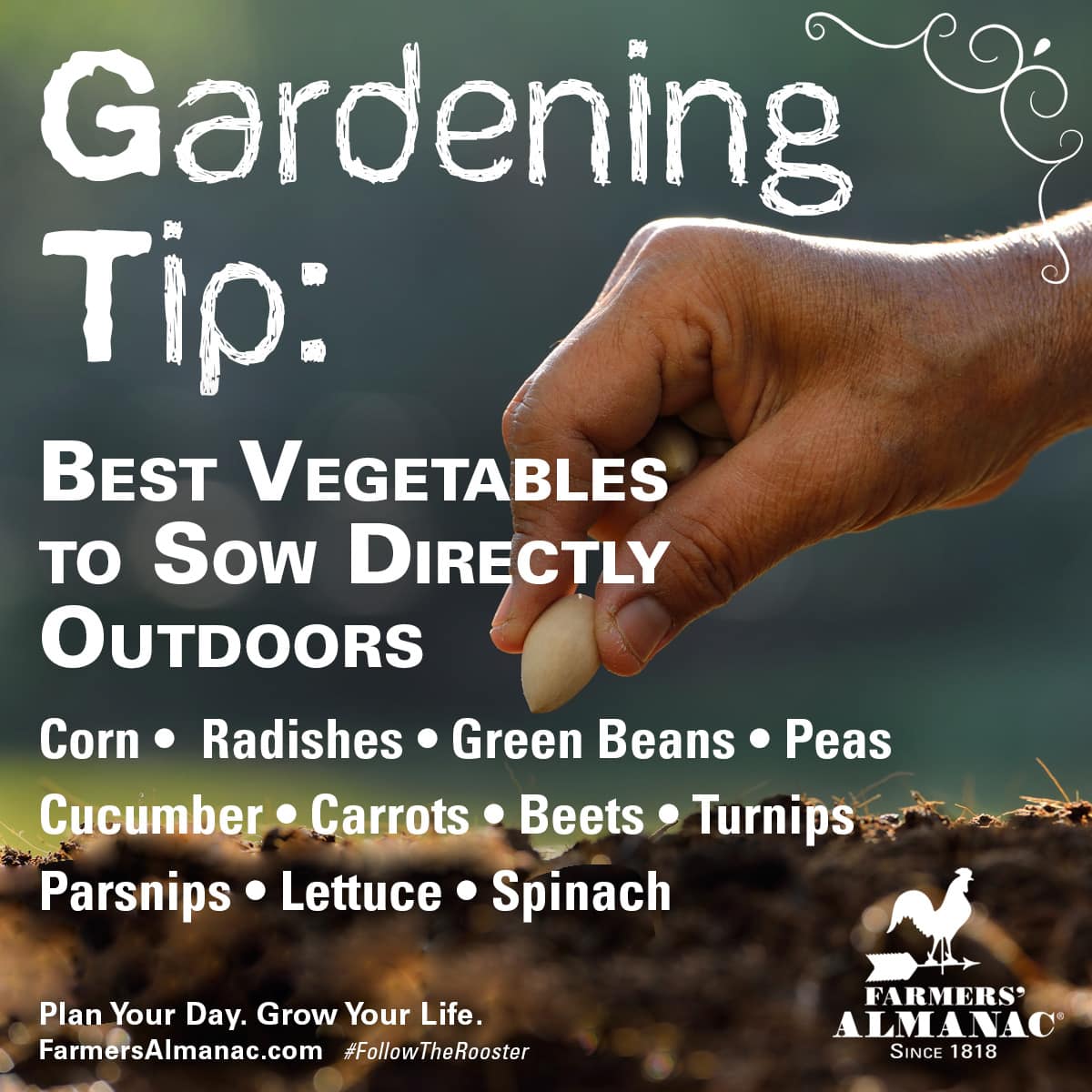
Root crops like carrots or radishes do not like to have their roots disturbed and are, therefore, not good candidates for transplant. These crops are best when directly sown. Cucumbers, squash, melons, corn, peas, and beans also resent root disturbance and outperform their transplanted counterparts when direct-sown in warm soil.
5. How Big are the Seeds?
If you are new to gardening or at least new to direct sowing of seeds, start with things like corn, peas, pumpkins, and sunflowers. These seeds are very large, making it easy to see what you are doing and allowing you to plant at the recommended depth and spacing.
Crops like potatoes and onions are easy to plant because they do not involve tiny seeds either. They can be sown direct, but not exactly from seed. Seed potatoes are pieces of whole potatoes that include the eyes. Onions are usually grown from sets, which are immature bulbs grown the previous year.
6. How Patient Are You?
Some flowers take as long as 90 days to go from germination to blooming. If you do not feel like waiting almost three months for your dose of summer color, choose plants. The instant gratification of planting flowers already in bloom may be worth the extra money to you if your yard has been buried in snow for six months.
Crop-by-Crop: Seeds vs. Transplants Recommendation
This table pulls from Cornell Cooperative Extension’s variety trial reports, University of Minnesota Extension’s home gardener guides, and Missouri Botanical Garden bulb research. Rows marked “both” are crops where either method works and personal preference or zone makes the call.
| Crop | Seed or Transplant? | Why |
|---|---|---|
| Tomatoes | Transplant | 90 to 150 days to fruit. Zones 3 to 6 need the head-start. |
| Peppers | Transplant | Long-season, tender. Same head-start need as tomatoes. |
| Eggplant | Transplant | Warmer soil requirement than peppers. |
| Broccoli, cauliflower, cabbage | Transplant (spring), seed (fall) | Spring plantings need the head-start; fall plantings direct-sow into warm soil. |
| Cucumbers, squash, melons | Seed | Fast germination, resent root disturbance. |
| Corn | Seed | Direct-sow only; deep roots do not transplant. |
| Peas and beans | Seed | Grow quickly, big seeds easy to plant. |
| Carrots, radishes, beets, turnips | Seed | Root crops. Do not tolerate transplant shock. |
| Lettuce, spinach, chard | Both | Direct-sow for succession, transplant for early first pick. |
| Onions, potatoes | Sets or seed potatoes | Direct-plant sets or eye pieces, not seed. |
| Sunflowers, cosmos, zinnias, marigolds | Seed | Cheap, quick, and self-sow next year. |
| Impatiens, begonias, geraniums | Transplant | Slow from seed. Nursery greenhouses save 8 to 12 weeks. |
Starting Seeds Indoors: The Best of Both Options?
Warm-season crops, like tomatoes and peppers, require a long growing season and may not have time to mature if seeded directly in the garden. Cool-season crops like broccoli and cauliflower, on the other hand, must mature before hot weather sets in. An alternative to buying plants is to start seeds in trays or peat pots inside. Or try eggshells!
You will want to start warm-season seeds later than cool-season seed. With either, you have to harden off the young plants to prevent transplant shock before moving them to the garden. Do this by setting them outside in the sun in a sheltered area for two or three hours a day each day for a week to 10 days. You will also want to limit watering and fertilizing during this hardening-off period.
Need to know when to start your seeds? Check our seed starting chart here.
Be sure to check our Gardening By The Moon calendar here for best days to do these gardening chores.

Seeds vs. Transplants FAQ
Which vegetables are best grown from seed?
Corn, peas, beans, radishes, carrots, beets, turnips, cucumbers, squash, and melons. These crops either resent root disturbance (root vegetables, cucurbits) or germinate so quickly that transplants offer no head-start.
Which vegetables are best grown from transplants?
Tomatoes, peppers, eggplants, and spring plantings of broccoli, cauliflower, and cabbage. These crops need a 3 to 5 week head-start in USDA zones 3 to 6, per Cornell Cooperative Extension trials, to produce a full harvest before frost.
Is it cheaper to plant from seed?
Yes, by 10 to 100 times per plant. A $3.50 packet of tomato seed yields 30 potential plants; a 4-pack of transplants costs $5 to $8 for four. For a 20-plant garden that is $10 in seed and starter versus $25 to $40 in transplants.
Do transplants really give me an earlier harvest?
Yes, roughly 3 to 5 weeks earlier for warm-season crops like tomatoes and peppers in zones 4 to 6. Total season yield is usually similar; you just start eating fresh produce sooner.
When should I start seeds indoors?
Six to ten weeks before your average last frost date. Warm-season crops (tomato, pepper, eggplant) start earlier than cool-season crops (broccoli, cabbage). The Farmers’ Almanac seed-starting chart gives the exact date by ZIP code.
What is hardening off, and do I need to do it?
Yes, always. Hardening off is the gradual introduction of indoor-started seedlings to outdoor conditions over 7 to 10 days. Set the young plants in a sheltered outdoor spot for two to three hours the first day, then increase the exposure daily. Limit watering and skip fertilizer during this period to prevent transplant shock.
Which flowers are cheapest to grow from seed?
Sunflowers, cosmos, zinnias, marigolds, morning glory, nasturtiums, and California poppies. All germinate reliably from a $2 to $3 packet and bloom within 60 to 90 days, and most self-sow year after year.


Judy Kneiszel
Judy Kneiszel is a freelance writer from De Pere, Wisconsin. She contributes to regional and national magazines and newsletters, writing on a wide variety of topics including food, farming, health, renewable energy, and running a small business.
- Judy Kneiszel

- Judy Kneiszel
- Judy Kneiszel
- Judy Kneiszel



I definitely do a combination living in the northeast. I’ve also found my personal preference is to direct seed viny things like squash and cucumbers. I’ve found they don’t like transplanting.
Farmers often use a combination of planting methods in the spring. Depending on the crop you could use transplants first & then direct seed at the same time if the temp’s are favorable. This way your transplanted veg would be ready early with the seeded ones maturing a little bit later so as to provide something to enjoy over a longer period. Later plantings can be done with seed to reduce your costs.
This is a great tip for an easy way to succession plant. Succession planting is a great way to spread out your harvest times to make it more manageable and I feel, less wasteful sometimes! Thank you for sharing this!
Yes I will like a copy