

Mortar and Pestle: Uses, Types, and How to Grind
This ancient kitchen gadget is making a comeback among celebrity and home chefs alike because it allows you to get mega flavor from your spices. Learn more!
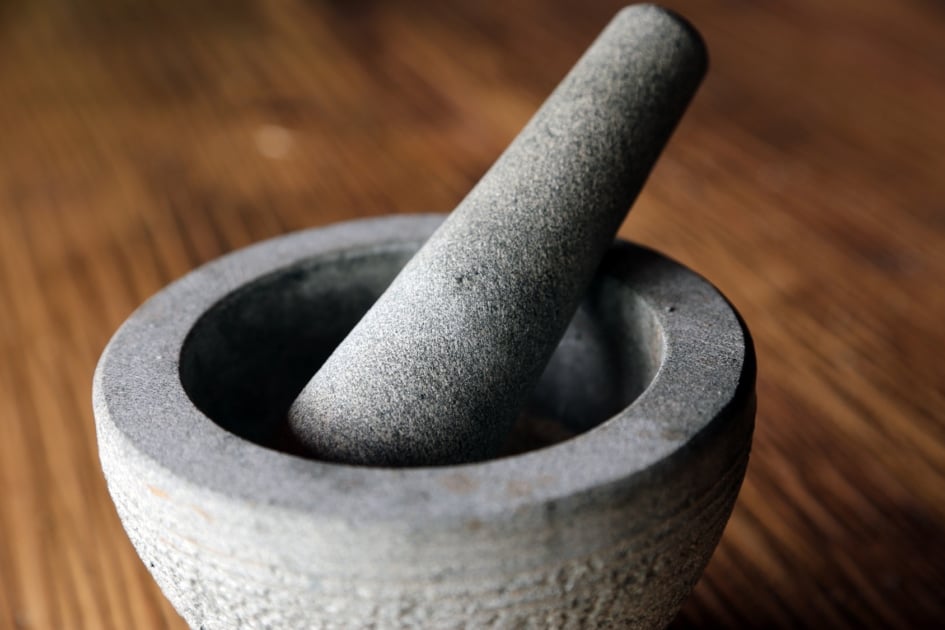
Quick Reference: Using a Mortar and Pestle
- What it does: pounds and crushes herbs and spices to release their oils, pulling more flavor than an electric grinder that only cuts.
- Best material: granite for heavy-duty grinding. It is strong, non-porous, and keeps flavors pure.
- Also comes in: ceramic, glass, porcelain, wood, metal, marble, or bamboo.
- Grind: peppercorns, coriander, cloves, cardamom, dried chilies, sea salt, flax, lavender, garlic, and fresh pesto.
- Clean: grind dry white rice and dust it out, or rinse and towel dry. Granite tolerates mild soap and water. Never soak.
The mortar and pestle is one of the oldest kitchen tools in the world, and in 2026 it is turning up on countertops again, from celebrity kitchens to home cooks who want more flavor from their spice rack. To get the most out of your herbs and spices, you may want to set aside the electric grinder or food processor in favor of this simple ancient device. It has outlasted nearly every gadget that tried to replace it, and once you use one, the reason is easy to taste.
Why Cooks Are Reaching for the Mortar and Pestle
The advantages over an electric grinder or food processor start before you even begin. There is no assembly required, which really means none at all. It runs with less noise, and cleanup is easy, with no small parts or sharp blades to wash.
The bigger difference is in the flavor. A food processor tends to cut whatever you put in it. A mortar and pestle lets you pound and crush instead, which releases the oils and flavors more effectively. You also get more control over just how pulverized you want the results, from a coarse crack to a fine powder. And there is a small bonus: making a habit of grinding by hand can tone your biceps, especially if you cook a lot.
There is a practical reason behind the flavor, too. Whole spices hold their aromatic oils inside until you break them open, which is why they keep their punch far longer than the pre-ground jars. Michigan State University Extension notes that whole spices stay fresh longer and are best ground as you need them. Grinding a teaspoon fresh, right before it goes in the pot, is the whole point.
Choosing the Right Mortar and Pestle
A mortar and pestle comes in a wide range of sizes and materials. You will find them made of ceramic, glass, porcelain, wood, metal, granite, marble, or bamboo. Before you buy, decide what you will mostly be using it for, because the material does the work.
Granite is usually the safest bet. It is strong and built for heavy-duty grinding, and because it is non-porous it keeps the flavors of whatever you are grinding pure. Here is how the common materials compare so you can match the tool to your counter.
| Material | Best for | Drawbacks | Care notes |
|---|---|---|---|
| Granite | Heavy-duty spice grinding, pastes (pesto, curry, garlic); the most versatile all-purpose choice | Requires seasoning before first use; heavy | Season once with raw rice; hand-wash with warm water and mild soap; air dry fully; no dishwasher |
| Marble | Light herb crushing, soft spices, decorative display | Porous; stains with acidic ingredients (tomato, citrus, vinegar); smoother surface less abrasive than granite | Hand-wash; dry immediately; avoid acidic ingredients; no dishwasher |
| Ceramic or porcelain | Delicate herbs, small seeds, powder blending, apothecary use | Can chip or crack under heavy grinding pressure; not suitable for hard whole spices | Non-porous; easy to clean; many models are top-rack dishwasher safe; no seasoning required |
| Wood | Soft herbs (basil, mint), garlic, salad dressings, flavored oils | Highly porous; absorbs flavors, odors, and oils permanently; not suitable for hard spices | Never dishwasher; wipe with damp cloth; minimal soap; oil interior with food-safe oil every 1-2 months; air dry completely |
| Cast iron | Heavy-duty grinding, whole spices, resins; extremely durable | Rusts if left wet or stored damp; heavy; requires periodic re-seasoning | Season with thin coat of oil before first use; wash with hot water and brush; dry immediately and thoroughly; no dishwasher |
| Volcanic rock (molcajete) | Traditional salsas, guacamole, mole; builds seasoned flavor over time | Porous; retains spice residue between uses; more fragile than granite | Season before first use (grind rice, then garlic and cumin); rinse with warm water and stiff brush; no soap; no dishwasher |

What You Can Make With a Mortar and Pestle
Once it is on the counter, you will reach for it more than you expect. Here is a list of cooking tasks you can accomplish with a mortar and pestle:
- Grind your own peppercorns and spices including cinnamon sticks, coriander, and cloves.
- Remove cardamom seeds from their pods and then crush to use in Indian cooking.
- Grind sea salt to the fine texture of popcorn salt and season your movie night treat.
- Crush whole dry chilies into flakes.
- Crush capers to use in homemade tartar sauce recipes.
- Smash fresh peeled ginger to use in Asian recipes.
- Crush some flax seeds to release their benefits and add to yogurt for a nutritious breakfast or snack.
- Crush lavender to use in baking or potpourri.
- Crush herbs and seeds to make medicinal teas.
- Make fresh, homemade nut butters.
- Turn fresh garlic cloves into a paste and spread on Italian bread with olive oil for some intense garlic bread.
- Crush some fresh basil, garlic and pine nuts together in the larger sized units. Then mix in some olive oil to make super fresh and flavorful pesto.
If you grow your own basil, garlic, or lavender, the mortar and pestle is where the harvest becomes dinner. The Gardening by the Moon Calendar can help you time those plantings, and our long-range forecast flags the good-weather stretches to get out in the beds.
How to Grind: Getting the Technique Right
The tool does most of the work, but a little technique gets you there faster. Start with a small batch so the bowl is not crowded. Set the pestle down on the spices and give a few firm presses first, a motion the old cooks called cracking, to break the whole seeds open before you grind.
Once the seeds have cracked, switch to a circular pressing motion, leaning your weight into the pestle rather than pounding wildly. Keep going until the texture matches what your recipe wants, whether that is a coarse crack for a steak rub or a fine dust for a curry. For a paste like pesto or garlic, add a pinch of coarse salt. The salt grains act like tiny grinding stones and pull the mixture together into a smooth spread.
How to Clean a Mortar and Pestle
Cleaning is simple, and cooks tend to fall into one of two camps. Many people use the “dry cleaning” method, which is to simply use the pestle to grind up dry, uncooked white rice after each use, then dust out the powder. The rice picks up the leftover oils and any lingering aromas along with it.
Other cooks recommend rinsing each piece after use and drying it completely with a towel. It is your preference. Because granite is non-porous, many chefs say it is even okay to wash with a mild soap and water, just do not soak it. A quick rule of thumb: rinse or dry-clean between similar spices, and save the soap for when you switch from something like garlic to something delicate.
Seasoning a New Mortar and Pestle
A brand-new stone mortar and pestle, especially unglazed granite, often carries fine grit left over from the carving. Season it before its first real job. Grind a spoonful of dry white rice to a powder, dust it out, and repeat until the rice comes out white instead of gray. Then pound a little raw garlic with coarse salt, let it sit a few minutes, and rinse. After that the surface is ready, and it only improves with use.
An added bonus of using this ancient grinder is that a mortar and pestle on your kitchen counter looks attractive, like part of the decor. It is the rare tool that earns its keep and its spot on the shelf.

Mortar and Pestle: Frequently Asked Questions
What is a mortar and pestle used for?
It is used to pound and crush herbs and spices by hand, which releases their oils and flavors better than an electric grinder that only cuts. Cooks use it to grind peppercorns, coriander, cloves, and cardamom, crush dried chilies and sea salt, smash garlic and ginger, and make fresh pesto and nut butters.
What is the best material for a mortar and pestle?
Granite is usually the safest bet. It is strong, built for heavy-duty grinding, and non-porous, so it keeps the flavors of what you grind pure. You can also find them in ceramic, glass, porcelain, wood, metal, marble, and bamboo, but for everyday grinding of tough seeds and whole spices, granite is hard to beat.
Why use a mortar and pestle instead of an electric grinder?
There is no assembly, less noise, and no small parts or sharp blades to wash. More important, pounding and crushing releases oils and flavors that a spinning blade only cuts, and you control exactly how coarse or fine the result is. Whole spices ground fresh also taste far stronger than the pre-ground jars.
How do you clean a mortar and pestle?
Two ways work. Grind up dry, uncooked white rice after each use and dust out the powder, which lifts leftover oils and aromas. Or rinse each piece and dry it completely with a towel. Because granite is non-porous, a mild soap and water is fine, just do not soak it.
Do you need to season a new mortar and pestle?
Yes, if it is unglazed stone like granite. Grind dry white rice to a powder and dust it out, repeating until the rice comes out white rather than gray, to clear any leftover grit from carving. Then pound a little garlic with coarse salt and rinse. After that it is ready for spices and only improves with use.
Does grinding spices by hand really taste different?
It does. Whole spices hold their aromatic oils inside until you break them open, so grinding a small batch right before cooking gives you fresher, stronger flavor than pre-ground powders that have been losing their punch on the shelf. Do you use a mortar and pestle? Tell us in the comments below.


Judy Kneiszel
Judy Kneiszel is a freelance writer from De Pere, Wisconsin. She contributes to regional and national magazines and newsletters, writing on a wide variety of topics including food, farming, health, renewable energy, and running a small business.
- Judy Kneiszel

- Judy Kneiszel
- Judy Kneiszel
- Judy Kneiszel




I have recently discovered crushing my mothers medicine with mine was easier than using the store bought pill crusher. The healthcare nurse didn’t like me using it but my mom’s doctors loved the idea.
Yes, have a wooden mortar and pestle. Been using for years to crush whole dried hot peppers, and recently to mull mint leaves for my Moscow Mule. Like the other suggestions. Thanks.
very good article
another keeper
I grind sea salt, 5 blend peppercorns, & dried garlic to make a combination daily seasoning & base for a meat rub.
Great article~ Love my mortar and pestles! I have a huge granite bowl, two glass and a beautiful locally-made ceramic set. I tend to use the ceramic for dry (it has a rough interior that works well, as Mule commented above on her post), the large granite for pesto and the glass for the ones that need a water cleanup.
Howdy Judy:
I reproduce the old Indian grinding bowls and grindstones out of sandstone. Very abrasive grinding(might add a little “grit” to your product(<:)) Nice South Western touch to your kitchen. Clean-up, let common sense be your guide.!
On another note; We would like to see info on a gluten free diet,, products and availability,, do's and don'ts. Thanks,,,
Mule