

Forget-Me-Nots: Symbolism, Folklore, the Alaska State Flower, and How to Grow Them
Learn how to grow these prolific blue bloomers, which are rich in symbolism and lore.
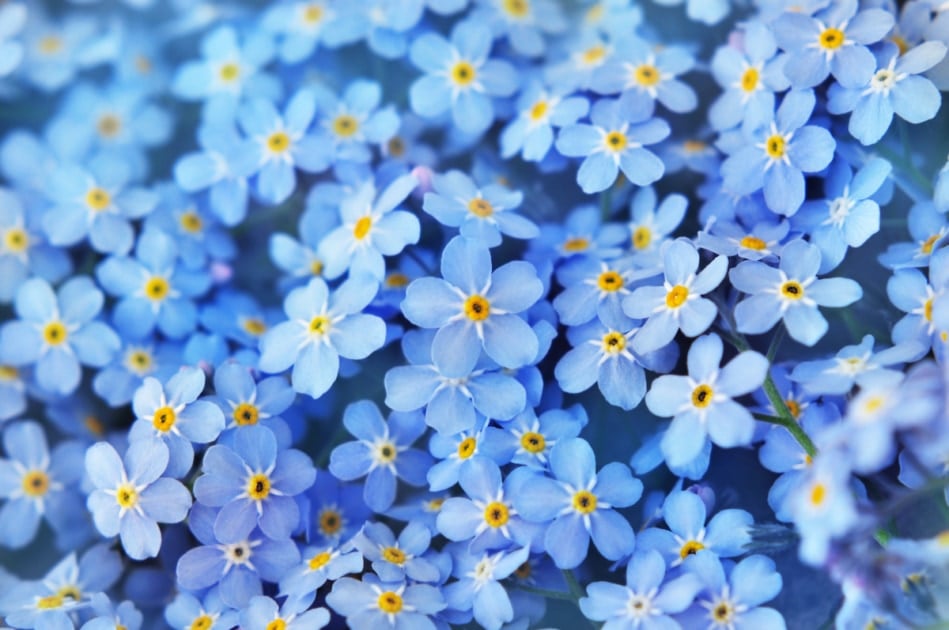
Quick Reference: Forget-Me-Nots
- Botanical name: Myosotis sylvatica (woodland) and M. scorpioides (water).
- Symbolism: remembrance, faithful love, lasting connection. Worn at memorials and weddings.
- Alaska state flower: designated 1949. Symbolic of Alaska’s lasting connection to those who serve.
- Hardiness: USDA zones 3 to 8. Cold-loving short-lived perennial that self-seeds aggressively.
- Tool: the Almanac’s Best Days planting calendar for moon-aligned sowing windows.
On this page
Related Almanac guides
Sources cited in this guide
Forget-me-nots are tiny five-petalled blue flowers with a yellow center that bloom in early to mid spring across most of the cool-temperate world. They carry centuries of remembrance symbolism, are the state flower of Alaska, and self-seed so aggressively that one packet can colonize a shaded garden corner indefinitely. This guide is what they mean, the medieval German legend behind the name, the Alaska designation, and how to grow Myosotis sylvatica reliably in your USDA zone.
The Medieval German Legend Behind the Name
Per Britannica’s forget-me-not entry, the name traces to a single widely-shared medieval German legend.
- The story: a medieval knight walked beside a river with his beloved when he spotted small blue flowers on the far bank. He waded across to pick them. The current was stronger than expected. As he was swept away, he threw the bouquet to her and called out “Vergiss mein nicht” (forget me not).
- The phrase: spread across German-speaking Europe in the 14th and 15th centuries, then to English (forget-me-not) by the 1530s.
- Why it stuck: the flower’s tiny size (easy to overlook), bright blue color (uncommon in nature), and short bloom (a few weeks each spring) made the remembrance symbolism feel intuitive across cultures.
Why Alaska Made It the State Flower
Per the Alaska State Symbols office, the forget-me-not has been the official state flower since 1949 (10 years before statehood).
- Native to Alaska. Myosotis alpestris is native and grows wild across alpine and tundra regions.
- Pioneer-era symbolism. Adopted in 1917 by the Grand Igloo (Pioneers of Alaska) as their symbolic flower of remembering those who came before.
- Formal designation. Made official state flower by the territorial legislature in 1949, retained at statehood in 1959.
- Modern symbolism: tied to remembrance of those who served and lasting connection to the state for those who have moved away.
How to Grow Forget-Me-Nots (USDA Zones 3 to 8)
Per USDA NRCS Plants Database, Myosotis sylvatica is one of the easiest cold-tolerant perennials to establish.
- When to sow: direct-sow in late summer (August to September) for next-spring bloom, or in early spring (March to April) for late-spring bloom.
- Where: partial shade with moist well-drained soil. Tolerates full sun in cool zones; needs shade in zones 7 to 8.
- Spacing: sow generously, thin to 6 inches between plants. Plants are short-lived (1 to 2 years) but self-seed indefinitely.
- Companion plants: daffodils, tulips, hellebores, hostas. Bloom timing overlaps perfectly.
- Maintenance: almost none. Cut back after seed set to encourage self-sowing.
Forget-Me-Nots: Names, Symbolism, Legends, Growing Tips (Detail)
Below are the original detail sections on names, symbolism, Alaska designation, legends and lore, and growing care.
Unforgettable Names
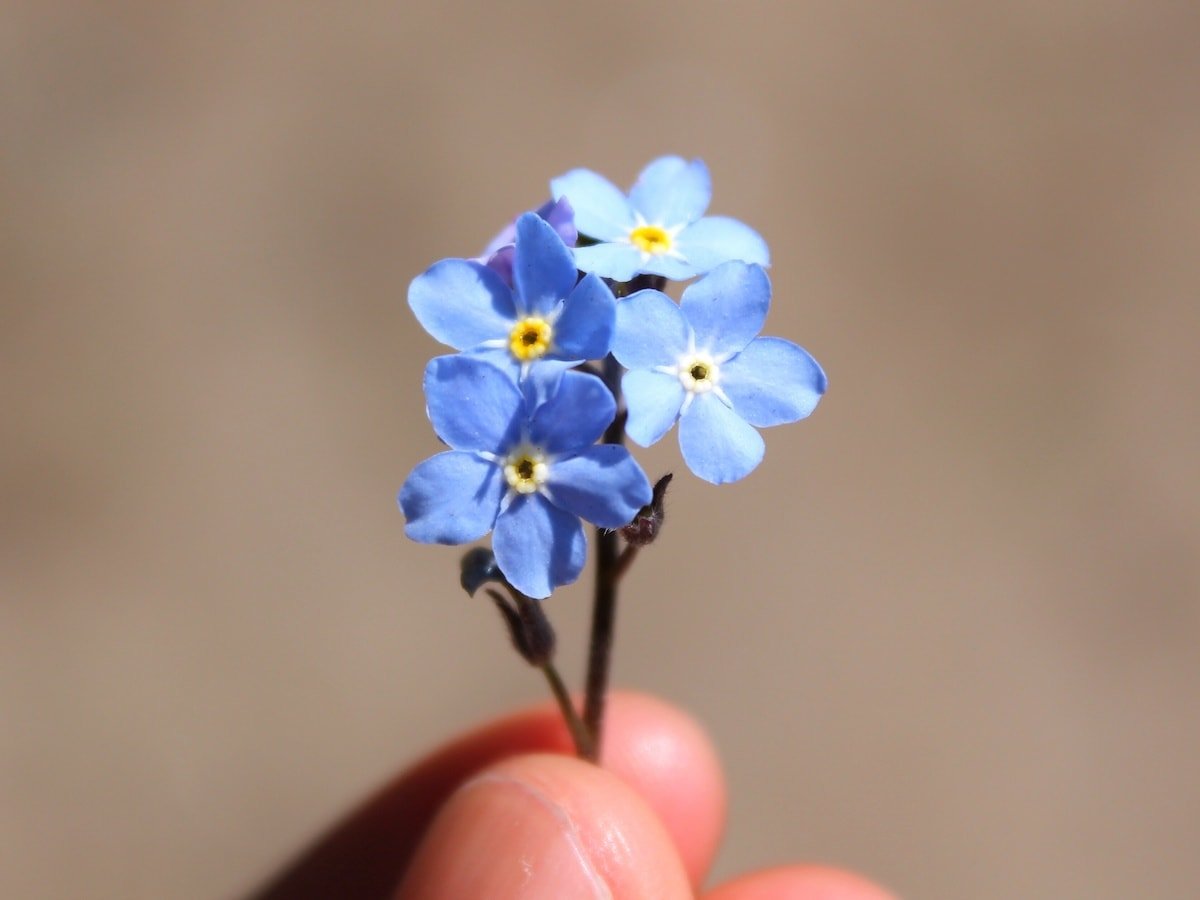
The woodland forget-me-not, Myosotis sylvatica, is one of the more common types that you’ll find in gardens. The genus name comes from the ancient Greek word, mus and ous (or otos), which means “mouse” and “ear” respectively. This comes from the shape of the plant’s foliage, which features short, pointed leaves reminiscent of mouse ears.
Another type, Myosotis scorpiodes, is sometimes called “scorpion grass,” which seems like an unusual name for such a pretty little flower, but it comes from how the plant grows, with emerging clusters of flowers bent in the curl of a scorpion’s tail.
Forget-Me-Not Symbolism
Forget-me-nots symbolize true love and respect. When you give someone these tiny blooms, it represents a promise that you will always remember them and will keep them in your thoughts. They are also considered a symbol of fidelity and faithfulness.
The Alaska State Flower
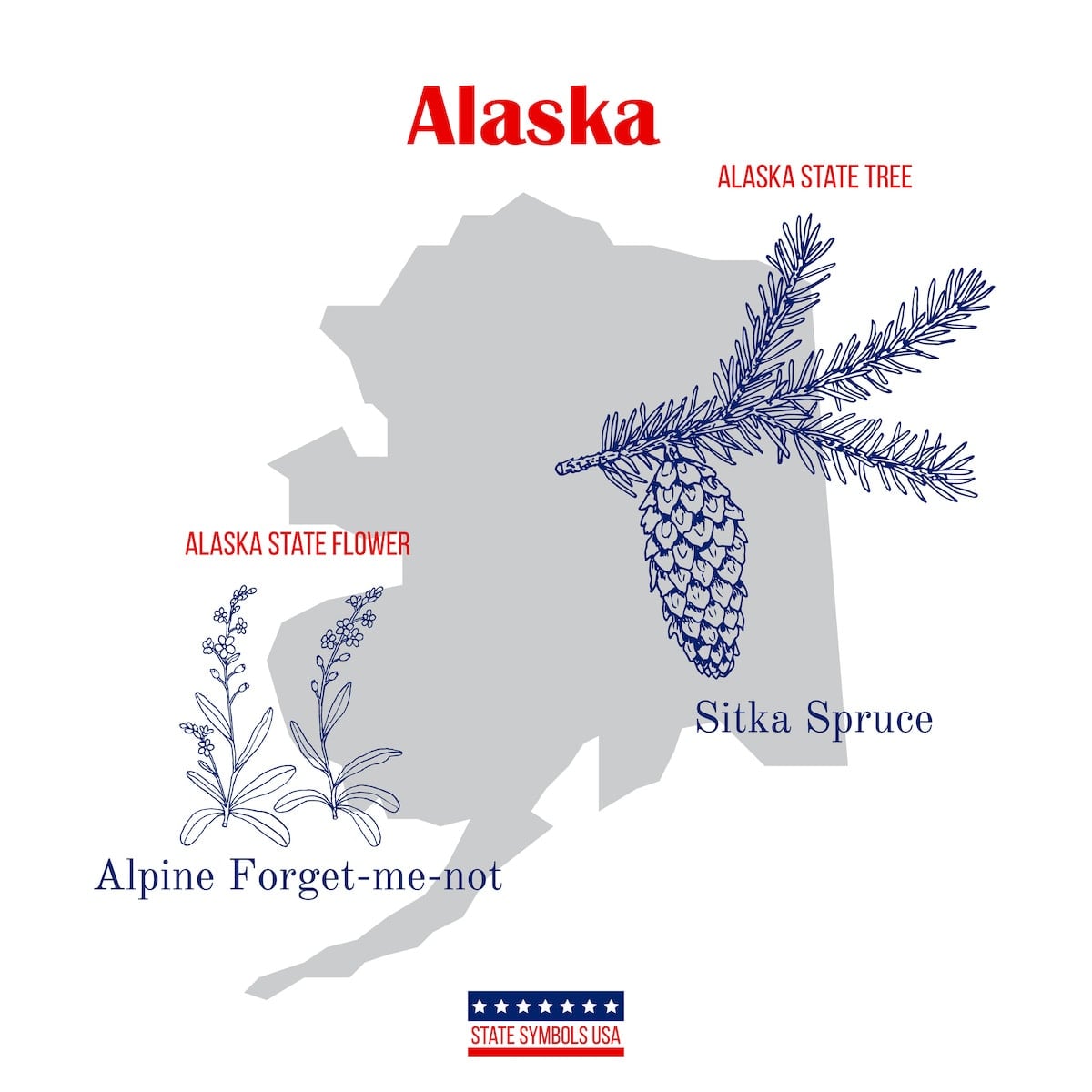
The Myosotis alpestris, or the Alpine forget-me-not, is Alaska’s state flower, and it was named as such before Alaska became a state. The Alaskan Territory adopted the flower as its emblem in 1917, and people loved it so much that Alaska kept it when it officially became a state.
Other Forget-Me-Not symbols
Many places and organizations feature the forget-me-not as a poignant symbol:
- In Newfoundland, it represents those who fell in World War I.
- In Armenia, it’s a symbol for the Armenian Genocide Centennial.
- It’s the symbol for International Missing Children’s Day.
- The Alzheimer’s Society uses forget-me-nots as a symbol for memory loss and to raise awareness for the disease.
Forget-Me-Not Legends and Lore
The forget-me-not moniker has some of the most interesting legends behind it. One describes a German knight who was strolling with his lady along the banks of the Danube river. The lady saw pretty blue flowers, but they’d been pulled loose by the river’s flow and were about to disappear downstream. She wanted to save the flowers, so her chivalrous knight jumped into the water. He couldn’t fight the strong current, so he tossed the flowers onto the bank, and as he was carried out to sea, he called out, vergiss mein nicht, which is German for “forget me not.”
Another legend says that the German knight didn’t leap into the river after the flowers, but rather bent to pick some for his lady when the weight of his armor caused him to topple into the water, and then he called out “forget me not” as he was swept away. A separate German tale says the name was chosen when God was naming flowers. This one was the last, and the flower cried out, “Forget me not, O Lord,” to which God pronounced, “That shall be your name!”
Forget-Me-Not Flower Lore
The forget-me-not is also recognized by some as the birth flower for the month of September, along with the aster and morning glory.
Growing Tips and Care
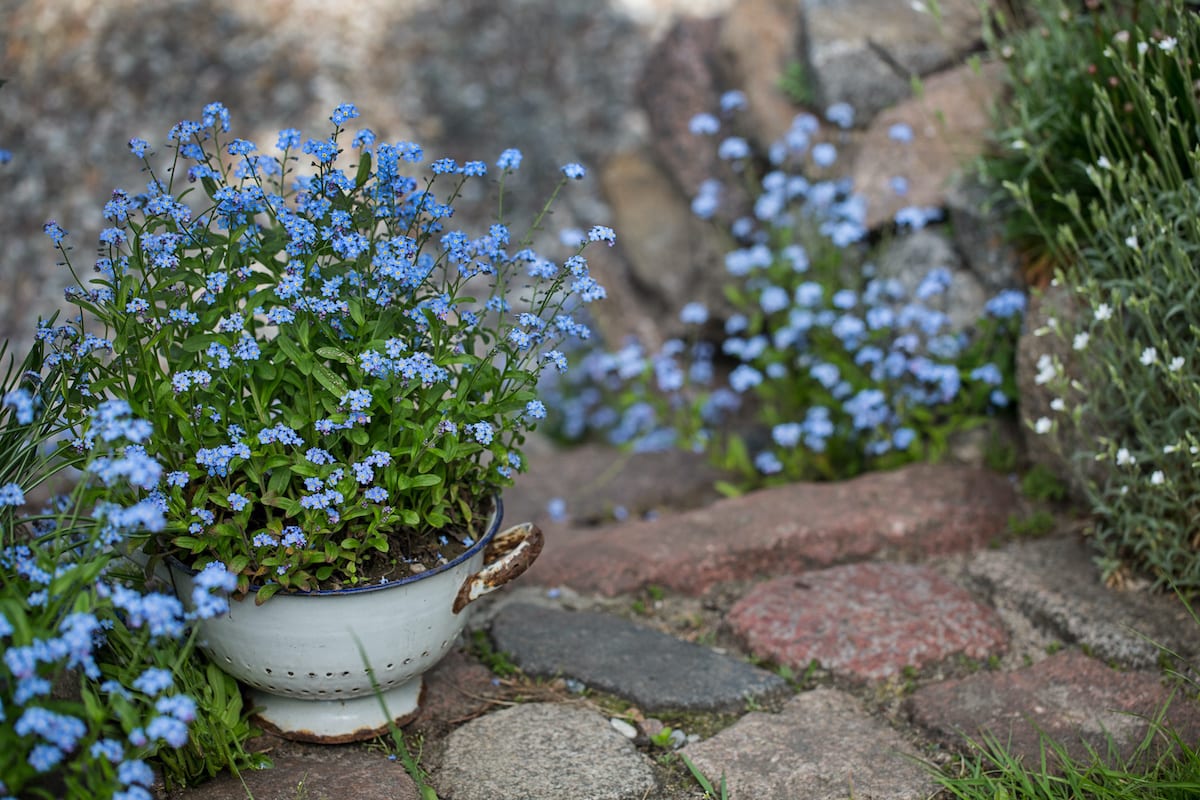
Currently, there are 74 different species of forget-me-nots that can be found all over the world, and many of them are popular garden plants because they add a beautiful touch of color to your garden.
Most of these flowers range in shade from pale blue to bright blue, but a few feature white or pink blooms. Some even mix blue and pink blooms in the same cluster of flowers!
Forget-me-nots are usually biennials, and will take two years to complete their growing cycle of flowering, then producing seed the second year. They’ll die back in the winter and re-sprout in the spring. Once you have forget-me-nots in your garden, you won’t have to re-seed.
Varieties like the Myosotis scorpioides is hardy in USDA zones 5 through 9, and Myosotis alpestris is hardy in zones 3 through 9.
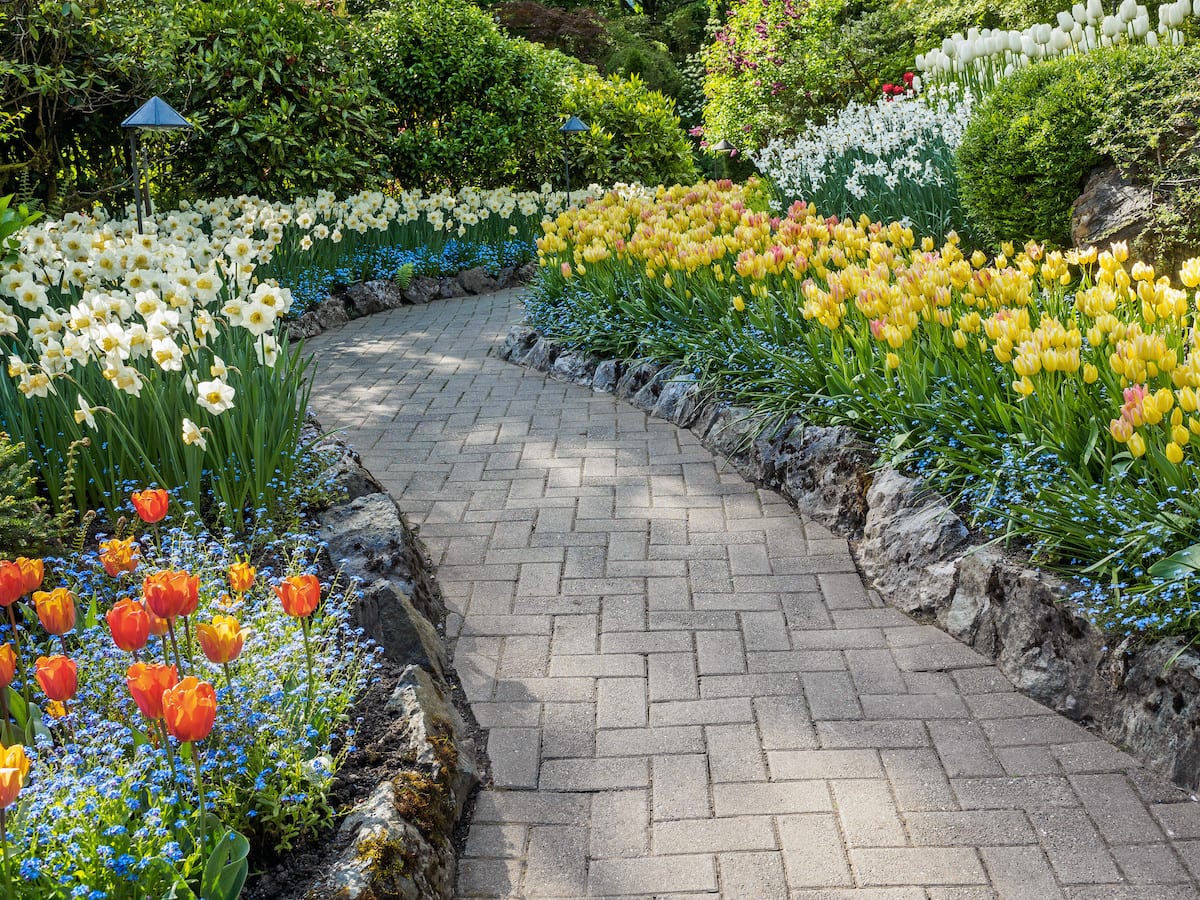
These little plants enjoy part shade, but they’ll tolerate full sun in many areas. During hot summers, however, they’ll do better with a bit of shade on sultry afternoons. This makes them ideal as bedding plants and along borders where taller plants can shade them slightly. Because they are a forest plant, they like rich, organic soil that’s moist but not soggy.
The best time to plant forget-me-not seeds is in the spring if you hope to see the pretty blue flowers the following season. Pick a good spot for them, and they will bloom between May and October each year thereafter.
One thing to consider when planting forget-me-nots is that they can take over a garden if not properly managed. While many gardeners allow forget-me-nots to sow themselves to keep the patch growing year after year, all that seed can mean that you’ll find yourself weeding forget-me-nots out of spots you didn’t want them.
Forget-me-nots are a classic, not to be overshadowed by big and showy blooms like roses. They might be small, but that makes them all the sweeter.


Forget-Me-Nots FAQ
What does a forget-me-not flower symbolize?
Remembrance, faithful love, and lasting connection. The symbolism has been continuous since the medieval German legend behind the name. Commonly worn at memorials, weddings, anniversaries, and at remembrance events for those who have served or passed.
Why is it called a forget-me-not?
From the German “Vergiss mein nicht,” likely from a medieval legend of a knight calling out the phrase to his beloved as he was swept away by a river while picking the flowers for her. The English equivalent appears in print by the 1530s and has been continuously used since.
When do forget-me-nots bloom?
Early to mid spring in most temperate zones (March to May). The bloom typically lasts 3 to 6 weeks. In cooler northern climates (Alaska, Canada) bloom extends into June. The flowers reliably re-emerge each spring via self-sowing.
Are forget-me-nots invasive?
They self-seed aggressively and can spread out of intended beds, but they are not classified as invasive in most US states. Some northern states list them as naturalized weeds in moist meadows. Cut back after seed set if you want to limit spread.
Can you grow forget-me-nots in pots?
Yes. They thrive in 6 to 10 inch pots with moist soil and partial shade. Reseed themselves in adjacent pots and beds, so plan accordingly. Best paired with daffodils, tulips, or pansies in mixed spring containers.
Why is the forget-me-not the Alaska state flower?
Adopted in 1917 by the Pioneers of Alaska as a symbol of remembering those who came before, and made the official territorial flower in 1949. The native blue alpine forget-me-not (Myosotis alpestris) grows wild across Alaska and aligned naturally with the state’s pioneer remembrance symbolism.


Amber Kanuckel
Amber Kanuckel is a freelance writer from rural Ohio who loves all things outdoors. She specializes in home, garden, environmental, and green living topics.
- Amber Kanuckel

- Amber Kanuckel

- Amber Kanuckel
- Amber Kanuckel




I planted a pollinators mix and a little blue flower ended the season with a tiny cockle burr type sticker that clung to clothes. Was that the forget-me-not??
So beautiful
When my dear husband died in 2022, the funeral home sent some forget-me-not seeds in my papers. I planted them in the spring and had a gorgeous plant in a pot. I will always have them in my little patio garden. He would have liked them , too.
We are sorry for your loss. Forget-me-nots are a beautiful way to remember those that have our hearts.
A friend gave me some of these a few years ago that I planted n one of my flowerbeds. I figured out why they’re called “Forgeet-Me-Nots! They reseed themselves all over the place!!! I find them all over my yard, even places nowhere near where they were originally planted!! Forgeet-Me-Not, indeed!!
Also, the Forget-me Not is the symbol of The Disabled American Veterans. Forget us not.
Thank you for that, a lovely reminder of great importance.
When our beloved dog Mickey passed away, our veterinarian sent us some forget-me-not seeds to plant in his honour. What a great idea. We’ll plant them in the garden he used to wander in.
This is such a kind and wonderful idea!
I’ve been looking for a flower to plant at my grandparents grave and this is perfect! They both loved the color blue.
Hi Marion, yes this would be a lovely choice. Thank you for visiting our site and commenting.
Forget-Me-Nots were also used as a secret means to identify masonic brethren in Nazi occupied areas. Their Masonic jewelry and emblems made them targets.
Hi Brenda W, that’s very interesting. Thank you for sharing.
Thanks for writing this article. I’ve always wondered about forget me nots. Now I know!????