

9 Tips to Reduce the Threat of Wildfires Around Your Home
Quick Reference
- Defensible-space distance: 100 to 200 feet of cleared vegetation around the home, depending on slope.
- Fuel-tank rule: Propane, lumber, and firewood at least 30 feet from any structure.
- Lawn buffer: Keep 30 feet of irrigated lawn around the house; mow native grass out to 100 feet.
- Highest risk months: June through October in the West; September through November in California.
- Smoke check: AirNow.gov for current AQI in your zip code.
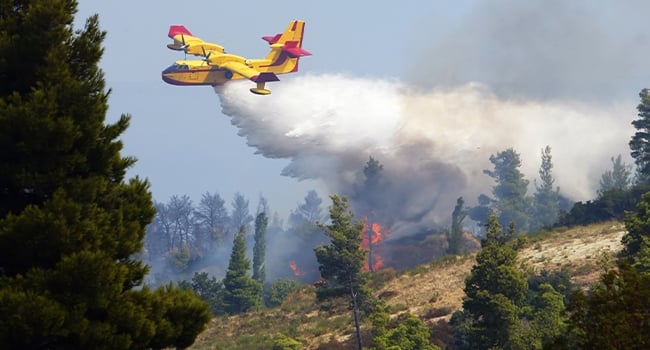
Fire season is no longer a Western summer story. According to the National Interagency Fire Center, wildfires now run hotter, longer, and into states that once saw only the occasional brush blaze. The 9 wildfire-prevention tips below are practical defensive work most homeowners can do over a single weekend. They will not stop a megafire, but they sharply raise the odds your home survives one.
9 Tips to Reduce the Threat of Wildfires
1. Create defensible space around your home.
Clear vegetation and ignition loads within 100 to 200 feet of any structure, with the larger distance for homes on steep slopes where fire climbs faster. Storage sheds, firewood, lumber stacks, and propane or fuel tanks belong at least 30 feet from the house. Many of those items burn hotter than the house itself and act as bridges that carry fire to your walls.
2. Mow and water your lawn.
FireSafe Montana recommends at least 30 feet of irrigated, mown lawn around the house to break the fuel chain. Beyond that, mow native grass out to 100 feet so the dry stems are too short to carry flame across the property.
3. Plant shrubs at least 3 to 5 feet from the house.
Avoid grasses or resinous plants directly against the siding. Choose sedums, low ground covers, and flowering perennials instead. Trim perennials in the fall so dead stalks do not sit dry against the foundation all winter.
4. Use nonflammable landscaping materials.
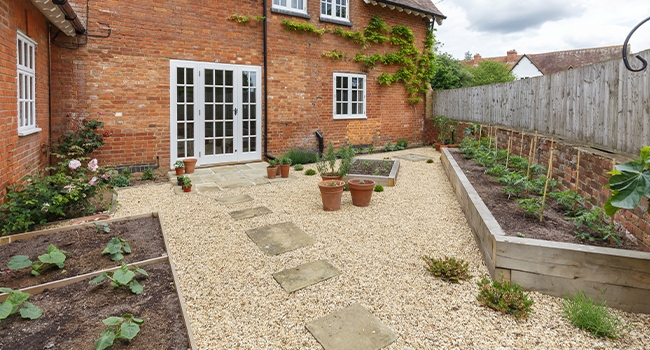
Between the plantings and the house, use gravel, river rock, flagstone, or concrete decking. If a spark lands here, there is nothing to catch. Avoid bark mulch within 5 feet of the home; it ignites readily under ember storms.
5. Remove dead or weakened trees.
Healthy trees with thick bark and high crowns are surprisingly fire-resistant. Dead trees are not. Take down standing dead, prune lower branches to 10 feet off the ground, and clear brush from beneath crowns so ground fire cannot ladder up into the canopy.
6. Grow deciduous trees between evergreens and junipers.
Green leaves carry far less heat than resinous needles. A row of maples, oaks, or aspens planted between conifers slows the spread of crown fire because deciduous canopies do not ignite as readily.
7. Keep a water hose handy.
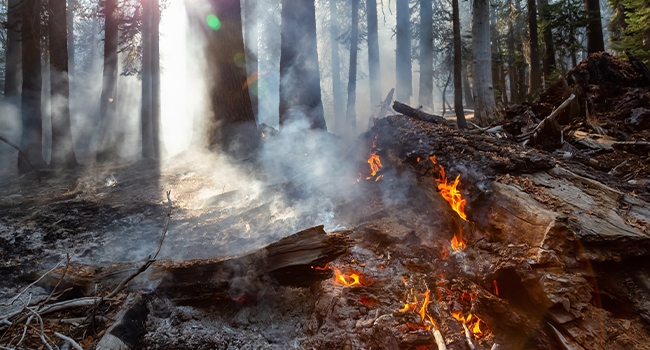
Keep 100 feet of hose connected to an outside faucet during fire season. Test it in May and again in September. A pre-evacuation hose-down of decks, eaves, and shrubs raises moisture content enough to slow embers.
8. Clean your chimney regularly.
Sweep the chimney annually and install a spark-arrestor screen on the cap. Chimney sparks are a leading source of wildfires near woodlot homes. The 1/4-inch mesh standard is what fire codes generally call for.
9. Tag your animals.
Pets should be microchipped and wear collars with current phone numbers. For livestock that may be turned loose during an emergency, write your phone number on the hooves with a livestock marker. Many post-fire pet reunions hinge on a single tag.

Regional Wildfire Risk Around North America
| Region | Peak season | What drives it |
|---|---|---|
| California and the Pacific Southwest | Late summer into autumn, and increasingly year-round | Long dry summers, then offshore wind events that drive fire downslope fast |
| Pacific Northwest | July into September | Dry east-side forests and lightning starts |
| Mountain West and Great Basin | June into September | Drought, beetle-killed timber, high-elevation lightning |
| Southwest | April into July, before the monsoon breaks | The driest and windiest stretch of the year |
| Great Plains | Late winter into spring | Cured grass and high wind. Fast grass fire rather than forest fire |
| Southeast and Gulf | Spring, and autumn in drought years | Pine understory, much of it managed with prescribed burning |
| Northeast and Great Lakes | Spring, between snowmelt and green-up | A short window when last year’s leaf litter is dry and nothing has leafed out yet |
How to Stay Safe if Wildfire Smoke Affects Air Quality
Smoke can travel hundreds, even thousands of miles from the fire that produced it. The 2023 Canadian wildfires turned New York City orange, and Midwest air quality matched Beijing’s worst days. Check the air quality in your zip code at AirNow.
- Stay informed. Local TV, radio, and NOAA all post advisories.
- Stay inside when AQI is over 150, especially if you have asthma, COPD, are pregnant, elderly, or have young children. Pets and livestock breathe the same air.
- Wear an N95 mask if you must go out. Surgical and cloth masks do not filter PM2.5.
- Avoid strenuous outdoor activity. Defer mowing, biking, and long runs.
- Keep windows closed and run an air purifier or HVAC with a MERV-13 or HEPA filter.
- For livestock, limit exercise and provide steady fresh water. Horses and cattle suffer respiratory stress in heavy smoke.

Frequently Asked Questions
How much defensible space do I need around my home?
The standard is 100 feet on flat ground and up to 200 feet on a slope, with the steeper the slope, the larger the buffer. Inside the first 30 feet, keep grass green and mown and remove all ignition loads. From 30 to 100 feet, thin trees and keep brush low. Beyond that, reduce continuous fuel.
Which months are highest risk for wildfires?
In California and the Pacific Northwest, late summer through fall is highest risk, peaking September through November. The Southwest has an April to June primary season. The Great Plains burn hardest in March, April, and May. The Southeast peaks February to May. The Canadian boreal forest peaks May to August.
Is bark mulch really a fire hazard?
Yes, within 5 feet of the house. Bark mulch ignites under ember showers and can carry flame to siding. Use gravel, river rock, or decomposed granite in the first 5-foot band. Bark mulch beyond that distance is fine.
Do I need a special mask for wildfire smoke?
Yes. An N95 or KN95 filters out the fine PM2.5 particles that make wildfire smoke dangerous. Surgical masks and cloth masks do not. Fit matters: the mask must seal against your face.
What is the most important single change I can make?
Clear the first 5 feet around your foundation. No bark mulch, no shrubs against the siding, no firewood stacks, nothing that can carry flame to the house. Post-fire surveys repeatedly find that homes that survived had a clean, non-flammable zone right at the wall.
Will homeowners insurance cover wildfire damage?
Standard homeowners policies usually cover wildfire damage, but some carriers in high-risk zip codes (mainly in California) have stopped renewing. Check your policy’s wildfire endorsement, document defensible-space work with photos, and review your coverage limits each spring.
Join the Discussion
What do you do to prevent wildfires and safeguard your property? Are there any fire-safety tips you would add to this list? Let us know in the comments below.
Related Articles
- What To Do If A Fire Breaks Out
- 10 Things You Should Never Burn In Your Fireplace
- Spring Storm Safety Checklist


Amy Grisak
Amy Grisak is a freelance writer, blogger, and photographer specializing in gardening, local food, and stories about her home state of Montana. She enjoys sharing her experiences with self-reliant living and outdoor recreation. Her article on the "hugelkultur" gardening technique appears in the 2021 Farmers' Almanac. You can follow her topics on her site, AmyGrisak.com.
- Amy Grisak

- Amy Grisak
- Amy Grisak
- Amy Grisak



The biggest cause of wildfires being so damaging is that the states don’t practice proper & important forest management. Most fires result from lighting strikes, some from carbon embers from the tailpipe of autos, inattentive people when smoking or not properly extinguishing a campfire & all too often intentionally starting a fire. Many fires would not spread as quickly if there were better forest management practices…reducing the amount of fuel that feeds these fires.