

Companion Plant Valentine Puns for Gardeners You Love (2026)

Quick Reference
- What this is: Five companion plant Valentine puns you can save, share, or plant together in the 2026 kitchen garden.
- The pairs: tomato and basil, carrot and sage, rhubarb and onion, beet and radish, strawberry and lavender.
- Why the pairs work: flavor boost, pest deterrence, shade, and root aeration between neighbors.
- Best planting window: USDA zones 3 to 9 after the last spring frost, or start transplants indoors 6 to 8 weeks earlier.
- Send a pun: right click any image to save. Tag @farmersalmanac on Instagram or Facebook for a chance to be featured.
Valentine’s Day 2026 falls on Saturday, February 14. If you know a gardener, the sweetest card is a plant pun that also happens to be true. The pairs below are real companion plants that share a bed for a reason: one shades the other, one feeds the other, one keeps pests off the leaves next door. Here are five Valentine puns from the Farmers’ Almanac kitchen garden, along with the science that makes each match honest.
Right click or press and hold any image to save it. Share on Instagram or Facebook and tag your valentine and Farmers’ Almanac (@farmersalmanac) for a chance to be featured.

Tomatoes and Basil
Basil planted at the foot of a tomato deepens the tomato’s flavor and, in field trials from Oregon State University, has been linked to fuller tomato yields. Basil oils also repel flies and mosquitoes that would otherwise settle on the fruit. Marigolds are the second half of the classic tomato trio: their roots release compounds that suppress root-knot nematodes and other garden pests, a mechanism confirmed by the University of Minnesota Extension.
Other honest tomato neighbors include asparagus, carrots, celery, the onion family, lettuce, parsley, and spinach. See our companion planting guide for a fuller list, plus what not to plant beside a tomato.

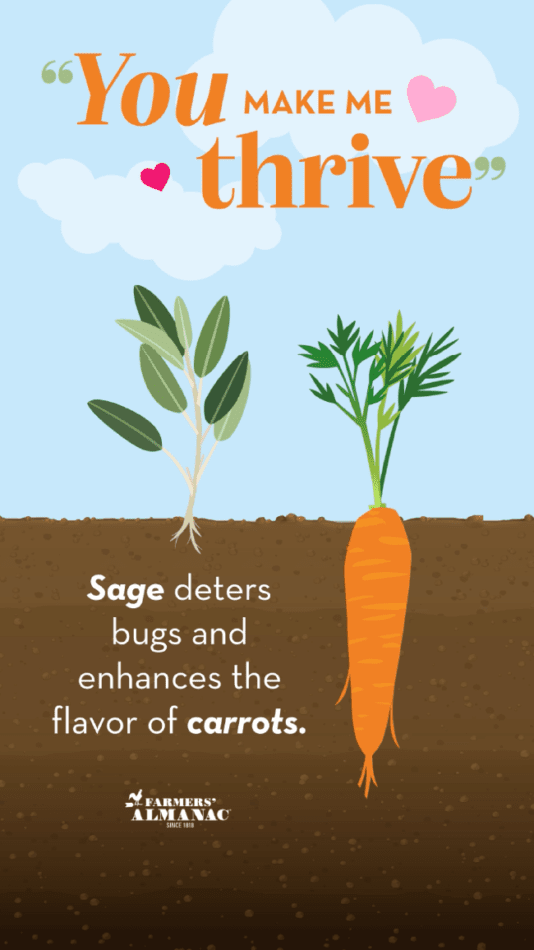
Carrots and Sage
Sage deters carrot flies and sharpens the flavor of the roots underneath. Rosemary and chives play the same role: their essential oils confuse the female carrot fly, whose eggs would otherwise hatch straight into the carrot’s shoulder. Carrots also grow well beside tomatoes because the tomato foliage throws a soft shade over the heat-sensitive carrot tops.
Tomatoes also produce solanine, a natural insecticide that targets pests specific to carrot plants. See our full breakdown of companion plants for carrots for the rows to sow together and the ones to keep apart.
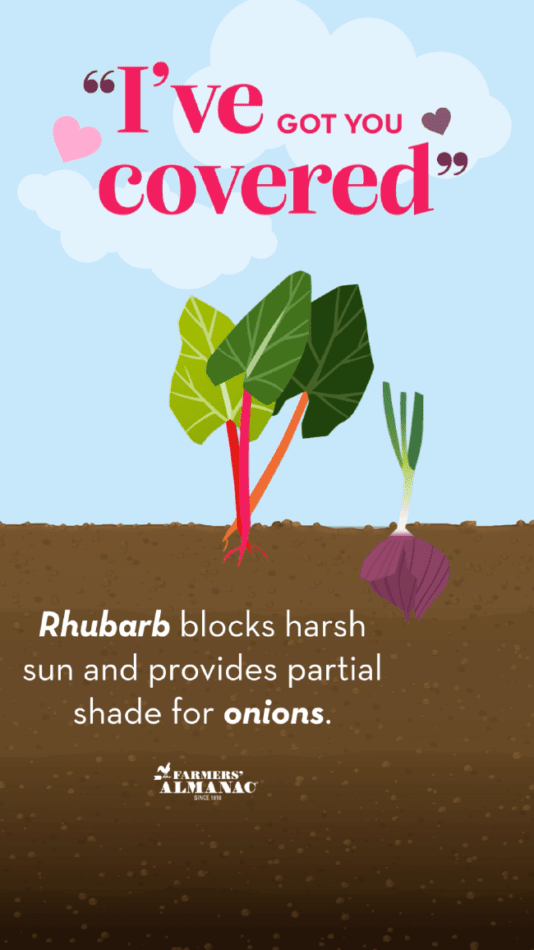
Rhubarb and Onions
Like tomatoes and carrots, rhubarb blocks harsh afternoon sun and gives the onions below it a cooler root zone in high summer. Onions are part of the lily family, alongside garlic, shallots, leeks, and chives. They also thrive next to beets. But keep onions well away from peas and beans: the alliums leach a compound that stunts legume growth.
Onions also do well in alternating rows with carrots, since the onion smell masks the carrot smell that the carrot fly hunts by. Fun fact: raw onion juice is a folk remedy for bee and wasp stings, useful to remember when you are weeding barefoot.
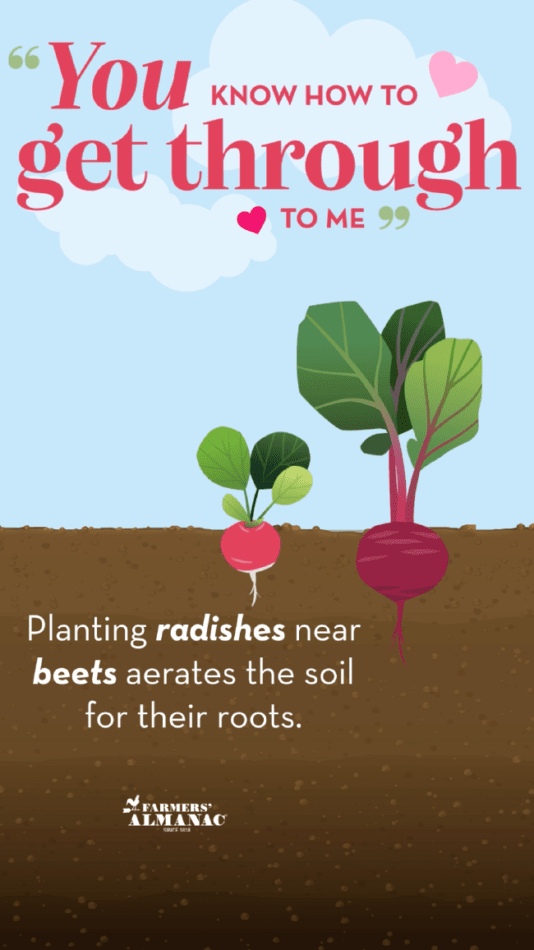
Radishes and Beets
Radishes fatten fast and pull air down into hard soil, loosening the bed for the slower beet roots that follow. That is why radishes are a companion plant for so many vegetables. Pole beans do very well planted beside radishes for the same reason.
Sow a couple of radish seeds beside your cucumber plants to keep cucumber beetles off the vines. Radishes act as a trap crop: the beetles feed on the radish leaves first and often leave the cucumbers alone.
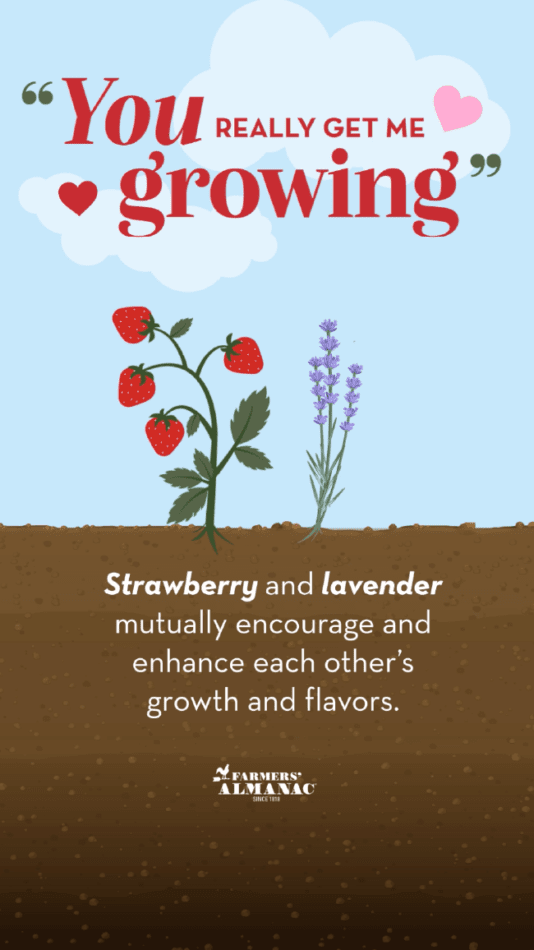
Strawberries and Lavender
Strawberry and lavender lift each other’s growth and flavor. Lavender flowers pull in bumblebees and honeybees at the exact moment strawberry blossoms need pollinating, so berry set climbs on a well-planted bed. Strawberries also pair well with bush beans, spinach, lettuce, and borage.
Want your strawberries to taste more wild? Try mulching the bed with pine needles: the mild acidity brings out a deeper, woods-picked flavor by mid-June.
Regional Timing for These Pairings (US and Canada)
Cross-check your local last-frost date with the Almanac’s zone tool before you set anything out. A late cold snap will undo a good pairing.
Turn the Puns Into a Real Valentine’s Gift
- Print two of the pun cards and clip them to a seed packet of the matching pair (basil plus tomato, sage plus carrot).
- Pot up a small basil plant, wrap the pot in kraft paper, and tape the Tomato says to Basil card to the side.
- Fill a mason jar with a strawberry starter and a sprig of dried lavender, then loop the Strawberry says to Lavender card through the ribbon.
- Send a text: screenshot a card, add a line like “planting these together in May, want to help?” and send it to your gardening valentine.
Join the Discussion
Which of the companion plant Valentine puns is your favorite, and who are you sending it to? Did any of these pairings send you looking for new seeds or starter plants? What did you learn about the benefits of companion planting that you did not know before? And which fruits, vegetables, or herbs do you still have questions about? Let us know in the comments below.

Companion Plant Valentine Puns FAQ
What is a companion plant, exactly?
A companion plant is one that helps a nearby plant grow better, taste better, or fend off pests. The help can be physical (shade, wind break, root aeration), chemical (repellent oils, growth-boosting compounds), or biological (drawing pollinators, hosting predator insects).
Do these companion plant Valentine pairs actually grow together in real gardens?
Yes. Tomato and basil, carrot and sage, rhubarb and onion, radish and beet, and strawberry and lavender are all long-recognized pairs used by home gardeners and market growers across North America. The puns are cute, the growing science is real.
When should I sow a companion pair together?
Match the more heat-sensitive plant. Tomato and basil both go out after the last frost. Carrot and sage go in when the soil warms above 45 F. Strawberry and lavender share a bed prepared the previous fall or early spring. See the regional table above for your zone.
Is companion planting scientifically proven or is it folklore?
Both. Some pairings, like marigolds suppressing nematodes and radishes trapping cucumber beetles, are backed by extension trials. Others sit in the older, garden-lore tradition and work often enough that generations of growers keep planting them side by side. We flag which is which as we go.
Which companion plants should I never put together?
Keep onions and other alliums away from peas and beans. Do not plant fennel near almost anything (it inhibits neighbors). Avoid brassicas next to strawberries. Our full companion planting guide lists the rest.
Can I turn a companion plant valentine pun into a real gift?
Yes. Pair a printed pun card with a seed packet, a small potted starter, or a pair of matching transplants in a shared pot. See the gift ideas above for four simple options that cost under 20 dollars.
When is Valentine’s Day 2026, and can I still plant these together this spring?
Valentine’s Day 2026 falls on Saturday, February 14. That is roughly 12 to 16 weeks before most northern gardeners transplant tomatoes, which is the perfect window to gift a seed packet or a starter plant.
Related Article


This article was published by the Staff at FarmersAlmanac.com. Any questions? Contact us at [email protected].
- Farmers' Almanac Staff

- Farmers' Almanac Staff

- Farmers' Almanac Staff

- Farmers' Almanac Staff




Wishing a heartfelt Valentine’s Day to everyone. May your day be filled with love and warmth, no matter where you find it.❤️
Delightful and informative! I love it?
Thanks for your feedback! Happy Valentine’s Day, Shelly 🧡
I’ve enjoyed this literary gardening. I’m in serious thought now as to which vegetables I should launch my practical gardening with. Thank you very much for this insightful lecture.
We are happy to hear you are inspired, Elbert! You’re welcome.
Loved the puns
We hope you share them with some special people, Pamela! Thanks for stopping by to say hello. ?