

Are Fireflies Disappearing? Why and How to Help
You may have noticed you haven't seen as many fireflies on these summer nights as you used to. Are they disappearing? Here's what's going on and what you can do to help them make a comeback.
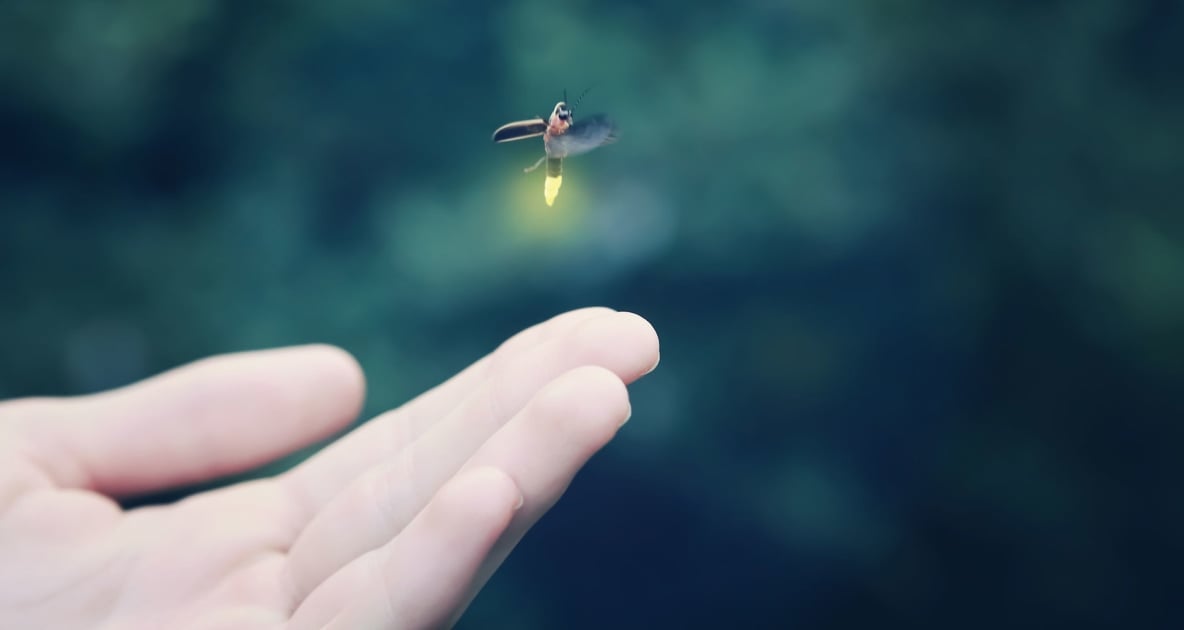
Quick Reference: Are Fireflies Disappearing?
- Are they declining? Yes. Firefly numbers are falling across the country and around the world, including the common Big Dipper firefly (Photinus pyralis).
- Why: light pollution, pesticide and lawn-chemical use, and loss of habitat from development.
- Where they live: larvae spend up to 95% of a firefly’s life in rotting logs, leaf litter, and moist soil, growing for one to two years.
- What helps: turn off outdoor lights, skip lawn chemicals, leave the leaves and logs, add water, and plant a garden.
- Named source: Ben Pfeiffer of Firefly.org.
Do you remember those warm summer nights when the patio was the perfect spot to catch and watch fireflies lighting up the entire backyard? Their lights sparkled and twinkled in the dark as they signaled to one another, blinking back and forth in a language made of light. Lately, though, their numbers have been dwindling, especially here in Maine, and on some June evenings you may be lucky to spot even one or two. Is it possible that fireflies are disappearing? Are we in danger of losing that summer spark for good?
Are Fireflies Really Disappearing?
The short answer is yes. Firefly numbers are decreasing all over the country and all over the world. According to Ben Pfeiffer of Firefly.org, most of us are seeing a decline in the Big Dipper firefly (Photinus pyralis), the familiar dusk-flying species that draws a slow J-shaped streak of light as it rises. The drop-off comes from several factors working together: light pollution, pesticide use, and loss of habitat from development.
Fireflies are picky about where they live, and many are not able to recover once their habitats are destroyed or rearranged. A meadow that goes under pavement does not come back. Neither does a damp woodland edge that gets graded flat and seeded with turf grass. That is why a bug so beloved on July evenings can quietly thin out year after year without most of us noticing until the yard goes dark.
Why Firefly Numbers Are Falling
Three troubles come up again and again, and the good news is that a homeowner can do something about all three.
- Light pollution. Fireflies court by flashing a specific pattern back and forth. Porch lights, floodlights, and the general glow of a lit-up street drown out those signals, so males and females cannot find each other to mate. Fewer matches mean fewer eggs and fewer fireflies the following summer.
- Pesticides and lawn chemicals. Broad sprays do not tell the difference between a pest and a firefly. Worse, most of a firefly’s life is spent underground and in the leaf litter as a larva, exactly where soil-applied chemicals do their damage.
- Habitat loss. Fireflies need moisture, rotting wood, and undisturbed ground. Development, tidy landscaping, and heavy mowing strip all three out of the picture.
None of this is unique to New England. The National Park Service reports that even the famous synchronous fireflies of Great Smoky Mountains National Park, which flash in unison for a couple of weeks each summer, are watched closely because their habitat is so sensitive. You can read the Park Service’s account of that rare firefly display and what threatens it.
Where Fireflies Are Struggling
Fireflies are not spread evenly across North America. Most species live east of the Rocky Mountains, which is why summer evenings in the East and Midwest have long been the ones filled with blinking lights. Here is a rough region-by-region picture of where they thrive and where they are thinnest.
| Region | Status | Main threats |
|---|---|---|
| Delaware coast (Mid-Atlantic) | Critical; Photuris bethaniensis (Bethany Beach firefly) is Critically Endangered on the IUCN Red List | Coastal wetland loss from development and sea level rise; endemic to freshwater interdunal swales within 500 m of the Delaware coast |
| Florida (coastal) | Endangered species present; Micronaspis floridana eradicated from multiple former sites | Salt marsh and mangrove habitat loss; light pollution; pesticides |
| Appalachians and Great Smokies | Monitored; habitat relatively intact but tourism pressure documented at Elkmont | Synchronous firefly (Photinus carolinus) viewing crowds managed by lottery; trampling and phone-light pollution are the primary pressures |
| Southeast and Midwest (inland) | Multiple species listed as Threatened or Vulnerable | Wetland drainage; agricultural intensification; broad-spectrum pesticides and mosquito-spray programs; light pollution |
| New England | Declining; citizen science data shows meaningful drops in high-light-pollution areas; long-term monitoring records are short | Habitat loss from urbanization; light pollution disrupting mating signals; at least 20 species documented in Massachusetts |
| Southwest (Texas, Arizona, New Mexico) | Several species Vulnerable to Endangered; drought-sensitive riparian habitats at risk | Drought and groundwater depletion; oil and gas development; highly range-restricted sky-island species |
| Pacific states and Pacific Northwest | Mostly Data Deficient; over 50% of Pacific Northwest species too poorly studied to assess | Most western fireflies do not flash and are hard to detect; water-table depletion and drought are primary suspected threats |
Wherever you live, the fix is local. A single firefly-friendly yard becomes a pocket of good habitat, and a street full of them becomes a corridor. That is where your own patch of ground comes in.
- Building a firefly-friendly bed of native grasses and trees? Time the planting with the Gardening by the Moon Calendar.
- Above-ground plants go in during the light, or waxing, of the Moon.

Help Fireflies Make a Comeback
Here are a few things you can do to help fireflies in your area. According to Firefly.org, you can:
- Install water features in your garden. Fireflies favor damp ground, so even a small pond, a rain garden, or a rain barrel that keeps one corner moist can draw them in.
- Allow logs to rot. Fireflies spend up to 95% of their lives in larval stages. They live in rotting logs, soil, mud, and leaf litter, and spend from one to two years growing until they finally pupate and become adults.
- Turn your lights off at night. Artificial light can confuse fireflies when they are trying to mate.
- Refrain from using lawn chemicals.
- Plant a garden. Gardens are meccas for fireflies, helping to replace lost habitat. They also supply fireflies with lots of food. If you have garden snails, slugs, worms, and other insects, fireflies can lend a hand by helping to control these pests. Females also need a place to lay eggs, and a garden offers an oasis with the soil moisture that larvae need to develop.
- Plant trees and native grasses.
- Do not over-mow your lawn.
- Do not rake leaves and bag them for the trash. When you do, you are raking up firefly larvae and discarding them along with the leaves.
Building a Firefly-Friendly Garden
Think of a firefly yard as three layers working together: a dark sky overhead, moist and messy ground below, and living plants in between. You do not need all of it at once. Pick one corner and let it go a little wild.
Start by leaving the leaves. A shady border where leaf litter is allowed to pile up and break down becomes a nursery for larvae. Add a log or two and let them soften over the seasons. Keep that corner watered but never soggy, and skip the sprays entirely, since the larvae you are trying to protect live right there in the soil.
Native grasses and low shrubs give adult fireflies a place to perch and flash at dusk, and they pair well with the same flowers that feed bees and butterflies. If you are already planning beds this summer, our companion planting guide can help you group plants that get along, and a layer of mulch around them will hold the ground cool and moist through the heat of summer. Do a little of this and the payoff arrives on its own schedule, usually a season or two later, when the June dark starts blinking again.
Check out these fascinating facts about fireflies.
What about where you live? Are you seeing the same number of fireflies as you used to, or are you seeing a decline? Tell us in the comments below.

Are Fireflies Disappearing? Frequently Asked Questions
Are fireflies really disappearing?
Yes. Firefly numbers are declining across the United States and around the world. According to Ben Pfeiffer of Firefly.org, the common Big Dipper firefly (Photinus pyralis) is dropping off because of light pollution, pesticide use, and habitat loss from development.
Why are there fewer fireflies than there used to be?
Three causes work together. Outdoor lighting drowns out the flash signals fireflies use to mate, lawn and farm chemicals kill larvae in the soil, and development removes the moist, undisturbed ground they need. Fireflies are picky about habitat and often cannot recover once it is gone.
How can I attract fireflies to my yard?
Turn off outdoor lights at night, stop using lawn chemicals, and leave leaf litter and rotting logs in a shady corner. Add a water feature or a damp spot, plant native grasses and trees, and do not over-mow. A garden full of soil moisture and cover gives fireflies both food and a place to lay eggs.
Do porch lights really affect fireflies?
They do. Fireflies court by flashing a specific pattern back and forth in the dark. Porch lights, floodlights, and the general glow of a lit street wash out those signals so males and females cannot find each other, which means fewer eggs and fewer fireflies the next summer.
Where do fireflies spend most of their lives?
Underground and in the leaf litter. Fireflies spend up to 95% of their lives in the larval stage, living in rotting logs, soil, mud, and fallen leaves for one to two years before they pupate and emerge as the flashing adults we see in summer.
Are fireflies found everywhere in the United States?
No. Most firefly species live east of the Rocky Mountains, which is why the East, Southeast, and Midwest have the classic blinking summer evenings. In the arid Southwest and much of the West, fireflies are scarce and cling to desert springs and wet low ground.


This article was published by the Staff at FarmersAlmanac.com. Any questions? Contact us at [email protected].
- Farmers' Almanac Staff

- Farmers' Almanac Staff

- Farmers' Almanac Staff

- Farmers' Almanac Staff


What I DON’T understand is that when I was a kid growing in the 50s and 60s in the Bronx, yes the Bronx, ,the night was flooded with lightning bugs. Every house burned coal for heat, cars ran on leaded gas and no catalytic converters, I can recall when the city would spray the neighborhoods with I guess with DDT. Streetlights lit up the neighborhood and houses and apartments of course lit up the night with window light and yet every June like clockwork they came and came in droves.
I live in the southern part of Iowa with Illinois on one side and Missouri on the other. We used to have a whole back yard full of them. We have 10 acres of land and every where you looked they were there. I have noticed in the last 3 years or more We haven’t seen any. It’s really sad because I miss them so much!!
I do not see any fireflies and have not for many many years.
As a kid in the 1950’s I lived on the western outskirts of Minneapolis, MN. At night you would see hundreds of fireflies, and Night Hawks would be dive bombing the skies for mosquitos; now all you have are mosquitos. I’m a retired Delta pilot, and light pollution has defiantly grown exponentially over the years, along with the use of lawn chemicals. Back in the 50’s, when we still had push mowers with no motor, many lawns were clover that grew to 4″ max, so you only had to mow a few times each summer. But then the fad became perfectly groomed golf course lawns, where the mowing and chemicals are much of the problem. Clover, besides being maintenance free, makes it’s own nitrogen, and out competes weeds and other grasses. The clover flower is also a favorite for bees, which helps plants and trees pollinate. Nature can take care of its self, if the 8+ billion human inhabitants understood nature.
In Maryland we miss having the trees twinkling with life.
😢
I live in Hooksett,NH and they’re are tons of them in our back yard this year. they made a comeback here. We have several rotting trees in the woods
Lucky! They are such a sight to see! I saw one last night here in Maine. Used to see hundreds!
Here in Lichfield, New Hampshire we haven’t seen them for years.. until last night I saw a few for the first time. I used to sit with my dogs who loved watching them so much. That was really lucky!! I do hope they’ll stay. They’re so beautiful and the world would be more sad and dark without them
I am fairly certain it has been at least 25 years since I have seen a firefly… Until tonight! There had to be hundreds of them in my backyard. I have never seen so many at once. Beautiful. Eerie. Ah, I live in Oklahoma City, BTW.
YAY! We love that you were able to see them! They sure are gorgeous!
They are just gone…here in Springfield Missouri…not dwindled…gone…seems like just a few years ago I remember them lighting up the backyard there were so many…the backyard environment hasn’t changed…something else is causing it.
It sure is sad. We used to have huge fields of them here in Maine. You would drive by and see hundreds. We still have them, but usually only a few at a time.
I live in Alabama. We’ve always had many, many fireflies in early May. This year, with the cicadas out, I’ve not seen a single firefly. Have no idea if its related but, makes me wonder. 🤷♀️