Birth Flower Tattoo Ideas: All 12 Months, Meanings and Designs

Every month has a flower attached to it, and most have two. That is what makes a birth flower tattoo work: it marks a person or a date without a number, a name or an initial, and it carries a meaning that goes back to the Victorian language of flowers.
Below is every month, both traditional flowers, what each one means, and an honest note on how each behaves as a tattoo. Some of these flowers are much easier to tattoo well than others, and that is worth knowing before you sit down.
Birth flower tattoos by month, at a glance
| Month | Birth flower | Second flower | What it means |
|---|---|---|---|
| January | Carnation | Snowdrop | Devotion and new beginnings |
| February | Violet | Primrose | Modesty and faithfulness |
| March | Daffodil | Jonquil | Rebirth and new starts |
| April | Daisy | Sweet pea | Innocence and loyal love |
| May | Lily of the valley | Hawthorn | The return of happiness |
| June | Rose | Honeysuckle | Love and devoted affection |
| July | Larkspur | Water lily | An open heart |
| August | Gladiolus | Poppy | Strength of character, and remembrance |
| September | Aster | Morning glory | Patience and affection |
| October | Marigold | Cosmos | Warmth, and remembrance |
| November | Chrysanthemum | Peony | Loyalty and honesty |
| December | Narcissus (paperwhite) | Holly | Hope and foresight |
Every month in detail
The notes below are about how each flower behaves as a design, which is the part most lists leave out.
January: Carnation and Snowdrop
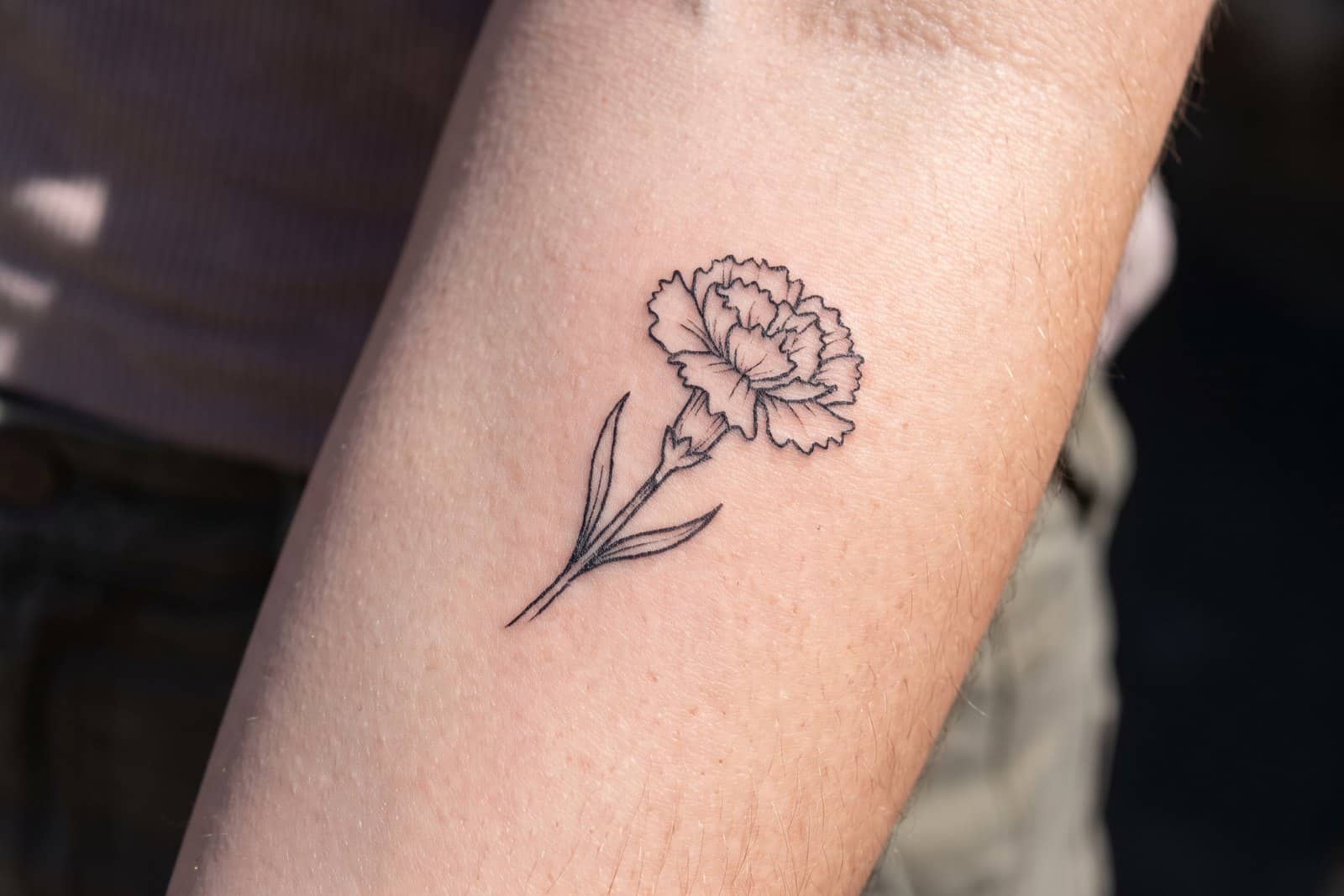
Meaning: Devotion and new beginnings.
The carnation’s ruffled, layered petals are the challenge here. At small sizes the ruffles close up into a blob, so most artists either go larger or simplify to five or six petal clusters. The snowdrop is the easier January option: a single drooping bell on a thin stem, which suits fine line work and stays readable at almost any size.
In a bouquet: Snowdrops sit well beside February violets for a two-sibling piece.
More on this flower: the January birth flower, its meaning and lore.
February: Violet and Primrose
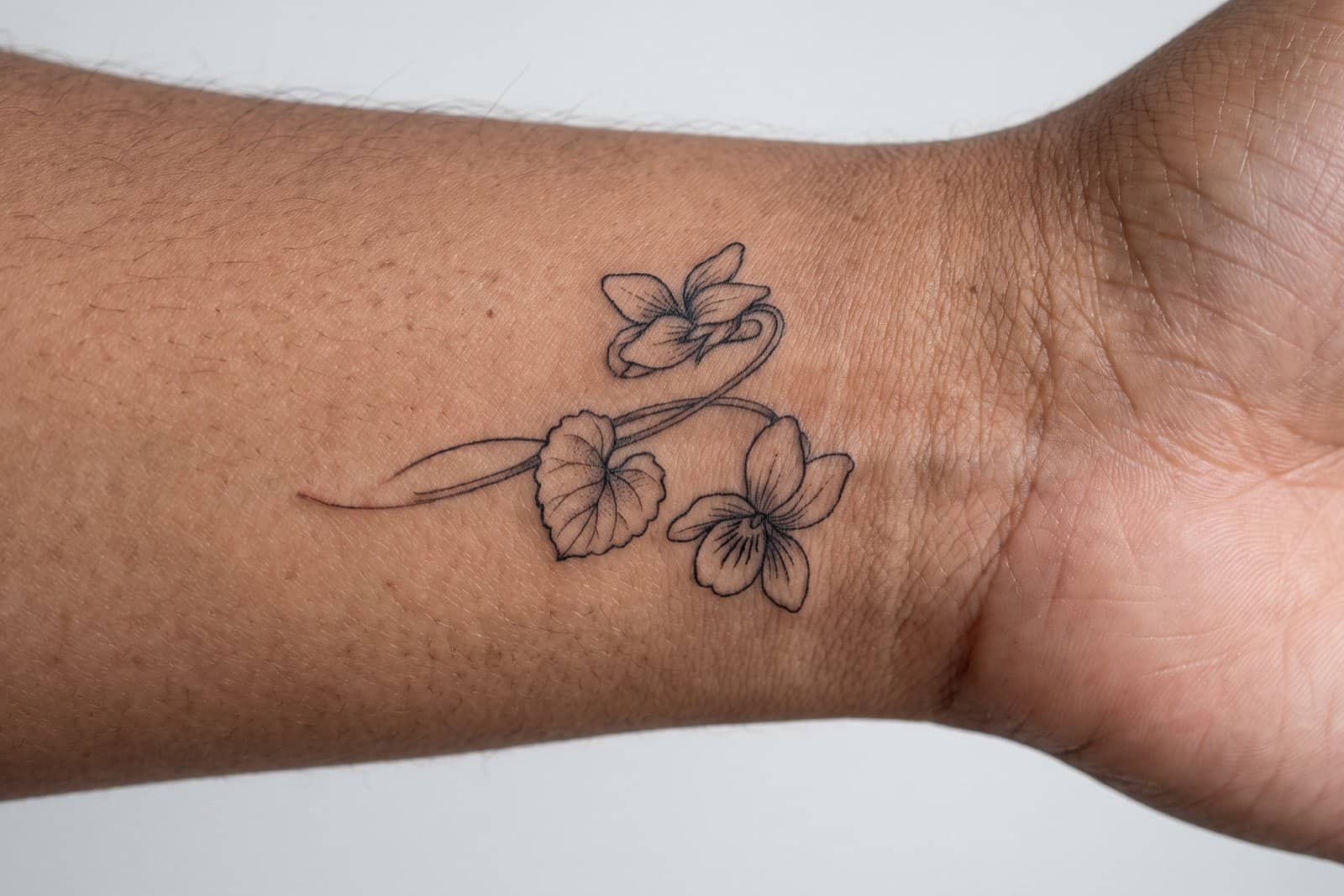
Meaning: Modesty and faithfulness.
Violets are small, five-petalled and low contrast, which makes them one of the most forgiving birth flowers to tattoo. They work as a single bloom on a wrist or ankle, and they cluster neatly when you need several. Primrose is similar in shape with a flatter face.
In a bouquet: Violets are the usual filler flower in a family bouquet because they fill gaps without competing.
More on this flower: the February birth flower, its meaning and lore.
March: Daffodil and Jonquil
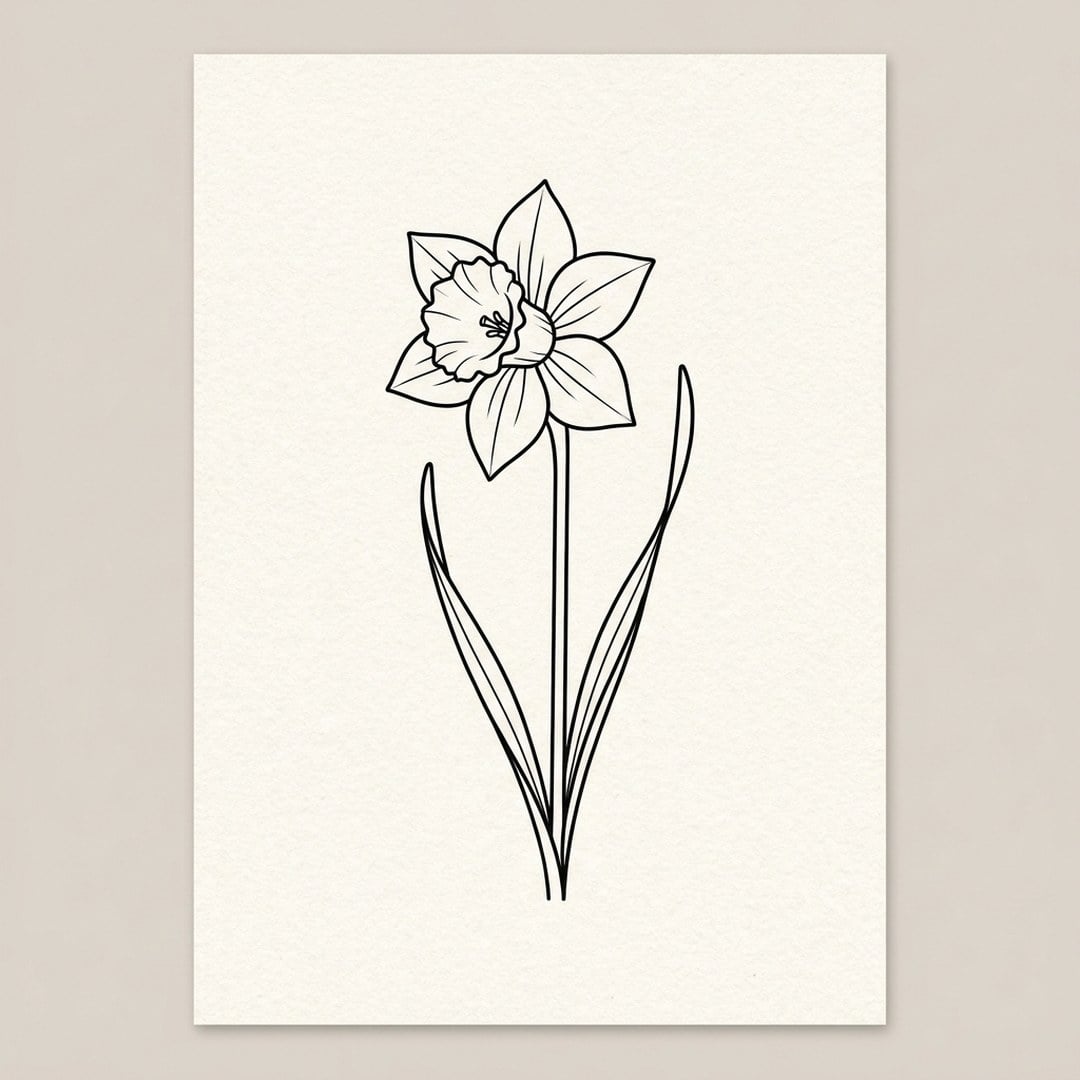
Meaning: Rebirth and new starts.
The daffodil has the strongest silhouette on this list: a trumpet center against a six petal star. That shape survives shrinking better than almost any other birth flower, which is why it is a common first tattoo. It also reads clearly in pure blackwork.
In a bouquet: Daffodils anchor a bouquet well because the trumpet gives the eye somewhere to land.
More on this flower: the March birth flower, its meaning and lore.
April: Daisy and Sweet pea
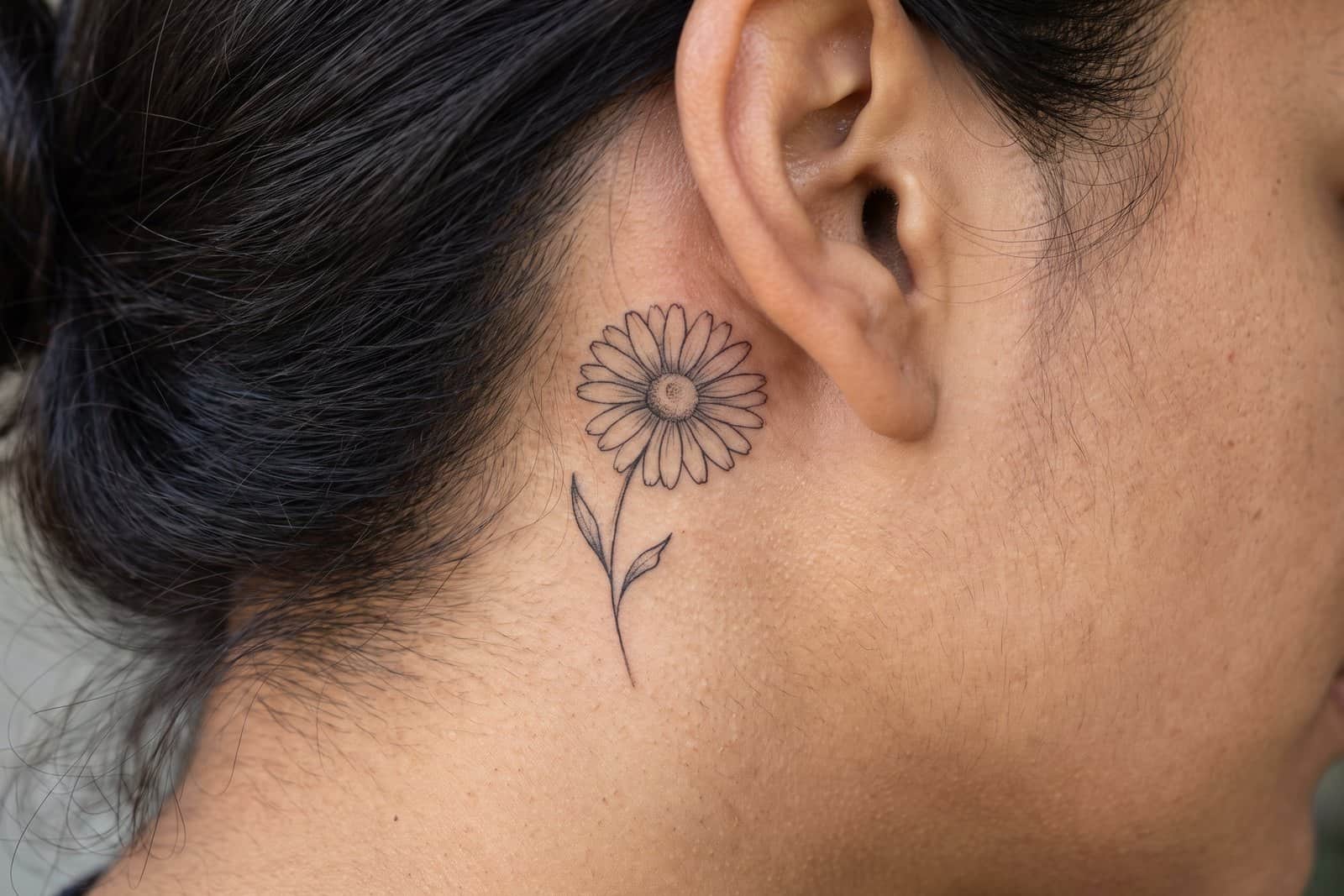
Meaning: Innocence and loyal love.
The daisy is the most forgiving flower here. A circle and a ring of even petals is readable at a centimetre across, holds its shape over decades, and suits every style from fine line to traditional. Sweet pea is the softer alternative, with ruffled wings on a curling stem.
In a bouquet: Daisies and June roses are the most common pairing for a parent and child piece.
More on this flower: the April birth flower, its meaning and lore.
May: Lily of the valley and Hawthorn
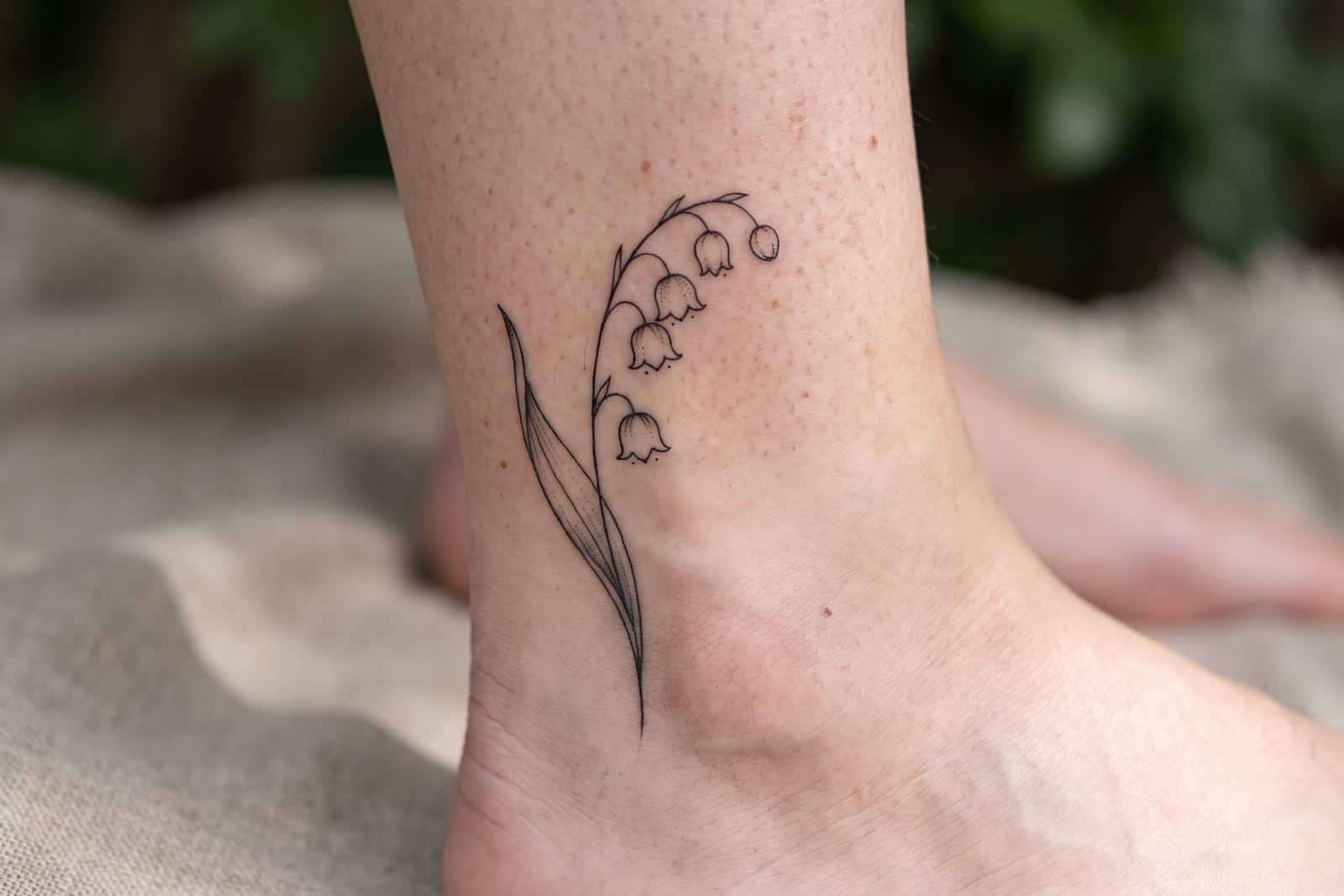
Meaning: The return of happiness.
A row of small hanging bells along an arching stem, which gives it a natural vertical line. That makes it one of the best birth flowers for a spine, forearm or behind-the-ear placement. It is delicate work, so the bells need enough space not to merge.
In a bouquet: Its arching stem is often used as the spine of a family bouquet, with other flowers hung off it.
More on this flower: the May birth flower, its meaning and lore.
June: Rose and Honeysuckle
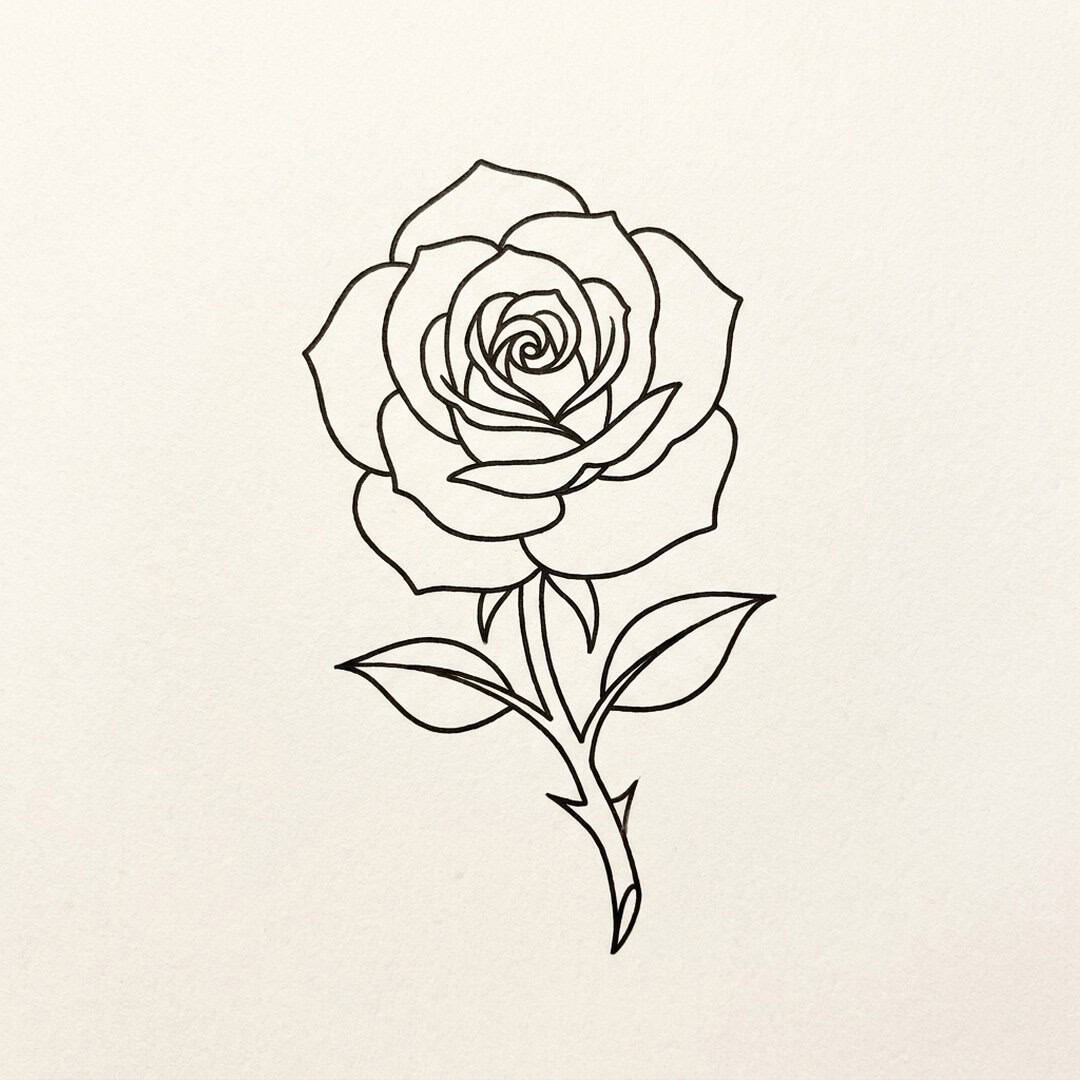
Meaning: Love and devoted affection.
The most tattooed flower in the world, in every style there is, which means any artist will have done hundreds. The spiral center is what carries it, and a badly drawn spiral is the most common way a rose tattoo ages badly. Honeysuckle is the quieter June option.
In a bouquet: A rose usually becomes the focal flower in any bouquet it appears in.
More on this flower: the June birth flower, its meaning and lore.
July: Larkspur and Water lily
Meaning: An open heart.
Larkspur grows as a tall spire of small blooms, so it wants length rather than width. It is a natural fit down a forearm, calf or spine, and it stacks neatly next to other spired flowers. Water lily is the July option if you want something round and flat instead.
In a bouquet: Larkspur and May lily of the valley both run vertically, so they frame a bouquet well.
More on this flower: the July birth flower, its meaning and lore.
August: Gladiolus and Poppy
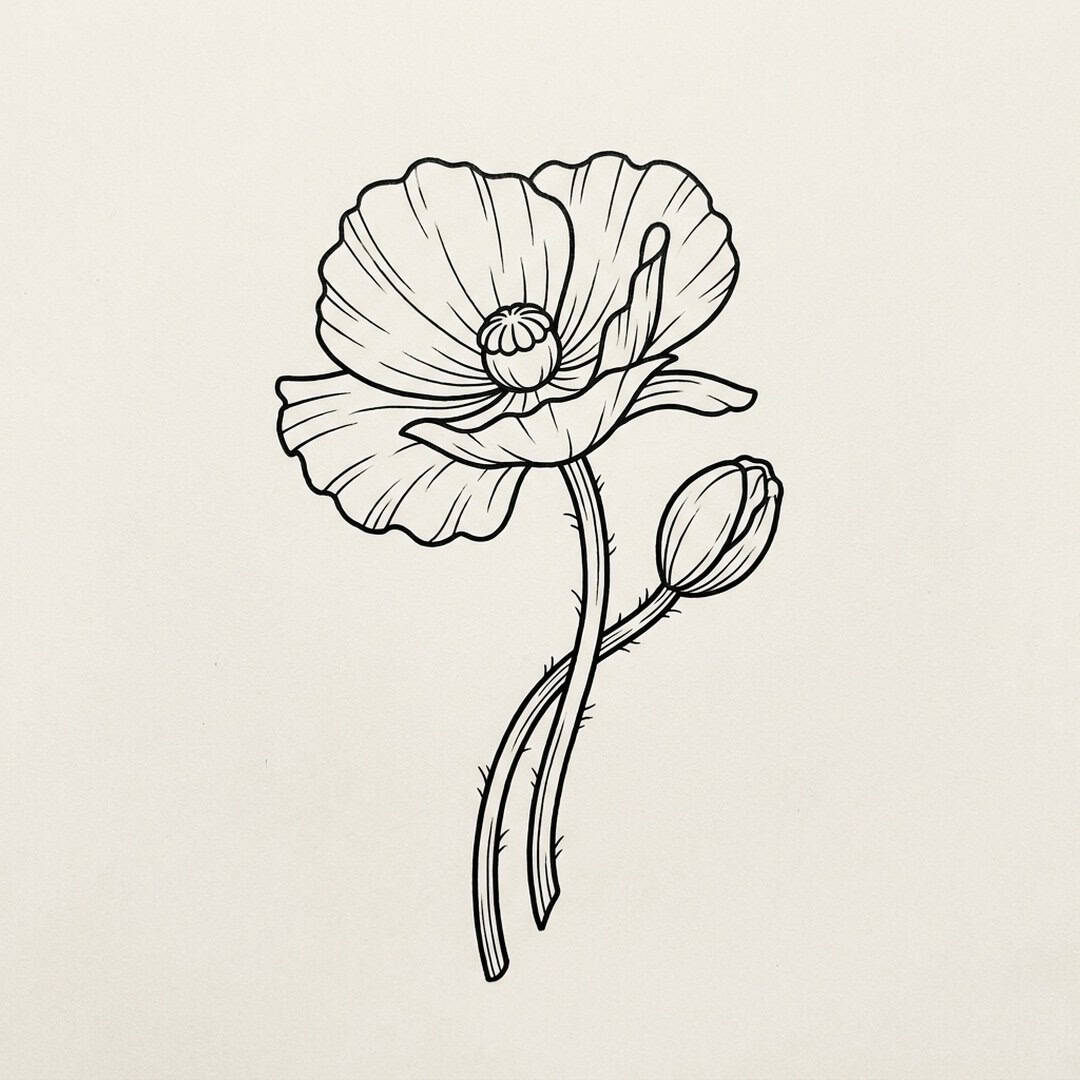
Meaning: Strength of character, and remembrance.
Gladiolus is another spire, named for the sword, and it needs real length to look like itself. The poppy is the more popular August choice: a simple cup of four crepe petals with a dark center, which takes color beautifully and reads well in black too.
In a bouquet: Poppies carry red better than anything else here, so they often provide a bouquet’s only color.
More on this flower: the August birth flower, its meaning and lore.
September: Aster and Morning glory
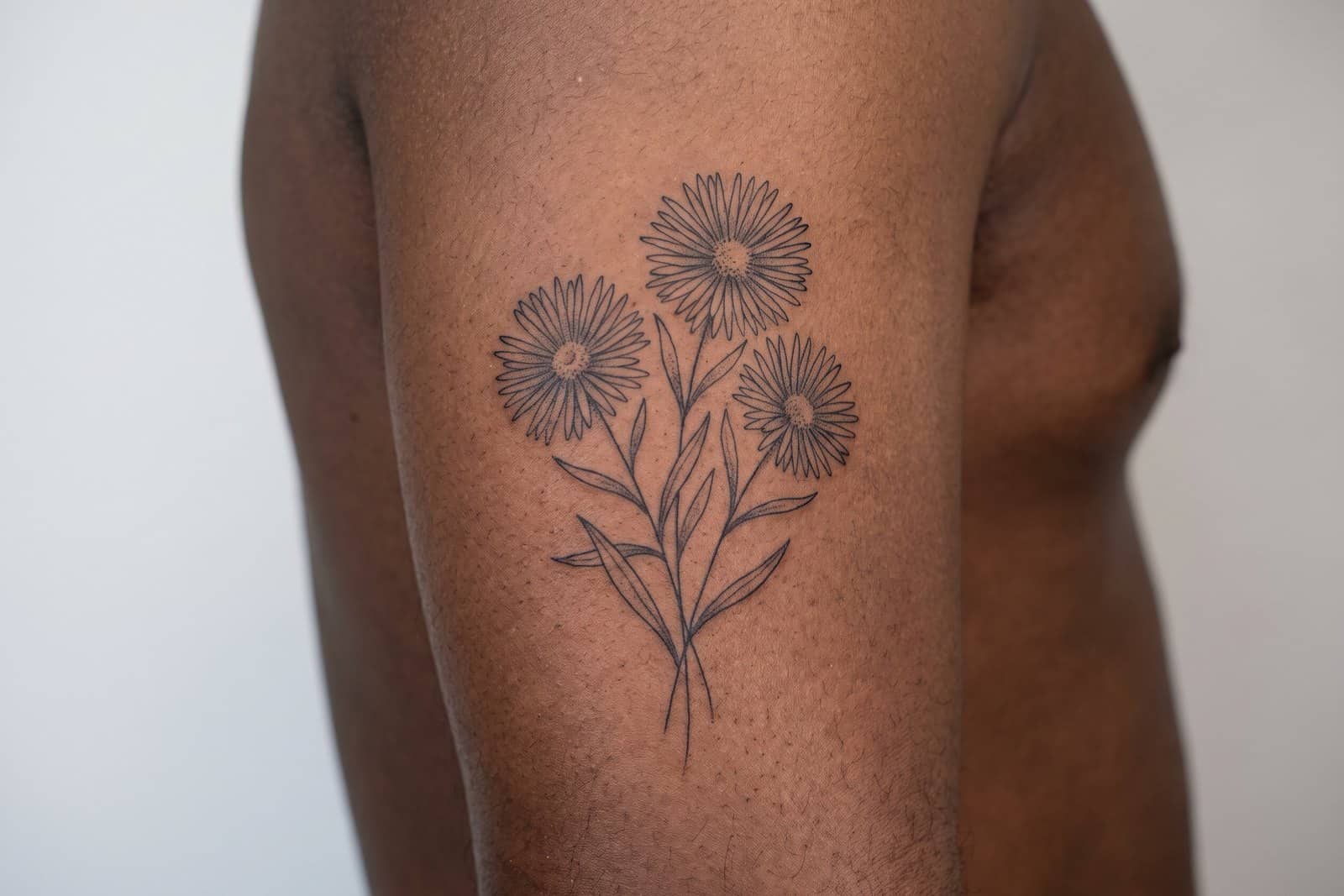
Meaning: Patience and affection.
Asters have many narrow petals radiating from a small center, which is detailed work. Small asters tend to fill in over time, so this is one to give room to or to simplify deliberately. Morning glory is the easier option, with a clean trumpet and a heart leaf.
In a bouquet: Morning glory vines are often used to link separate flowers into one piece.
More on this flower: the September birth flower, its meaning and lore.
October: Marigold and Cosmos
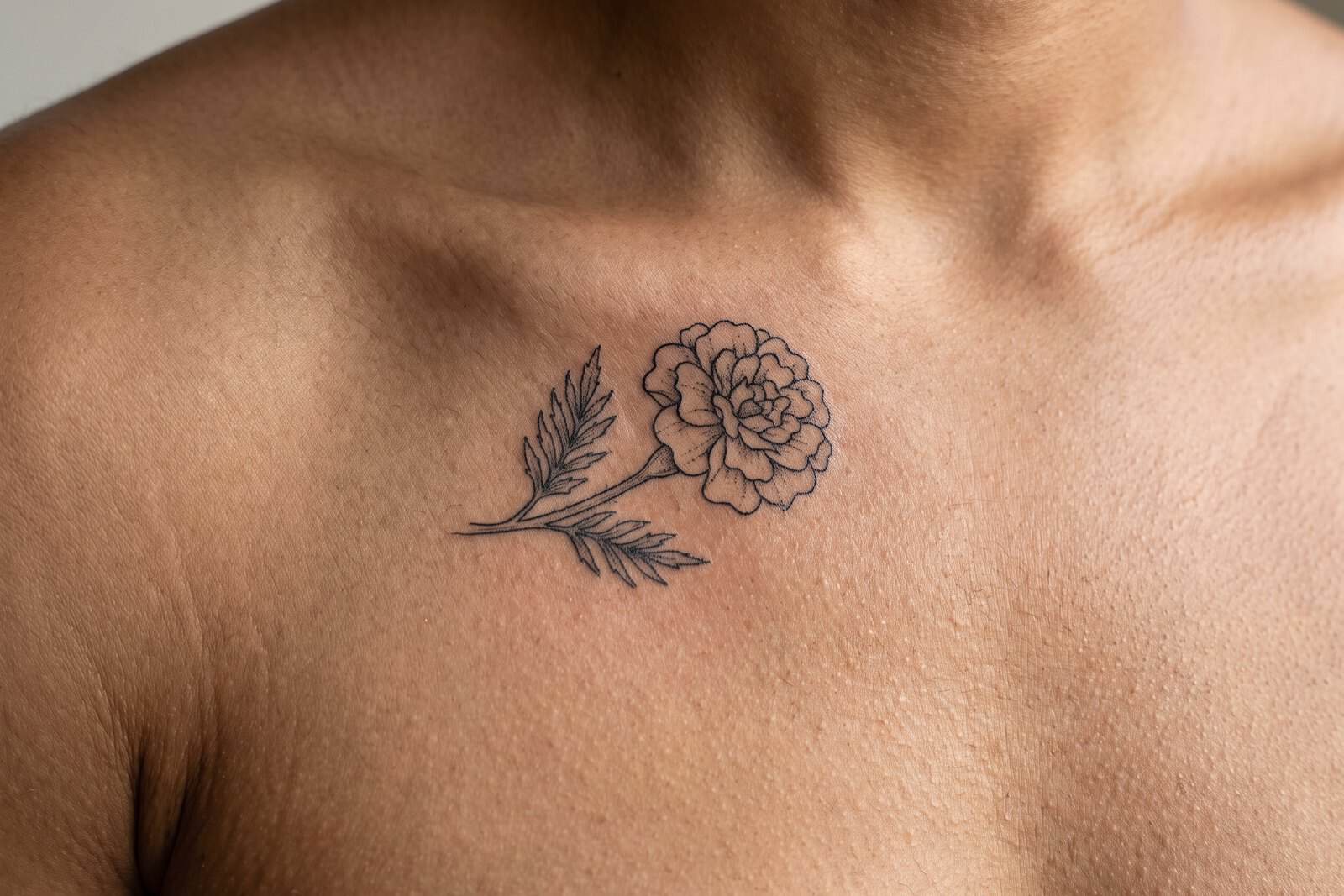
Meaning: Warmth, and remembrance.
Marigolds are dense with tightly packed petals, so they suit bold color and solid shapes more than fine line. They carry strong associations with remembrance, which is why they appear often in memorial pieces. Cosmos is the light alternative: eight flat petals, simple.
In a bouquet: Cosmos is frequently swapped in when a marigold would be too heavy for the design.
More on this flower: the October birth flower, its meaning and lore.
November: Chrysanthemum and Peony
Meaning: Loyalty and honesty.
The chrysanthemum is a traditional subject in Japanese tattooing, where it carries its own meaning of longevity, so there is a deep well of reference for it. It is dense and wants size. The peony is equally traditional in that style and equally demanding of space.
In a bouquet: Both November flowers are large, so they usually set the scale of the whole piece.
More on this flower: the November birth flower, its meaning and lore.
December: Narcissus (paperwhite) and Holly
Meaning: Hope and foresight.
The paperwhite narcissus is a cleaner, whiter cousin of the March daffodil, with the same useful trumpet shape. Holly is the more distinctive December option and one of very few birth flowers with berries, which gives a rare spot of red in an otherwise green design.
In a bouquet: Holly berries are often used as the accent color in a winter family bouquet.
More on this flower: the December birth flower, its meaning and lore.
Family bouquet tattoos
The most common version of this tattoo is not one flower but several, one for each person in a family. It is worth planning properly, because a bouquet assembled one flower at a time rarely sits well.
- Bring every flower at once. Even if you are only getting two now, show the artist all of them so the composition has room for the rest.
- Watch the scale. Gladiolus, chrysanthemum and peony are large. Violet, snowdrop and lily of the valley are small. Where the sizes clash, the second flower for that month is usually the easier match.
- Pick your structure. Most family bouquets are built around one vertical stem, often May lily of the valley or July larkspur, with rounder flowers hung off it.
- Decide about color early. Poppies, marigolds and holly berries are built for color. Snowdrops and baby’s breath are not. Mixing the two approaches in one piece is difficult to balance.
- Leave space. New family members arrive. A design with no room forces an awkward decision later.
Placement and size
Shape should drive placement more than preference does. The flowers fall into three rough groups.
| Shape | Months | Suits |
|---|---|---|
| Tall and spired | May, July, August (gladiolus) | Forearm, calf, spine, the side of the ribs. Anywhere with length. |
| Round and flat | March, April, September, October, December (narcissus) | Wrist, ankle, shoulder, behind the ear. Anywhere small and self-contained. |
| Large and dense | June, November, January (carnation) | Upper arm, thigh, back. They need room to keep their detail. |
On size, the honest guidance from most artists is that fine detail closes up over years as ink spreads slightly under the skin. A design that looks crisp at two centimetres on paper may not still read as that flower in a decade. Ask to see healed work, not fresh work, before committing to something small and detailed.
Finding the right artist matters more than the reference image. Ask to see healed work rather than fresh photographs, and look for someone who shows botanical line work in their portfolio. Directories such as tattoos near me are a reasonable place to start comparing studios.
Styles that suit birth flowers
- Fine line is the most popular right now and suits the clean-outlined flowers. It struggles with dense petals and is the style most affected by ink spread.
- Botanical illustration, drawn as though from an old field guide, fits this subject better than anything else and handles detail well.
- Watercolor gives color without hard edges, which works for poppies, marigolds and roses.
- Traditional and blackwork hold their shape longest. Bold lines and solid fills age more predictably than fine detail.
- Japanese is worth knowing about for November, where the chrysanthemum and peony are long-established subjects with their own symbolism.
What the meanings actually come from
The meanings come from floriography, the Victorian practice of arranging a bouquet so it carried a message. The lists were published as parlour gift books and they contradict each other freely, which is why the same flower sometimes has two meanings. Nobody was ever the authority on it.
Some of the meanings are less gentle than people expect. The marigold means warmth and grief at once. The poppy has meant remembrance since the First World War, and consolation long before that. Our guide to flower meanings has the full A to Z, including what each color changes.
Frequently asked questions
What is a birth flower tattoo?
It is a tattoo of the flower traditionally associated with the month somebody was born. Every month has one, and most have two. The appeal is that it marks a birthday or a person without using a date, a name or an initial.
Does every month have two birth flowers?
Most do. The older English lists name one flower per month, and the American lists that followed often named another that actually bloomed in that month in North America. Neither is the official version, so both stayed. If your birth flower is one you do not like the look of, the second is just as traditional.
Which birth flower tattoos work best small?
Flowers with a clear outline: the daisy, the daffodil, the snowdrop and the violet. Asters, marigolds, chrysanthemums and carnations all have many overlapping petals, and fine detail closes up as a tattoo settles, so those want either more room or a deliberately simplified design.
How do you combine birth flowers for a family?
Take every flower to the artist at the same time so the bouquet is designed as one piece rather than added to. Watch the scale, because a gladiolus beside a violet is a hard composition, and leave space, because most people add another flower later.
What do the birth flowers mean?
Each carries a meaning from the Victorian language of flowers. The carnation is devotion, the daffodil new beginnings, the rose love, the poppy remembrance. Every month’s meaning is in the table above, and our guide to flower meanings has the full A to Z.
Is there a birth flower for a specific day, not just a month?
Not in the traditional lists. Birth flowers are assigned by month only. Some modern sources publish day-by-day flower lists, but they are recent inventions rather than part of the older tradition.
Read next
- Birth flowers by month: find yours and what it means
- Flower meanings: the language of flowers, A to Z
- Birth month herbs: find yours
- Birth month birds: find yours
- Birth animal calendar: what is your birth animal?
- Zodiac signs and dates: all 12 signs explained


This article was published by the Staff at FarmersAlmanac.com. Any questions? Contact us at [email protected].
- Farmers' Almanac Staff

- Farmers' Almanac Staff

- Farmers' Almanac Staff

- Farmers' Almanac Staff