

April Birth Flower: Daisy Meaning, Lore, and Growing Tips
Quick Reference: The April Birth Flower
- Flower: the common daisy (Bellis perennis), with the sweet pea as the traditional alternate.
- Meaning: innocence, purity, true love, and new beginnings.
- Family: Asteraceae, home to roughly 24,000 species, nearly 10 percent of the world’s flowers.
- Bloom time: mid-spring to late summer or early fall, depending on variety.
- Growing: hardy in zones 4 to 9, full sun to partial shade, spaced 24 to 30 inches apart.
The April birth flower is the daisy, a bloom folklore ties to innocence, true love, and the fresh start of spring. Its name traces back to the Old English phrase for “day’s eye,” a nod to the way the flower shuts at dusk and opens again with the sun. Here is what the daisy has meant across cultures and centuries, how to grow it, and why the sweet pea shares April as a second birth flower.
About Daisies
Daisies belong to the flower family Asteraceae. That family runs to roughly 24,000 species, and it holds not only daisies but asters, blanketflowers, coneflowers, black eyed susans, sunflowers, and many relatives. All told, it accounts for nearly 10 percent of the flower species on Earth.
When people name the daisy as the birth flower for April, they usually mean the common daisy (Bellis perennis). These small, cheerful blooms go by plenty of other names, among them wild daisy, lawn daisy, garden daisy, meadow daisy, and English daisy. Older folk names include bruisewort, woundwort, and bone flower. You can see the plant’s full botanical record in the USDA plant profile for Bellis perennis.
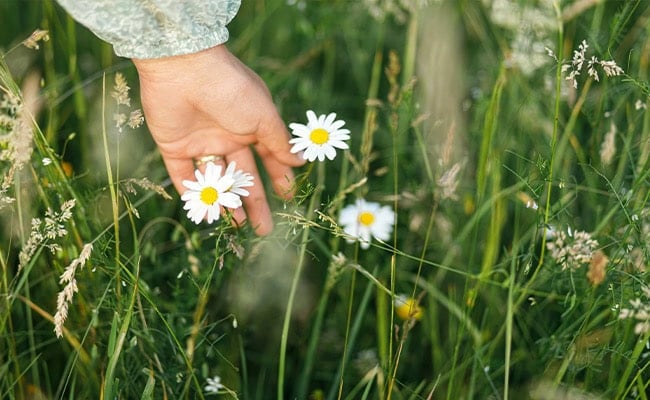
The etymology of the name has more than one explanation. Daisy is thought to come from the Old English “daegesege,” or “day’s eye,” which points to the flower’s habit of closing fully at night and opening with the sun. In Medieval Latin the same idea reads as “solis oculus,” meaning “Sun’s eye.” Daisies also show heliotropism, turning through the day to follow the sun, one more reason to call them day’s eye flowers.
The Latin name Bellis perennis tells its own story. It joins “bellus,” meaning beautiful, with “perennis,” meaning everlasting. The pairing praises both the flower’s looks and its long season. Depending on the variety and the ground it grows in, a daisy can bloom from mid-spring as far as late summer or even early fall.
The common daisy first grew in the fields and meadows of northern, western, and central Europe and western Asia. Today these herbaceous perennials have naturalized across much of the world, including both North and South America and Australia.
Worth noting: while Bellis perennis is the official birth month flower for April, other daisies carry the same symbolism and make thoughtful gifts, shasta daisies and gerbera daisies among them.
Daisy Symbolism
A daisy is a composite flower, which means it is really two blooms in one. The white petals form one bloom and the yellow center forms another. That doubling deepens one of the flower’s oldest meanings, true love, since it shows two parts joining into a harmonious whole. Devotion and affection travel with it.
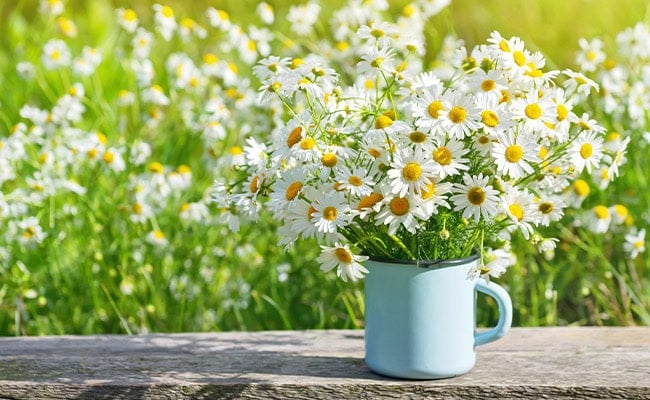
The white of the daisy also stands for purity and innocence. Those qualities link the flower to the Virgin Mary, and to the new beginnings of motherhood and childbirth, which is why a daisy bouquet is such a fitting gift for a new mother.
Because the daisy renews itself and shows up so early and so freely in spring, it also carries fertility, new beginnings, and rebirth. Those are the very qualities we tie to April, when the land wakes back into full, vivid life after winter.

Daisy Flower Meaning Around The World
Every culture reads the daisy a little differently. In Celtic legend, the gods were said to scatter daisies over the graves of children and infants to bring cheer to grieving parents, which gives the bloom a meaning that is hopeful and sorrowful at once. Chinese tradition likewise links daisies with death and sympathy. Even the modern saying “pushing up the daisies” ties the flower to the grave.
Norse mythology holds the daisy sacred to Freya, the goddess of love, beauty, and fertility. Roman mythology tells of the nymph Belides, thought to be part of the source of the name “bellus,” who turned herself into a daisy to escape the unwanted attention of Vertumnus, the god of gardens and seasons. That story feeds another meaning, the keeping of secrets, since the daisy hid Belides so well.
In more modern floriography, the language of flowers, daisies stand for being independent and free-thinking, a nod to how easily they naturalize and spread in the wild. (See the “Growing Daisy Plants” section below.)
Any questions? Contact [email protected]
Cooking With Daisies
Because daisies grow nearly everywhere and are so easy to find, they carry a long history as food and folk medicine. The young leaves and petals have a fresh, light flavor that suits salads and sandwiches, and the blooms can be sugared or left plain to top cakes, cupcakes, and cookies.
Daisies also go into soups, or get sauteed as a simple side dish, and they can be infused in honey or worked into butter for a bit of unusual flavor. Older, more mature daisies turn bitter and astringent, so they are less prized in the kitchen.
Daisies In Folk Medicine
People have reached for daisies to dress wounds and treat other ailments since the days of ancient Egypt and Rome. The flowers are known to have mild antibacterial properties that help wounds along, and they are anti-inflammatory, which is why they turned up in old remedies for arthritis, rheumatism, and headaches. Ointments infused with daisy were popular for skin troubles such as wrinkles, sunspots, eczema, bruises, and other damage.
No modern treatment leans on daisies as a cure-all, but the flowers still show up as homeopathic remedies for coughs, colds, bronchitis, ulcers, digestive trouble, bloating, constipation, diarrhea, and even eye complaints.
Note: Farmers’ Almanac does not give medical advice. The information provided here is intended for educational purposes only. Please work with a professional If you do choose to forage botanicals in nature.
Daisy as a Name
One happy tie-in the daisy shares with several other birth month flowers is its use as a feminine name. Daisy has ranked among the top 200 feminine names in the United States since 1990. Before that, it had slipped as low as the 600s.
Daisy also works as a fond nickname for Margaret, by way of the French “marguerite,” itself another name for the oxeye daisy (Leucanthemum vulgare).
Famous Daisys run from Daisy Duke of “The Dukes of Hazzard” to Walt Disney’s quack-tastic sweetheart of Donald, Daisy Duck, along with characters in Downton Abbey and Grey’s Anatomy. Literature has its share too, none more famous than Daisy Buchanan in F. Scott Fitzgerald’s “The Great Gatsby.”
Daisy is a place name as well, shared by towns in Arkansas, Georgia, Kentucky, Maryland, Virginia, and other states, along with spots in Australia and Canada.
Games With Daisies
Daisies are so plentiful that children have folded them into games for generations. The old “he-loves-me, he-loves-me-not” game, plucking petals one by one to see if a sweetheart returns the feeling, plays right into the innocence and true love the flower stands for.
Daisies are also the flower behind the “daisy chain,” a long strand of blooms linked end to end. You slit each stem with a fingernail, thread the next flower’s stem through the hole, and keep going. Join the ends and you have a wreath, necklace, bracelet, or crown, the kind of thing children love to show off through spring and summer.
Related product: April Birthstone – Malachite Necklace
Best Days to Plant Daisies
If you like to time garden work by tradition, daisies fit neatly into Gardening by the Moon. Because you grow them for the flowers you see above the soil, they follow the above-ground rule: plant during the light, or waxing, of the Moon, when old timers held that growth was drawn upward. April is a natural month for it, since the month’s full Moon is the Pink Moon. You can look up its exact timing on our Full Moon dates and times page.
- Daisies are grown for their blooms, so favor the light, or waxing, of the Moon for planting.
- The Gardening by the Moon Calendar lists this month’s Best Days to plant flowers in your area.
Daisy Bloom Time by Region
Daisies open on their own schedule, and that schedule shifts with your part of the country. Frost dates and summer heat both play a part, so use the table below as a general guide and let your own soil and weather have the final say.
| Region | Daisies typically bloom | Notes |
|---|---|---|
| Deep South and Gulf Coast | April into June | Heat shuts them down early. Afternoon shade extends the run |
| Mid-South and Piedmont | May into early July | A second flush is possible if deadheaded |
| Mid-Atlantic and Ohio Valley | Late May into July | The classic oxeye-in-the-verge season |
| Midwest and Great Lakes | June into August | Long, reliable midsummer display |
| Northeast and New England | June into August | Shasta types carry the later end of the season |
| Mountain West and Pacific Northwest | Late June into September | Cooler summers give the longest bloom of anywhere |
Not sure which band you fall in? Our guide to plant hardiness zones will place your garden and confirm that daisies are a good fit.
Growing Daisy Plants
With so much lore to enjoy, daisies are a fine flower to add to a family garden as the April birth flower, to mark any special moment in the month, or simply as a sweet, innocent touch in the landscape. Their long season, mid-spring to late summer or early fall depending on variety and conditions, keeps them popular, and there is evidence daisies have been cultivated since as early as 2200 B.C.
You can grow daisy plants in containers, window boxes, or straight in the ground with little fuss, which makes them good plants for beginners. Keep in mind that they can take over a patch if left alone, and in some areas they are counted as weeds or even invasive. Plenty of gardeners feel the opposite way and prize that naturalized look as a soft ground cover or the heart of a cottage garden.
Daisies are hardy in gardening zones 4 to 9, where they shine as perennials and grow easily from seeds or seedlings. They like well-drained soil and tolerate many soil types, but they need good air circulation to hold off powdery mildew and other fungus. Set daisies 24 to 30 inches apart, and thin them now and then to ease crowding and keep the plants healthy.
Smaller daisy varieties top out around eight inches tall, but taller kinds may need staking so they do not tip or weep in the bed. Sheltering the plants from strong wind also helps them stand up straight and bright.
For the fullest, prettiest blooms, plant daisies in full sun or partial shade and feed them a general fertilizer. Pay attention to the phosphorus in that fertilizer, since phosphorus drives flower growth and strong blooms, especially in the more colorful varieties.
Daisies wilt when they are thirsty, which is a handy signal, and they bounce back fast once watered. If the rain does not oblige, give them one to two inches of water a week, ideally through a soaker hose or drip line at the base of the plant, and they will stay content.
Naturalized daisies can be a delight across the whole lawn, but in beds and containers a light pinching keeps them bushier and more contained. Deadheading the spent blooms will coax out more flowers and stretch the show later into the season.
One last word of warning: deer and rabbits both enjoy a daisy snack, so you may need to take steps to keep them off if you want the blooms to last in landscaping beds or dedicated containers.
The Alternate April Birth Flower: Sweet Pea
The daisy gets top billing, but the sweet pea (Lathyrus odoratus) is the traditional second birth flower for April. A relative of legumes and beans, native to Italy and the Mediterranean, the sweet pea stands for thanks and good wishes, along with blissful pleasure, gratitude, sincerity, and friendship. It is a classic gift for brides, and its light fragrance makes it an uplifting, popular bloom. Unlike the daisy, though, the sweet pea is toxic and has no place at the table or in the medicine chest.
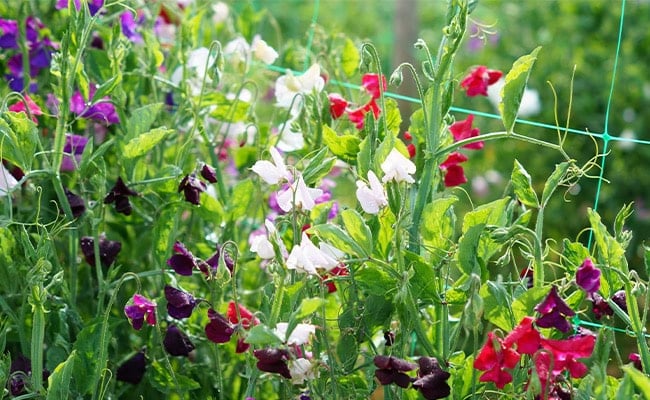
Daisy or sweet pea, choosing a symbolic April birth flower to plant in a family garden, give as a gift, or gather into a bouquet is a warm gesture with more meaning than many people realize. The better we know the lore behind these familiar flowers, the more we can appreciate how rich and lovely daisies and other birth flowers truly are.

The April Birth Flower: Frequently Asked Questions
What is the April birth flower?
The April birth flower is the daisy, most often the common daisy (Bellis perennis). It stands for innocence, purity, true love, and new beginnings, all fitting for a spring month. The sweet pea is the traditional alternate flower for April.
What does a daisy symbolize?
Daisies carry innocence and purity from their white petals, and true love from the way a composite flower joins two blooms in one. They also stand for new beginnings, fertility, and rebirth, which is why they suit both a new mother and the fresh start of spring.
Why is the daisy called a “day’s eye” flower?
The name comes from the Old English “daegesege,” or “day’s eye,” because the flower closes at night and opens again with the morning sun. Daisies also show heliotropism, turning through the day to follow the sun, which reinforces the old day’s eye nickname.
Are daisies edible?
Common daisy leaves and petals are edible and have a fresh, light flavor good in salads, sandwiches, and as a cake decoration. Older blooms turn bitter, so younger ones taste best. If you forage, work with a professional to be sure of your identification, and never eat the toxic sweet pea.
What growing zones suit daisies, and how do I plant them?
Daisies are hardy in zones 4 to 9. Give them full sun to partial shade and well-drained soil, space plants 24 to 30 inches apart, and water one to two inches a week when rain is short. Deadhead the spent blooms to keep new flowers coming through the season.
What is the other April birth flower besides the daisy?
The sweet pea (Lathyrus odoratus) is the traditional alternate April birth flower. It symbolizes gratitude, friendship, and good wishes, and its light fragrance makes it a favorite bridal gift. Note that the sweet pea is toxic, so it is for the vase and the garden, not the kitchen.
Were daisies really used as medicine?
Folk healers going back to ancient Egypt and Rome used daisies on wounds and for aches, and the flowers do have mild antibacterial and anti-inflammatory traits. That said, no modern treatment relies on them as a cure, and the Farmers’ Almanac does not give medical advice, so treat these as history and folklore rather than prescriptions.
Join The Discussion
Which flower do you prefer: daisies or sweet peas?
Did anything surprise you about the daisy flower’s meaning?
Share your tips and tricks for the most beautiful daisies and sweet peas in the comments below!


Melissa Mayntz
Melissa Mayntz is a writer who specializes in birds and birding, though her work spans a wide range—from folklore to healthy living. Her first book, Migration: Exploring the Remarkable Journeys of Birds was published in 2020. Mayntz also writes for National Wildlife Magazine and The Spruce. Find her at MelissaMayntz.com.
- Melissa Mayntz

- Melissa Mayntz
- Melissa Mayntz
- Melissa Mayntz



I am in my 60’s. All my life I have known the April birth flower to be sweet peas. Never until this article, have I heard of daisies s a birth flower for April.
This is weird.