

Texas Bluebonnets: The State Flower, the Legend, the Bloom Window, and How to Grow Them
Each spring, fields of bluebonnets pop up along Texas roadways and in fields, making for an incredible sight. Learn the legends surrounding this beautiful blue flower, how it became the beloved Texas state flower, and how to grow your own!
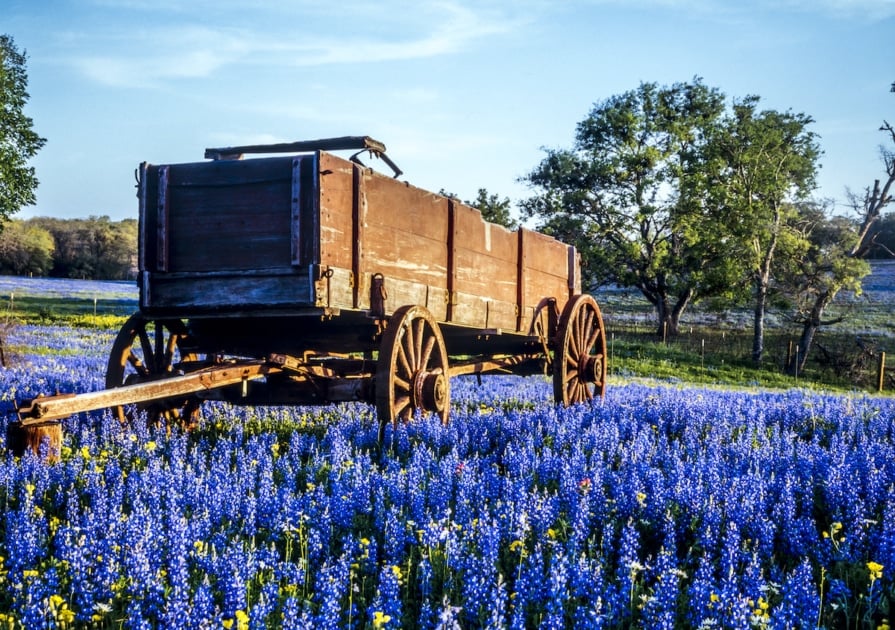
Quick Reference: Texas Bluebonnets
- State flower of Texas. Designated 1901, expanded 1971 to include all Lupinus species.
- Bloom window: peak late March to mid April across Texas Hill Country and Central Texas.
- USDA zones: 6 to 8, but Texas-native; struggles outside Texas.
- Sowing: September to October. Seeds need scarification (hot water soak or sandpaper rub) to germinate.
- The Comanche legend: the She-Who-Is-Alone story of sacrifice and the first bluebonnet bloom.
On this page
Texas bluebonnets are a Lupinus genus wildflower native to Central and South Texas, the state flower since 1901, and one of the most-photographed spring blooms in the United States. The peak bloom window (late March to mid April) draws thousands of visitors to roadside meadows each year. This guide is the species behind the name, the Comanche legend tied to the flower, the specific growing requirements that make bluebonnets work in Texas (and fail almost everywhere else), and the rules every bluebonnet visitor needs to know.
Which Species Is the State Flower (the 1971 Expansion)
Per the Texas State Symbols office, the state flower designation is more inclusive than most state flowers.
- 1901 designation. The Texas legislature chose Lupinus subcarnosus (sandyland bluebonnet) as the official state flower, despite controversy.
- 1971 expansion. The legislature broadened the designation to include all Lupinus species growing wild in Texas.
- Most-photographed species: Lupinus texensis (Texas bluebonnet), the broad showy species that fills the famous Hill Country meadows.
- Other Texas lupines covered: L. subcarnosus, L. havardii (Big Bend bluebonnet, 3 feet tall), L. concinnus, and L. plattensis.
- Why all 5 are official: the 1971 expansion solved the controversy and recognized regional diversity across Texas.
How to Grow Bluebonnets (the Specific Requirements)
Per the Lady Bird Johnson Wildflower Center, bluebonnets have specific needs that explain why they thrive in Texas and struggle elsewhere.
- Soil. Well-drained, slightly alkaline (pH 6.8 to 7.5). Limestone-derived soils of Texas Hill Country are ideal. Heavy clay or acidic soils fail.
- Seed scarification. Bluebonnet seeds have hard impermeable coats. Scarify with hot-water soak (overnight in just-boiled water) or light sandpaper rub before sowing.
- Sow in fall. September to October is the window. Seeds germinate in fall, plants overwinter as small rosettes, bloom in spring.
- Full sun. 6+ hours direct.
- Self-seeding. Established beds reseed indefinitely if you let the seed heads mature and shatter before mowing.
- Hardy in USDA zones 6 to 8. Limited success outside zones.
Bluebonnet History, Symbolism, Legends, Growing, and Rules (Detail)
Below are the original sections covering the state flower designation, the many names, symbolism, legends, growing instructions, and bluebonnet etiquette rules.
How Were Bluebonnets Chosen As the Texas State Flower?
Surprisingly, when the bluebonnet became the Texas state flower the race to make it happen was a contentious one. In 1901, the Texas legislature was in the midst of hashing out official state mascots when three different speakers submitted a nomination for different flowers, each arguing passionately for their bloom of choice. Cotton bolls received a nomination because of their huge impact on the Texas economy, while “Cactus Jack” nominated the prickly pear cactus because of its hardiness and the beauty of its flowers. Eventually, both lost to the bluebonnet, which had been nominated by the National Society of Colonial Dames of America.
The true Texas bluebonnet is the Lupinus texensis, but there are five species of bluebonnet native to Texas, and today, all of them hold the state flower title. These include:
- Lupinus concinnus
- Lupinus havardii
- Lupinus perennis – the wild lupine found in the Almanac’s home state of Maine!
- Lupinus plattensis
- Lupinus subcarnosus
The Lupinus subcarnosus was the bluebonnet initially selected to hold the “State Flower” title, but Texans petitioned the legislature to change it to the Lupinus texensis, a variety with larger, brighter blooms. Eventually, in 1971, it was decided that this species, native to Texas, would be the state flower.
A Flower of Many Names
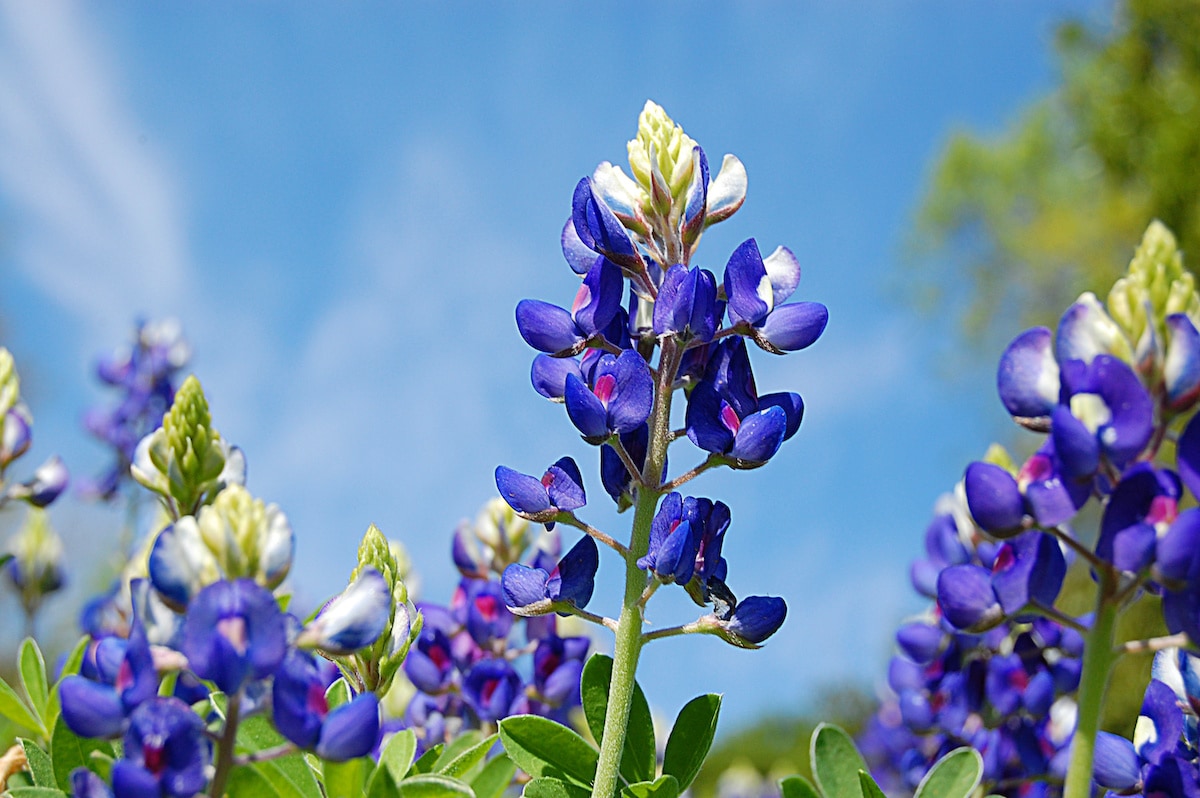
Bluebonnets get their name from the flower’s individual bloom’s resemblance to the sunbonnets women wore to guard against the grueling Texas sun. Throughout history, though, it’s been known by many other names, including “lupines” since it is part of the Lupinus genus. It’s also been called “wolf flower,” as the wolf’s Latin name is Canis lupus, and possibly because the flower is poisonous when ingested. Farmers would say that there were two dangers to their livestock, wolves and the wolf flower.
The Spanish had a few names for bluebonnets, too, including El Conejo, meaning “rabbit” after the flower’s white tip, which is reminiscent of a cottontail rabbit’s tail. Spaniards also called it Azulego, which loosely translates as “cornflower” or “indigo bunting,” a name that comes from the bluebonnet’s color.
Bluebonnet Symbolism
Bluebonnets are said to symbolize bravery, sacrifice, and admiration.
The Legend of the Pink Bluebonnet
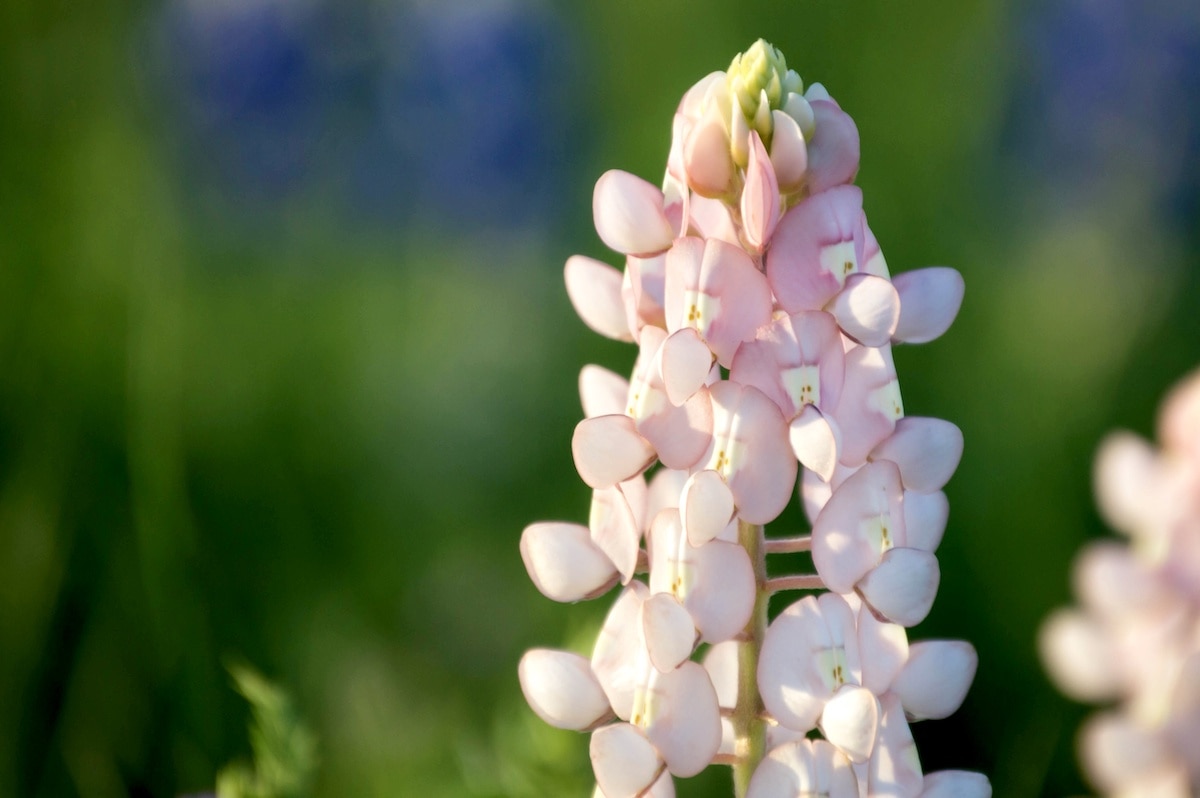
The pink bluebonnet is another flower steeped in legend. According to one story, children were playing in a field of bluebonnets near San Antonio. Among all the blue, they spotted a white bluebonnet and a pink one. The children asked their grandmother why those two flowers had different colors. She replied that the white flower among all the blue represented the Lone Star of the Texas state flag. The pink one, she said, hearkened back to another legend, one that says pink bluebonnets grow to honor the soldiers lost at the Alamo.
Other Bluebonnet Legends
The Jumano Native Americans have their own story about bluebonnets. According to them, when early missionaries came through New Mexico and Texas to spread the word of Christianity among the tribes there, many Jumanos had dreams of a nun who was dressed in a beautiful shade of cobalt blue. It was after her final visit to slumbering tribe members that the people woke to find the field they’d slept in covered in beautiful bluebonnets to match the nun’s habit.
There are also some stories that say these flowers were brought to Texas by Spanish explorers. One version says that the explorers were given the seeds from priests in the Holy Land, and the explorers brought them along for good luck. Another says that Spanish explorers used the seeds as a sort of bribe to Native Americans, trading bluebonnet seeds in exchange for the native peoples’ cooperation. Both of these stories are untrue, it’s verified that bluebonnets are native to Texas, but still, these little bits of folklore circulate to this day.
Can You Grow Your Own Bluebonnets?
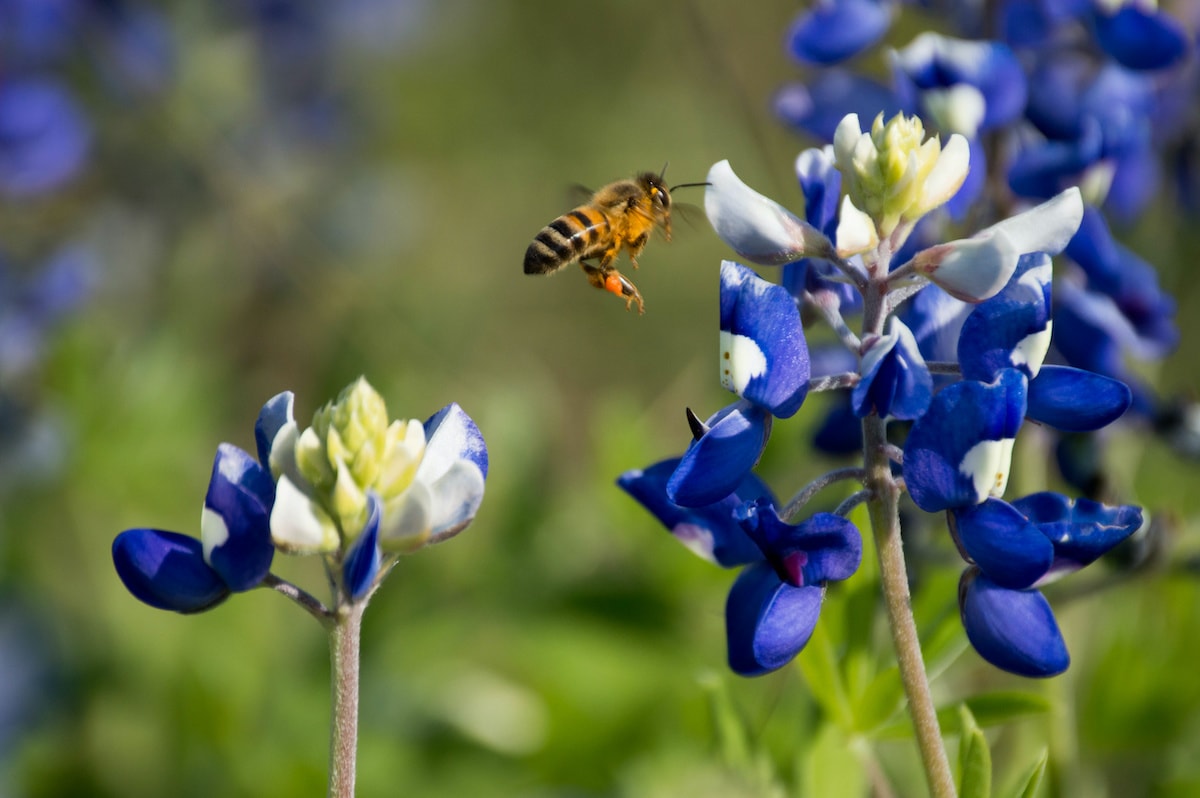
Bluebonnets would make a lovely addition to your garden. Most are blue, but some are white, pink, or purple. And native bumblebees love them! They feed on the nectar, and the flower relies on them in return.
In Texas, flowers appear in early March, with the height of the season being mid-April, extending into May. Around mid-May, they’ll form a seedpod, which eventually turns brown and pops open, releasing small, hard seeds. Then the plant will die back to the ground.
You don’t need to live in Texas to grow bluebonnets, but there are a few things to consider.
Bluebonnets are considered an annual, completing their life cycle, germinate, grow, flower, and set seeds, over the course of a year. To plant bluebonnets from seed in your garden: scarify the seeds first (here’s how to do it), then scatter them over the area where you are planting, lightly cover them with soil, tamp it down, and water heavily, but gently. Give them full sun, and if the weather is dry, make sure to keep them well-watered for a few weeks after planting. The seeds should germinate quickly with proper scarification. After that, bluebonnets won’t require much care; let natural rains do the watering for you, and there’s no need to fertilize, which will only result in leggy growth. Deadhead blooms to encourage side blooms off the main stalk. If you’re growing them in pots, be sure they have adequate drainage.
Mulching is also not necessary and could inhibit the self-seeding process.
In cold climates, you may have to purchase pre-grown plants in the spring if you want them to flower that year.
If conditions are favorable in your garden for your bluebonnets to set seed and re-seed themselves, you can count on seeing blooms for years to come.
Some Bluebonnet “Rules”
Don’t pick bluebonnets if you see them, leave them alone! And be sure children and pets don’t ingest them, as they are poisonous. And if ever possible, take advantage of Lady Bird Johnson Wildflower Center’s bluebonnet areas in Texas. Their special stands were created to provide a safe place for taking pictures of the flowers away from traffic.


Texas Bluebonnets FAQ
When do Texas bluebonnets bloom?
Peak late March to mid April in most of Texas. The window shifts earlier in South Texas (late February to mid March in some years) and later in North Texas (April to early May). Bloom intensity varies year to year based on fall rainfall.
Is it illegal to pick bluebonnets in Texas?
No, but it is heavily discouraged for ecological and courtesy reasons. The widespread myth that it is illegal traces to the original 1901 state-flower designation. Texas Parks and Wildlife asks visitors to leave bluebonnets in place so others can enjoy and seed will set for next year.
Can I grow bluebonnets outside Texas?
With effort, in alkaline well-drained soil in USDA zones 6 to 8. Successful plantings exist in Oklahoma, Louisiana, and parts of New Mexico. North of zone 6 the cold winters and acidic soils generally cause failure.
Why do you have to scarify bluebonnet seeds?
Bluebonnet seeds have an impermeable hard coat that delays germination in nature so seeds spread their germination over multiple years. For garden use, scarifying (hot water soak or sandpaper rub) breaks the coat so seeds germinate uniformly the first season.
When should I plant bluebonnet seeds?
September to October. The seedlings need to germinate in fall, overwinter as small rosettes, and accumulate cold to set flower buds. Spring planting fails. Fall planting is non-negotiable.
Is there a legend behind the bluebonnet?
Yes, the Comanche legend of She-Who-Is-Alone: a young girl sacrificed her most treasured doll into the fire as an offering to end a drought. The next morning the hills were covered in bluebonnets as a sign of the offering being accepted. The story is widely retold in Texas folklore and children’s literature.


Amber Kanuckel
Amber Kanuckel is a freelance writer from rural Ohio who loves all things outdoors. She specializes in home, garden, environmental, and green living topics.
- Amber Kanuckel

- Amber Kanuckel

- Amber Kanuckel
- Amber Kanuckel





If you plan to grow bluebonnets please be aware they must be allowed to seed naturally which means the area where they are grown will look quite unkempt during seed maturation. You cannot mow until the seeds have dropped or you will not have a next year’s crop. And timing is important if planting bought seeds. They seed naturally in East Texas in May/June depending on weather/growing conditions. Your bought seeds should be planted at that time for plants the following year. Plants will come up in January and hug the ground until it warms enough to encourage vigorous growth.
In Huntsville, Texas, the seeds actually start to sprout around September. This depends upon how much rainfall we get. By January, the plants should be of a good size in order to bloom in April. Drema is correct, they must make contact with the dirt. If you plant the seeds, lightly cover them and lightly water (with a watering can w/rosette) until germination occurs. I plant my seeds in August and that seems to work out well. Our seed pods usually don’t blow open until about mid-June here. It is like finding treasure when you spot a plant. My yard guy is a gem and carefully mows around them. What comes up in the flower beds, I leave until the pods have opened up, and then plant another annual. They are quite easy to grow. Think how Mother Nature does it and you will have good luck. One interesting fact I have read about them, is that they hold back a certain amount of seeds for later germination. This can be for as long as three years. Ensures continuation of the species.
Thank you so much for sharing this information. These are gorgeous flowers!