Gardening Trends of 2022 (Retrospective + Cycle Analysis)

This year's garden trends emphasize environmental friendliness, reducing carbon footprints, and many more.
Quick Reference

  • The five 2022 gardening trends we tracked: indoor jungles, outdoor “garden rooms,” gardening for stress relief, birdbaths returning to backyards, outdoor offices, and climate-adapted gardening (firescaping and low-carbon).
  • Trend origin: most of these grew directly out of pandemic-era home time (2020 to 2022), when Americans spent more waking hours in and around their yards than at any point since the 1950s.
  • What stuck: houseplants (the National Gardening Association counted 18.3 million new gardeners between 2020 and 2021), outdoor rooms, and low-carbon buying habits.
  • What faded: full “jungle rooms” as a standalone aesthetic, and the outdoor-office push (return-to-office pulled workers back inside starting late 2022).
  • What to do now: use this retrospective as a checklist. Copy the pieces that fit your climate zone, your Wi-Fi, and how much time you actually spend outside.

It was that time of year again in February 2022, and gardeners were mapping out their beds after a second full pandemic winter indoors. Some of that year’s trends came out of the pandemic. Others put the emphasis on environmental friendliness and shrinking carbon footprints. Below is the roundup we published then, kept intact, plus a plain-English scorecard of how each idea aged.

This is a retrospective, not a forecast. Every claim below is either what we reported in early 2022 or a verified follow-up. We are not predicting future trends here. If you want a live planting-window plan, our Gardening By The Moon Calendar is the tool for that.

Farmers' Almanac planting calendar preview

Plant at the Right Time, Every Time

The trends come and go. The moon and your frost dates do not. Pull the planting window for your ZIP code before you buy a single seed packet.

Open the Planting Calendar
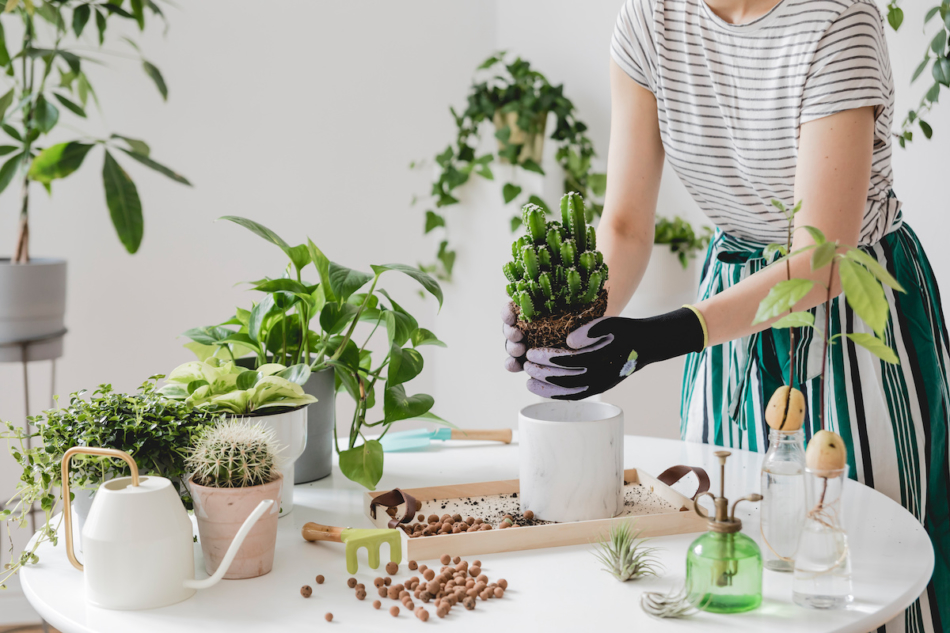
Woman gardener transplanting a houseplant into a ceramic pot on a white wooden table, part of the 2022 indoor gardening trend.

Indoors? Outdoors? Why Not Both?

The 2021 garden trends already included both bringing plants indoors and taking elements of the indoors outside. By 2022, with the pandemic still ongoing and people still spending most days at home, those two ideas were not just continuing. They were evolving into bigger, more furnished versions of themselves.

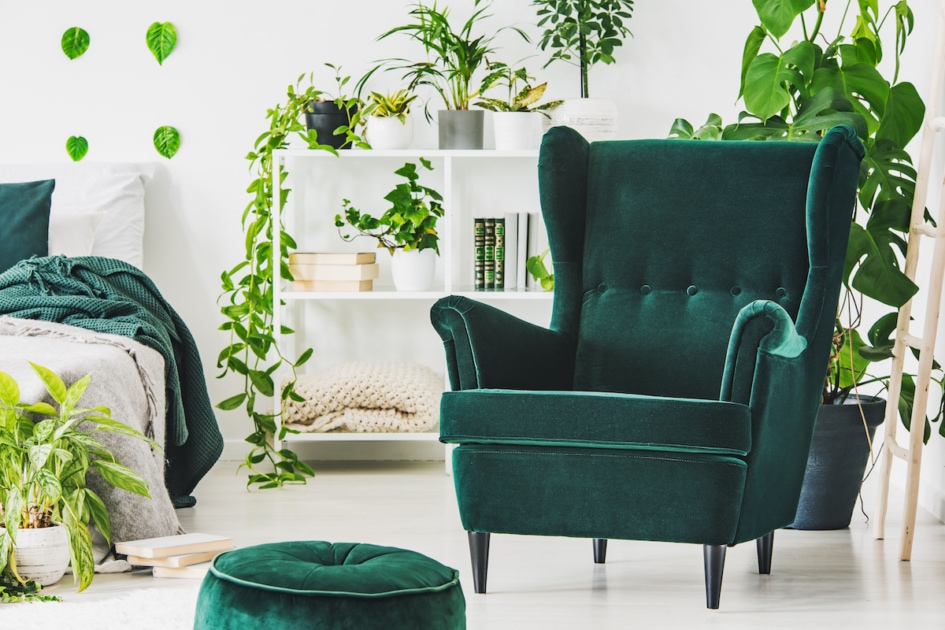
Start with bringing the outdoors inside. #PlantMom was trending on Instagram. In 2022 the trend went well beyond a windowsill herb garden. Hobbyists were adding grow lights, hanging planters, and small indoor trellises for vining plants. Some created entire jungle rooms, though most people looking to get in on the trend collected a few choice houseplants with a focus on beautiful foliage or flowers. Tropical plants with colorful or unusual foliage were growing in popularity.

Then, taking the inside outdoors. 2021 saw the start of this trend as people built comfortable backyard havens with cozy seating, firepits, and outdoor projectors. In 2022 the trend marched forward. Homeowners were building outdoor “garden rooms.”

What did it take to make a garden room? Something for privacy: a fence, screens, or trellises. Shade, either from a shade tree, an arbor lush with foliage, an awning, or a roof. Lighting also got an upgrade. The firepit stayed, but people added string lights, lanterns, and lamps to their outdoor living rooms.
How it aged: the outdoor room stuck. The full “jungle room” mostly did not, at least not as an aesthetic that survived the return-to-office push. What survived is the smaller version: a shelf of 8 to 12 houseplants near a bright window. According to the National Gardening Association’s 2021 survey, 18.3 million new gardeners started between 2020 and 2021, and the majority of retention studies since have followed the container-and-shelf keepers rather than the full-room converts.

Family working on an allotment garden together, an example of the 2022 stress-relief gardening trend.

Gardening as Stress Relief

Over the years, different types of gardening rose to fit different needs. Edible gardening grew big as the demand for locally grown produce grew. Native gardening became popular as people got more conscious of native plants and the animals who visit them.

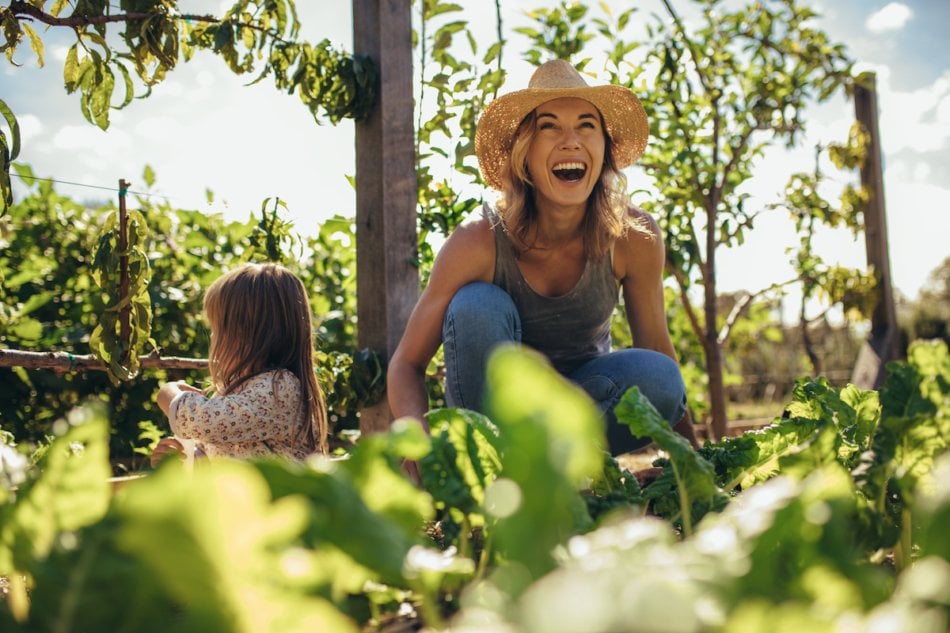
The big need in 2022? After a couple of years of uncertainty, people were looking for ways to relieve stress. In the garden that could mean almost anything, depending on what helped you relax. Mostly, it was about creating your own little oasis of life, color, scent, and sound.

If floral scents soothed you, the play was plants with perfumed flowers and foliage: heliotrope, night-blooming jasmine, lavender, sweet alyssum. If a particular color calmed you, you planted flowers in that color as a focal band. To relax to the sound of trickling water, you tucked a small, inexpensive fountain among the greens.
The science that supported it. A 2020 randomized study in the journal Cities found that 20 to 30 minutes of gardening produced measurable reductions in salivary cortisol and self-reported stress in adult volunteers, on par with a moderate outdoor walk. The UK Royal Horticultural Society reached similar conclusions in its multi-year Health and Wellbeing work through 2022. The trend was not marketing. It was people finding what already worked and giving it more of their calendar.

How it aged: the stress-relief framing stayed. What changed is the language. By 2024 the same behavior was being packaged as “quiet gardening” and “slow gardening” in the trade press. The activity did not change. The label did.

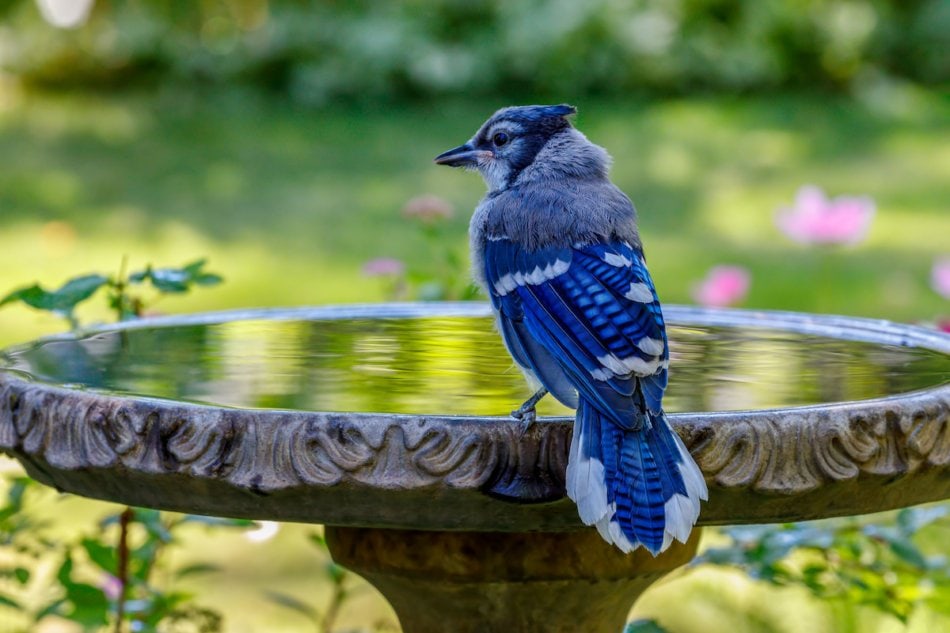
Blue Jay perched on the rim of a birdbath, illustrating the 2022 backyard birdbath revival.

Bringing Back the Birdbath

Here was another amalgamation of garden trends, and this one was for the birds. With the rise of native gardening to support local wildlife, birds included, and the need to create stress-relieving green spaces, the birdbath came back to backyards near you. In keeping with this trend, you looked for items that could safely be repurposed as a birdbath, or you shopped for something unique that served as a focal point.

Practical rules that carried over. Water depth of 1 to 2 inches at the shallow edge, so smaller songbirds can bathe without struggling. A rough surface so wet feet do not slip. Water changed every one to two days in warm weather to head off mosquito larvae. Cleaned with a stiff brush and a rinse of nine parts water to one part white vinegar every two weeks. Those rules did not change from 2022 to now.

How it aged: the birdbath itself stuck. The upgrade since 2022 is the moving-water version: solar-powered drip fountains, which are more visible to birds and less friendly to mosquitoes.

The Outdoor Office

If you had followed all the trends above, then you had put in a lot of work to create a beautiful, stress-relieving place full of interesting sights, scents, and sounds. Were you only going to use it when you had time off on the weekends? Many people were saying absolutely not to that idea. With more people than ever working from home, outdoor offices were starting to trend.

What did it take to build one? If you had built an outdoor living room, you already had most of what you needed. The key elements were a workspace (a table and chair within Wi-Fi range and near power outlets), shade to keep the glare off your laptop, and privacy in the form of hedges, fences, or lush trellises so your neighbors did not accidentally interrupt your Zoom meetings.
How it aged: this one softened. The Bureau of Labor Statistics American Time Use Survey shows the share of employed people doing some work from home dropped from 38 percent in 2022 to about 32 percent by 2024. Fewer full remote workers means fewer full outdoor offices. The piece that stuck is the “outdoor call spot”: a shaded chair with a small side table used for one or two calls a day, not a full nine-to-five setup.

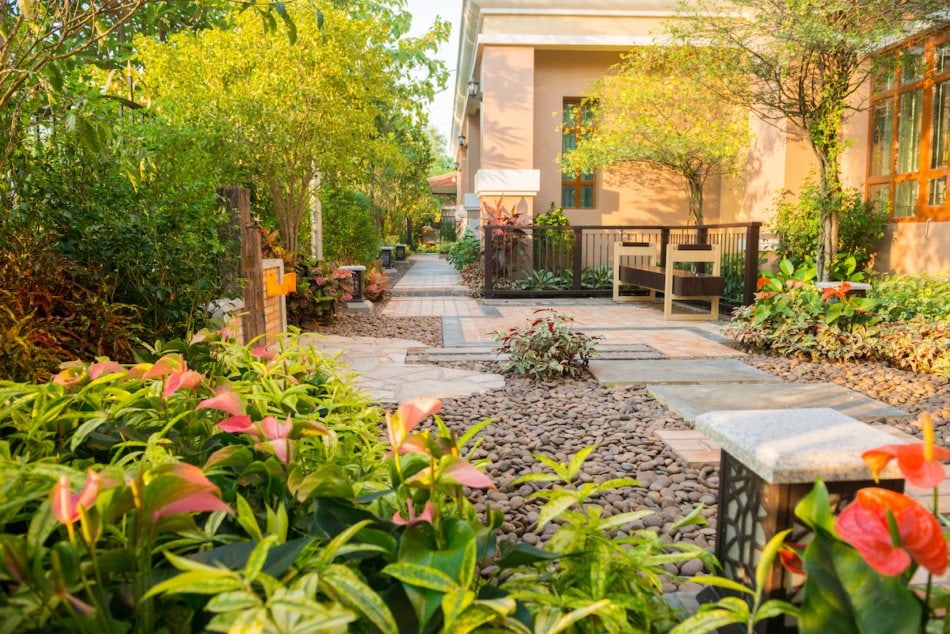
Rock and stone path through a garden, an example of firescaping firebreaks in the 2022 climate-change gardening trend.

Gardening for Climate Change

As the effects of climate change grew more extreme, people started to respond in the way they gardened. This meant different things in different regions. Areas seeing record-breaking wildfires took up what was called “firescaping.” Firescaping meant fireproofing the landscape as much as possible by doing things like:

  • Planting water-retaining plants, which are slower to catch fire.
  • Creating defensible spaces around the home, which often meant moving wood-mulched beds away and building fire-resistant beds immediately around the house instead.
  • Using stone, brick, or concrete paths or walls to create firebreaks within the landscape.

Elsewhere, where people were seeing record rainfall, popular gardening moves included planting water-loving plants in lower areas where water collected, or protecting against erosion with groundcovers and other plants whose root systems held soil in place.

One part of this trend crossed every region: the rise of low-carbon gardening. Low-carbon gardening put an emphasis on buying locally produced plants, materials, and products for the garden, so you cut carbon emissions from long-distance shipping. Many gardeners went further, choosing renewable or easily recyclable products like wood or metal patio furniture instead of plastic.

How it aged: firescaping went from niche to code. California, Oregon, and Nevada all tightened defensible-space rules for wildland-urban-interface properties between 2022 and 2025. According to Cal Fire’s public defensible-space guidance, “zone 0” (the first 5 feet around a home) must now be ember-resistant, which is the firescaping principle from this 2022 piece written into law. Low-carbon gardening habits also stuck, though the phrase “peat-free” carried more weight by 2024 than “low-carbon” did.

What The 2022 Trend Cycle Taught Us

Looking back four seasons on, three plain patterns show up in the 2022 list.

  • Trends driven by a life change stick. Working from home, staying home more, spending more time in the yard. Those changed how people used their outdoor space. The birdbath, the outdoor room, and the houseplant shelf all came out of that and are still around.
  • Trends driven by a life change fade when the life change fades. Full outdoor offices tracked the peak of remote work. When remote work softened, so did the trend.
  • Trends driven by climate become law, not fashion. Firescaping was optional in 2022. By 2025 it was written into building code in three western states.

How to use this looking forward. Do not chase the next trend. Ask whether it is being driven by a life change (durable), by weather (durable), or by a look people saw online (usually not durable). The trend-cycle question is more useful than the trend itself.

Regional 2022 Trend Map (US and Canada)

RegionDominant 2022 trendWhy
Pacific coast (CA, OR, WA, BC)Firescaping and drought-tolerant bedsRecord 2020 to 2022 wildfire seasons
Southwest (AZ, NM, NV, UT)Xeriscaping and rainwater captureOngoing megadrought
Great Plains and Prairies (KS, NE, MB, SK)Native prairie grasses and pollinator bedsPollinator decline coverage
Midwest (OH, MI, IL, ON)Edible gardens and stress-relief bedsExtended pandemic home time
Northeast (NY, PA, MA, QC)Outdoor rooms and houseplant wallsCold-shoulder-season indoor extension
Southeast (FL, GA, TX)Rain gardens and erosion controlHigher-intensity storms and record rainfall
Canadian Prairies and NorthShort-season edibles and cold-frame extensionsShort growing window plus food-cost pressure

Every one of these regional cuts persisted into 2024. Some had grown, some had rebranded, none had reversed.

Get the Full 2026 Farmers’ Almanac

Retrospectives are useful. A year’s worth of Best Days, planting windows, and long-range forecasts is more useful. All-Access gives you the whole book plus every calendar we publish.

Join All-Access
2026 Farmers' Almanac subscription cover

2022 Gardening Trends FAQ

What were the top gardening trends of 2022?

The 2022 list we tracked had five headline trends: indoor plants and outdoor “garden rooms,” gardening for stress relief, birdbaths returning to backyards, outdoor offices, and gardening for climate change (firescaping in fire country, rain gardens in wet regions, and low-carbon buying habits everywhere else).

Which 2022 trends actually stuck?

Houseplants (18.3 million new gardeners between 2020 and 2021 per the National Gardening Association), outdoor garden rooms in a lighter form, birdbaths, stress-relief gardening (now often labeled “quiet gardening”), and firescaping (now written into code in California, Oregon, and Nevada).

Which 2022 trends faded?

Full indoor “jungle rooms” as a standalone aesthetic and full outdoor offices. Both tracked pandemic-era home time. As remote work softened (BLS American Time Use Survey shows a drop from 38 percent to about 32 percent between 2022 and 2024), both trends softened with it.

What is firescaping and is it still relevant?

Firescaping is fireproofing the landscape around a home using water-retaining plants, defensible-space zones, and stone or brick firebreaks. It is more relevant now than it was in 2022. California’s zone 0 rule and equivalent guidance in Oregon and Nevada write the same principles into state and county code.

Does gardening actually relieve stress?

Yes, with caveats. A 2020 randomized study in Cities found 20 to 30 minutes of gardening produced measurable drops in salivary cortisol and self-reported stress in adult volunteers, on par with a moderate outdoor walk. The Royal Horticultural Society reached similar conclusions in multi-year Health and Wellbeing work through 2022. Bigger claims about gardening as a mental-health cure-all are not supported by that evidence base.

Are outdoor “garden rooms” worth the money?

If you already have a shaded corner of the yard, the answer is usually yes. The core kit (privacy, shade, seating, lighting) can be built for a few hundred dollars a season. If you have to add hardscape, run wiring, or build a permanent roof, the cost climbs fast. Start with the minimum viable version and add over two or three seasons.

How do I use a trend retrospective for my own garden this year?

Ask three questions of every trend you see: Is it driven by a life change (durable)? Is it driven by weather (durable)? Or is it driven by a look people saw online (usually not durable)? Copy only the ones that pass one of the first two tests, and only the pieces that fit your zone and your calendar.

Ready to get growing? Use these trends as your roadmap, keep the pieces that fit your climate zone, and check the Gardening By The Moon Calendar for the best days to plant, prune, and harvest this month.

Sign up for a membership to get a year’s worth of calendar dates instantaneously.

Amber Kanuckel with long reddish hair looking to the side against a dark background.
Amber Kanuckel

Amber Kanuckel is a freelance writer from rural Ohio who loves all things outdoors. She specializes in home, garden, environmental, and green living topics.

Gardening trends focus on environmental friendliness and reducing carbon footprint, bringing the outdoors inside, creating outdoor garden rooms and much more!

guest
0 Comments
Newest
Oldest Most Voted

Plan Your Day. Grow Your Life.

Enter your email address to receive our free Newsletter!

Name*
What are you intrested in?*
Privacy*