

How to Melt Ice Naturally: 4 Deicers That Work + a Traction Plan
Easy, natural ways to melt ice around your home this winter!
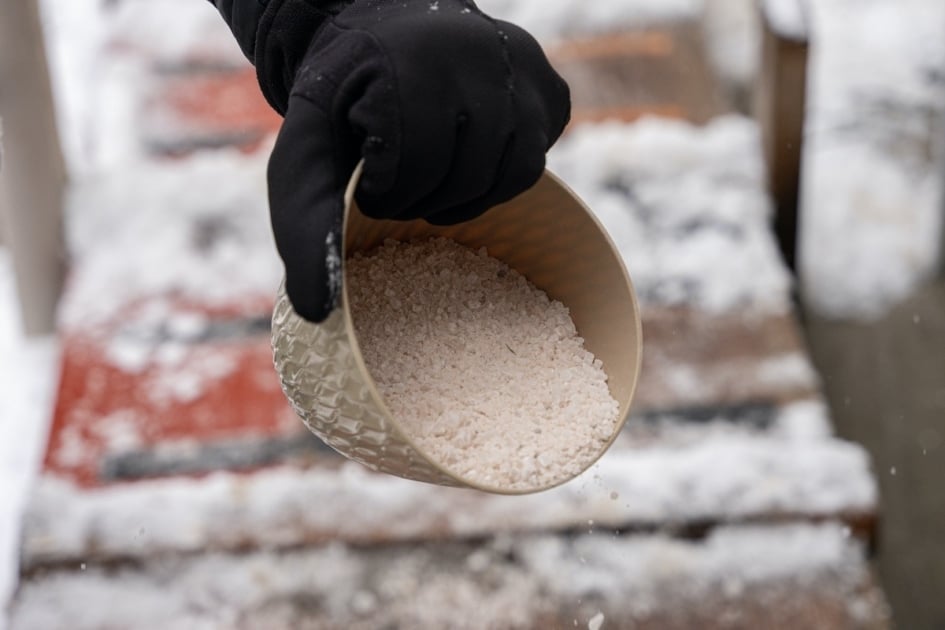
Quick Reference: How to Melt Ice Naturally
- Rock salt is cheap and fast, but stops working around 15°F, corrodes metal, and salts groundwater.
- Urea (fertilizer-grade) is gentler on pets and metal than salt, but high nitrogen can scorch plants and feed algae.
- Alfalfa meal melts slowly, doubles as traction, and runs lower-nitrogen than urea.
- Sugar beet juice drops the freezing point as low as -20°F and is safe for pets, plants, and concrete.
- For traction only (no melting): sand, wood ash, non-clumping clay kitty litter, used coffee grounds, sawdust.
- Test a small patch first; old concrete, sealed driveways, and lawn edges all react differently.
Ice and snow look beautiful from a window, less so when you are chipping at it in the dark before work. One bad slip and fall can turn the wonderland straight into an ER bill, and very few homes come with a heated driveway. The good news: you do not need a yard full of harsh chemicals to keep walkways safe. There is a short list of natural ways to melt ice that actually work, and a couple of low-cost tricks for the days when nothing melts at all.
This guide walks through the four most reliable natural deicers, where each one earns its keep, and what to reach for when the temperature falls past where any of them work. If you are planning ahead for the season, our long-range weather forecast can flag the cold snaps worth stocking up for.
4 Ways to Melt Ice Naturally
Each option below works on the same basic principle: it lowers the freezing point of water so the ice loses its grip on the surface underneath. They differ in price, working temperature, and how much collateral damage they do to grass, pets, paint, and the local watershed.
1. Salt
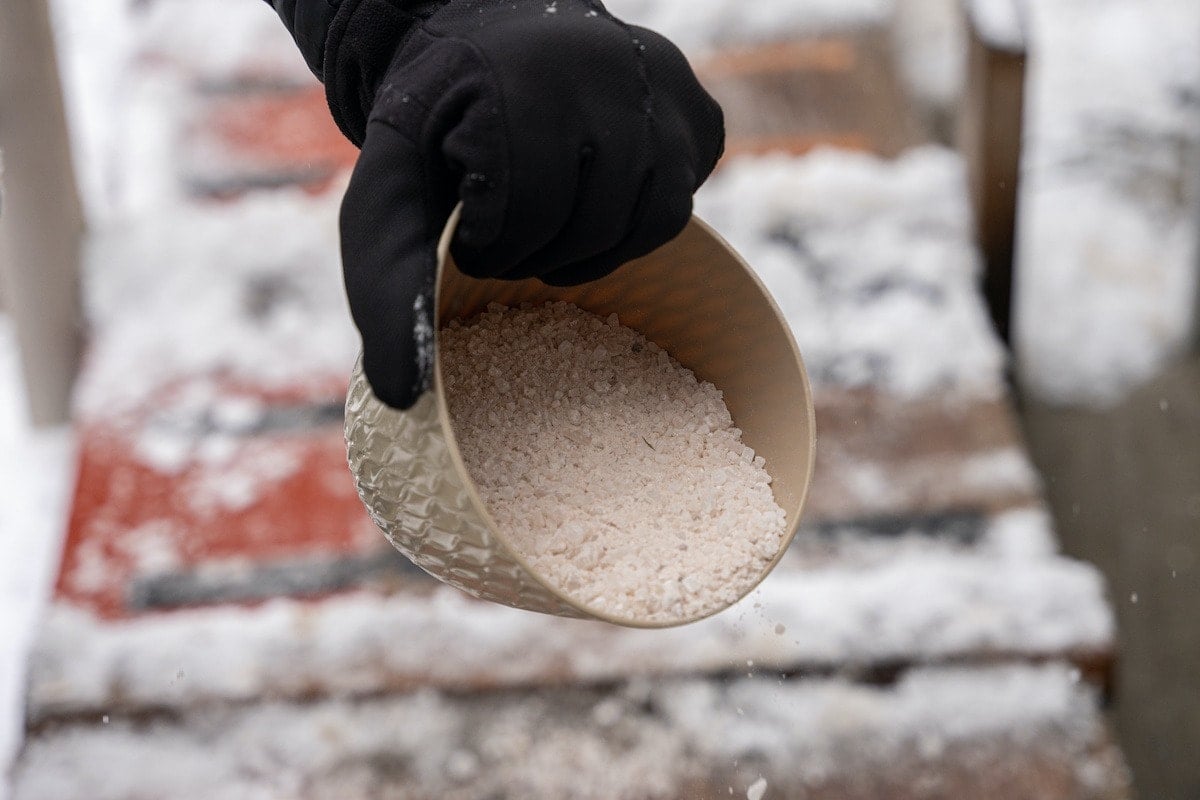
Rock salt is the deicer almost everyone reaches for first. It is cheap, easy to find at any hardware store, and effective down to about 15°F. It also comes in several forms: basic sodium chloride rock salt, calcium chloride pellets (which keep working into the negatives), and pre-mixed liquid brines that municipalities spray before a storm.
The catch is what salt does to everything around it. Chloride is corrosive: it shortens the life of car undercarriages, eats at metal railings, stains concrete, and drags into carpets on the bottom of boots. It dries out skin, including the pads of pets’ paws, and it can blister grass and shrubs growing near a heavily salted path. The bigger long-term concern is groundwater: the U.S. Geological Survey has documented rising chloride levels in northern lakes, streams, and drinking-water wells tied directly to road and sidewalk de-icing (see the USGS Freshwaters Are Getting Saltier brief).
If you do reach for salt, use it sparingly: a coffee-cup’s worth covers about ten square feet. Below roughly 10°F, plain rock salt stops working anyway, and you are better off switching to calcium chloride or to one of the options below. Always check the bag, since “ice melt” blends often mix sodium chloride with other compounds to push the working temperature lower.
2. Urea
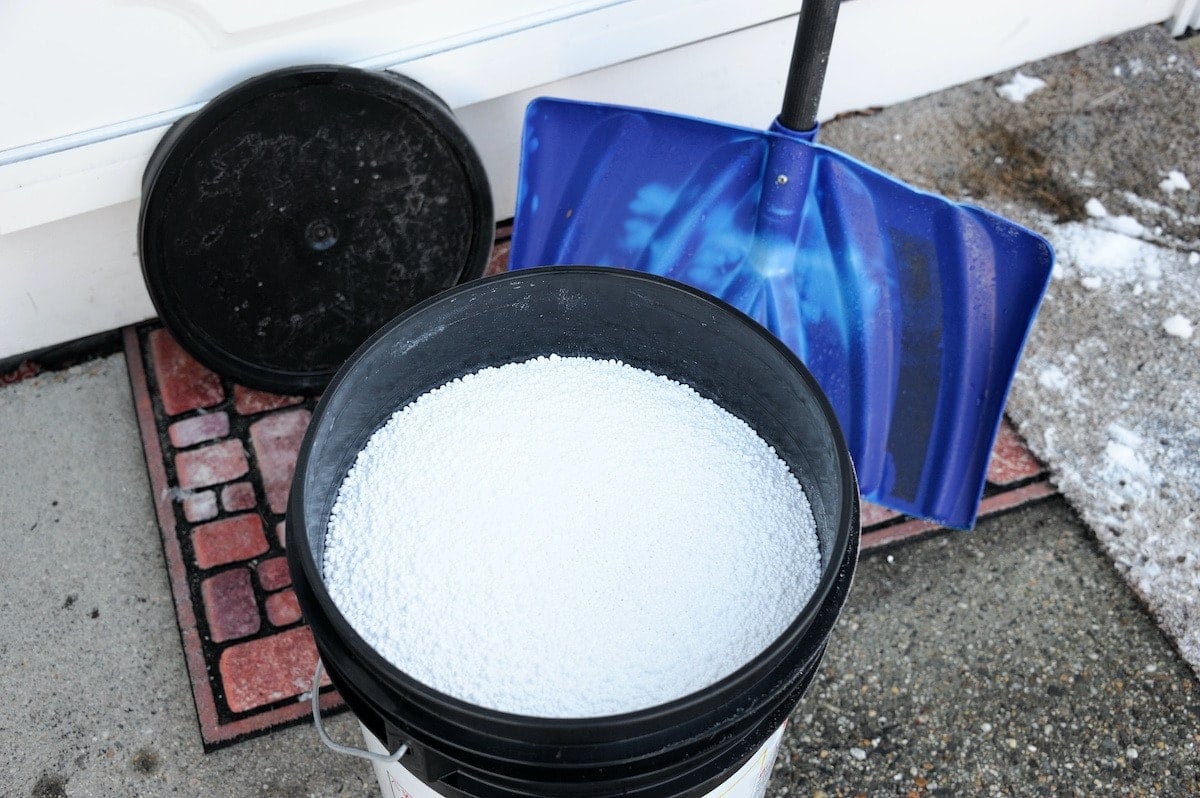
After salt, urea is the next most common deicer. It is sold as a granular fertilizer and is far less corrosive than chloride, which makes it a better fit around iron railings, garage doors, and car parking pads. It is also gentler on pet paws and on concrete that is less than a year old. Urea works to roughly 15°F, similar to rock salt, and is widely available at farm and garden stores.
Urea has its own downsides. The high nitrogen concentration that makes it a useful fertilizer in summer will burn lawn edges and ornamentals in winter, just as over-fertilizing does in July. That same nitrogen runs off into storm drains and feeds algae blooms in nearby ponds and streams. Use it on hard surfaces only, sweep up the leftover granules once the ice has gone, and do not pile it against the base of trees or shrubs.
3. Alfalfa Meal
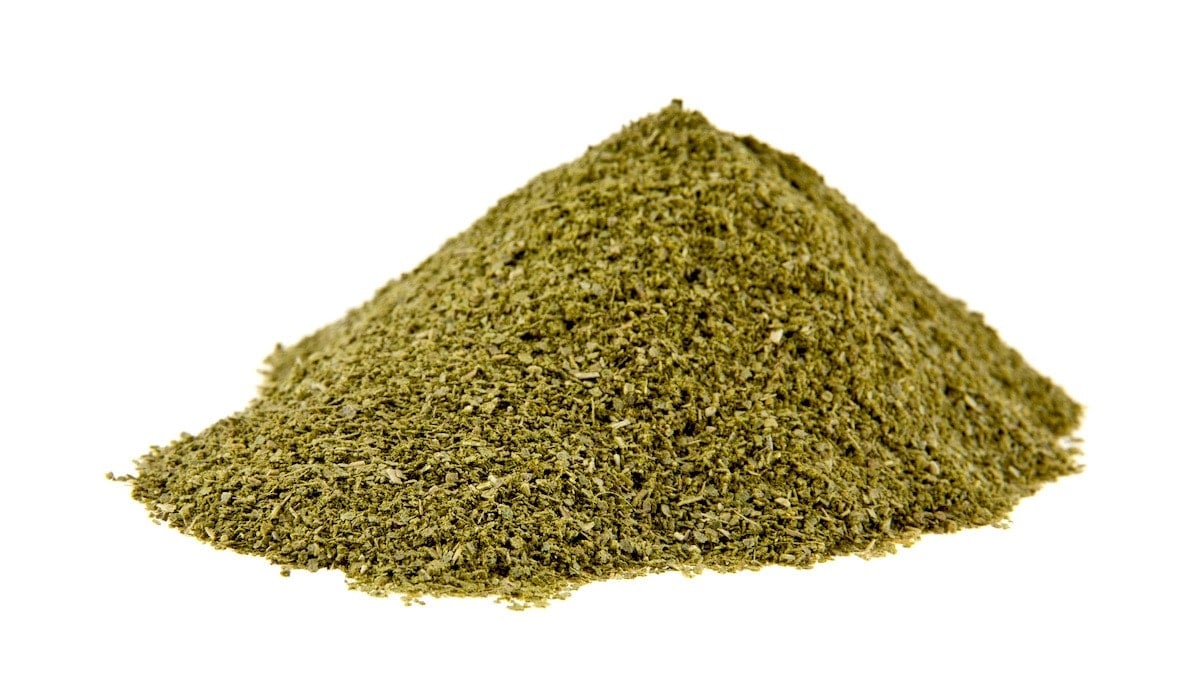
Alfalfa meal is the natural deicer most people have never heard of, even though it is sitting on the shelf at the same hardware store as the salt. Like urea, it is 100% natural and is most often sold as an organic fertilizer. It does contain nitrogen, but at lower concentrations than urea, which makes it a softer hit on grass and on the water table when used in moderation.
The texture is its other advantage. Alfalfa meal is dry and slightly grainy, so it adds traction the moment it lands while the slow ice-melt is doing its work. It will not strip a driveway sealant, will not burn a dog’s paws, and the dust that gets tracked in vacuums up rather than staining carpet white. Bags are available at most hardware and garden stores; one 50-pound bag will handle a typical driveway through a full winter.
4. Sugar Beet Juice
Sugar beet juice is the deicer with the deepest cold tolerance and the strangest origin story. The leftover juice from processing sugar beets contains compounds that lower the freezing point of water, and can be applied on its own or mixed into a brine to extend a salt’s working range. It is effective down to roughly -20°F, far below where plain rock salt gives up. In recent years some northern communities have been using beet juice mixtures to melt ice on municipal roads, often blended with traditional salt brine to cut the chloride dose in half.
Beet juice is odorless and virtually colorless once cured, harmless to humans and pets, friendly to plants, and easy on cars and concrete. The catch is that you cannot crack open a jar of pickled beets from the pantry and get the same result; the food-grade product has sugar that attracts pests and goes sticky in the thaw. Look for “agricultural beet juice” or “beet brine” at a farm-supply store or online retailer.
Read our cold-weather safety tips and learn how to fall on ice without breaking anything!
Add Some Traction
The most natural way to melt ice is to let time do it for you. In a temperate winter that may be a day or two; in northern Maine or interior Minnesota it might be April. Either way, you can make icy walkways safer right now by adding traction rather than chemistry.
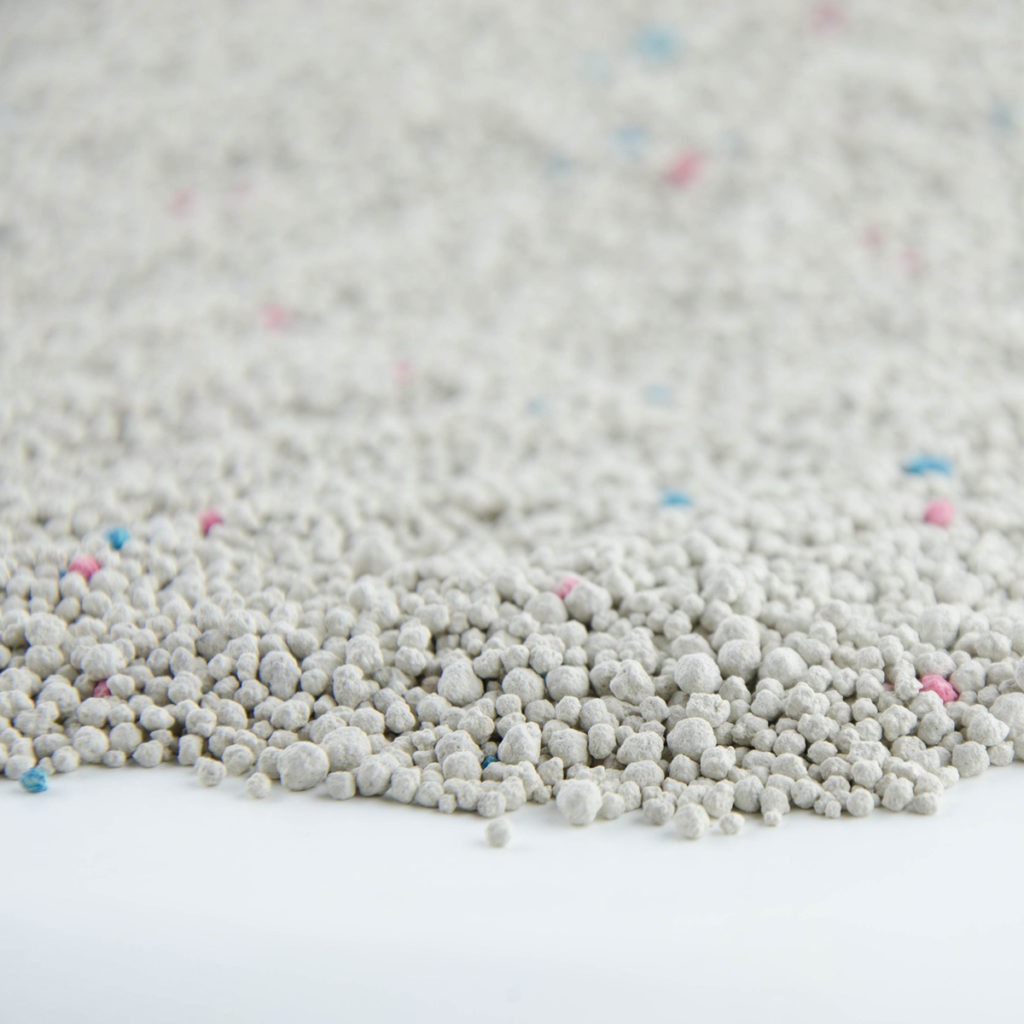
Sand is the workhorse, cheap by the bag and effective on any surface. Wood ash from a clean fireplace works well and tracks gray dust indoors, so save it for the driveway. Non-clumping clay-based kitty litter grips without dissolving and is easy to sweep up. Used coffee grounds add traction and a small amount of dark color, which absorbs sunlight and helps thin ice melt a touch faster. Sawdust is the carpenter’s option, free if you have a workshop nearby. (For more options, see our natural deicer rundown.) Cover the whole driveway if budget allows, or run narrow footpaths where you actually walk.
Pick the Right Deicer by Temperature
Most natural deicers fail well above 0°F, which is exactly when you need them most. This is the temperature each one works to in real conditions, not on a marketing label:
| Deicer | Effective down to (F) | Best use temperature range | Environmental impact (brief) | Concrete and plant safety | Approx cost per 50 lb bag |
|---|---|---|---|---|---|
| Rock salt (sodium chloride) | 12 F | 15 F to 32 F; works best above 20 F | High chloride runoff harms freshwater organisms, roadside vegetation, and soil structure. Minnesota PCA and FHWA identify it as the primary source of road salt water quality impairment in northern states. | Can accelerate concrete spalling, especially in new concrete under 1 year old. Toxic to plants at higher concentrations; damages roots and foliage via runoff. | $6 to $10 |
| Calcium chloride | -25 F | -25 F to 32 F; best choice below 0 F | Moderate chloride impact on waterways and vegetation; lower application rates needed due to higher effectiveness, which partly offsets chloride load. FHWA notes it as a preferred low-temperature option when minimizing application quantity. | Can be damaging to concrete if over-applied, particularly if it penetrates cracks. Less harmful to plants than sodium chloride at equivalent melt quantities due to lower required dose; keep away from plant roots. | $14 to $20 |
| Magnesium chloride | -13 F (practical field limit) | -10 F to 32 F; effective mid-range cold weather deicer | Moderate chloride impact; lower corrosion to metals than calcium chloride in field studies. Minnesota PCA recommends it over rock salt for sensitive areas, though it still contributes to chloride loading in waterways. | Generally less damaging to concrete than calcium chloride. Less harmful to vegetation than sodium chloride at equivalent doses; still capable of plant damage if over-applied near roots or crowns. | $12 to $18 |
| Potassium chloride | 25 F | 25 F to 32 F; limited to mild cold conditions only | Chloride runoff still concerns waterways. Potassium itself is a plant nutrient at low concentrations, but concentrated doses near roots are damaging. Iowa State University Extension notes it is the least damaging of the chloride salts to soil structure. | Generally safer for concrete than sodium or calcium chloride. Less harmful to most plants than sodium chloride; marketed as a plant-safer option but not truly safe in repeated or heavy use near landscaping. | $16 to $25 |
| Calcium magnesium acetate (CMA) | -15 F (practical limit) | -15 F to 32 F; best for environmentally sensitive areas | Biodegradable; contains no chloride. Does not contribute to road salt water quality impairment. FHWA identifies it as the leading chloride-free alternative for bridge decks and sensitive areas. | Much safer for concrete than any chloride product. Little to no damage to landscape plants; recommended by university extension programs for use near trees, gardens, and turf where repeated salt damage has occurred. | $30 to $50 or more; typically 20 to 30 times the cost of rock salt |
| Sand or gravel (abrasive only) | No lower limit; does not melt ice | Any temperature; provides traction only, no melting | No chloride impact. Can clog storm drains and contribute to sediment loading in waterways if not cleaned up in spring. Requires post-winter street sweeping. | No damage to concrete or plants. Must be swept up after use or it creates a dust and sediment management problem. | $4 to $8 |
| Sand and salt blend (typically 70-90% sand, 10-30% rock salt) | 12 F (limited by salt component) | 12 F to 32 F; balances traction and modest melting | Reduced chloride load vs. pure rock salt but still contributes chloride runoff. Sand component adds sediment management requirements. Common municipal choice for moderate conditions per Clear Roads and FHWA pooled-fund studies. | Concrete and plant risk lower than pure rock salt due to reduced chloride concentration, but not eliminated. Suitable as a transitional option where traction is the primary concern and melting is secondary. | $6 to $12 |
The temperatures above assume a thin layer of ice and a roughly two-hour working window. Thick ice slabs, packed snow, and refreezing puddles all push the practical limit higher. When in doubt, pick the option with the deepest cold tolerance you can afford and spread it thinly.
Protect Your Driveway, Pets, and Plants
Concrete: Anything under a year old should never see chloride; the freeze-thaw cycle drives salt into the pores and flakes the surface. Use urea, alfalfa meal, or sand on new pours.
Pets: Rock salt and calcium chloride both irritate paw pads and can be toxic if licked off after a walk. Wipe paws on the way in. If you have multiple pets, lean on alfalfa meal or beet brine at the front step.
Plants: Keep all deicers at least 12 inches from the base of trees, shrubs, and lawn edges. Salt and urea both leach into soil through spring melt and can stunt the next growing season.
Timing: Spread deicer before the snow falls if you can. A thin layer of urea or alfalfa meal on a dry driveway will keep the first half-inch from bonding to the surface, which is the only kind of snow that turns into the sheet ice that ruins your week.
FAQ: Natural Ice Melt
What is the best natural way to melt ice on a driveway?
Sugar beet juice has the deepest cold tolerance and the lightest environmental impact, but it is harder to source. For most homeowners, alfalfa meal hits the sweet spot of effective, gentle, and easy to buy.
Will rock salt damage my concrete?
Yes, especially on concrete under a year old. Chloride pulls moisture into the pores, then freeze-thaw cycles spall the surface. Use urea or sand on new pours instead.
At what temperature does salt stop working?
Plain sodium chloride rock salt loses most of its effect around 15°F. Calcium chloride keeps working to roughly -25°F. Beet juice goes to about -20°F.
Is alfalfa meal safe for pets?
Yes. Alfalfa meal is a livestock feed and natural fertilizer, with no toxic compounds and no chloride to dry out paw pads.
Can I use beet juice from a grocery store jar?
No. Pickled or food-grade beet juice contains sugar that attracts pests and turns sticky in the thaw. Look for agricultural beet brine at a farm-supply outlet.
Does kitty litter melt ice?
No. Kitty litter (non-clumping clay) is a traction aid only. Pair it with one of the actual deicers above on the days you need both grip and a thaw.
What is the cheapest natural deicer?
Sand for traction; urea fertilizer for actual melting. Both are widely available at farm and hardware stores under $15 for a bag that will last a season on a normal-sized driveway.
Check out these other winter hacks you’ll love! And mark the worst of the cold on your calendar with our Best Days calendar.


Jaime McLeod
Jaime McLeod is a longtime journalist who has written for a wide variety of newspapers, magazines, and websites, including MTV.com. She enjoys the outdoors, growing and eating organic food, and is interested in all aspects of natural wellness.
- Jaime McLeod

- Jaime McLeod
- Jaime McLeod
- Jaime McLeod





Sprinking Poultry grit on outdoor walkways helps with traction where ice is. If poultry grit is on the floor in the house do not use a vacuum cleaner to remove it. Sweep the granules up with a broom instead and dispose the grit in the garbage bin. It could damage a household vacuum cleaner.
Great tip – thank you for sharing!