July Birthstone: Ruby Meaning, Folklore, and Buyer’s Guide
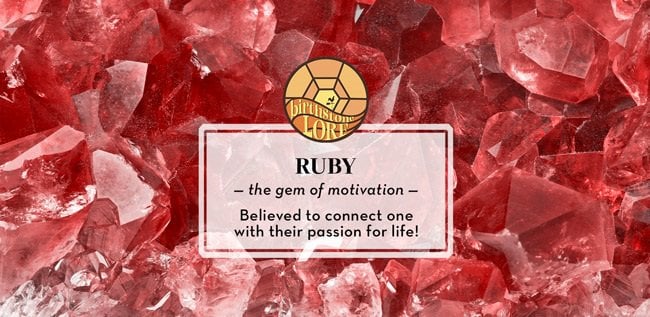
Quick Reference: The July Birthstone
- July’s birthstone: Ruby (red corundum).
- Symbolism: Passion, courage, protection, and love.
- Hardness: 9 on the Mohs scale, second only to diamond.
- What makes it red: Traces of chromium in the corundum crystal.
- Top grade: “Pigeon Blood Ruby” from the Mogok valley in Burma (Myanmar).
- Sanskrit name: ratnaraj, the king of gems.
- Zodiac: Cancer (June 21 to July 22) and Leo (July 23 to August 22).
- Anniversary: Traditional 40th wedding anniversary stone.
- Alternative July stones: Citrine and garnet.
July’s birthstone is the ruby, and no other gem carries quite the same weight of story. Its English name comes from the Latin ruber, meaning red, but the Sanskrit name says more about how the stone was treated for centuries: ratnaraj, the king of jewels. Below you will find the full plain-English account of what a ruby is, where it forms, how to read its folklore honestly, and how to choose or care for one if July belongs to someone you love.
What Is the July Birthstone?
The July birthstone is ruby, a red variety of the mineral corundum. Corundum itself is aluminum oxide, written by mineralogists as Al2O3. When trace amounts of chromium slip into the crystal, the stone glows red and earns the name ruby. Without that chromium, the same mineral becomes sapphire in blue, yellow, pink, purple, or colorless varieties. So every ruby is corundum, but only red corundum is a ruby.
Ruby sits at 9 on the Mohs hardness scale, which means only diamond outranks it. That toughness is part of why the stone has been set into crowns, sword pommels, and signet rings for thousands of years. Heat and pressure do not break it. Daily wear barely scratches it. For a stone tied to passion and protection, that quiet durability is fitting.
Ruby Facts
How are they formed?
Rubies are made of the mineral corundum, a tightly packed lattice of oxygen and aluminum atoms with a sprinkling of chromium. Chromium is what makes them red. The crystals grow when these elements meet under extreme pressure and heat deep in the Earth’s crust, usually in marble or basalt host rocks that have been cooked by mountain-building events. The slower the cool, the cleaner the crystal.
Why so rare?
Rubies cannot form where the common elements iron and silica are present, and those two elements are almost everywhere in the Earth’s crust. That single chemical incompatibility is why ruby deposits are so scarce. A gem-quality ruby needs a pocket of rock where iron stays away and chromium happens to be on hand. Few places on Earth meet that recipe at gem scale.
Where were they discovered?
Rubies are believed to have been first discovered during the Stone Age in the Mogok region of Myanmar, formerly known as Burma. Indian traders carried Burmese stones along the old gem routes for thousands of years, and Hindus valued ruby as the most important gemstone, ranking it above diamond. Sri Lanka and Thailand later joined the trade. The Mogok valley is still the geological source of the legendary “pigeon blood” grade.
Do ruby gemstones come in different shades?
Red ruby stones come in a range of shades found around the world. They run from soft pink through orange-red into deep, almost purple crimson. The most sought after carry a slightly bluish-purple hue called “Pigeon Blood,” a term not to be confused with spinel, a separate red mineral often misidentified as ruby in older royal collections.
Natural rubies commonly hold inclusions called rutile, or silk. Rutile inclusions look like fine needles caught inside the crystal. They are one of the first things a gemologist looks for when distinguishing a natural ruby from a lab-created one, because that silky pattern only forms in slow, natural growth.
The History and Lore of Ruby
Few stones have travelled through as many cultures with their reputation intact. From the Indian subcontinent to the courts of medieval Europe, the ruby has stood for power, courage, and protection of life. The same red, the same hardness, the same scarcity, read by every age in its own way.
- India: Sanskrit texts called ruby ratnaraj, the king of gems. Offering rubies to the god Krishna was said to grant rebirth as an emperor.
- Burma (Myanmar): Warriors implanted small rubies under their skin before battle, believing the stone made them invincible.
- Sri Lanka and Thailand: Ancient ports for the gem trade that carried Burmese rubies into the Mediterranean.
- Medieval Europe: Royal crowns and ecclesiastical relics studded with red stones, valued for vigor and divine favor.
- 1365, England: Sir John Mandeville wrote of a landholder who touched the four corners of his property with a ruby to protect it.
- British Crown Jewels: The famous 170-carat “Black Prince’s Ruby” set in the Imperial State Crown was revealed in 1783 to be a spinel, not a true ruby, but the name stuck.
Ruby vs Sapphire: Same Mineral, Different Color
This is the line that surprises most readers. Ruby and sapphire are the same mineral. Both are corundum. The difference comes down to which trace element is in the crystal. Chromium gives the red of ruby. Iron and titanium give the blue of sapphire. Other trace elements produce pink, yellow, purple, orange, and even colorless corundum, all of which are classified as sapphires.
The Gemological Institute of America (GIA) defines ruby strictly by chromium content. If a red corundum lacks the chromium signature that makes it glow with that distinctive fluorescent red, it is called a pink sapphire instead. Crossing the line between pink sapphire and ruby can mean a tenfold difference in price, which is why grading is taken so seriously. Readers born in September can take some comfort in the same family ties: their sapphire is, mineralogically speaking, ruby’s sibling.
Where Rubies Come From Today
The geography of ruby has shifted over the last fifty years, but the headline source has not changed. Burma still anchors the top of the market. New African deposits supply most of the commercial-grade stones you see in retail jewelry.
- Mogok, Burma (Myanmar): The historic source. Produces the legendary pigeon-blood reds. Output is small and prices are high.
- Mong Hsu, Burma: A newer Burmese source discovered in the early 1990s. Stones often need heat treatment to reach top color.
- Mozambique: The dominant modern source by volume. Strong reds rivaling Burmese material at lower cost.
- Thailand: Long a trading and cutting hub, with native deposits along the Cambodian border.
- Kenya and Tanzania: East African sources known for warmer, slightly orange-red stones.
- Madagascar: A rising source for both rough and finished material.
Ruby Folklore
A Bizarre Classification System
Rubies were known as ratnaraj in Sanskrit, which translates to the ruler of jewels. Hindus created a caste system for this red stone. Those of lower quality were not allowed to be in the presence of higher quality stones. The top of the caste was called Brahmin. Anyone who possessed a Brahmin was believed to live in perfect safety. The Hindus also believed that if they offered the precious gemstone to the god Krishna, they would be granted rebirth as an emperor.
Protection For Warriors As “The Blood Of Earth”
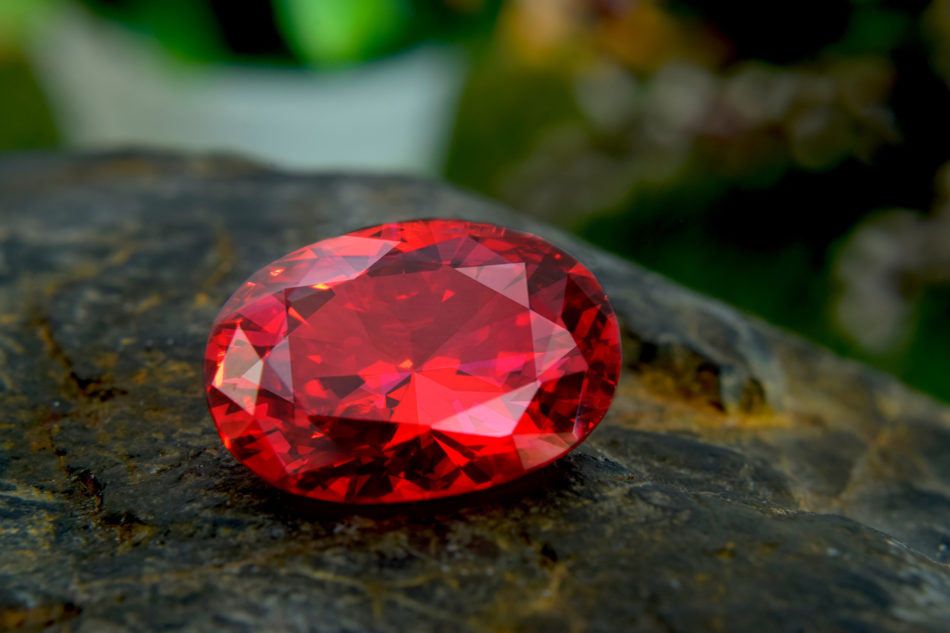
Many cultures in the East believed the ruby was the blood of the Earth, holding the power of life. They tied the gemstone to vigor, passion, abundance, and protection. To draw on that protection, rubies were sometimes inserted into the flesh of warriors before battle.
There is much folklore of rubies being placed or worn on the left side of the body to inspire protection, wealth, wisdom, and success. This belief carried into the 14th century. In 1365, Sir John Mandeville wrote of a man who touched the four corners of his land with his ruby to protect his property.
An Eternal Flame Inside
Others believed this dazzling stone was created by fire. Due to its inner glow, the ruby was said to hold an eternal flame. Ancient Greeks would even put rubies in water in the hope of making the water boil. (By the way, do you know the best time to boil water when cooking vegetables? Find out.)
Believed To Be Created By God
Rubies are mentioned in the Bible as one of the 12 stones created by God, set into the breastplate of the High Priest in the Book of Exodus.
A Disaster Forecaster?
Some still believe rubies can foretell disasters. To this day, people say a ruby will change color or appear duller just before a calamity to warn the wearer, then return to its original color when the wearer is no longer in danger. Direct evidence of this is anecdotal, but the story has crossed continents for centuries.
Ruby’s Metaphysical Properties
Rubies are thought to hold a long list of personal properties. The claims below come from folklore and modern crystal traditions, not from peer-reviewed studies. Many readers find them meaningful all the same.
- Protect the wearer as well as the wearer’s household.
- Bring wealth, passion, and longevity.
- Energize and stimulate motivation.
- Inspire a healthy passion for life.
- Connect the wearer with love and compassion by opening the heart chakra.
- Increase concentration, courage, and a positive state of mind.
- In India, an ancient Vedic text describes how rubies were placed at the center of Navaratna (meaning nine gems) jewelry to promote alignment with universal energy.
Famous Rubies In History
Rubies have a long, rich history that is still alive today. A handful of named stones carry most of that story, traded between auction houses, museums, and royal vaults.
The Rarest In The World
The Prince of Burma Ruby is one of the rarest in the world. Weighing more than 950 carats, it was found at the Dattaw Mine in Mogok, Myanmar, in 1996. What makes the stone unusual is its pigeon-blood color combined with the fact that it was not exposed to heat during its creation, an “unheated” Burmese ruby of that size is almost unheard of.
Stolen In A Heist!
One ruby with a memorable past is the DeLong Star Ruby. It was discovered in Burma in the 1930s. This oval, 100-carat gem was donated to the American Museum of Natural History by Edith Haggin DeLong. In 1964, it was stolen during the elaborate Murph the Surf gem heist that took two dozen rare gemstones from the museum. A ransom was paid, and the stone was returned in 1965. The star pattern visible on its surface is an asterism caused by needle-thin rutile inclusions arranged in a six-rayed pattern.
The Most Expensive Ever Bought
When looking for a famous ruby, one cannot ignore The Sunrise Ruby. This Burmese gem holds the title for the most expensive colored gemstone ever purchased at auction. Weighing 5.118 grams, it is a whopping 25.59 carats. In 2015, it sold at the Geneva Auction for over $30 million dollars. Its name was inspired by the 13th-century poet, Rumi:
The Sunrise Ruby
In the early morning hour,
just before dawn, lover and beloved wake
and take a drink of water.
She asks, “Do you love me or yourself more?
Really, tell the absolute truth.”
He says, “There is nothing left of me.
I’m like a ruby held up to the sunrise.
Is it still a stone, or a world
made of redness? It has no resistance
to sunlight.”
This is how Hallaj said, I am God,
and told the truth!
The ruby and the sunrise are one.
Be courageous and discipline yourself.
Completely become hearing and ear,
and wear this sun-ruby as an earring.
Work. Keep digging your well.
Don’t think about getting off from work.
Water is there somewhere.
Submit to a daily practice.
Your loyalty to that
is a ring on the door.
Keep knocking, and the joy inside
will eventually open a window
and look out to see who’s there.
-Rumi
Other Named Rubies Worth Knowing
- Edwardes Ruby (167 ct): Held at the Natural History Museum in London, named for John Edwardes who donated it in 1887.
- Carmen Lucia Ruby (23.1 ct): An unheated Burmese cushion-cut stone held by the Smithsonian National Museum of Natural History.
- The Black Prince’s “Ruby” (170 ct): The famous red gem in the British Imperial State Crown was confirmed to be a red spinel in 1783. It remains a striking reminder that not every red royal stone is a ruby.
Ruby Treatments: What “Heated” and “Filled” Mean
Most rubies on the market today have been treated to improve color or clarity. The two main treatments are very different in scale and disclosure.
- Heat treatment: A long-established practice that affects more than ninety percent of rubies on the open market. Heating dissolves rutile inclusions and deepens the red. The treatment is stable, accepted by the GIA and the American Gem Trade Association, and only needs to be disclosed on the grading report.
- Glass filling (lead-glass infusion): A more aggressive process that floods fractured rough with leaded glass to create a stone that looks far better than the rough deserved. These “composite” rubies are fragile and lose color if exposed to acid, ultrasonic cleaning, or even a jeweler’s torch during repair. Reputable sellers always disclose.
- Unheated rubies: Stones with no treatment at all. They are the most valuable category and command a premium of two to ten times over heated stones of the same color.
Always ask for the grading report before you pay. A trustworthy seller will hand it over.
Ruby and the Zodiac
July straddles two zodiac signs. People born from July 1 through July 22 fall under Cancer, the water sign tied to the moon. Those born from July 23 onward sit under Leo, the fixed fire sign ruled by the sun. The ruby’s red glow and “inner flame” reading suit Leo’s solar character, while its protective folklore speaks to Cancer’s emphasis on home and family. Either way, July gets the most photogenic birthstone of the calendar.
How To Care For Ruby Jewellery
A ruby is one of the easiest precious stones to live with, but the treatment matters. Use this short routine for clean, untreated, or heat-treated stones.
- Soak in warm water with a drop of mild dish soap for fifteen minutes.
- Scrub gently behind the stone with a soft toothbrush to lift skin oil and lotion.
- Rinse in clean water and dry on a soft cloth.
- Ultrasonic and steam cleaning are usually safe for untreated or heat-treated rubies. They are not safe for glass-filled rubies.
- Store rubies separately from softer stones such as opal, pearl, or turquoise, since corundum can scratch them.
Choosing A Ruby: A Plain-English Buyer’s Guide
Jewellers grade rubies using a version of the diamond “4Cs,” adapted for colored stones.
- Color: The single most important factor. Look for a pure, saturated red with a faint blue or purple undertone. “Pigeon blood” is the trade benchmark.
- Clarity: Eye-clean is the goal, but fine silk-like rutile inclusions are normal and prove a natural origin.
- Cut: A good cut returns the red as evenly as possible. Avoid windows, dark zones, or extinction.
- Carat weight: Rubies above one carat in the right color climb steeply in price. Below that, the rise is gentler.
- Origin: Burmese stones command the highest premium, then Mozambique, then everywhere else. Origin should be confirmed on the grading report.
Set a budget before you start shopping, and ask for a GIA or other independent laboratory report on any stone above half a carat. Do what feels right for the person who will wear it.
Ruby As The 40th Anniversary Stone
In the traditional Western anniversary list, ruby is the gem of the 40th wedding anniversary. The pairing is more than poetic. A 40-year marriage is the kind of slow, hardened thing a 9-on-the-Mohs stone seems to honor. If you are shopping for a 40th, a heat-treated Mozambique ruby in a simple setting gives you the right color story without the Burmese price tag.
Alternative Birthstones for July
There are affordable, natural forms of ruby birthstone jewelry as well as alternative options to precious stones for celebrating July.
Citrine
Like ruby, citrine is associated with abundance and the manifestation of one’s desires. Citrine is also believed to release fear.
Garnet
Another stone to consider is garnet, which is traditionally recognized as January’s birthstone. In India, garnet was believed to have a similar vibration to the ruby. Garnet is abundantly available and reasonably priced. For readers comparing red stones across the calendar, see also the June birthstone (pearl, alexandrite, and moonstone) and the August birthstone (peridot, sardonyx, and spinel).
Ruby In The Wider July Tradition
The ruby sits inside a larger month full of red symbolism. July’s birth flowers are the larkspur and the water lily, and the month opens with Canada Day, closes with national festivals across the United States and Mexico, and contains the Buck Moon. For a fuller picture of what folklore and tradition assign to the month, see our guide to July birth month symbols and fun facts.

Frequently Asked Questions About The July Birthstone
What is the birthstone for July?
July’s birthstone is the ruby, a red variety of the mineral corundum. Citrine and garnet are sometimes listed as affordable alternatives.
What does the ruby symbolize?
Ruby has long been a symbol of passion, courage, protection, and love. Eastern traditions called it the “blood of the Earth” and tied it to vigor and life. Western traditions made it the stone of royalty and the 40th wedding anniversary.
Why are rubies red?
Rubies are red because of trace amounts of chromium inside the corundum crystal. Remove the chromium and the same mineral becomes colorless or, with iron and titanium, blue sapphire.
What is a “pigeon blood” ruby?
“Pigeon blood” is a trade term for the most prized ruby color: a vivid, pure red with a faint blue or purple undertone. The benchmark comes from the Mogok valley in Burma. Stones meeting the grade command the highest prices.
Are rubies and sapphires really the same stone?
Yes, mineralogically. Both are corundum (aluminum oxide). Red corundum is called ruby. Every other color, blue, pink, yellow, purple, orange, even colorless, is called sapphire. The GIA defines the boundary by the strength of chromium-driven red.
How can I tell if a ruby is real?
Look for natural inclusions called rutile, or silk, which only form during slow natural growth. Lab-grown rubies tend to look flawless under magnification. The reliable answer is a grading report from the GIA or another independent gem lab.
Is it safe to clean a ruby in an ultrasonic cleaner?
Untreated and heat-treated rubies are usually safe in an ultrasonic or steam cleaner. Glass-filled (lead-glass-infused) rubies are not. They can crack or lose color. When in doubt, warm soapy water and a soft toothbrush will do the job.
Which anniversary is the ruby for?
Ruby is the traditional gem of the 40th wedding anniversary in the Western anniversary calendar. It is also tied to the 15th anniversary in some lists.
Join The Discussion!
Were you born in the month of July? Had you ever heard of the connection between rubies and warrior protection?
Do you believe that rubies have the power to protect?
Have you ever seen one in person?
Let us know in the comments below!
Learn about other birthstones.


Tamra Albright-Johnson
Tamra Albright-Johnson specializes in the unique histories and folklore around rare stones. She owns and operates a custom jewelry shop with her daughter, Kennie, in Iowa.
- Tamra Albright-Johnson

- Tamra Albright-Johnson
- Tamra Albright-Johnson
- Tamra Albright-Johnson