

How to Boil Vegetables: When to Add Them to the Water
You'll need this clever hack to remember how to cook your favorite veggies! It's our most popular tip!
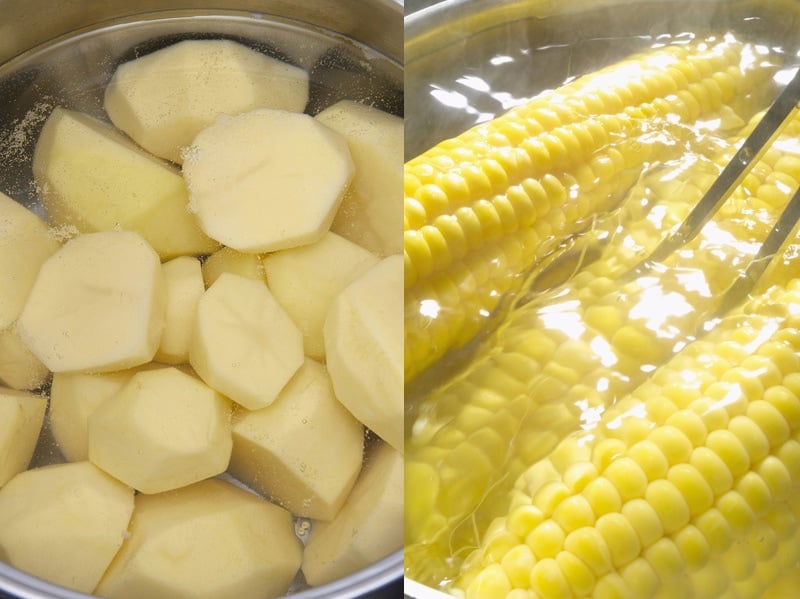
There is a simple rule passed down in many kitchens about when to add vegetables to boiling water. It cuts overcooking, keeps color, and preserves texture. The rule sorts every vegetable into two groups based on where it grows.
Quick Reference
- Above-ground vegetables (broccoli, green beans, peas, asparagus, corn on the cob): start in already-boiling water.
- Below-ground vegetables (potatoes, carrots, turnips, beets, parsnips): start in cold water, bring to a boil together.
- Why it matters: above-ground crops cook fast and need quick heat to keep color and texture; below-ground crops cook slowly and need gradual heat so the outside does not overcook before the inside is tender.
- Always salt the water: 1 tablespoon per quart. Salt seasons from the inside out.
- Test for doneness: fork-tender for root vegetables; bright color and slight resistance for above-ground.
- Old kitchen rule: grow up = start in boiling; grow down = start in cold.
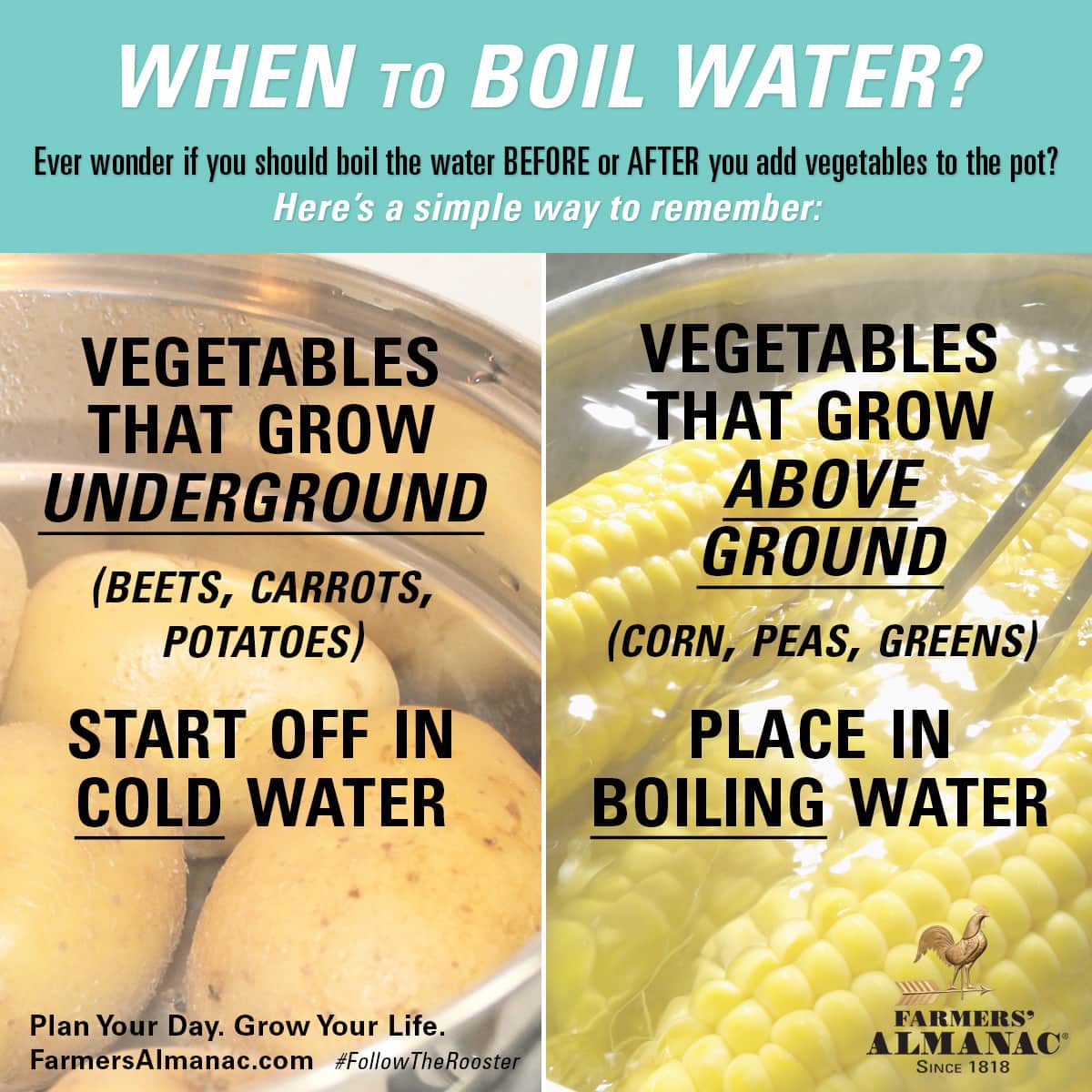
The Rule: Where the Vegetable Grows Decides When You Add It
Above-ground vegetables go into already-boiling water. Broccoli, cauliflower, green beans, snap peas, sweet corn on the cob, asparagus, and Brussels sprouts all cook fast. Dropping them into rolling water kicks off the heat shock that locks in color and stops them from going limp. The cooking time is short (3 to 8 minutes) and the inside cooks at nearly the same rate as the outside.
Below-ground vegetables start in cold water and come to a boil with the water. Potatoes, carrots, turnips, parsnips, beets, rutabagas, sweet potatoes, and other root vegetables are dense. If you drop a whole potato into boiling water, the outside will turn to mush before the center reaches tender. Starting in cold lets the heat penetrate gradually, so the whole vegetable cooks at roughly the same pace.
Why the Rule Works
Above-ground vegetables are mostly water held in delicate cell walls. They cook by softening those walls just enough. Hot-water shock keeps the cooking quick. Bright colors come from chlorophyll, which is preserved by short, hot exposure and degraded by long, slow exposure. That is why broccoli that simmers too long looks olive-drab instead of forest green.
Root vegetables are denser, with packed starch. They need time for heat to travel from the outside in. Starting in cold means the outside is not boiled to mush by the time the inside is fork-tender. The same principle applies whether you are making mashed potatoes, a pot of carrots for soup, or beets for pickling.
Salt the Water (Both Cases)
One tablespoon of salt per quart of water is the cooking-school standard. It seasons the vegetable from the inside out, the way pasta water seasons noodles. Unsalted water makes everything taste flat, no matter how good the seasoning at the table. Sea salt or kosher salt, not table salt.
How to Test for Doneness
For root vegetables, slide a paring knife or skewer into the largest piece. It should glide in with no resistance. If you feel a hard center, give it 2 more minutes. For green vegetables, pull a piece out and taste: bright color, slight bite, no rawness. Drain immediately and shock in ice water if you are not serving right away. Cold-shocking stops the residual heat from continuing to cook the vegetable in the colander.

Quick Reference Times (Above-Ground)
- Asparagus: 3-5 minutes
- Broccoli florets: 3-4 minutes
- Cauliflower florets: 4-5 minutes
- Green beans: 4-6 minutes
- Snap peas: 2-3 minutes
- Corn on the cob: 4-6 minutes
- Brussels sprouts (halved): 6-8 minutes
- Spinach: 1-2 minutes
Quick Reference Times (Below-Ground)
- Whole small new potatoes: 15-20 minutes
- Diced potatoes (1-inch cubes): 10-12 minutes
- Carrots, sliced: 8-10 minutes
- Carrots, whole: 15-20 minutes
- Turnips, diced: 10-12 minutes
- Parsnips, diced: 10-12 minutes
- Beets, whole: 30-45 minutes
- Sweet potatoes, diced: 10-15 minutes
A Few Exceptions Worth Knowing
Sweet corn straight from the field cooks in 3 to 5 minutes; stored corn from the grocery store takes 5 to 6. Sugar in corn turns to starch the moment the ear is picked, so the fresher the corn, the shorter the cook. Onions and garlic go straight into the pan, not water; they are seasoning, not vegetables. Leafy greens (spinach, chard, beet greens) need barely a minute in boiling water before being lifted out.
Folklore tradition pairs the boiling-water rule with the moon’s sign, with above-ground vegetables prepared in waxing (growing) signs and root vegetables in waning. The science is thin, but the rhythm of the rule survives because it works. For more old-kitchen rules of thumb, see our potato-growing guide and the Farmers’ Almanac gardening calendar.
Try It With Corn on the Cob
Drop shucked ears into a pot of rolling, salted water. Cover and turn off the heat. Let sit 4 to 6 minutes. Lift out and serve with butter and salt. See more corn-on-the-cob recipes for ways to dress it up.

Frequently Asked Questions
Why do you start root vegetables in cold water?
Root vegetables are dense. Dropping them into boiling water cooks the outside fast while the center stays hard. Starting in cold water lets the heat penetrate gradually, so the whole vegetable reaches tender at the same time.
Why do you start green vegetables in boiling water?
Above-ground vegetables cook fast and need quick heat to lock in color and texture. Hot-water shock preserves the chlorophyll that keeps broccoli and green beans bright green. Slow heat turns them olive-drab.
How much salt should I use?
One tablespoon of kosher or sea salt per quart of water. It seasons the vegetable from the inside out and keeps the flavor from going flat.
Should I shock vegetables in ice water after boiling?
Yes, if you are not serving them immediately. The ice bath stops residual heat from continuing to cook the vegetable in the colander and keeps the color bright.
Does the cold-water rule work for steaming?
Less so. Steaming uses gentler, drier heat throughout. The boil rule is specific to dropping the vegetable into water. For steaming, start most vegetables once the steam is going.


This article was published by the Staff at FarmersAlmanac.com. Any questions? Contact us at [email protected].
- Farmers' Almanac Staff

- Farmers' Almanac Staff

- Farmers' Almanac Staff

- Farmers' Almanac Staff




After cooking vegetables, never pour the liquid down the drain. It is like liquid gold. Let it cool down and use it for houseplants. There are valuable nutrients in the water and they will love you for it. Plants just perk up and grow and sprout and do whatever happy plants do. Don’t need it right away? Park it in the fridge overnight, but let it come to room temp before pouring on plants. They don’t like cold showers any more than we do.
Hi Patricia, yes, that’s one of our tips, as well. Just be sure the water is not salted.
My mother’s saying: If it grows in the hot hot sun, put it in boiling water to cook. If it grows in the cold cold ground put it in cold water to cook. Mom would have been 103 this year.
We love that! Thank you, Susan
Microwaving one of corn, in husk, for four minutes is amazing. Cut base and silk slide off with husk.
Eight minutes for two ears…
I’ve always started my potatoes in cold water, something my mother and grandmother always did. Didn’t know about the corn, have always started my corn on the cob with sugar in cold water.
I have Idaho Potatoes that I have always started in hot water & brought up to a boil & they don’t get mushy. It’s the other potatoes that you can’t do this with!! Just sayin’