Lightning Safety: Statistics and the 30-30 Rule
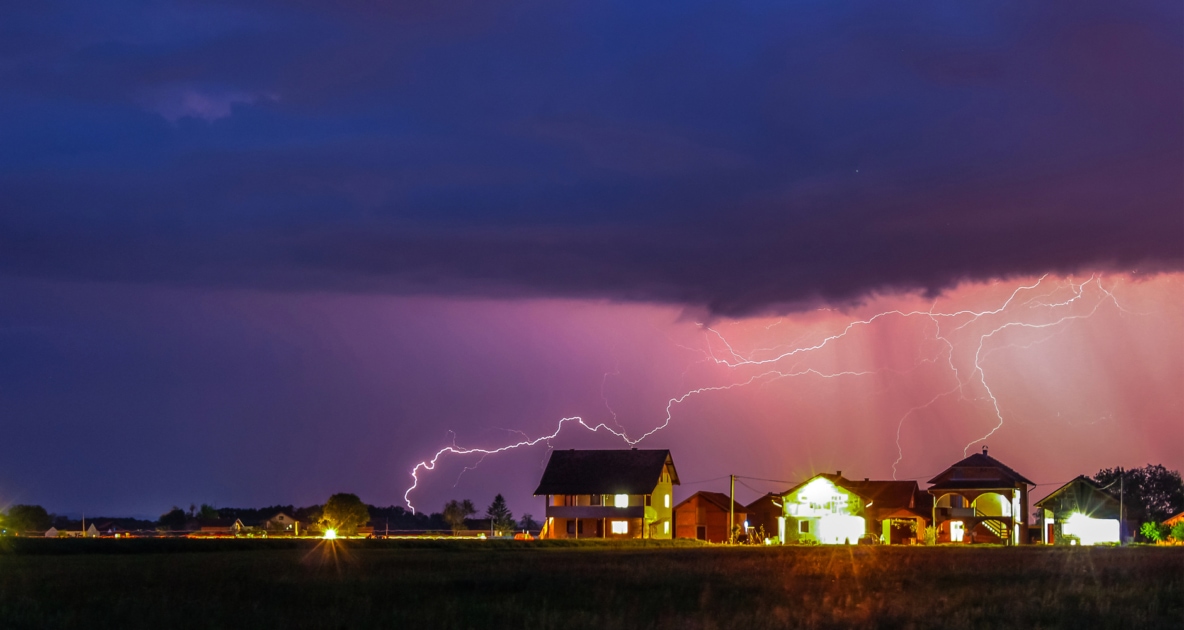
Quick Reference
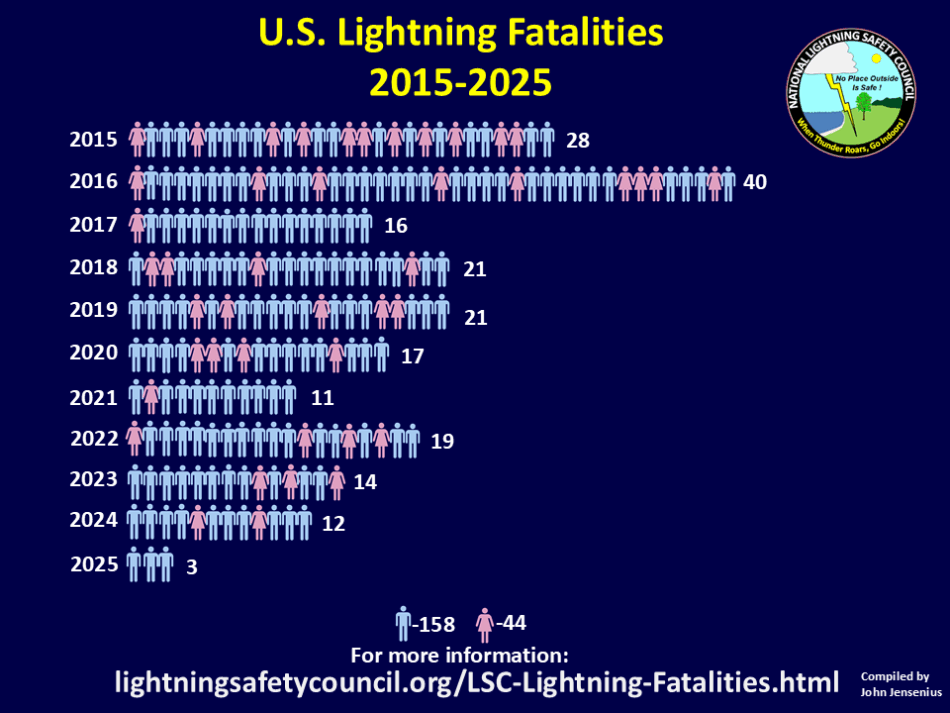
- Annual U.S. lightning deaths: About 20 people. Undocumented injuries are likely several times the official ~300.
- Annual U.S. lightning flashes: About 25 million cloud-to-ground strikes.
- 30-30 Rule: If you see lightning and count to 30 before hearing thunder, the storm is within 6 miles. Go inside.
- Wait time: Stay indoors for at least 30 minutes after the last thunder before going back out.
- Lightning can strike up to 10 miles from the rain. Blue sky overhead does not mean safe.
Each year, lightning kills about 20 people in the U.S. and injures hundreds more. The numbers feel small until you remember every fatality is preventable. This is the statistics-and-mechanics guide to lightning safety. For the myth-busting Q&A (cellphones, cars, showers), see our sibling article Thunder and Lightning Safety: Myths, Facts, and Q&A. Here we focus on the data and the 30-30 Rule that prevents most lightning casualties.
Lightning: The Statistics
According to the National Weather Service, lightning kills an average of 20 people per year in the United States and injures several hundred more. Beneath the official count, undocumented injuries are likely much higher; many survivors of lightning strikes never seek treatment beyond a doctor’s note.
About 25 million cloud-to-ground lightning flashes hit the contiguous U.S. each year. Watching lightning is awe-inspiring. It is also extremely dangerous. Unlike tornadoes or hurricanes, which kill in large concentrated events, lightning kills one or two at a time. Because the deaths are scattered, the threat gets less attention than its body count deserves.
Lightning Safety: An Educational Problem
Few people really understand the dangers of lightning. Many do not act to protect their lives, property, and the lives of others quickly enough because they do not understand the full set of risks. The first step in fixing this is education: knowing which behaviors put you at risk and what to do instead. Coaches, camp counselors, lifeguards, and anyone responsible for children’s outdoor safety should know the 30-30 Rule and the safe-shelter list cold.
How Thunderstorms Develop
Thunderstorms develop on hot days through predictable stages of growth, maturity, and dissipation. On a sunny morning, sun heats the air. Pockets of warmer air rise. When the rising air hits a certain level in the atmosphere, cumulus clouds form. Continued heating builds these into towering cumulus, the puffy cauliflower-headed clouds that often signal a thunderstorm is incubating. From cumulus to violent storm can take less than an hour. Read: Best Places to Watch a Thunderstorm if you want to see one from a safe distance.

The Lightning Discharge: Don’t Be Part of It
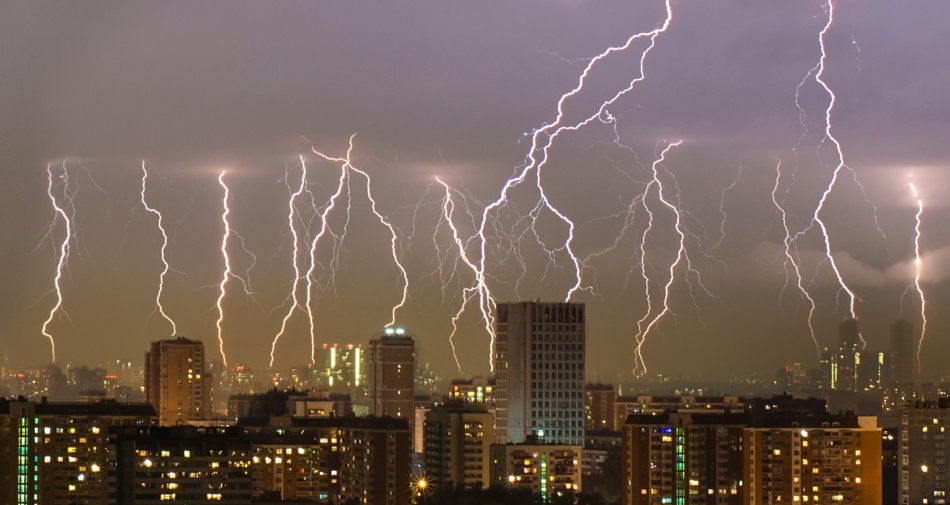
During a thunderstorm, each cloud-to-ground lightning flash is a potential killer. Whether a particular flash hits a person depends on whether they happen to be in the path of the discharge. The visible bolt is only part of the danger. The current also spreads along the ground, radiating outward from the strike point for tens of yards. Many lightning victims are struck not by the main bolt but by this ground current as it ripples through wet soil, rebar, fence lines, plumbing, or tree roots.
When Should I Seek Shelter?
Lightning can strike as much as 10 miles away from the rain area in a thunderstorm. That is roughly the distance you can hear thunder. When the storm is 10 miles out, it may be hard to tell a storm is even coming. The first stroke is just as deadly as the last. If the sky looks threatening, take shelter before you hear thunder.
The 30-30 Rule
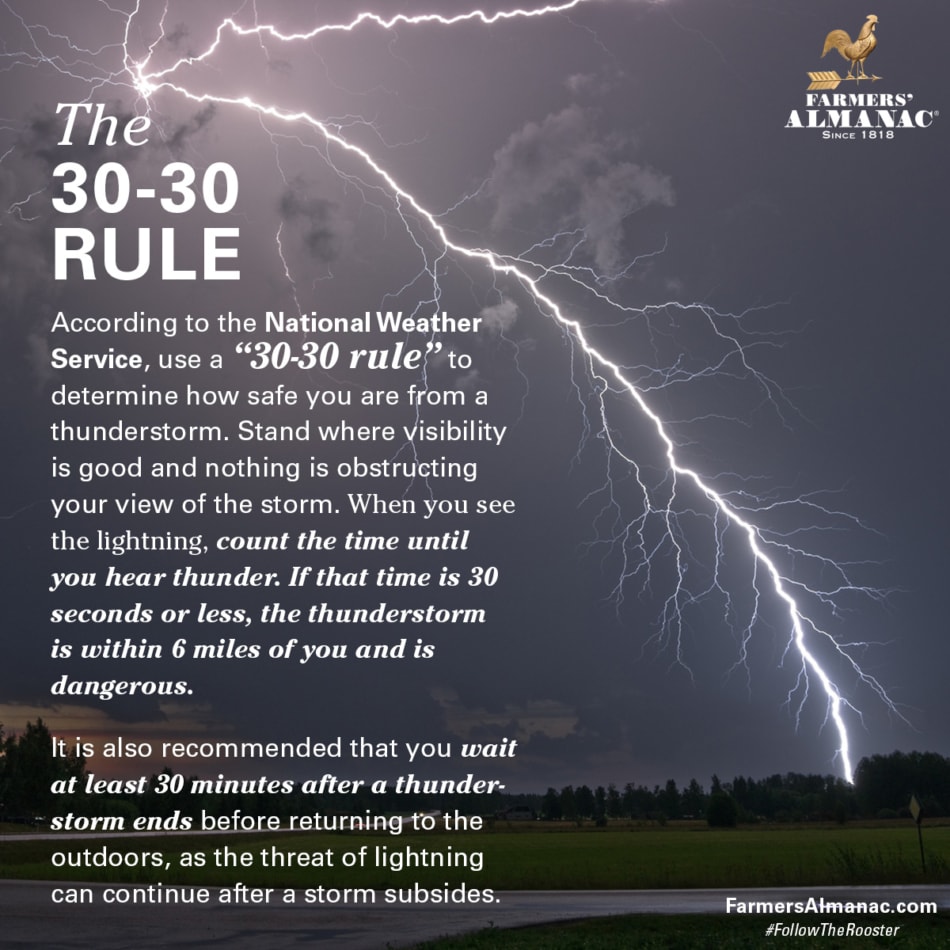
Use the 30-30 Rule when visibility is good and nothing is blocking your view of the storm:
- When you see lightning, count the seconds until you hear thunder. If 30 seconds or less, the storm is within 6 miles. Seek shelter immediately.
- After the storm passes, wait 30 minutes from the last thunder before leaving shelter. The trailing edge of a storm can still produce strikes long after the rain stops. Do not be fooled by sunshine or blue sky.
Outdoor Activities: Minimizing Risk
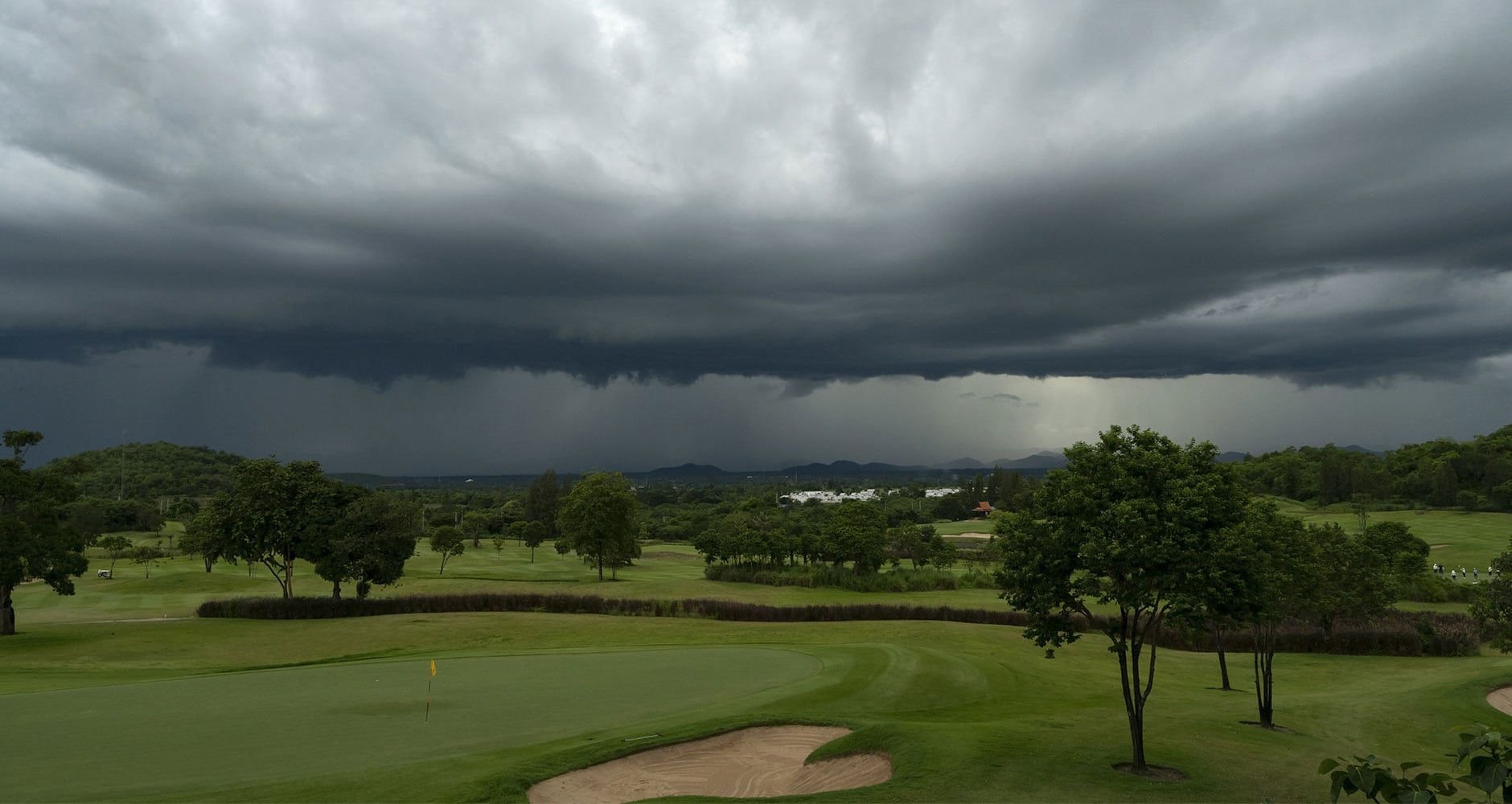
Most U.S. lightning deaths happen during the summer months when peak outdoor recreation overlaps with peak thunderstorm activity. People take advantage of warm weather to fish, boat, golf, bike, run, hike, camp, and work outside. Many of those activities put a person in elevated terrain or open water, both prime strike zones.
If you are responsible for organized outdoor activities (coaches, umpires, referees, camp counselors), have a lightning plan. Stop play at the first crack of thunder. Move everyone to a substantial building or hard-topped vehicle. Wait the full 30 minutes from the last thunder before resuming. Lightning Safety Council and NOAA both publish standardized protocols you can adopt.
Indoor Activities: Things to Avoid
Indoors is much safer than outdoors but not perfectly safe. Lightning travels through electrical systems, plumbing, and even reinforced concrete. Avoid the following during a storm:
- Computers, laptops, game systems, anything plugged into an outlet
- Washers, dryers, dishwashers, microwaves
- Wired phones (cellphones are fine)
- Showers, baths, sinks, anything involving running water
- Windows and doors (stand away from them)
- Concrete walls or floors with rebar
When Thunder Roars, Go Indoors.
If you can hear thunder, you are already within striking distance of the storm.
National Weather Service lightning safety campaign
If Someone Is Struck, What to Do
Lightning strike victims are safe to touch. The body does not retain a charge. Call 911 immediately. Cardiac arrest, irregular heart rhythms, burns, and nerve damage are common. Start CPR if the victim is not breathing or has no pulse. With prompt CPR and medical care, most lightning-strike victims survive, though long-term effects on memory, balance, and sleep can persist for years.
Have a Safe Summer
Lightning is a real and predictable threat to people outdoors in summer. With basic awareness (the 30-30 Rule, the safe-shelter list, and the indoor cautions above) the death toll could drop substantially. When thunderstorms threaten, get to a safe place, stay there longer than you think you need to, stay away from windows and doors, and avoid anything that conducts electricity. Have a safe summer.

Frequently Asked Questions
What is the 30-30 Rule for lightning safety?
When you see lightning, count the seconds until you hear thunder. If 30 seconds or less, the storm is within 6 miles. Seek shelter. After the storm, wait 30 minutes from the last thunder before leaving shelter.
How many people are killed by lightning each year in the U.S.?
About 20 deaths per year on average, per the National Weather Service. Roughly 300 documented injuries annually, with the actual count likely several times higher because many survivors never seek treatment.
How far away can lightning strike?
Up to 10 miles from the rain area. That is roughly the distance thunder can be heard. A clear blue sky overhead does not mean you are safe if a storm is in the area.
Is it safe to touch someone who has just been struck by lightning?
Yes. The body does not retain a charge. Call 911 immediately and start CPR if the victim is not breathing or has no pulse.
What is ground current and why does it matter?
When lightning strikes the ground, the current spreads outward through wet soil, rebar, plumbing, and tree roots for tens of yards. Many lightning casualties are not struck by the main bolt directly but are hit by this ground current. It is why lying flat on the ground is not a safe pose.
When does U.S. lightning activity peak?
July, followed by June and August. Florida and the Gulf Coast see lightning year-round but peak in summer. The northern and western U.S. have a narrower thunderstorm season concentrated in summer afternoons.
Additional Resources
- Lightning Safety Council
- NOAA Lightning Safety resources
- Thunder and Lightning Safety: Myths, Facts, and Q&A (sibling article)


This article was published by the Staff at FarmersAlmanac.com. Any questions? Contact us at [email protected].
- Farmers' Almanac Staff

- Farmers' Almanac Staff

- Farmers' Almanac Staff

- Farmers' Almanac Staff