8 Natural Ways To Get Rid of Wasps Safely (Naturally)

Quick Reference: Natural Ways To Get Rid of Wasps
- Best season to act: Early spring, before queens build nests.
- Top deterrent scents: Peppermint, clove, geranium, lemongrass, citronella.
- Easiest fix: Seal trash cans, rinse soda cans, pick up fallen fruit.
- Trap placement: Far from patios, doors, pools, and play areas.
- Call a pro when: Nest is in a wall, large, or near doorways, or anyone is allergic.
- Wasps are useful: Many species hunt caterpillars, aphids, and other garden pests.
Wasps belong in the garden more than most folks think. Many species hunt caterpillars, flies, aphids, and the other small pests that chew through tomatoes, beans, and roses. The trouble starts when wasps move from the vegetable rows to the patio table, the grill, the trash bin, and the hummingbird feeder. The good news: you do not always need harsh chemicals to send them back to the garden. A handful of natural deterrents, tidy outdoor habits, and a little spring inspection will keep wasps away from the spots where people gather.
This guide walks through eight natural ways to get rid of wasps safely, plus the smells they hate, what attracts them to your yard, and the moment to stop and call a professional. Folks have been deterring wasps with peppermint, clove, and a tightly sealed trash can for generations. The science is friendly to the folklore here.
One safety rule, first: never try to remove a large wasp nest, yellowjacket nest, hornet nest, or any nest tucked inside a wall, attic, crawl space, or high-traffic area. If anyone in the household has a sting allergy, or if the nest is large or hard to reach, call a pest control professional. The eight methods below are for deterrence and prevention around the spaces you actually use.
Related Post: 22 Ways To Combat Garden Pests Naturally

First: Are They Wasps, Bees, Hornets, or Yellowjackets?
Before reaching for a spray, identify the visitor. Many people call every striped flying insect a “bee,” but bees, wasps, hornets, and yellowjackets behave differently and need different responses. Penn State Extension has photo-driven identification guides, and these are the field marks to look for.
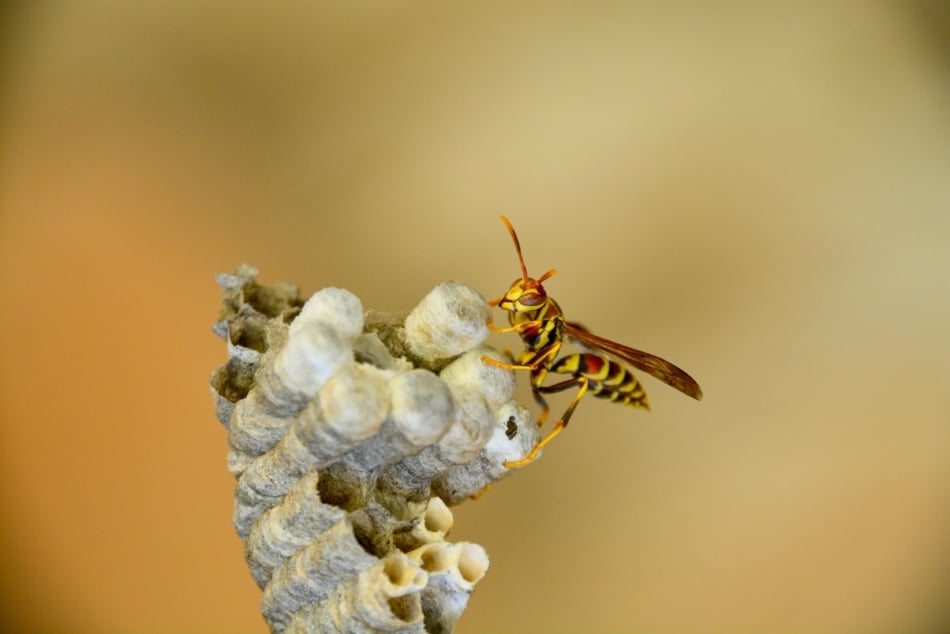
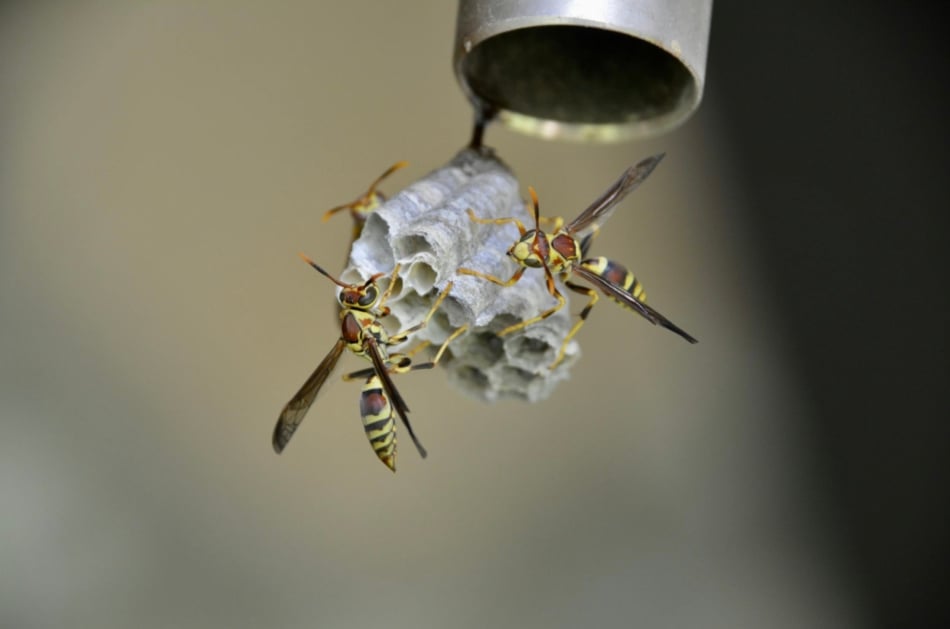
Wasps usually have smooth, shiny bodies, narrow waists, and long legs. They are drawn to meat, sweets, trash, fallen fruit, and outdoor meals.
Yellowjackets are a type of wasp. They tend to be more aggressive around food and often nest underground, inside wall voids, or in hidden cavities. They are the most common picnic pest in late summer.
Hornets are larger wasps. Bald-faced hornets and European hornets build big papery nests in trees, shrubs, eaves, or attached to outbuildings.
Bees are usually fuzzier, with branched hairs that carry pollen. They are vital pollinators. If you have honey bees or a honey bee swarm, contact a local beekeeper or swarm-removal group rather than try to destroy the colony.
Reminder on the role wasps play: Wasps can be a nuisance around patios and picnic tables, but they are also helpful garden allies. According to research summarized by the Xerces Society, many wasps are predators or parasitoids of caterpillars, flies, aphids, and other plant-damaging insects, and several species also serve as incidental pollinators. The goal here is to deter wasps from high-traffic spots, not to eliminate them from the garden entirely.
8 Natural Ways To Get Rid of Wasps
1. Remove the Food That Attracts Them
The easiest way to keep wasps away is to stop feeding them. Wasps shift menus through the season. In spring and early summer they hunt protein for their growing colonies. By late summer and into fall, they switch to sugar and crowd around soda cans, fallen fruit, and hummingbird feeders.
To make your yard less appealing:
- Keep trash cans tightly sealed.
- Rinse soda cans and juice bottles before recycling.
- Clean up barbecue scraps and grease after grilling.
- Do not leave pet food outside.
- Pick up fallen fruit from apple, pear, peach, plum, and berry plants.
- Cover pitchers, cups, and food trays when eating outdoors.
- Clean hummingbird feeders and wipe away sticky sugar-water drips.
If wasps are gathering on a porch or patio, look for something sweet, meaty, or sticky nearby. Removing the attractant usually solves more of the problem than any spray.
2. Use a Peppermint Oil Spray Around Problem Areas
Wasps dislike strong scents, and peppermint is one of the most popular natural wasp deterrents. It will not remove an established nest, but it does help discourage wasps from settling around doorways, porch ceilings, deck railings, patio furniture, and outdoor dining areas.
Simple peppermint wasp spray:
- 2 cups water
- 10 to 15 drops of peppermint essential oil
- 1 teaspoon liquid castile soap or mild dish soap
Add the ingredients to a spray bottle and shake well. Mist around outdoor surfaces where wasps tend to gather, such as railings, eaves, patio umbrellas, garbage can lids, and table legs.
Important: Do not spray this directly on wasps, bees, pets, children, food, flowering plants, or an active nest. Essential oils can irritate skin and may be unsafe for pets, especially cats. Reapply after rain.
3. Try Clove, Geranium, and Lemongrass
Another strong scent combination is clove, geranium, and lemongrass. These three oils show up across natural wasp deterrent recipes because they help mask the food smells that wasps follow.
Natural wasp deterrent blend:
- 2 cups water
- 5 drops clove essential oil
- 5 drops geranium essential oil
- 5 drops lemongrass essential oil
- 1 teaspoon mild dish soap
Shake well and spray around outdoor spots where wasps are a nuisance. Try porch railings, patio edges, deck furniture, outdoor trash areas, and the outside of picnic tables before food is served.
This works best as a deterrent, not as nest removal. If wasps are coming from an active nest, the nest itself still needs to be handled safely.
4. Plant Wasp-Repelling Herbs Near Outdoor Living Areas
Fragrant herbs do double duty: they make patios, walkways, and seating areas less inviting to wasps, and they earn their keep in the kitchen. Try planting these herbs in pots near patios, porches, decks, and outdoor dining spaces:
- Mint
- Spearmint
- Thyme
- Rosemary
- Basil
- Lemongrass
- Citronella
Mint is especially easy to grow, but it spreads aggressively in the ground. Keep it in containers unless you want it to take over part of the garden. Herbs alone will not stop a determined nest, but they earn their place in a larger wasp-prevention plan, especially around spots where people gather.
5. Hang a Decoy Wasp Nest Early in the Season
Some homeowners hang decoy wasp nests to discourage paper wasps from building nearby. The idea is simple: certain wasps are territorial and tend to avoid building too close to another colony. Decoy nests work best when they go up early in the season, before nests are established.
Hang one under a porch roof, eave, shed overhang, or covered patio where you have had wasp problems in the past. A decoy nest is not a guaranteed fix, and it will not remove wasps that have already settled in. Think of it as a prevention tool, not a cure.
6. Seal Cracks, Gaps, and Nesting Spots
Wasps prefer sheltered places. Yellowjackets in particular may move into wall voids, abandoned rodent burrows, hollow spaces, or hidden ground cavities. To prevent future problems, inspect your home and garden structures in early spring. Look for gaps around:
- Siding
- Window frames
- Door frames
- Rooflines
- Soffits
- Deck boards
- Sheds
- Garage trim
- Outdoor faucets and utility openings
Seal small cracks and openings with caulk, weatherstripping, or appropriate exterior sealant. Repair damaged screens and cover vents with proper mesh.
Do not seal an entrance if wasps are actively flying in and out. Trapping wasps inside a wall or structure can drive them to find another way out, sometimes straight into the house. If you suspect a nest inside a wall, call a professional.
7. Use a Wasp Trap, Far Away From People
If wasps are constantly bothering your patio, pool, garden table, or outdoor kitchen, a trap may help reduce activity in that area. The key is placement. Do not put a trap where people are sitting or eating. Set it far away from the space you want to protect, so wasps fly toward the trap and away from the table.
Simple bottle trap:
- Cut the top third off a plastic bottle.
- Add a small amount of bait to the bottom.
- Turn the top piece upside down and place it inside the bottle like a funnel.
- Hang or set the trap away from patios, doors, play areas, and pets.
For bait, use sugar water, overripe fruit, fruit juice, or a small piece of lunch meat depending on the season. Wasps tend to seek protein earlier in the season and sweets later in summer and fall. Empty and refresh traps regularly. Wear gloves and use caution when handling them.
8. Know When To Leave Them Alone, or Call a Pro
Not every wasp nest needs to be removed. If a small nest is far from doors, walkways, patios, play areas, and pets, it may be best to leave it alone. Wasps help control garden pests, and many colonies die out naturally after the season ends. Penn State Extension recommends professional removal in the cases below.
Call a pest control professional if:
- The nest is large.
- The nest is inside a wall, attic, shed, crawl space, or other structure.
- The wasps are yellowjackets or hornets and are acting aggressively.
- The nest is near a doorway, porch, playground, mailbox, patio, grill, or pool.
- Someone in the home is allergic to stings.
- You cannot safely reach or clearly see the nest.
Never use gasoline, kerosene, fire, or boiling water on a wasp nest. These methods are dangerous and can cause burns, fires, toxic fumes, property damage, and far more aggressive wasp activity.
Related Post: Mosquito Repellent Plants, Natural Ways to Keep Bugs Away
What Attracts Wasps to Your Yard?
If wasps keep coming back, your yard is probably offering food, water, shelter, or nesting spots. The common attractants:
- Open trash cans
- Sticky recycling bins
- Compost piles
- Fallen fruit
- Outdoor food and drinks
- Pet food
- Grill grease
- Hummingbird feeders
- Flowering plants
- Standing water
- Cracks and gaps in buildings
- Old rodent holes
Start by removing food sources and sealing nesting opportunities. Natural sprays and herbs work better when you are not also feeding the wasps.
What Smells Do Wasps Hate?
Wasps are often deterred by strong scents, especially:
- Peppermint
- Clove
- Geranium
- Lemongrass
- Citronella
- Rosemary
- Thyme
- Spearmint
For best results, use scent deterrents around the places where you want wasps to stop gathering: porch railings, patio furniture, garbage areas, deck edges, and outdoor dining spaces. Reapply after rain.
Regional Wasp Pressure: A US and Canada Snapshot
Wasp pressure rises with heat and humidity, then peaks in late summer. The timing of that peak shifts by region, so the calendar below gives a rough planning window. Your local extension service can fine-tune the dates for your zone.
The pattern holds across the continent: spring is for prevention and herb planting, summer is for tidy outdoor habits, and the back half of summer is when scent sprays and well-placed traps earn their keep.
How To Keep Wasps Away From Outdoor Meals
Wasps are famous for ruining picnics, cookouts, and late-summer patio dinners. To keep them away from food:
- Serve food indoors and carry plates outside when ready.
- Cover serving dishes with mesh food covers.
- Use cups with lids when drinking sweet beverages.
- Wipe spills immediately.
- Keep trash cans far from the table.
- Set wasp traps at the far edge of the yard, not near the table.
- Clean the grill after cooking.
A simple change in where you place food, trash, and traps can make a real difference at the picnic table.
The Bottom Line
Wasps are not all bad, but they do not belong around doors, decks, patios, pools, grills, garbage cans, and play areas. The best natural approach is straightforward: remove what attracts them, block nesting spots, use scent deterrents, place traps far from people, and know when a nest is too risky to handle yourself. With a little prevention, you can enjoy your garden and outdoor spaces with fewer unwanted buzzing guests.
Plan your spring inspection. Plant your herbs. Trust the wasps that stay in the garden, and keep the rest at arm’s length.
FAQs About Getting Rid of Wasps Naturally
Do natural wasp repellents really work?
Natural wasp repellents can discourage wasps from gathering in specific spots, especially when paired with good cleanup and yard prevention. They are less effective against an established nest. Use them on railings, table legs, and trash lids, and reapply after rain.
Will peppermint oil get rid of a wasp nest?
No. Peppermint oil may help deter wasps from treated surfaces, but it should not be used as a nest-removal method. Do not spray essential oils directly into an active nest. For nest removal, call a pest control professional.
What is the fastest way to keep wasps away from a patio?
Remove food and drink spills, seal the trash, move traps away from the seating area, and spritz a natural scent spray around railings, table legs, and nearby surfaces before guests arrive. Then keep food covered while you eat.
Should I destroy a wasp nest?
Only if the nest poses a real risk to people or pets. If it is far from activity, it may be best to leave it alone. If the nest is large, hidden, aggressive, or near people, call a professional.
Are wasps good for the garden?
Yes. Many wasps help control garden pests by feeding on caterpillars, aphids, flies, and other plant-damagers, and several species also pollinate flowers in passing. The goal is not to eliminate every wasp from your yard. The goal is to keep them out of high-traffic spots where they may sting.
What should I do if I find wasps inside the house?
If one or two wasps get indoors, calmly open a window or door and let them out. If wasps appear repeatedly, there may be a nest in a wall, attic, chimney, or vent. Contact a pest control professional rather than try to seal the entry yourself.
When should I start natural wasp prevention?
Early spring. That is when queens emerge from overwintering and start scouting nest sites. A quick inspection of eaves, sheds, soffits, and outdoor faucets, plus a few decoy nests and herb pots, sets the season on the right foot before wasps settle in.


- Farmers' Almanac Staff

- Farmers' Almanac Staff
- Farmers' Almanac Staff
- Farmers' Almanac Staff