

What Is a Wet Moon (Cheshire Moon)? The Folklore and the Science
At certain times of the year, the Moon changes position in the sky giving viewers something to smile about. Learn when and where to spot it.
Quick Reference: The Wet Moon
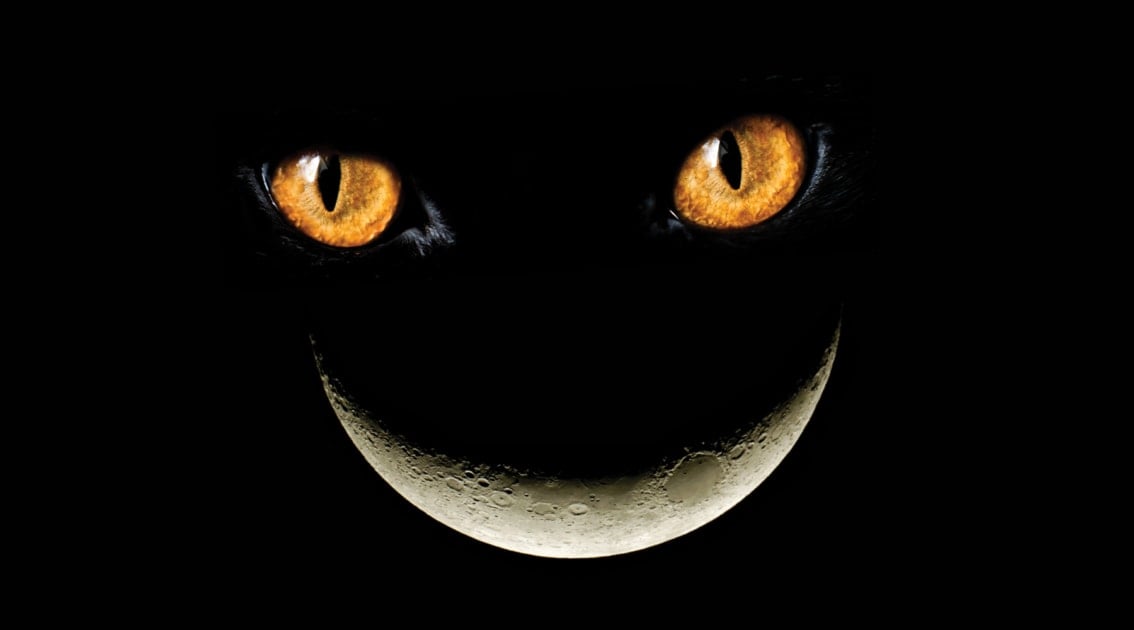
- What it is: a crescent moon whose horns point upward, like a smile or a bowl.
- Other names: Cheshire moon, smiling moon, bowl moon.
- When you see it: when the moon’s terminator line is more horizontal than vertical, which happens at low latitudes and near the equinoxes.
- Folklore meaning: in many tropical cultures, the bowl shape was said to hold water and predict rain.
- Science behind it: the orientation depends on your latitude and the time of year.
The wet moon (sometimes called the Cheshire moon for its smile-like shape) is a crescent moon whose horns point straight up instead of to the side. The bowl-shaped crescent has been read in many tropical cultures as a vessel that holds water and predicts rain. Here is what creates the shape, why it changes with your latitude, and the folklore that gave it its name.
Why the Crescent Tilts
The crescent moon’s orientation in the sky depends on three things: your latitude on Earth, the season, and the moon’s position in its orbit. At low latitudes near the equator, the crescent often appears tilted with horns pointing up. At high latitudes the horns more often point to the side.
Near the equinoxes (March and September), the moon’s path is most parallel to the horizon for observers in temperate latitudes, which is when the wet moon shape is most visible from the US and Canada.
The Folklore
In Hawaiian and Polynesian traditions, the wet moon was the kahawai pou: a moon shaped like an upright bowl that ‘held water,’ which meant the next rains would come soon. Caribbean and Pacific tropical traditions read the shape similarly: the bowl holds water, the dry moon (horns to the side) lets water spill out.
In temperate climates with less consistent rainfall correlation, the folklore weakened. The ‘wet moon predicts rain’ rule persists most strongly in tropical and subtropical regions where the rain link held up over many seasons.

Frequently Asked Questions
Why is it called a Cheshire moon?
After the Cheshire Cat in Alice in Wonderland, whose smile remained after the cat disappeared. The upturned-crescent shape resembles a smile.
Does a wet moon really predict rain?
In tropical regions where the orientation of the crescent aligns with seasonal rainfall patterns, folklore claims of rain prediction have a kernel of truth. In temperate regions the rule is much less reliable.
When can I see a wet moon?
Near the equinoxes (March and September), in the few days surrounding a new moon, looking west after sunset (or east before sunrise).
Is the wet moon a real astronomical category?
No, it’s a folklore name, not a formal astronomical term. The shape is just a normal crescent moon viewed from a particular latitude and time.



This article was published by the Staff at FarmersAlmanac.com. Any questions? Contact us at [email protected].
- Farmers' Almanac Staff

- Farmers' Almanac Staff

- Farmers' Almanac Staff

- Farmers' Almanac Staff



just because you’ve never experienced it yourself doesn’t mean it doesn’t exist. it all depends on the time and place for the experience as the article explains.
Why doesn’t this show up on the almanac then? I see only vertical for all the days of the year – none are horizontal ( nothing looking like the smile)
New to me. I really like getting this type of information from the Almanac. I just picked up mine for this year and it’s as interesting now as it was back in the day. It’s really fun getting these emails too.