

Why You Need a Potato Ricer: The Mashed-Potato Tool That Beats Every Other
Meet your new go-to kitchen gadget! Learn how easy it is to create the smoothest mashed potatoes, guacamole, and more!
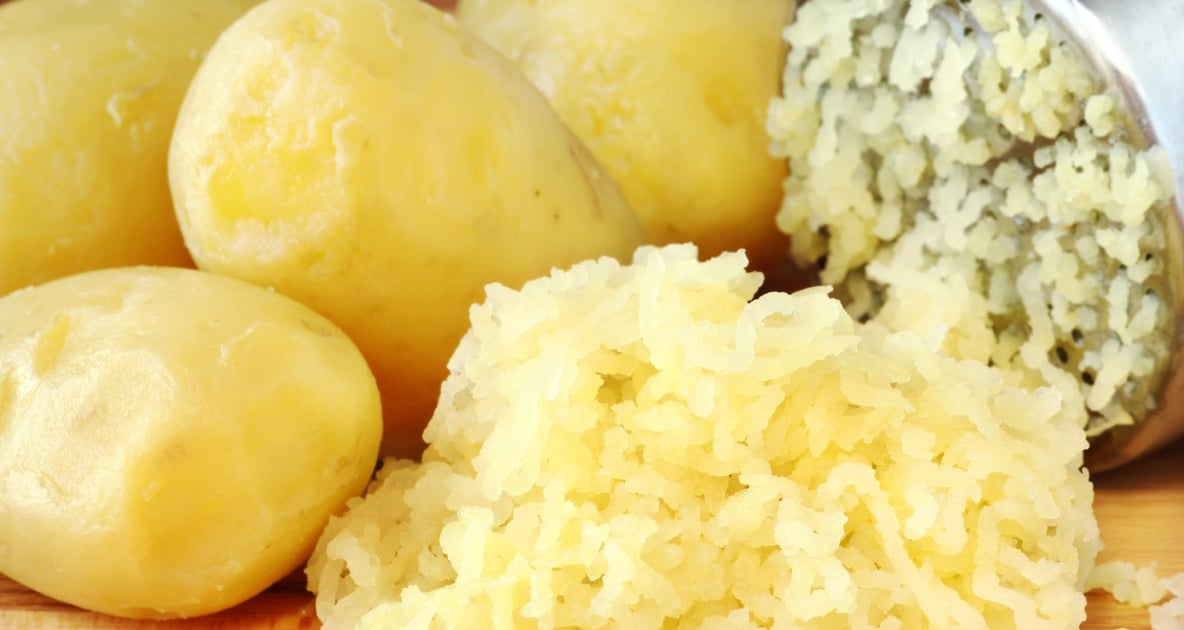
A potato ricer is one of those single-purpose tools that earns its drawer space the first time you use it. Cooked potatoes go in the basket, you squeeze the handles, and the potato pushes through small holes into a fluffy, lump-free cloud. Mashed potatoes made with a ricer are lighter and fluffier than anything a masher, fork, or mixer can produce. Here is why and how to use one.
Quick Reference
- What it is: a kitchen tool shaped like a giant garlic press. Hold cooked potato in the basket, squeeze the handles, and the potato extrudes through small holes as fine, fluffy strands.
- Why bother: ricer mashed potatoes are lighter, fluffier, and less starchy than any other method. No lumps, no glue, no over-mixing.
- Best potatoes: high-starch varieties (Russet, Yukon Gold). Waxy potatoes (red, fingerling) get gummy.
- Also great for: spaetzle, gnocchi dough, mashed cauliflower, cooked egg yolks for deviled eggs.
- Cost: $15 to $40. Stainless steel models last decades.
- Cleanup: rinse immediately after use. Dishwasher safe.
What Is a Potato Ricer?
A potato ricer is a manual extrusion tool that looks like a large garlic press. It has a hinged basket with small perforations on the bottom and two long handles. You drop cooked potato chunks into the basket, close the handles, and squeeze. The potato pushes through the perforations as fine strands, roughly the diameter of a grain of rice (hence the name). The strands collect in a bowl below.
It’s Called A Ricer, But It’s For Potatoes
The name comes from the rice-grain shape of the extruded strands, but the tool is almost universally used for potatoes. A ricer breaks the potato apart without compressing or over-working it. That matters because potato starch is delicate. The more you mash, stir, or whip cooked potato, the more starch releases and the gluier the texture becomes. A ricer pushes the potato through without grinding, which keeps the starch intact and the texture fluffy.
Start With The Right Potatoes
High-starch potatoes work best in a ricer. Russet (Idaho) is the classic choice; Yukon Gold is the next best for a slightly buttery texture. Waxy potatoes (red, fingerling, new potatoes) lack the starch for ricing and turn gummy. Boil potatoes whole in salted water until fork-tender, peel while still warm (the skins slip off easily), and rice immediately. Cold potatoes do not push through cleanly.
More Than Potatoes
A ricer earns its keep beyond mashed potatoes:
- Gnocchi dough. Riced potato is what gives gnocchi its delicate texture. Mashed potato makes leaden gnocchi.
- Spaetzle. The German potato dumpling pushes the dough through a ricer right into boiling water.
- Mashed cauliflower or rutabaga. Cook until soft, then rice for an airy mash.
- Deviled egg filling. Push cooked egg yolks through the ricer for the smoothest yolk filling. No more chunky deviled eggs.
- Squeezing water from frozen spinach. Toss the spinach in the basket and squeeze.
- Apple sauce. Cooked apples through the ricer give a smooth sauce in seconds.

Perfect Garlic Mashed Potatoes Recipe
Ingredients (serves 4):
- 2 pounds Russet or Yukon Gold potatoes, peeled and cut into 2-inch chunks
- 4 cloves garlic, peeled
- 1 tablespoon kosher salt for the cooking water
- ½ cup whole milk, warmed
- 4 tablespoons unsalted butter, melted
- Salt and pepper to taste
- Fresh chives, finely chopped, to finish
Instructions:
- Place potatoes and garlic in a large pot. Cover with cold water by 1 inch. Add 1 tablespoon kosher salt.
- Bring to a boil, reduce to a simmer, and cook 15 to 20 minutes until potatoes are fork-tender.
- Drain. Return potatoes and garlic to the warm pot for 1 minute to dry off excess moisture.
- Working in batches, push potatoes and garlic through the ricer into a clean bowl.
- Pour warm milk and melted butter over the riced potato. Fold gently with a spatula (do not stir vigorously; the potatoes are already light).
- Season with salt and pepper. Top with chives. Serve immediately.

Frequently Asked Questions
Is a potato ricer better than a masher?
For mashed potatoes, yes. A ricer extrudes the potato through small holes without compressing or over-working it, which keeps the starch from turning gummy. The result is lighter and fluffier than a masher can produce.
Can you use a food processor instead of a ricer?
No. A food processor over-works cooked potato and releases too much starch, creating a gluey, gummy mash. The blades are too aggressive.
Do you peel potatoes before ricing?
Peel after boiling, while the potatoes are still warm. The skins slip off easily and the flesh stays cleaner.
What is the best potato for a ricer?
Russet (Idaho) and Yukon Gold. Both are high-starch and produce the fluffiest result. Avoid waxy varieties like red potatoes, fingerlings, or new potatoes; they turn gummy.
How do you clean a potato ricer?
Rinse immediately after use, before potato dries in the perforations. Most ricers are dishwasher safe.


Edward Higgins
Edward Higgins is a freelance writer, artist, home chef, and avid fly fisherman who lives outside of Portland, Maine. He studied at Skidmore College and Harvard University. His article 10 Best Edible Insects appears in the 2020 Farmers' Almanac.
- Edward Higgins

- Edward Higgins
- Edward Higgins
- Edward Higgins




Been a long long time been hoping for a ricer as a present, never did, so got my own, wife now not so happy l didn’t get one for Xmas earlir
Richard, they’re amazing aren’t they?
Auto correct got me.
Don’t wait too long between grating, “ricing” and frying.
We use ours to press all the moisture out of our freshly grated potatoes for making hash browns. Too much water turns your hashers into a soggy mess. The ricer allows the potatoes to get super crispy! We also tested rinsing or not rinsing before “ricing”. We prefer not rinsed as they have more starch which lends to an even crispier brown. Just don’t wait too long between grating, rinsing and frying.
If a person has is mature of age and has arthritis in their hands – is the ricer too difficult to use?
Hi Patricia, Because the potatoes are cooked and soft, and you use two hands, it’s not hard to press (not like a garlic press is). You should have no problems.
I am a senior, have a ricer, and love the texture of the mash. However, and this is the only con…it’s too small a chamber, and I DO find that shoving that mass through the screen is difficult and…fiddly. I’m looking into purchasing a food mill at this point…bigger bowl, stainless, and often come with a variety of screens. Perhaps that is a solution for you, too.
I love my potato ricer. I inherited it from my Grandma. She made the best mashed potatoes, now I make the best mashed potatoes!
Besides using the special hot griddle, the potato ricer has to be one of the best inventions to use to rice potatoes for Norwegian Lefse!
Hmm, what about hashbrowns? I’ve never used a ricer so don’t know what a tater looks liked after it’s been “riced”.(<:
My grandmother used to make the best mashed potatoes and she always used a ricer. But now she’s dead. Oh well.
The kids laughed at my request for a potato ricer for Christmas. But may I say they love my mashed potatoes.
Hi Kathryn White – great! It’s so true that they do the best job! Thanks for commenting.