

Wild Edibles: Yes, There Is a Sumac Berry You Can Eat
Don't worry, they're not poisonous! Learn how these crazy-looking clusters of red berries are used in dishes around the world, and try a tasty "lemonade" recipe!
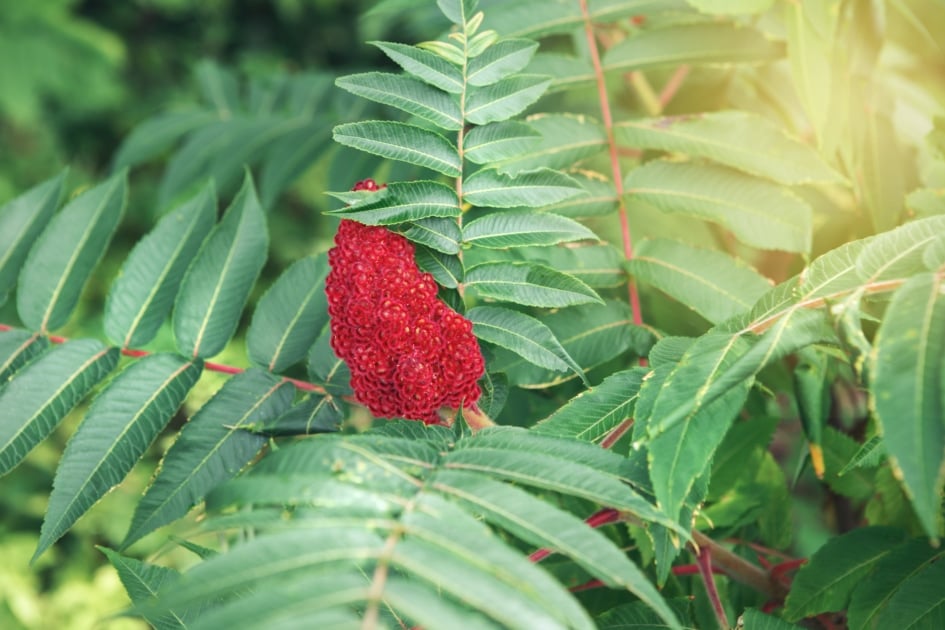
Sumac has a reputation problem. The name itself carries the warning of poison sumac, the swampy cousin that causes a rash worse than poison ivy. But the upright, red, cone-shaped clusters along most North American roadsides are not the toxic plant. They are staghorn or smooth sumac, two of the most useful wild edibles on the continent, and the source of one of the brightest, easiest foraging projects a beginner can take on.
Quick Reference
- What is edible: the red, cone-shaped berry clusters of staghorn sumac (Rhus typhina) and smooth sumac (Rhus glabra).
- What is not: poison sumac (Toxicodendron vernix) carries droopy, white-to-pale-green berry clusters and is highly toxic.
- Where it grows: open, sunny edges across most of the eastern and central United States and southern Canada.
- When to harvest: late summer through early fall, before heavy rain rinses the tart surface coating away.
- What it tastes like: sharp, lemony tartness from the malic acid coating on the berries; the dried, ground version is the same spice used across Middle Eastern cuisine.
- How to use it: “sumac-ade” cold infusion, ground spice on flatbread and salads, or a tart finish on roast vegetables.
Two Edible Sumacs to Know
Staghorn Sumac (Rhus typhina)
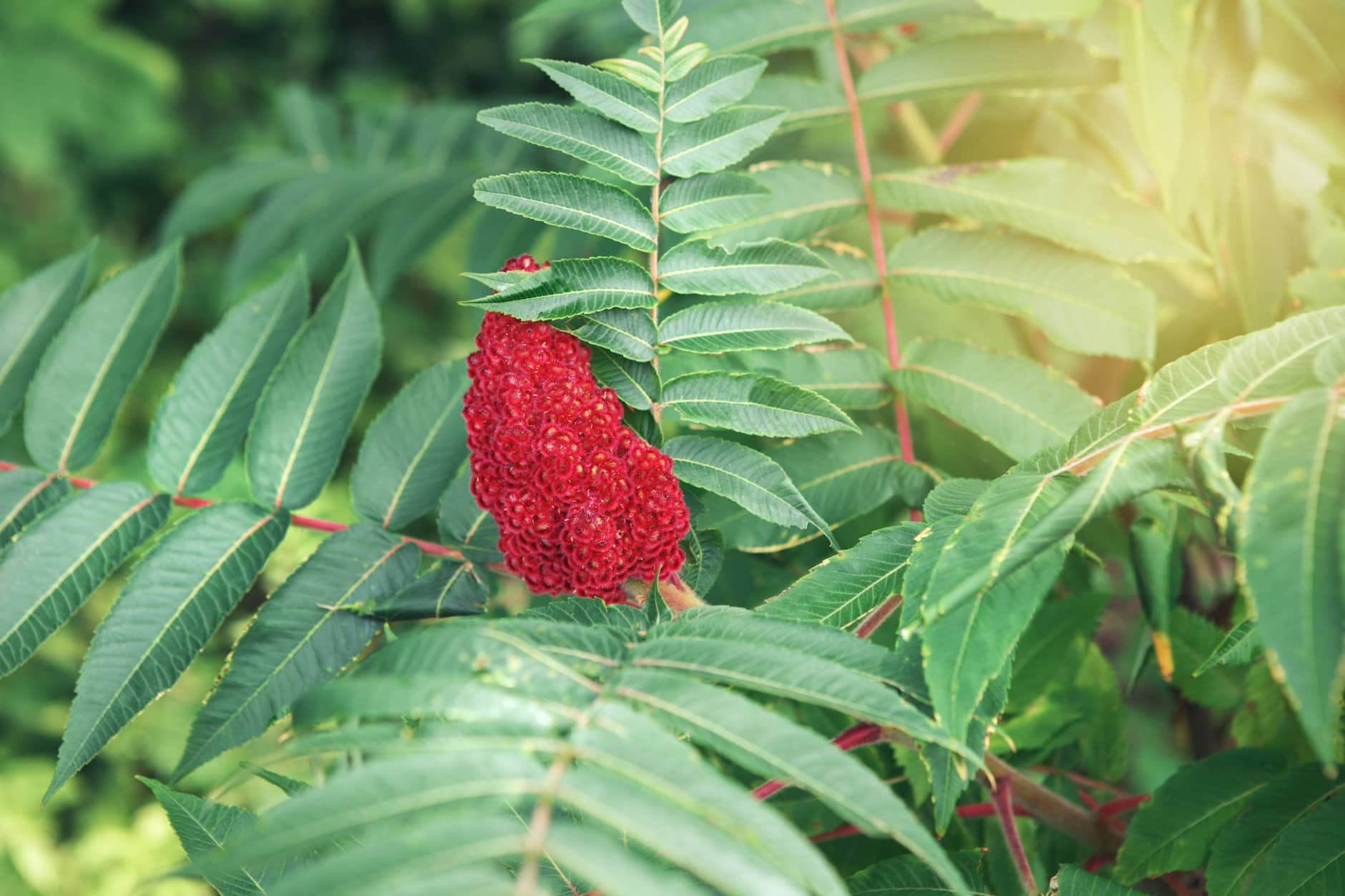
The most common edible sumac in the eastern and midwestern United States. Staghorn grows as a small tree or large shrub, up to 30 feet tall, with compound leaves that turn brilliant red in fall. The branches are velvety, like a young deer’s antler, which is where the name came from. Berry clusters form in late summer at branch tips: upright, dense, conical, and a deep red-burgundy.
Smooth Sumac (Rhus glabra)
The same edible berry, on a smaller shrub with hairless stems. Smooth sumac is the most widely distributed sumac in North America; it grows in every U.S. state except Alaska and Hawaii. Berries are interchangeable with staghorn for kitchen use.
How to Tell Edible Sumac from Poison Sumac
This is the only ID step that matters before harvesting. The differences are clear once you know what to look for.
- Berry color and posture: edible sumac (staghorn and smooth) carries red, upright berry clusters at the branch tips. Poison sumac carries white-to-pale-green, drooping berry clusters that hang from the stems like a wilted grape bunch.
- Habitat: edible sumacs grow in dry, sunny, open ground (roadsides, field edges, abandoned lots). Poison sumac grows in wet, boggy, swampy ground, almost always near standing water.
- Leaves: edible sumacs have serrated leaflets; poison sumac has smooth, untoothed leaflets.
- Stems: staghorn sumac has fuzzy stems; smooth sumac has hairless stems; poison sumac stems can be reddish but lack the velvet of staghorn.
If the berry cluster is red and upright on a sunny roadside, you are safe. If it is white and drooping near a swamp, walk away.
When and How to Harvest
Sumac berries ripen between late July and early October, depending on latitude. The lemony-tart coating on each berry is water-soluble and rinses off in heavy rain. The rule of thumb: harvest after several dry days, before a downpour. Lick a berry lightly before cutting; if it tastes sour, the cluster is good. If it tastes only of dust, the rain stripped the flavor.
Cut whole clusters with pruners. Drop them into a paper bag to keep clean. Brush off insects gently; a sumac cluster is often home to ants and ladybugs. Use within a couple of days for the brightest flavor, or dry the clusters whole for ground sumac spice and winter use.
Sumac “Lemonade”
The classic forager’s drink. Indigenous communities across the continent made it long before lemonade was a phrase in English.
- Soak two or three ripe sumac clusters in a half-gallon of cold water for 20 to 30 minutes.
- Gently squeeze and rub the berries against the inside of the jar to release the tart coating.
- Strain through a fine-mesh sieve lined with cheesecloth or a coffee filter. The cloth catches the fine hairs that can irritate the throat.
- Sweeten to taste with sugar, maple syrup, or honey. Serve over ice.
The result is a sharp, citrus-pink drink that tastes like pink lemonade with a sharper edge. Cold water only. Heat dulls the bright flavor and pulls bitter tannins out of the stems.
Dried and Ground Sumac as a Spice
Middle Eastern kitchens have used sumac as a spice for centuries. The bright, lemony tartness is the backbone of za’atar (a blend with sumac, thyme, sesame, and salt) and finishes nearly every grilled-meat platter, hummus plate, and flatbread in the Levant. The species used commercially (Rhus coriaria) is the Sicilian or tanner’s sumac, not the North American staghorn, but the flavor profiles overlap enough that home foragers use staghorn the same way.
To dry your own: spread harvested clusters on a screen in a shaded, breezy spot for a week, or use a dehydrator at low heat. When the clusters are crisp, strip the berries from the stems, grind in a spice grinder, and sieve out the hairs and stem fragments. Store in a sealed jar. Sprinkle on roast vegetables, eggs, salads, grilled fish, lamb, and grain bowls.

Other Wild Edibles in the Same Hedgerow
Sumac shares its sunny edge habitat with several other forager-friendly plants. Wild grapes climb through the sumac stems on many roadsides. Black raspberries finish before sumac and lay in the same brushy edges. Goldenrod blooms behind the sumac in August and brings useful tea-grade leaves. None of these require deep woods. A forager can build an honest pantry from one half-mile of roadside in late summer.
Cautions
Skip sumac if you have a known allergy to plants in the cashew family (Anacardiaceae). The same family includes mango, pistachio, and cashew, and rare cross-reactivity is documented. Avoid harvesting along heavily sprayed roadsides or near agricultural runoff. Do not eat sumac if you are taking blood thinners without checking with your doctor first; high-tannin foods can interact.
Frequently Asked Questions
Are all sumac berries edible?
No. Staghorn (Rhus typhina) and smooth (Rhus glabra) sumac, with red upright berry clusters, are edible. Poison sumac (Toxicodendron vernix), with droopy white-to-pale-green berries in swampy habitat, is toxic and causes severe contact rash.
What does sumac taste like?
Sharp, citrusy, lemonade-tart. The flavor comes from malic acid coating the surface of each berry. Ground, dried sumac is the same spice used in za’atar and across Middle Eastern cooking.
When do you harvest sumac berries?
Late summer to early fall (late July through early October in most of the United States). Harvest after several dry days and before heavy rain, which rinses the tart coating away.
Can sumac upset your stomach?
In moderation, no. Sumac is high in tannins, so very strong or hot infusions can taste bitter and irritate sensitive stomachs. Cold-infused sumac-ade and ground spice on food are well tolerated.
Is North American sumac the same as Middle Eastern culinary sumac?
Different species, same flavor family. The commercial spice usually comes from Rhus coriaria, the Sicilian or tanner’s sumac. North American staghorn and smooth sumac have nearly identical flavor and are commonly used as a substitute by home foragers.


Amber Kanuckel
Amber Kanuckel is a freelance writer from rural Ohio who loves all things outdoors. She specializes in home, garden, environmental, and green living topics.
- Amber Kanuckel

- Amber Kanuckel

- Amber Kanuckel
- Amber Kanuckel





I have powdered sumac and want to make cough syrup how much do I use to make an 8 oz bottle
How do you store the lemonade once made?
I picked some last weekend and the outside berries are red but the interior of the cluster is brownish with what looks like little cobwebs and brownish berries. Are the red ones okay to use and discard the interior ones, or give the rest to my chickens or should I discard it all? I live in the lower South, zone 8.
I moved to the house I’m in a little over a year ago and kept wondering what these red berries were. I’ve got these sumac trees growing wild all over one side of my property. I grabbed one of these off the tree and tasted a berry. Definitely Sumac! My late husband was from Amman and we have always kept a large jar of this for fattoush salad or for sprinkling over roasted cauliflour (my favorite use). How exciting for me as the sumac I generally find at the Arabic store is not fresh. I’ll be harvesting and drying these for sure. Thanks for the information.
aw how nice. what a great little connection to your husband
I just bought a Staghorn Sumac tree online, I hope it will grow here in Southern Nevada , it’s a zone 8 tree so it should since it likes clay soil and tough areas. Just worried if it can take the heat?
I mostly got it for my chickens and local Quail, but I sure am going to try the lemonade.
I have several here in east alton Illinois about 20 miles north of st louis, they grow fantastic and are semi tropical. They thrive in the sun and hot weather. Mine are about 6 years old and about 10-15 feet tall with droopy branches. Mine also just ripened the berries so it’s time for tea! Also note these will pop up everywhere I mean 30- 40 at a time they root about ten inches deep and grow like crazy, they xan be contained by placing a thin metal ring about 6-8″ tall about 8-12″ down and about 3-4′ around the base. In winter all minor limbs will break off and all foliage s well but they always come back in the spring.
Sumac it’s an Arabic word سماق. The origin of this spice was from the Levantine area, Turkey and the rest of the Med took it with them to use in their dishes when they invaded the Middle East. It’s used in many delicious dishes and taste little sour and does not stain the hands or the mouth.
I LOVE sumac and bought some home in 2020 when I was in Amman. My question is, do you know if it can stain your hands and/or teeth and if so what to do about that. I noticed some black stains around my nails after cooking with sumac. Could be just coincidental but wondering if anyone has more experience than I do. thanks.
I never thought that Sumac berries are edible. Thanks for the article.
Just the red ones
We have smooth sumac in central Illinois. It provides beautiful leaves and some fruit. Is it OK to use?
Absolutley
I really enjoyed reading about sumac. Always heard they were poison. Thank you I will try them this summer..
Some Sumac are, stay clear if they have white berries