9 April Weather Lore Sayings (and What They Actually Mean)
Spring is a crazy time for weather, especially April! Check out some of these April weather lore sayings. How many of these do you know?
Quick Reference
- Most famous saying: “April showers bring May flowers.” Recorded in English farming tradition since at least 1557.
- Most reliable rule: “Rain before seven, fine before eleven.” Holds true on most temperate-climate spring days.
- Most farmer-friendly: “A cold and moist April fills the cellar and fattens the cow.” Still true: cool wet Aprils support strong forage and grain growth.
- Why April lore matters: April is the make-or-break month for the planting calendar. Farmers tracked the weather closely, and the lore preserves what they learned.
April is the month farmers in the temperate zone watched most carefully. The growing season opens with April rain. The frost-free date sits at the back of the month for most US zones. The first plantings go in. Centuries of close observation produced a stack of weather lore couplets, most of them passed down from European farming traditions and refined in the colonies. Here are nine April weather lore sayings, what each one means, and how the rule lines up with modern atmospheric science.
1. If It Thunders on All Fool’s Day, It Brings Good Crops of Corn and Hay
All Fool’s Day is April 1. Thunder on April 1 was taken as a sign of a vigorous spring weather pattern (warm, moist, unstable air pushing north) that would continue into May and produce a good growing season for corn and hay. The reading is partial truth: an early-season thunderstorm does indicate the warm-front activity that feeds spring rain, which corn and hay both need. It is not a guarantee, but it is a positive signal.
2. A Cold May and a Windy April, a Full Barn
This couplet captures the agricultural ideal for the eastern half of the country: a windy April keeps the fields drying enough to plant on schedule, and a cool May extends the cool-season crop window before summer heat takes over. Farmers across England, the Northeast, and the Midwest still nod to this rule. A “full barn” is the year’s harvest, and the conditions described are the ones that produce it.
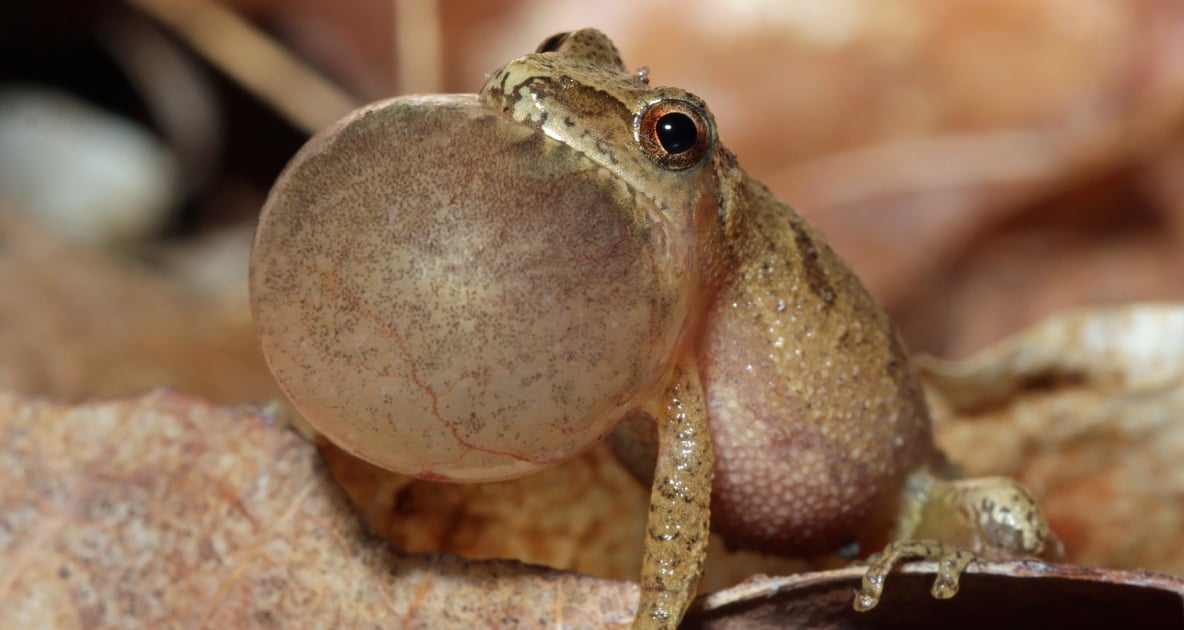
3. The Louder the Frog, the More the Rain
Frogs call more loudly and frequently when humidity rises. Rising humidity is one of the leading indicators of approaching rain, often a few hours ahead. The rule has measurable backing. Researchers studying spring peeper choruses in Vermont and elsewhere have documented call-rate increases the evening before rain, and individual peepers calling more loudly when the local humidity is above 80 percent. For more on frogs as weather indicators, see our piece on spring peepers.
4. Oak Before Ash, We Are In for a Splash; Ash Before Oak, We Are In for a Soak
Both species leaf out in April or early May in most US zones. The rule says: if the oak’s leaves emerge before the ash’s, the summer will see only modest rain (“a splash”); if the ash leafs out first, the summer will be wet (“a soak”). This is one of the oldest English weather rhymes, traced back to at least the 17th century. The science is shaky. Modern phenology research finds no strong correlation between which species leafs out first and the volume of summer rain that follows. The rhyme survives because it is memorable, not because it is reliable.
5. March’ll Search Ye, April Try Ye; May’ll Tell, Whether Live or Die Ye
This older saying is about the planting season, framed as a stress test for both farmer and crop. March searches the seedbed (cold and damp). April tries the early plantings (frost risk). May reveals whether the year’s crops will succeed or fail. The structure of the rhyme captures real agricultural reality: late frost in May is the single most damaging weather risk for most temperate-zone crops, and a year that comes through April unscathed can still be lost in early May.
6. Rain Before Seven, Fine Before Eleven
This is the most reliable single rule on the list. Most spring rain in the temperate zone is driven by frontal systems that sweep through quickly. A morning rain shower that starts before 7 a.m. has usually moved on by 11 a.m. The pattern is so common in the eastern half of the country that the rule shows up in farming and sailing traditions in nearly every English-speaking country.
The rule has limits. Slow-moving frontal systems and stalled lows can produce all-day rain, and the saying does not apply to those. But for the ordinary spring shower, the four-hour window from 7 to 11 is the right rule of thumb.
7. Sounds Traveling Far and Wide, a Rainy Day Will Betide
This rule is grounded in real atmospheric physics. Sound travels farther in moist air than in dry air, so when humidity is high (often ahead of rain), distant sounds carry better. A train whistle that you usually cannot hear, the church bell from two towns over, traffic from the next road: these become audible when humidity rises. The rule predates atmospheric measurement; farmers and sailors had been noting it for centuries before science caught up.
8. A Cow With Its Tail to the West, Makes Weather the Best
Cows usually graze with their hindquarters to the prevailing wind, which protects their faces and noses from biting insects and dust. In most of the United States, the prevailing wind is from the west. So a cow with its tail to the west is grazing into a typical westerly fair-weather wind. A cow with its tail to the east is grazing into a wind reversal, which often signals an approaching weather system from the east. The rule captures the same wind-direction pattern that meteorologists use: wind shifts often precede storms.
9. A Cold and Moist April Fills the Cellar and Fattens the Cow
The “cellar” is the root cellar where farmers stored crops over winter. A cool, wet April produces strong cool-season pasture growth (which fattens the cow), strong forage and hay yields, and a full grain harvest later in the year (which fills the cellar). The rule reflects a long-standing agricultural reality: cool damp Aprils are better for the year’s harvest than warm dry ones, even though they feel less pleasant in the moment.
And the One Everyone Knows: April Showers Bring May Flowers
The full original couplet, recorded in Thomas Tusser’s 1557 farming text A Hundred Good Pointes of Husbandrie, is:
Sweet April showers
Do spring May flowers.
The rhyme captures what botanists confirm. April rainfall recharges soil moisture in the root zone, where May-flowering perennials (tulips, daffodils, peonies, lilacs) and annuals draw water as they flower. A wet April produces stronger, taller, longer-lasting flowering displays in May. A dry April produces a stunted, short-lived flowering season. Modern garden research consistently finds that April precipitation is the strongest single predictor of May flower density across the eastern half of the country.
Other April Lore Worth Knowing
- “A wet April, a full granary.” Same idea as the cellar rule: April rain feeds the year’s grain harvest.
- “April is the cruellest month.” Not lore, but T.S. Eliot’s line from The Waste Land. Farmers nodded; April promises a great deal but rarely delivers without delivering frost first.
- “Plant your peas by St. Patrick’s Day, harvest by the Fourth of July.” March 17 to July 4: a 110-day window that mostly works for cool-season pea varieties in zones 5 and 6.
For more month-specific weather sayings, see our pieces on June weather lore, October weather lore, and December weather lore.
How to Use April Weather Lore Today
The rules are not a substitute for the seven-day forecast. They are a household supplement that turns a walk through the yard into a weather-reading exercise. The frogs are loud tonight: rain by morning. The cow is grazing west: stable weather today. The oak is leafing out before the ash: a drier summer (probably). The April rain is steady this week: expect a strong May garden.
The Farmers’ Almanac long-range forecast covers April patterns months ahead, with regional breakdowns for the US and Canada. Pair the long-range view with the lore in your own yard. Both are useful. Neither is complete on its own.
Listen to the frogs. Watch the cow. Plant by the rain.
Frequently Asked Questions
Where does “April showers bring May flowers” come from?
The phrase is a shortened version of a couplet recorded in Thomas Tusser’s 1557 farming book A Hundred Good Pointes of Husbandrie: “Sweet April showers do spring May flowers.” It has been part of English-language weather lore for nearly 500 years.
Is “rain before seven, fine before eleven” actually true?
Most of the time, yes. Spring rain in the temperate zone is usually driven by fast-moving frontal systems, and a morning shower that starts before 7 a.m. has typically passed by 11 a.m. The rule does not apply to slow-moving lows or stalled fronts, which can produce all-day rain.
Why do frogs call louder before rain?
Rising humidity ahead of rain triggers stronger calling behavior in many frog species, especially spring peepers in the eastern US. The increased humidity also helps sound carry farther, so the chorus sounds louder to a listener even at the same call rate.
Does the oak-before-ash rule actually work?
Modern phenology research finds little correlation between which species leafs out first and the rainfall that follows. The rhyme has survived because it is memorable, not because it is reliable. Use it for fun, not for planting decisions.
Why is April so important for farmers?
April is the month when soil temperatures rise enough to plant cool-season crops, when the last frost dates fall in most US zones, and when April rainfall recharges soil moisture for the May growing window. The wrong April weather (too dry, too cold, late hard frost) can knock back the entire growing year.
Why does sound travel farther before rain?
Moist air conducts sound more efficiently than dry air, and the temperature inversion that often precedes rain bends sound waves back toward the ground rather than letting them dissipate upward. The combination is why distant sounds become audible ahead of incoming weather.
Should I plant by April weather lore?
Use the lore as a supplement, not a primary tool. The seven-day forecast and your local frost-free date are more reliable for actual planting decisions. The lore is best for reading the day-to-day patterns and for the seasonal-feel context the forecast does not capture.

This article was published by the Staff at FarmersAlmanac.com. Any questions? Contact us at [email protected].
- Farmers' Almanac Staff

- Farmers' Almanac Staff

- Farmers' Almanac Staff

- Farmers' Almanac Staff