

10 Amazing Facts About Hummingbirds (2026)
We share 10 cool things about these tiny, amazing birds along with feeding tips, plus when you will see them in your back yard!
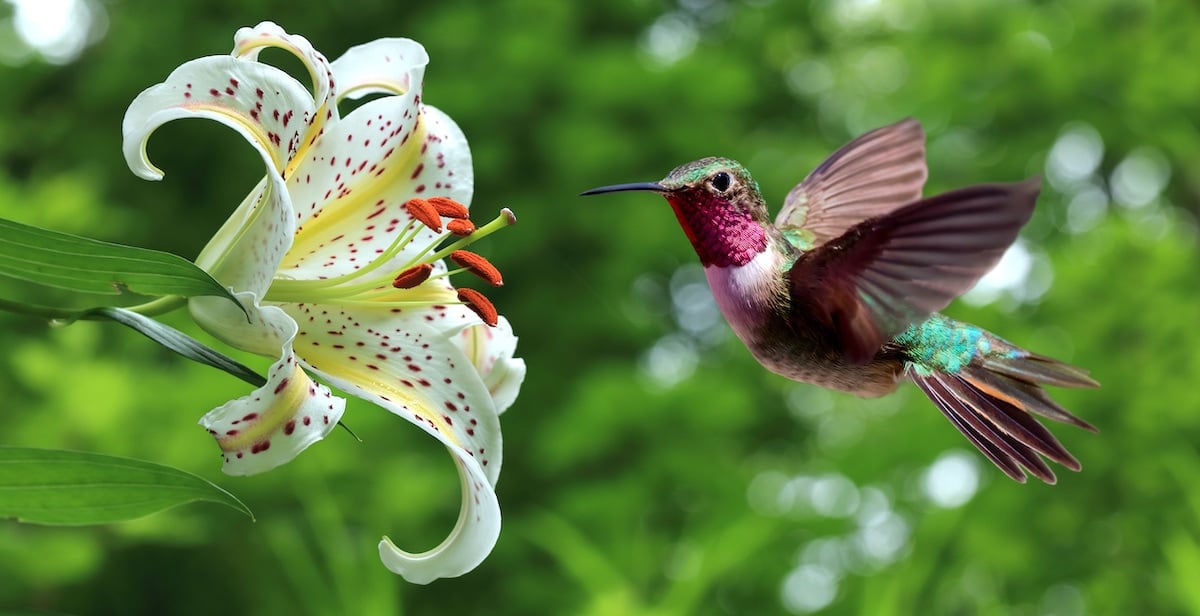
Quick Reference
- Amazing hummingbird facts in one line: they hover on wings beating 60 times a second, fly backward, weigh 2 to 20 grams, and visit at least 1,500 flowers a day.
- Heart rate: 500 beats per minute at rest, double when excited.
- Spring arrival: some hummingbirds start heading north as early as mid-February or early March.
- Sugar-water recipe: 1 part granulated sugar to 4 parts water. No honey. No red dye.
- Best plants to attract them: tubular red and orange blooms like bee balm, salvia, trumpet vine, columbine, fuchsia, and coral honeysuckle.
- Sources: Cornell Lab of Ornithology, National Audubon Society, Farmers’ Almanac field notes.
Hummingbirds are amazingly beautiful birds. When they arrive, we know that spring has sprung. Some hummingbirds start heading north as early as mid-February or early March, and most of the US sees the first scout by the end of April. Here are some amazing hummingbird facts about these tiny winged creatures, the sugar-water recipe that brings them to a feeder, and the bloom list that keeps them in the yard.
10 Fascinating Hummingbird Facts
- Hummingbirds are tiny, and weigh between 2 to 20 grams (2 grams = 0.00440925 lbs).
- They feed on nectar, as well as insects and tiny spiders for protein.
- While they are known for their ability to hover in mid-air by rapidly flapping their wings, they are also the only known group of birds able to fly backward.
- Hummingbirds have very tiny feet that are not well suited for walking but well designed for perching.
- Hummingbirds rotate their entire wing, with little or no flexing of the wrist or hand joints. And, because of this unique but inefficient means of flight, they must eat a lot of food each day, with nectar often amounting to 100 to 200% of their body weight.
- While some scientists do not agree, the exact number of species is perhaps 329, making them the second-largest family of birds after flycatchers.
- When still, the hummingbird’s heart beats 500 times a minute and doubles when excited.
- In order to hover, the hummingbird has to beat its wings 60 times per second. When perched, the hummingbird does not push off with its feet like other birds but will begin by beating its wings.
- A hummingbird has to visit at least 1,500 flowers a day in search of nectar because of their great expenditure of energy to stay warm and maintain their heart rate. A flower’s nectar is high in sucrose, which is a sugar that is easily digested. It is also a form of quick energy.
- Hummingbirds have no sense of smell but they have keen hearing and sight to find those brightly colored flowers.
More Amazing Hummingbird Facts You Might Not Know
- Top speed: a male Anna’s hummingbird can dive at roughly 60 mph, the fastest body length per second of any bird on Earth.
- Tongue mechanics: the tongue forks at the tip and unrolls into nectar like a tiny grooved straw. It can flick 18 times a second.
- Migration distance: the Ruby-throated crosses the Gulf of Mexico (~500 miles) nonstop, fueling on body fat alone.
- Memory: hummingbirds remember individual feeder locations year after year and which flower has been recently emptied.
- Torpor: on cold nights they drop into a deep dormancy that slows the heart from 500 bpm to about 50 bpm to survive the chill.
- Nests: walnut-sized, built from plant down bound with spider silk so the nest can stretch as the chicks grow.
- Eggs: the size of a navy bean, two per clutch, two to three clutches a season.
Feeding Tips
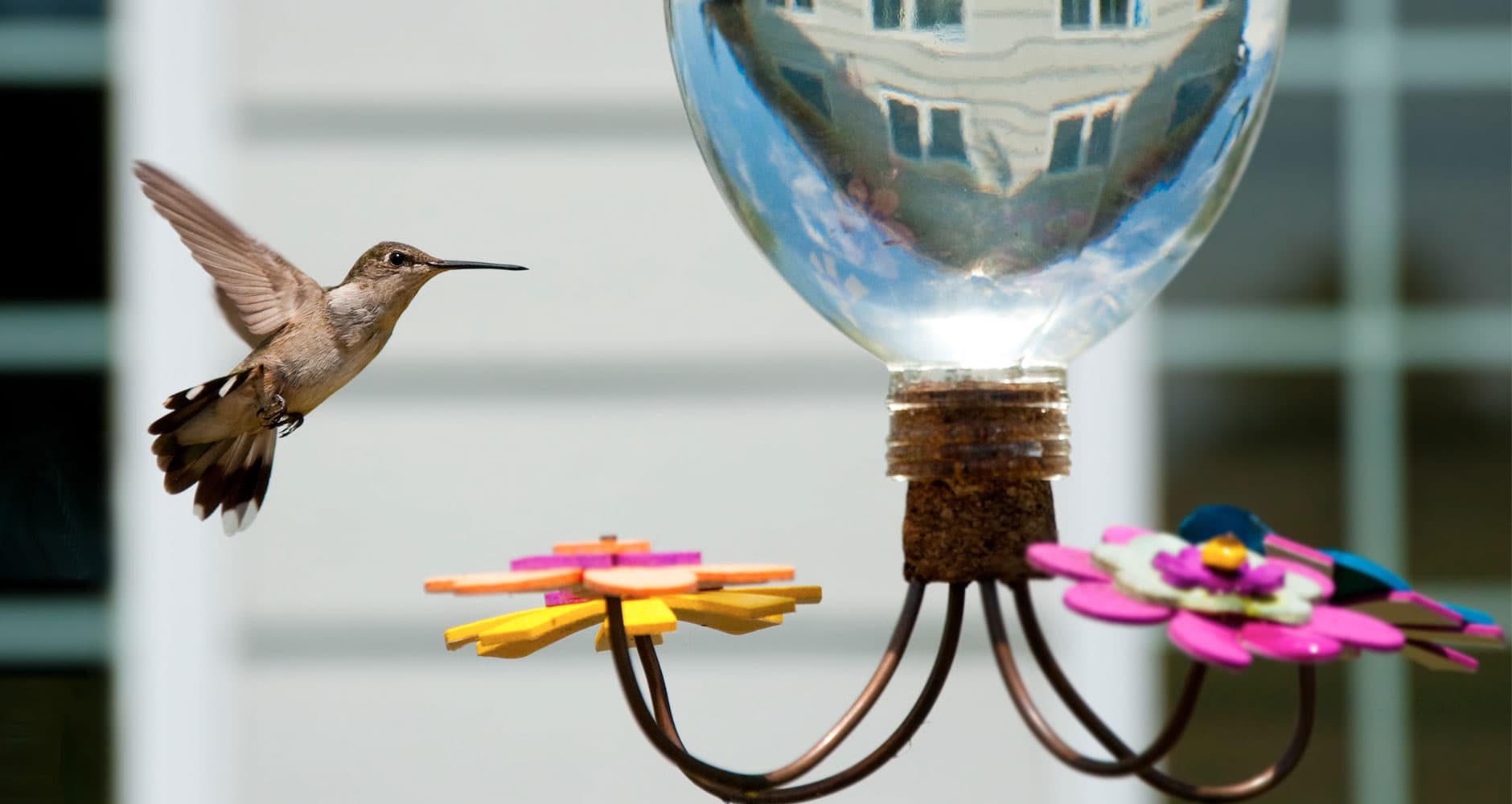
Special feeding bottles can be purchased or a simple red dish or red-wrapped bottle can be used. Fill these with sugar water. To make sugar water, combine one part granulated sugar with four parts water and heat until sugar dissolves. Store in the refrigerator. Never use honey, as it will ferment, creating a fungus on the hummingbird’s tongue. Artificial sweeteners have no food value and, therefore, will not provide the birds with any energy. This will lead to slow starvation. Do not add red food coloring to the sugar water. For the full recipe and feeder cleaning schedule, see our hummingbird nectar and feeder tips guide.

To Attract Hummingbirds to Your Garden
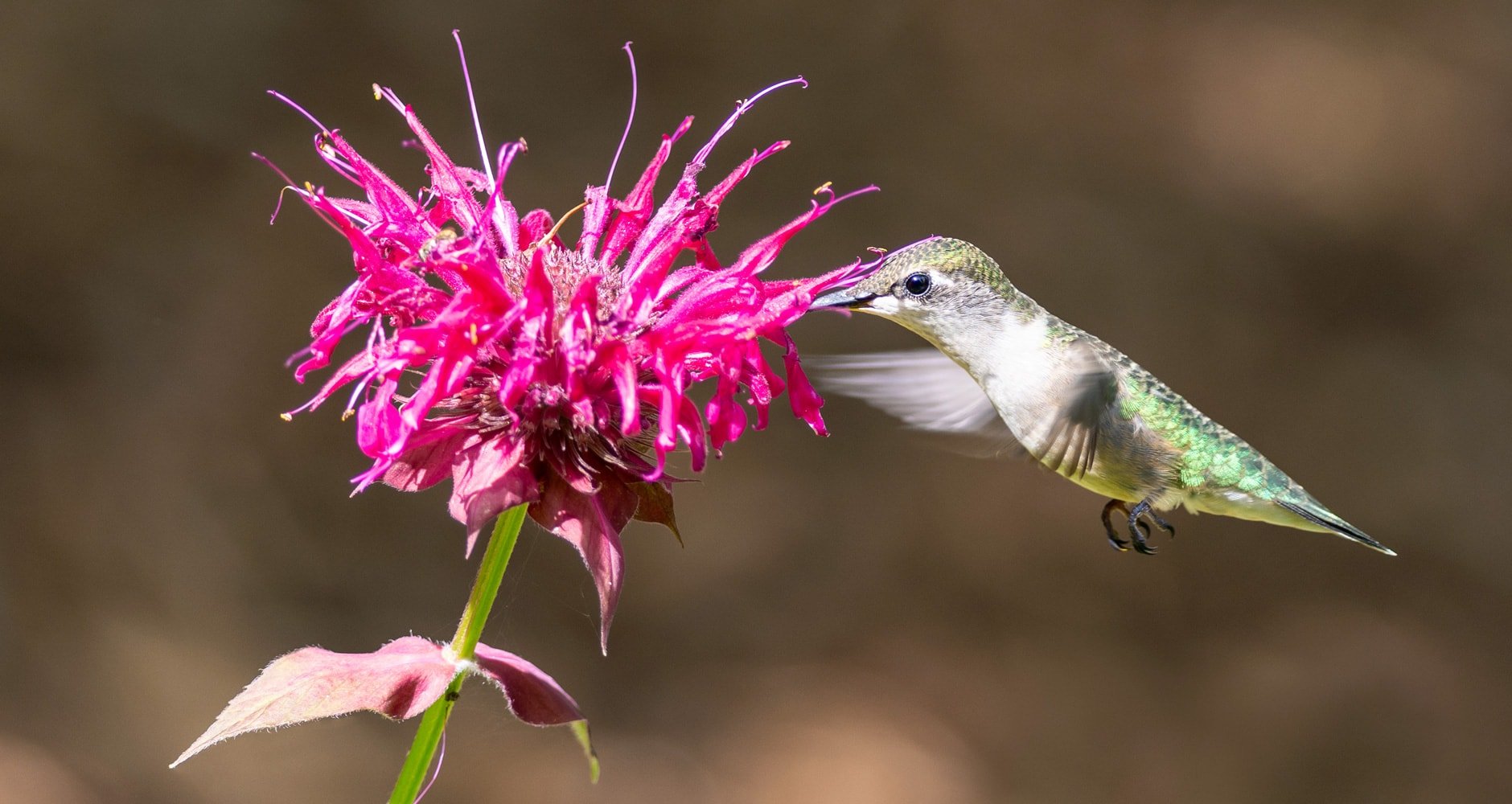
Make sure that you choose flowers that can produce nectar, grow well in your area, and are brightly colored. Many flowers known to attract hummingbirds have blossoms that are red to orange in color. Some flower suggestions include:
Azalea
Bee Balm
Begonia
Bleeding Heart
Bottlebrush
Buttercup
Columbine
Cypress Vine
Dahlia
Daylily
Delphinium
Four O’clock
Fuchsia
Geranium
Gladiola
Hibiscus
Honeysuckle
Jasmine
Mexican Sage
Morning Glory
Phlox
Pineapple Sage
Scarlet Sage
Snapdragon
Sweet William
Which Species Will You See, by Region
| Region | Main species | First arrival window |
|---|---|---|
| Gulf Coast (TX, LA, MS, AL, FL) | Ruby-throated, Rufous, Buff-bellied | early March |
| Southeast (GA, SC, NC, TN) | Ruby-throated | mid-March |
| Mid-Atlantic to Great Lakes | Ruby-throated | early April to early May |
| Northeast and Canada (east) | Ruby-throated | late April to mid-May |
| Southwest (AZ, NM, west TX) | Black-chinned, Anna’s, Costa’s, Broad-tailed | late February to mid-March |
| Pacific Coast (CA, OR) | Anna’s (year-round), Allen’s, Rufous | year-round (Anna’s) |
| Pacific Northwest | Rufous, Anna’s (coastal) | early March |
| Mountain West | Broad-tailed, Rufous, Calliope | early May |
When Will You See Them
The Audubon Society shares when you can expect to see them in your region. For most US backyards, hang the feeder about two weeks before the first sighting, and leave it up until two weeks after the last bird vanishes in the fall.
Watch hummingbirds in slow motion.

Frequently Asked Questions
What are the most amazing hummingbird facts?
They beat their wings 60 times a second, fly backward, weigh 2 to 20 grams, visit at least 1,500 flowers a day, and have a heart rate of 500 beats per minute at rest. The Anna’s hummingbird dives at 60 mph.
What is the sugar-water recipe for hummingbirds?
1 part plain granulated sugar to 4 parts water. Heat to dissolve, cool, then fill the feeder. No honey, no red dye, no sugar substitutes.
How fast do hummingbirds fly?
A male Anna’s hummingbird dives at roughly 60 mph in its courtship display. Cruise speed is around 30 mph. The Ruby-throated crosses the Gulf of Mexico (about 500 miles) without stopping.
How long do hummingbirds live?
Most live 3 to 5 years in the wild. Some banded Ruby-throated birds have been recaptured at 9+ years. Mortality is highest in the first year.
What flowers attract hummingbirds?
Tubular red and orange blooms work best: bee balm, salvia, trumpet vine, coral honeysuckle, columbine, fuchsia, cardinal flower. The 25-flower list above covers the most reliable picks across most US regions.
When should I put my hummingbird feeder out?
About two weeks before the typical first sighting in your region. Most US regions: mid-March in the South, early to late April in the East and Midwest, early May in the Mountain West. Anna’s hummingbirds along the Pacific Coast are year-round.
Do hummingbirds sleep at night?
Yes, and deeply. They enter a state called torpor where the heart slows from 500 bpm to about 50 bpm and body temperature drops sharply. They wake at first light, hungry.


This article was published by the Staff at FarmersAlmanac.com. Any questions? Contact us at [email protected].
- Farmers' Almanac Staff

- Farmers' Almanac Staff

- Farmers' Almanac Staff

- Farmers' Almanac Staff


I had honey bees on my feeders this year. Humming birds fed with them. I have yellow jacket nest, and those devils never bothered my feeders. This is August 2024. Many hummers coming thru, heading south.
I’d add zinnias to that list, as a hummingbird favorite. Our local hummingbirds love visiting our zinnias (and so do many other pollinators).
I would add asters and iron weed too !
Just wondering how nectar makes up 100 to 200 percent of their bodyweight? That is a little suspicious.
Yes!
I live in Emporia, Kansas, and have a large yard full of flowers. We have many feeders for the hummingbirds, and many many visitors. It is interesting to watch the very wide variety of flowers they like. They can become very tame.
We have hummingbirds that sit quietly on the top of the shepherd’s hook above their feeder. Is that normal?
yes, they are resting and / or sunning themselves.
Why do they fight each other?
Yes. Hummingbirds can be very territorial although I have seen two or three peacefully perched at the same time on the hummingbird feeder. I guess it just depends.
they do not like to share their food with others, I don’t think they hurt one another though
Two hummingbird stories. When I lived in the woods I had lots of ruby-throats outside my window … one day I watched one of them perched on top of the feeder shooting out his long tongue to catch raindrops as they fell. So cute. Once I had an out-of-range rufous for a week … when he wasn’t feeding, he’d perch on a nearby twig and dive-bomb the rubies when they approached the feeder. He was lost so I didn’t blame him for being cranky.
I love the hummers! I am unable to feed them due to yellow jackets & carpenter ants get inside & contaminate the sugar water.
sometimes a sticky substance spread on top of feeder can deter the ants; I have yellow jackets and ants and “my” humming birds eat just fine so don’t let that deter you.
Add Flowering Maple also know as Chinese Lantern to the hummingbird favorite flowering bush list!!