

Lilac Bush: Greek Legend, Growing, Pruning, and Why Old Bushes Stop Blooming
If there is one thing we all look forward to, it’s lilacs blooming in the spring. It's hard to imagine, but there was once a negative stigma associated with these fragrant flowers. Read on!
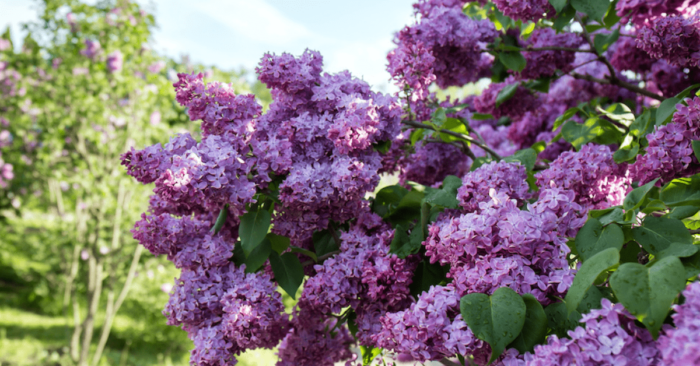
Quick Reference: Lilac Bush
- Botanical name: Syringa vulgaris (common lilac); Syringa genus has 20+ species.
- Bloom: May to early June. 1 to 3 week window, intensely fragrant.
- USDA zones: 3 to 7. Needs cold winter dormancy. Struggles below zone 3 and above zone 7.
- Pruning: within 4 weeks of bloom finishing. Late pruning removes next year’s flower buds.
- Old bush not blooming? Likely needs rejuvenation pruning. Cut 1/3 of oldest stems to ground each year for 3 years.
On this page
Related Almanac guides
Sources cited in this guide
Lilacs are among the oldest cultivated garden shrubs in North America. Many of the oldest established New England farmsteads still have lilacs planted at the front gate in the 1700s, still blooming each May. This guide is the Greek mythology behind the name, the simple growing rules that make lilacs reliable from zone 3 to zone 7, and the most-asked question: why an old lilac bush stops blooming and how to fix it.
Why an Old Lilac Stops Blooming (and How to Fix It)
Per UMN Extension’s lilac care research, the most common lilac problem is the same one every time: an established bush slowly drops bloom volume over decades.
- Cause #1: wrong pruning time. Lilacs bloom on old wood. Pruning in fall, winter, or summer removes next year’s buds. Prune ONLY within 4 weeks of bloom finishing.
- Cause #2: too many old stems. Lilac flower buds form on 2 to 6 year old wood, not on very young or very old stems. A bush of mostly old stems flowers poorly.
- Cause #3: too much shade. Lilacs need 6+ hours direct sun. Growing trees can gradually shade out an established lilac.
- The fix: rejuvenation pruning. Each spring (right after bloom), cut 1/3 of the oldest thickest stems all the way to the ground. Over 3 years you completely renew the bush. Flowering recovers fully in year 3 to 4.
- Drastic option: cut the whole bush to 6 inches in early spring. You lose 1 to 2 years of bloom but the plant returns vigorous and floriferous.
The Greek Legend Behind the Name
Per Britannica’s lilac entry, the botanical name comes from a Greek myth.
- Pan and Syrinx. The Greek god Pan pursued the nymph Syrinx through the woods.
- The transformation. To escape Pan, Syrinx asked the river nymphs to transform her. She became a tall hollow reed.
- The instrument. Pan cut the reed and made the first panpipe (syrinx) from it.
- The lilac connection. Lilac stems are hollow like the reed; the genus was named Syringa after the same root.
- Where it grew: the common lilac is native to the Balkans, brought to Western Europe in the 16th century and to North America by the 1750s.
Lilac Origins, Legend, Symbolism, and Growing (Detail)
Below are the original sections covering lilac origin, Greek legend, luck folklore, long history, planting, and growing tips.
Where Did We Get Lilac Flowers?
Before gardeners brought them to Britain and the Americas, common lilacs were found in Eastern Europe, while other types originated in Iran.
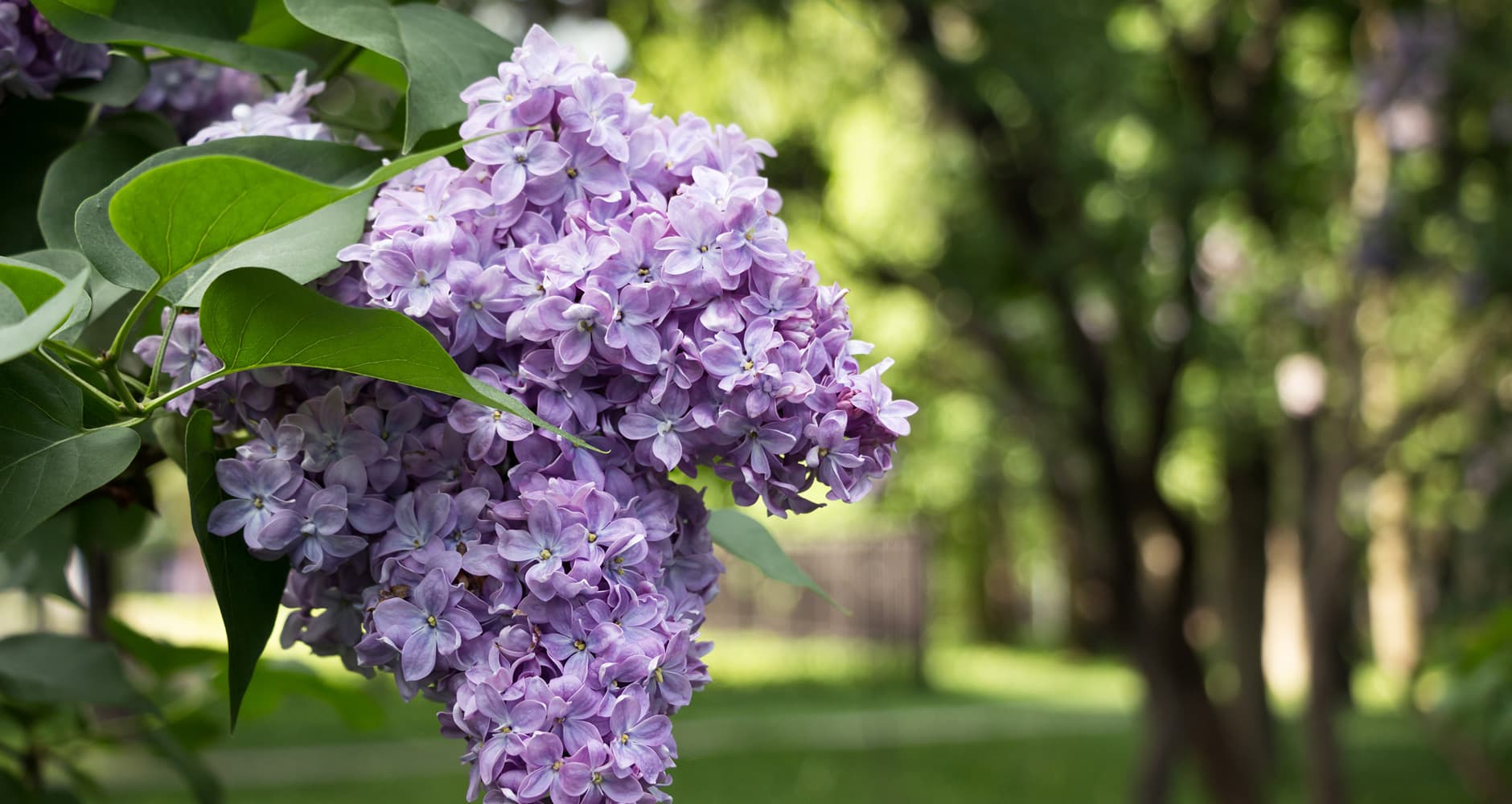
Lilac Bushes’ Greek Legend
The history of this shrub dates back so far that the ancient Greeks had a tale about it. In their legend, the god Pan fell hopelessly in love with a nymph named Syringa, but Syringa was terrified of the god and his newfound affection. Pan chased Syringa through a forest, where she turned herself into a lilac bush to hide from him.
Are Lilac Flowers Unlucky?
Throughout Europe, especially within the British Isles, the lilac was considered an unlucky flower. It was perfectly fine to grow them outdoors, but bringing the flowers inside was asking for disaster. Purple lilacs were supposed to be far unluckier than the white ones, to the point that some said bringing a bouquet of purple lilacs inside would “bring death to a healthy home.”
So bad was the reputation of lilacs that old British lore claimed that any girl wearing a sprig of lilacs on her dress was destined to be single forever. At one time, you could even give a bouquet of lilacs to your partner as a sign that you wanted to break up with him or her.
The Victorian era brought an end to the negative stigma surrounding lilacs, finally putting them in their rightful place as a favorite flower. Victorians developed what is known as the “Language of Flowers,” a system that gave flowers meanings that could be used symbolically or as a form of communication. Consequently, purple lilacs became known as the flowers of the first feelings of love, while white lilacs represented the innocence of youth.
Lilac’s Long History

Even in the United States, lilacs have a long history. Both Thomas Jefferson and George Washington grew these shrubs, and there are lilacs growing at New Hampshire’s Governor Wentworth Estate that are believed to have been planted in 1750. Early Americans often used lilacs as a substitute for aloe, a treatment for malaria and as a de-wormer.
Planting and Growing Lilacs
They are exceptionally sturdy, long lived and carefree. Because they spread by root suckers, you can nearly always dig up new starts from old lilac bushes.
RELATED: Gardening by the Moon Calendar
Growing Tips
- Choose a spot with full sun and good drainage. They don’t like wet feet.
- Make sure your planting area has lots of room because these shrubs can grow over 15 feet tall, with a footprint just as large in circumference.
- Lilacs need cold winters, which means that they normally only grow in USDA hardiness zones 3 through 9. In zones 8 and 9, you’ll have the best luck with specialty varieties that can tolerate warm winters. In warm climates, look for varieties including “Lavender Lady,” “Blue Skies,” “Angel White,” or “Miss Kim.”
- When it comes to maintaining lilacs, there are a few things to know. Some people never prune their lilacs and that is fine, but the individual trunks can become very large, easily the size of a small to medium tree. The only issue that arises from not pruning your bushes, aside from the large size, is that if two large branches grow too close together, they may strangle each other, causing a bit of die back. The bush will recover from this, but in the meantime, you’ll want to remove the dead trunks. If you want to keep the branches smaller, then you’ll need to periodically trim out the old growth. The problem is that lilacs only bloom on branches that are a year old or older, so if you want to prune and still have blooms, follow the 1/3 rule. That is, only cut out approximately 1/3 of the older branches each year so that the lilac stays healthy and keeps blooming.
Lilacs have been a popular ornamental shrub for centuries, and with good reason. Few other large shrubs will bloom as much, smell as nice, or be as easy to care for.
RELATED: Edible Flowers, including our Lilac Lemonade Recipe!


Lilac Bush FAQ
When do lilacs bloom?
May to early June across most of USDA zones 3 to 7. Bloom lasts 1 to 3 weeks depending on weather. The earliest cultivars (Hyacinthiflora group) start in late April; the latest (Preston hybrids) extend bloom into mid-June.
Why is my lilac bush not blooming?
Three most common causes: pruning at the wrong time (fall, winter, or summer removes next year’s buds), too many old stems (rejuvenation pruning fixes this), or too much shade. UMN Extension recommends cutting 1/3 of the oldest stems to the ground each year for 3 years to restore flowering.
When should you prune a lilac bush?
Within 4 weeks of bloom finishing (typically late May to mid June). Lilacs set next year’s flower buds on this year’s new wood beginning in June. Pruning later removes the buds; pruning earlier loses current-year bloom.
How big does a lilac bush get?
Common lilac (Syringa vulgaris): 8 to 15 feet tall and 6 to 12 feet wide at maturity. Dwarf cultivars (Bloomerang, Miss Kim) top out at 4 to 6 feet. Plant well-spaced; lilacs do not like crowded conditions.
Are lilac flowers edible?
Yes. Lilac florets are mildly fragrant and used in cooking (lilac sugar, lilac syrup, candied flowers, infused vinegar). Best harvested in the morning when fragrance is strongest. Avoid sprayed bushes.


Amber Kanuckel
Amber Kanuckel is a freelance writer from rural Ohio who loves all things outdoors. She specializes in home, garden, environmental, and green living topics.
- Amber Kanuckel

- Amber Kanuckel

- Amber Kanuckel

- Amber Kanuckel


Why would my lavender bloom and my bark blue, not seem like I have a bug or fungus? all get the same water, sun, and soil
If the frost doesn’t get the buds, the small yellow finches do. It’s a bit frustrating.
Sharing lilacs with mother nature and her animals is very frustrating at times, but those years where you have a great yield – there is nothing better! Good luck this season! We’d love to see your lilacs in bloom when its time!
Will Lilacs grow in North Carolina?
Of course! We’re growing them in Maine. They’re just blooming now!
Hi Marlene –
It depends on your location in NC. They grow fine in cooler foothills and mountain climates, down in Piedmont and Triangle, Charlotte area you will need to look for heat tolerant varieties such as Japanese or Korean lilacs. These do not get as large as regular lilacs but they do have that wonderful fragrance.
How can you keep a bouquet of lilac cuttings fresh in the house since they are woody?
Hi Carma, remove all the leaves, and cut the stems at an angle to make sure they’ll get plenty of fresh water!
My mom told me when I planted a Lilac bush forty-four years ago that I would never live to see it bloom. So far she is right.
They may need more sun. I have one spot in my lawn where I planted some and they have never blossomed but all the others have. Try moving some of the new growth.
One of mine is 7 ft tall just bought a mini lialic bush planted right outside my living room window. Live in denver, very low maintenance
Growing up in Southwest Ohio I remember our yard having lilacs bushes one purple one white. when i came back from the Army In
68. my mother always loved them i then learned how easy it was to transplant there starts even now 60 odd yrs later i ride around my home town and see lilacs that are offsprings of our lilacs from ours
I’m in Houston, 2here can I find lilacs to plant plz?
Hi Robin, we’re not sure what greenhouses you have around where you are, but they would certainly be helpful, or do a search; you can purchase lilac bushes via the internet.
In the 50′ and 60′ S we had a very old lilac bush in our front yard. After it bloomed each spring my dad would get out the hedge trimmer and square it off to blend in with our hedge. It bloomed every year with more blooms than the year before.
Yeah your dad was smart because it says to trim them as soon as they’re done blooming
I planted a piece of purple lilac bush my mother-in-law gave me 30 yrs a go…..she has had it since 1950. They smell so good!
I had a purple flower bush & planted a white one near it. Eventually the one with purple flowers has turned to white flowers