

When to Take Down Your Hummingbird Feeder (and the Myth That Holds People Back)
Fall migration is underway for the hummingbird. When should you take feeders down? We have the answer, plus what you can do to help these tiny creatures on their long journey south.
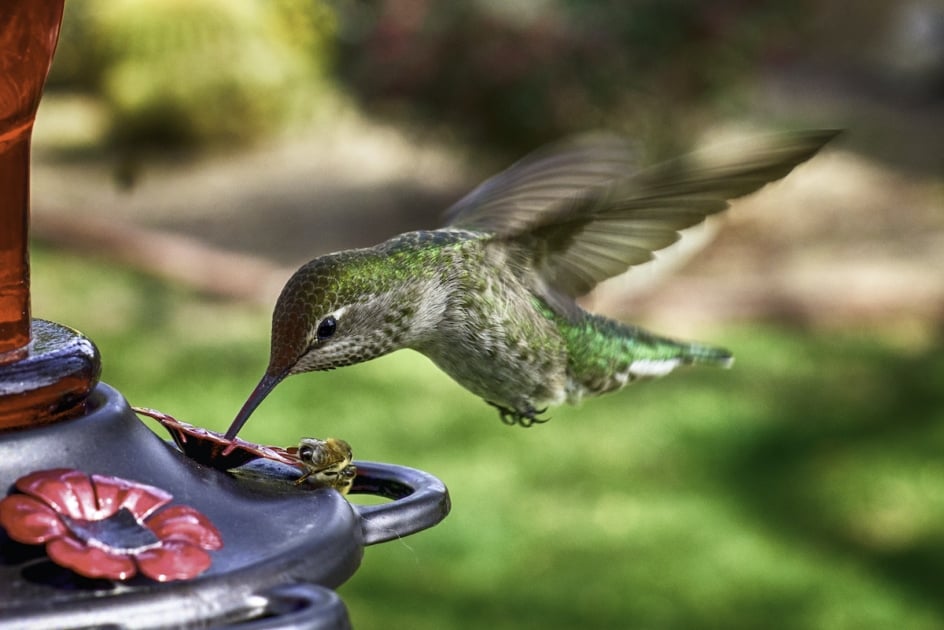
Quick Reference: Hummingbird Feeder Removal
- When to take down: 2 weeks after you see the last hummingbird (NOT before).
- The myth: leaving feeders up keeps hummingbirds from migrating.
- The reality: migration is triggered by day length and instinct, not food availability. Late stragglers and migrants from farther north need fuel.
- Typical removal date: early to mid October (zones 4 to 7); late October (zones 8 to 9).
- Tool: the Almanac’s bee + bird house placement.
On this page
Related Almanac guides
The most common hummingbird feeder myth is that leaving feeders up in fall keeps the birds from migrating. It does not. Per Cornell Lab of Ornithology and the Audubon Society, hummingbird migration is triggered by day length and hormonal cycles, not food availability. Leaving feeders up well into autumn actually helps late stragglers and birds migrating from farther north. This guide is when to take down your feeder, the science of hummingbird migration, and 9 tips to help them.
Why Leaving Feeders Up Is Better Than Taking Down Early
Per Cornell Lab of Ornithology hummingbird research.
- Migration timing is hormonal, not food-driven. Hummingbirds begin migration based on day length signals. They leave whether or not your feeder is there.
- Late stragglers benefit. Some hummingbirds (older birds, late hatchlings) migrate weeks after the bulk of the population. Fuel stops save lives.
- Northern migrants pass through. Hummingbirds nesting in Canada and the northern US pass through your area on their way south through September and October.
- Rule of thumb: wait at least 2 weeks after you see the last hummingbird before taking down feeders.
- In zones 8 to 9 (the deep south US): consider keeping a feeder up year-round to support wintering Rufous and other species.
When to Take Down by Region
Per Cornell Lab regional hummingbird migration data.
- USDA zones 3 to 4 (northern Midwest, New England): take down by late September to early October.
- USDA zones 5 to 6 (mid-Atlantic, Ohio Valley): take down by mid October.
- USDA zone 7 (Carolinas, Tennessee): take down by late October.
- USDA zone 8 to 9 (Florida, Gulf Coast): keep feeders up year-round. Wintering Rufous and Allen’s hummingbirds rely on them.
- Sanitize before taking down. Wash with hot water and white vinegar, dry fully, store away from sun.
Hummingbird Migration Help (Detail)
Below are the original sections on preparing for the trip, 9 tips, and other migration notes.
Did You Know?
- Hummingbirds do not travel in flocks, like most other birds, but migrate alone.
- September is the month we see the most hummingbirds venturing south. Although, stragglers can appear at your feeder in October.
- It takes about two weeks for a hummingbird to complete its fall migratory trek.
- Hummingbirds have excellent recall. They remember the location of your feeder and will return to the sites it has visited in the past.


Hummingbird Feeder Removal FAQ
When should I take down my hummingbird feeder?
Wait at least 2 weeks after the last sighting in your yard. For most of the US that means late September (zones 3 to 4) through late October (zone 7). Zones 8 to 9 can keep feeders up year-round for wintering species.
Will leaving the feeder up keep hummingbirds from migrating?
No. This is one of the most persistent hummingbird myths. Per Cornell Lab of Ornithology, hummingbird migration is triggered by day length and hormonal cycles, not food availability. Leaving feeders up actually helps late stragglers and northern migrants passing through.
How often should I clean my hummingbird feeder?
Every 2 to 5 days in hot weather (above 80 F); weekly in cooler weather. Fermented or moldy nectar can sicken or kill hummingbirds. Clean with hot water and white vinegar, never with soap (residue is harmful).
What should I put in my hummingbird feeder?
1 part white sugar to 4 parts water. Boil briefly to dissolve, cool, fill. Nothing else. No red dye (potentially harmful), no honey (ferments fast and harbors bacteria), no artificial sweeteners (no nutritional value).
When do hummingbirds migrate south?
Most North American hummingbirds begin migration in August (males first) through September (females and juveniles). By mid October most birds north of zone 7 have left. Birds may pass through your yard for several weeks during the migration window.


Deborah Tukua
Deborah Tukua is a natural living, healthy lifestyle writer and author of 7 non-fiction books, including Pearls of Garden Wisdom: Time-Saving Tips and Techniques from a Country Home, Pearls of Country Wisdom: Hints from a Small Town on Keeping Garden and Home, and Naturally Sweet Blender Treats. Tukua has been a writer for the Farmers' Almanac since 2004.
- Deborah Tukua

- Deborah Tukua
- Deborah Tukua
- Deborah Tukua




What I learned: Throwing out extra stored water, after one week and in hot weather, change every three days. Great job. You covered it all.
Thank you, Jennifer! We really appreciate your feedback. It means a lot. Best wishes from all of us at FA. 🧡
My feeders are being swarmed by yellow jackets
Oh no! Yellow jackets hate mint. Try taping a few fresh sprigs to your feeder near where hummingbirds would feed and see if it deters them. Please let us know if that helps! 🙏
It is December 6 and I still have hummingbirds in my yard. Last night it was 27degrees. Should I take down my feeder? I live in southeastern NC, on the coast.
I was told 1 cup of water to 4 teaspoons of sugar. Is that wrong? I’m worried.
1 cup water and 1/4 cup sugar. Heat water before adding sugar, it helps dissolve the sugar. Cool completely before filling feeder
We love seeing you responding and share tips. We can all learn a little something from each other! Our Almanac community is very special indeed. 🧡
I part sugar (1cup sugar) to 4 parts (4cups water)
It’s one part sugar or 1 cup to 4 parts water which is 4 cups water
I’m leaving in November, when should I take my feeder down so the hummingbirds understand there’s no feed for the winter?
We recommend leaving it up until about two weeks before you leave. Safe Travels!
I have many hummingbirds, in way south AZ. LOVE them. Last few years, the bees have taken over. Had to remove.I put in plants they love, but still so miss the feeders. Any ideas?
Loved the info…thank you
Hummingbirds will chase other hummingbirds away from our feeders, but will stay nearby while a Titmouse or Chickadee land on it. Yes, they do drink from it! I would think their fast beating wings might scare the other birds if they’d try to chase them.
Does anyone else have other birds drinking from their hummingbird feeders?
I have a “resident flock” that has been coming back every year for almost 30 years. They stay and nest. This year I went through 120 pounds of sugar. I can tell the difference between them and travelers because when I go outside, my birds will buzz my head if their feeders are empty! The travelers freak out and fly away. I usually leave a feeder up until October 15. I thoroughly wash the feeders with soap and hot water and a few drops of bleach to get rid of any remaining bacteria. My flock left for the migration on September 1st this year. I don’t miss putting out 1 to 2 gallons of sugar water every day, but I do miss their chittering outside my window!
I do what I can to feed birds! we have fenders and flowers for hummingbirds to help them on their journey. They love Bubblegum Petunias!
I’ve only seen 1 this year and took the feeder down but after reading the article, and have a new branch available to hang it on, I’m going to put it back up for a couple weeks- ( I live in Norwich, Ct.)