

December Birthstones: Turquoise, Tanzanite, and Blue Zircon
Quick Reference
- December birthstones: turquoise (traditional), tanzanite, and blue zircon
- Meanings: turquoise for protection, tanzanite for transformation, zircon for wisdom
- Zodiac signs: Sagittarius (Nov 22 to Dec 21) and Capricorn (Dec 22 to Jan 19)
- 11th-anniversary stone: turquoise
- Fun fact: December is one of only three months with a triple-stone birth list, alongside June and August
If you were born in December, you get to pick from three very different stones: a sky-blue desert classic, a violet upstart from Tanzania, and a mineral so old it predates the dinosaurs by billions of years. Turquoise has guarded warriors and shepherds for 7,000 years. Tanzanite was unknown until 1967. Zircon, the third option, is the oldest mineral ever found on Earth.
What Are the December Birthstones?
December is one of only three months with three official birthstones. The American Gem Trade Association and Jewelers of America recognize turquoise, tanzanite, and blue zircon as the December trio.
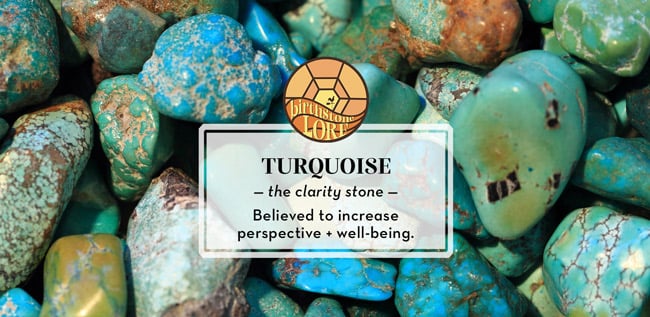
- Turquoise: the traditional December stone. Blue-green hydrated copper aluminium phosphate, rated 5 to 6 on the Mohs scale, used in jewellery and ritual for more than 7,000 years.
- Tanzanite: the modern primary stone. A purple-blue variety of the mineral zoisite, rated 6.5 to 7 on the Mohs scale, found in only one place on Earth.
- Blue zircon: the third option. Natural zirconium silicate, rated 6 to 7.5 on the Mohs scale, and not to be confused with synthetic cubic zirconia.
Turquoise carries the longest history. Tanzanite is the rarest. Zircon is the oldest by a wide margin. Below we cover all three, including the lore, the geology, the care, and the practical things to know before you buy.
Tanzanite: History and Lore
Tanzanite has the shortest history of any stone on the modern birthstone list. In 1967, prospector Manuel D’Souza filed the first mining claim near the Mererani Hills in the Arusha region of northern Tanzania, in the shadow of Mount Kilimanjaro. Within a year, samples reached the New York office of Tiffany & Co.
Henry Platt, then a vice president at Tiffany & Co., gave the stone its name in 1968, choosing “tanzanite” over the geologically correct “blue zoisite.” The American Gem Trade Association and Jewelers of America added tanzanite to the official December birthstone list in October 2002, the first new birthstone added in 90 years.
What makes tanzanite extraordinary is its single source. The entire commercial supply still comes from a four-kilometre square of land near Mererani. According to Tiffany & Co., tanzanite is roughly 1,000 times rarer than diamond, and geologists expect the deposit to be mined out within a generation. Among the Maasai, the stone is often given to women after the birth of a healthy child.
Zircon: History and Lore
Zircon does not get enough credit. Tiny zircon crystals from the Jack Hills of Western Australia have been radiometrically dated to roughly 4.4 billion years old, making zircon the oldest known mineral on Earth.
The name comes from the Sanskrit “jargoon,” meaning beautiful, by way of the Persian “zargun” for gold-coloured. Medieval European jewellers prized colourless zircon from Sri Lanka and traded it as the “Matura diamond” after the southern port city. Natural zircon comes in blue, brown, yellow, green, red, and colourless, with most blue zircon today heat-treated from brown stock mined in Cambodia.
Zircon is not cubic zirconia. Short version: zircon is a natural mineral with a centuries-long jewellery history; cubic zirconia is a laboratory invention from 1976.
Turquoise: History and Lore (Turquoise Facts)
Turquoise is one of the oldest gemstones in human history. Beads carved from turquoise have been recovered from burial sites in western Iran dating to about 7,000 BC. The Egyptian Pharaoh Sekhemkhet sent expeditions to the Sinai Peninsula for turquoise as early as 5500 BC. The Aztec ruler Moctezuma owned ceremonial turquoise mosaic masks now held by the British Museum in London. In Persia, the Nishapur mines of present-day Iran supplied “Persian Blue” turquoise for more than 4,000 years. Across the American Southwest, Pueblo, Navajo, and Zuni silversmiths built an entire jewellery tradition around the stone, and the celebrated “Sleeping Beauty” mine in Globe, Arizona, supplied much of the clean, robin’s-egg blue turquoise on the market until it closed in 2012.
Where is it found?
Turquoise is found around the world, including the United States, Mexico, the Middle East, and China. The most valuable and sought-after material comes from the American Southwest and Iran. A variety called “Golden Hills,” mined in Kazakhstan, is thought to be the purest in the world.
How is it formed?
Turquoise is a hydrated copper aluminium phosphate. It forms when water carrying dissolved copper and aluminium percolates through phosphate-rich sediment. Copper produces the classic blue. Iron in the mix shifts the colour toward green. Zinc gives it a yellow cast. That is why no two turquoise nuggets ever look quite the same.
Ancient History
Turquoise has been used in ceremony for centuries. One of its oldest documented uses dates to 7,000 BC in burial sites in western Iran. The Chinese were carving the stone 3,000 years ago. Turquoise also appears in ancient Egyptian tombs as far back as 3,000 BC, most famously in pharaohs’ burial masks including King Tutankhamun’s. Native American tribes likewise placed turquoise in their own burial sites and ceremonies.

Tanzanite Treatment: What Buyers Should Know
Almost every tanzanite sold today has been heat-treated. Stones come out of the ground a muddy reddish-brown, and a controlled bake at roughly 600 degrees Celsius turns them the vivid blue-purple buyers expect. The treatment is permanent, stable, and industry-standard, per the Gemological Institute of America. Unheated tanzanite exists but is rare enough to command a premium; a reputable seller should disclose treatment status in writing.
Blue Zircon Versus Cubic Zirconia
Here is the confusion: the names sound nearly identical, but the two materials are not the same thing.
- Zircon: a natural mineral, zirconium silicate, that forms in igneous and metamorphic rock over millions of years. It is the December birthstone.
- Cubic zirconia (CZ): a synthetic crystal of zirconium dioxide, first mass-produced in laboratories around 1976 as an inexpensive diamond simulant. It is not a December birthstone and has no meaningful natural occurrence.
Cubic zirconia is a fine costume gem at the right price. Natural zircon is something else: a genuine mineral with documented use in jewellery since at least the Middle Ages. If a December gift matters, ask the seller in writing whether the stone is natural zircon or CZ.
Turquoise Treatments and Stabilization
Most commercial turquoise on the American market has been stabilized, meaning the porous natural stone has been impregnated with clear resin to harden it and lock in its colour. Stabilization is not a flaw; it makes softer turquoise wearable in everyday jewellery. The grading runs roughly like this:
- Natural (untreated): the rarest and most expensive. Hard enough to cut and polish without resin. Look for a written disclosure.
- Stabilized: the most common. Real turquoise, resin-treated for durability. A fair value at fair prices.
- Reconstituted: turquoise dust and chips bonded with resin into a usable block. Lower price, lower grade.
- Imitation: usually dyed howlite, magnesite, or plastic. Not turquoise at all.
Reputable sellers disclose which category a stone falls into. If the answer is vague, walk away.
Geology and Sources
Cambodian heat-treated blue zircon dominates today’s market, but the Jack Hills zircon crystals studied by Australian geologists are what give the mineral its scientific fame.
Famous Turquoise Stones and Other December Birthstone Pieces
Queen of Kilimanjaro Tanzanite
The “Queen of Kilimanjaro” is a 242-carat brilliant-cut tanzanite set as the centrepiece of a tiara with 803 tsavorite garnets and 913 diamonds. It is one of the largest faceted tanzanites in the world. The Smithsonian National Museum of Natural History also holds a notable tanzanite collection.
Aztec Turquoise Mosaic Mask
The British Museum displays a turquoise mosaic mask believed to represent the Aztec god Quetzalcoatl, made in Mexico in the 15th or 16th century and likely part of the gifts the Aztec emperor Moctezuma sent to Hernán Cortés. Persian Sultans of the same era commissioned turquoise-set ceremonial daggers, several of which survive in the Topkapı Palace collection in Istanbul.
The Largest In The World
The Shandong Tianyu Museum of Natural History in China holds the largest turquoise ever found. The stone weighs nearly 500 pounds and measures more than three feet long, three feet high, and ten inches wide.
The Largest In The United States
The largest known American turquoise nugget was unearthed in 1982 at the Mona Lisa Mine in Polk County, Arkansas. It weighs 245 pounds.
The George Washington Stone
Albuquerque’s Turquoise Museum is home to the George Washington Stone, a 9-by-11-inch carving of 6,888 carats. The piece was originally carved and polished as a cabochon for a cedar chest, but the finished stone so resembled the first president that the museum displays it on its own. See the George Washington Stone here.
December Birthstone Folklore and Healing Beliefs
A note before the lore: the healing beliefs below come from cultural tradition, not laboratory medicine. Wear these stones for beauty, sentiment, or heritage; ask a doctor for anything medical.
Increased Accuracy In Battle
Burial ceremonies were not the only use for turquoise in ancient Egypt. Warriors believed the stone improved their accuracy, so it was often attached to sword pommels and scabbards. Native American tribes held a similar belief and fixed turquoise stones to bows, lances, and firearms.
A Symbol Of Sky And Rain
Turquoise symbolized the god of the sky for many Native American tribes. Some held that turquoise was formed from the tears of the creator. For this reason, the Navajo made sand mandalas, intricate circular designs, out of ground turquoise and coral to pray for rain.

The Apache believed a turquoise stone could be found at the end of a rainbow. They considered turquoise a talisman, a magical good-luck charm, and held that a shaman, or medicine man or woman, must possess this stone to be authentic and effective against evil spirits.
Protection
In Tibet, turquoise is the national gem and is held to be spiritual, connected with both sky and earth. Tradition says it brings health, good fortune, and protection. Tibetan parents give turquoise to their children to protect them from falling.
More Metaphysical Beliefs
- The Aztecs valued turquoise more than the Spaniards valued gold and emerald. They offered the stone at the temple of Matlalcueye, goddess of fertility and protection. Fragments of turquoise were placed in the mouths of distinguished chiefs as part of their funerary customs. In life, the chiefs wore turquoise bracelets.
- Turquoise has been linked to friendship and happiness.
- It is believed that the stone may be “programmed” for specific intentions.
- When worn near the heart, the stone is said to bring positive and happy energy.
- Placing turquoise on a horse’s bridle is believed to protect the animal from falling and other danger.
- Turquoise is said to change colour to warn of illness or infidelity.
- The stone may crack or break to warn the owner of danger.
- Tanzanite is associated with transformation, spiritual insight, and clear communication.
- Zircon is the so-called “stone of virtue” and is associated with wisdom, restful sleep, and grounded thinking.
Tanzanite, Zircon, Turquoise, and the December Zodiac
December spans two zodiac signs. Sagittarius runs November 22 through December 21; Capricorn runs December 22 through January 19. Astrologers traditionally pair the December birthstones with both:
- Sagittarius (the archer): often matched with turquoise for protection on long trips and tanzanite for vision.
- Capricorn (the goat): often matched with blue zircon for steady focus and turquoise for grounding.
For more on the season’s astrology, see our December birth-month symbols and fun facts guide.
How to Care for December Birthstones
Each of the three needs different handling, and getting it wrong will damage the stone. See the Mohs hardness scale for context on the numbers below.
- Turquoise (Mohs 5 to 6): the most fragile of the three. Porous and sensitive to oils, acids, perspiration, perfumes, lotions, and heat. Clean with warm soapy water and a soft cloth. Never use steam or ultrasonic cleaners. Put it on last and take it off first.
- Tanzanite (Mohs 6.5 to 7): tougher than turquoise but vulnerable to sudden temperature change and ultrasonic vibration. Warm soapy water and a soft brush only.
- Blue zircon (Mohs 6 to 7.5): hard but brittle, with facet edges that chip easily. Store separately from other jewellery. Soapy water and a soft cloth are safe.
Choosing Your December Birthstone
Three stones, three different reasons to pick one:
- Pick turquoise for heritage, for an heirloom look, and for the protective folklore that comes with 7,000 years of human use.
- Pick tanzanite for rarity, for a violet-blue that no other stone matches, and for the conversation that follows when someone asks where it came from.
- Pick blue zircon for fire and brilliance closer to a diamond’s, for a more affordable everyday stone, and for the satisfaction of owning a piece of the oldest mineral on Earth.
December Anniversary Significance
Turquoise is the traditional 11th-anniversary stone, a tidy excuse to buy your December partner a piece with both calendar and decade meaning. Some modern anniversary lists also put tanzanite at year 24. Zircon does not carry an anniversary slot in mainstream lists, but its history makes it a fitting gift for any milestone with “old” in the description.
Additional Information
Name Origins
Turquoise is the traditional birthstone for December. Its name is derived from the French expression “Pierre Tourques,” which translates to “Turkish stone.” That likely refers to the fact that turquoise first reached Europe along trade routes from Turkish sources, even though the stone was mined further east.
Beware of Fakes
Turquoise is becoming scarcer thanks to three pressures. Mining is expensive, governmental restrictions are tightening, and many of the historic mines have run dry and closed, including the Sleeping Beauty mine in Arizona in 2012. For these reasons, a real share of the turquoise sold today is fake. The most common imitation is dyed howlite, a white stone with dark webbing that mimics turquoise once it is given a blue bath.
Learn more about ancient turquoise variations and their scarcity in the following video:
Handle with care
Turquoise rates 5 to 6 on the Mohs scale. It is not affected by light, but heat can cause breakage or discolouration. The stone is sensitive to oils, acids, and perspiration. Clean with warm soapy water only; never steam or ultrasonic.
Alternative Stones
December has a deep bench. Beyond the official three, several stones have appeared on older lists or in regional traditions, including lapis lazuli (which held the December slot before 1952), blue topaz, and aquamarine. The two that matter on the modern American list are zircon and tanzanite.
Zircon
In 1952, the American Gem Society replaced lapis lazuli with zircon on the December list. Zircon, sometimes called the “stone of virtue,” comes in many colours. Most zircon on the market today has been heat-treated to deliver the desired tones of blue, gold, or clear.
Tanzanite
In 2002, tanzanite was added to the official list of December birthstones. Tanzanite is a blue-violet variety of the mineral zoisite mined only in Tanzania. There is not much folklore around the stone because it was unknown to the wider world until 1967, but the Maasai have already adopted it as a heritage gift to mothers of newborns.

December Birthstone FAQ
What is the December birthstone?
December has three modern birthstones: turquoise (the traditional choice), tanzanite (added by the American Gem Trade Association and Jewelers of America in 2002), and blue zircon (added in 1952). All three are recognised by the modern American birthstone list.
Is tanzanite or turquoise the “real” December birthstone?
Both. Turquoise is the traditional stone with the longest history. Tanzanite is the primary modern stone on most jewellers’ charts. Pick whichever speaks to you; neither is wrong.
Is zircon the same as cubic zirconia?
No. Zircon is a natural mineral (zirconium silicate) and the recognised December birthstone. Cubic zirconia is a synthetic crystal of zirconium dioxide, first produced in laboratories around 1976 as a diamond simulant. They are different materials with different chemistry, history, and value.
Why is tanzanite so expensive?
Tanzanite is mined commercially in only one place on Earth: a roughly four-kilometre square of land in the Mererani Hills of northern Tanzania. Tiffany & Co., which gave the stone its name in 1968, has called tanzanite about 1,000 times rarer than diamond. The supply is finite and is expected to be effectively mined out within a generation.
Can I wear turquoise every day?
You can, but be careful. Turquoise rates only 5 to 6 on the Mohs scale and is porous, so it absorbs oils, lotions, perfume, and sweat. A ring takes more abuse than earrings or a pendant. Take turquoise off before showering, swimming, gardening, or applying anything that goes onto your skin.
What zodiac signs go with December?
December covers two signs: Sagittarius (November 22 through December 21) and Capricorn (December 22 through January 19). Turquoise and tanzanite are most often paired with Sagittarius. Blue zircon and turquoise are most often paired with Capricorn.
Is turquoise an anniversary gemstone?
Yes. Turquoise is the traditional 11th-wedding-anniversary stone. Some modern anniversary lists also assign tanzanite to the 24th anniversary.
How do I avoid buying fake turquoise?
Ask the seller, in writing, whether the stone is natural, stabilized, reconstituted, or imitation. Reputable jewellers disclose treatment. Common imitations include dyed howlite, magnesite, and plastic. If the price seems impossibly low for a natural American or Persian stone, it almost certainly is.
Related Articles
- Birthstones by Month (full list)
- November Birthstone: Topaz
- January Birthstone: Garnet
- December Birth-Month Symbols and Fun Facts
- Zodiac Zone: Sagittarius
- December Flower Lore: Paperwhite (Narcissus)
Join The Discussion!
Do you own a turquoise, tanzanite, or zircon piece? Is it a family heirloom, an anniversary gift, or a stone you picked out for yourself? What did you learn from this article that surprised you? Let us know in the comments below.


Tamra Albright-Johnson
Tamra Albright-Johnson specializes in the unique histories and folklore around rare stones. She owns and operates a custom jewelry shop with her daughter, Kennie, in Iowa.
- Tamra Albright-Johnson

- Tamra Albright-Johnson
- Tamra Albright-Johnson
- Tamra Albright-Johnson

I first came to know turquoise in my teens and continue to acquire pieces. Didn’t know till decades later that I may well have Native lineage through both family lines. Learned a lot reading the article. Tu. PS I regret not buying Ellensburg Blue when I had the chance in 2013. Do you have any for sale?
Hi Sunny, We’re glad to hear you learned a lot from our article. We do have authentic turquoise necklaces available in our online store, located here: buy now. Supply is limited.