

Birth Month Birds: Find Yours (Complete 12-Month Guide)
Birth Month Birds at a Glance
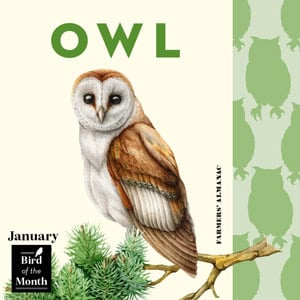
- January: Owl, thoughtful and wise
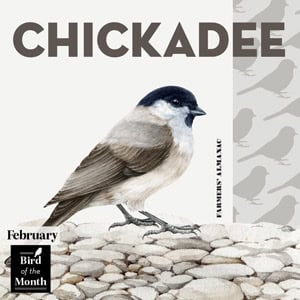
- February: Chickadee, cheerful and social
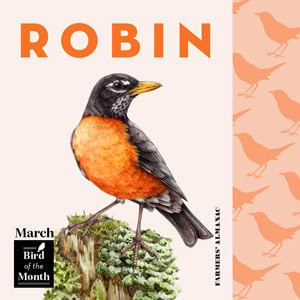
- March: Robin, tough and lively
- April: Duck, sociable and adaptable
- May: Hummingbird, joyful and agile
- June: Dove, peaceful and sociable
- July: Eagle, strong and courageous
- August: Woodpecker, open-minded and curious
- September: Hawk, dependable and steady
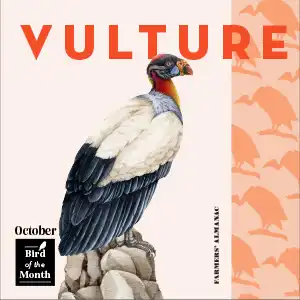
- October: Vulture, resourceful and patient
- November: Turkey, hardworking and loyal
- December: Cardinal, devoted and resilient
Every culture has paired birds with meaning, and the calendar is no exception. The birth month bird tradition gives each month a feathered emblem, tying personality traits and folklore to the bird that best matches the season. Below is the full twelve-month list, the stories behind each pick, and a few field notes so you can spot your bird on the next quiet walk.
Which birth month bird is yours? Tell us in the comments. Psst, have you seen our collectible Birth Month Birds Bag and Birthday Bundle?
What Are Birth Month Birds?
A birth month bird is a species linked to a calendar month, the way a birth flower is tied to roses or daisies. Each pick reflects the bird’s habits, its place in folklore, and the way it shows up in the season. Some, like the chickadee, fit because they brave the cold. Others, like the robin, fit because they herald a change in weather. The pairings are folk tradition rather than science, but they have grown into a friendly shorthand for personality, much like a zodiac sign with feathers.
The Folklore Tradition
Birds have carried symbolic weight for thousands of years. Ancient Greeks tied the owl to Athena, goddess of wisdom and prophecy. Christian and Hindu traditions both treat the duck as a sign of purity and good luck. Native and European folk cultures have read meaning into the cardinal’s flash of red, the hawk’s circling silhouette, and the dove’s quiet coo. The modern birth-month list draws on those older threads, then pins one species to each month based on when it sings loudest, nests closest, or fits the temperament of the season.
None of this is a horoscope. Think of it as a folklore lens, similar to the legends and lore behind the cardinal or songbirds as holiday symbols. The trait list is a starting point, not a prediction.

January: Owl
People born in January are thought to have a thoughtful, wise, and quiet nature, qualities mirrored in the owl. Owls were once associated with Athena, the goddess of wisdom and prophecy, and they have carried that reputation in folklore ever since. Their keen senses and nocturnal habits make them long-standing symbols of knowledge and intuition.
Where to spot one: Owls roost in mature woods, barns, and quiet suburban tree lines across the United States and Canada. Look at dusk and listen for hoots after dark. The great horned owl’s two-part call is the easiest to learn first.
February: Chickadee
The chickadee, a charming little bird, is the perfect bird of the month for February because it thrives in winter. These birds do not flee to warmer places. Chickadees keep busy searching for food and holding down their home turf, a reminder that life keeps going even when the weather outside is unfriendly.
What makes chickadees even more fascinating is their social nature. They are super friendly, sticking together in groups to make it through winter. Their cheerful chirps and quick movements give us a boost, hinting at spring and fresh starts even in the depths of winter.
Where to spot one: Chickadees are bold backyard visitors, especially at suet and sunflower feeders. Stock the feeder station early and you will see them most days. For a deeper look at winter feeding, see our guide to the best winter bird food.
March: Robin
Just as the daffodil announces the coming of spring, seeing a robin is a sign that warmer weather is on the way. These mid-sized singing birds, with their bright red chest and yellow beak, are not only a common sight but also the bird that represents March. The color “robin’s egg blue” is well-known, and the robin’s cheerful song, often written as “cheerily, cheer-up, cheerio,” tells us a new season is starting.
The robin, standing for fresh starts and a return to life, reflects the tough and lively character often seen in people born in March. With deep roots in old stories, the robin is known for its strong feelings, honor, and ability to keep going, an everlasting sign of the beginning of spring and the chance for new opportunities.
Where to spot one: Robins return to lawns and parks across the northern United States and southern Canada as soon as the ground softens. They tug worms at dawn and dusk and sing from the highest perch they can find.
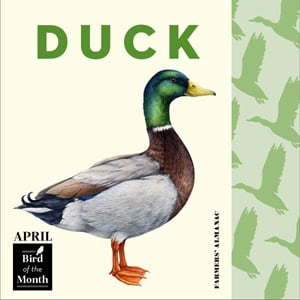
April: Duck
Ducks hold a sacred status in both Christian and Hindu cultures, symbolizing purity and good luck. These sociable and playful birds, with their ability to adapt and persevere, align with the traits of those born in April.
Ducks are born knowing how to swim, a built-in “go-getter” attitude. The mallard duck, in particular, is known for its ease of socializing and friendliness. Ducks live in peaceful groups and fly together in formation, a picture of community spirit and unity. They are calm and rarely become aggressive, unless they sense their young are in danger.
Where to spot one: Any pond, marsh, or slow river will do. Mallards are common from coast to coast in both the United States and Canada. April is also the start of duckling season, so watch from a respectful distance.
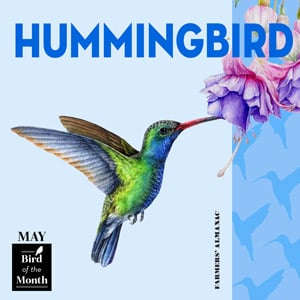
May: Hummingbird
Hummingbirds are a cherished sight in any bird lover’s yard, symbolizing hope, peace, and good fortune. These agile and graceful creatures embody joy, love, and the ability to navigate life swiftly and effortlessly, making them particularly meaningful for those born in May.
The name “hummingbird” comes from the humming sound created by their wings. Some species beat their wings as much as 80 times per second. Their unique design lets them fly in a figure-eight pattern, forward, vertically, horizontally, and even backward, unlike any other creature.
Where to spot one: Hummingbirds arrive across most of the United States and southern Canada in May. A sugar-water feeder helps, and so does a flowerbed they cannot resist. Our guide to attracting hummingbirds to the flower garden walks through the plants that work hardest.
Related: Hummingbird Moth
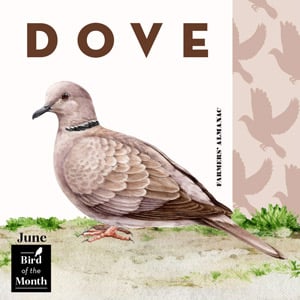
June: Dove
The dove is the universal symbol of peace and harmony. For people born in June, who are known to have a peaceful, sociable demeanor, it is a fitting bird of the month. Beyond peace, the dove’s soft and gentle presence speaks of love. For centuries doves have carried a strong historical connection with the divine realm and intuition.
Known for their distinct “coo,” doves are the smaller members of a diverse group of birds in the Columbidae family. These strong flyers have incredible navigation abilities and have been called the GPS of the bird kingdom. Like those born in June, the dove is also extremely adaptable and has found ways to live in almost every environment around the globe, including urban settings, rainforests, and even swamps.
Where to spot one: Mourning doves are the most common dove across the United States and southern Canada. Listen at dawn for the slow, sad coo, then look for them on power lines and gravel driveways.
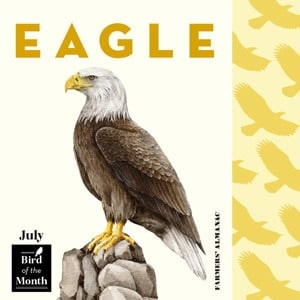
July: Eagle
The eagle, a soaring emblem of strength, courage, and freedom, fits the spirit of those born in July. Like the eagle, they carry quiet confidence, take flight with majesty, and inspire the people around them.
The Bald Eagle is one of the national symbols of the United States, an honor granted in 1782. The Bald Eagle gets its name from the old English word “balde,” which does not mean hairless but “shining white,” noting its distinctive white head that makes them easy to spot from a distance. The Golden Eagle, more widely found, is also native to North America.
Where to spot one: Bald Eagles favor large lakes, rivers, and coasts across the United States and most of Canada. Drive a river road in winter or early spring and scan the tallest bare trees along the bank.
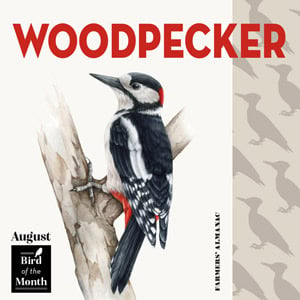
August: Woodpecker
The confident woodpecker lets its presence be known, the essence of those born in August. Like the woodpecker, those born in August are open-minded and not afraid to look beneath the surface to see what life has to offer.
Woodpeckers spend almost their entire lives in trees in search of insects, also feeding on sap and berries. These headbangers are a welcome sight in any bird lover’s backyard, and they are vital for healthy ecosystems, controlling pests and creating homes for other woodland birds and animals.
Where to spot one: Listen first. The drumming on dead wood is your tell. Downy and hairy woodpeckers are the most common across the United States and Canada and visit suet feeders happily.
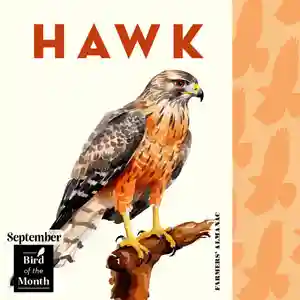
September: Hawk
The hawk, soaring high above the treetops, symbolizes the powerful, majestic spirit of those born in September. Like those born in September, they flap to the beat of their own drum, and they are diligent and dependable. Hawks represent strength, adaptability, protection, and perseverance. Like those born in September, the hawk is known to rise above obstacles.
While the hawk can look threatening, it is a vital bird to have in the environment, helping to control populations of rodents and other animals considered pests to humans.
Where to spot one: September is peak hawk migration. Ridge lines and lakeshore flyways across the eastern United States and southern Canada draw kettles of broad-winged and red-tailed hawks riding the thermals south.
October: Vulture
The patient vulture symbolizes resourcefulness, fitting those born in October. Vultures are adaptable and use all of their senses to get what they need in life.
Vultures survive feast or famine, going long stretches without food. Their adaptations have not only kept them alive, they also help clean up the environment, keeping ecosystems healthy and limiting the spread of disease.
In many cultures, the vulture symbolizes death and rebirth, a guardian between the physical and spiritual worlds. Fitting for those born in the month of Halloween. For more nocturnal Halloween company, see our piece on facts and folklore about bats.
Where to spot one: Turkey vultures ride thermals on warm autumn afternoons across most of the lower 48 states and southern Canada. Look for a teetering V-shape soaring without much wing flapping.
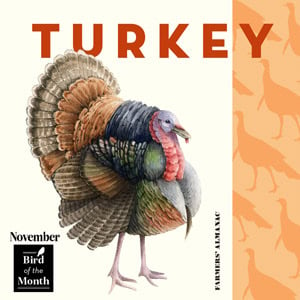
November: Turkey
The hardworking, adaptable, and headstrong turkey fits those born in November. Like those born in November, turkeys are highly adaptable and gregarious. They prefer to live in flocks and “rafter” together to look after one another, relying on the group for safety.
Because of its association with Thanksgiving, the turkey aptly symbolizes generosity, gratitude, and family, bringing people together in a spirit of thankfulness. Associated with luck and prosperity, encountering a turkey is considered a sign of a good bounty. For land to sustain a flock of turkeys, there must be ample food and water to feed them.
In many cultures, finding a turkey feather is believed to be a positive omen, representing a connection to nature, spiritual growth, and protection. Calling someone a “turkey,” meaning “cowardly” or “foolish,” is not an accurate quip. In fact, Benjamin Franklin celebrated turkeys as courageous, comparing them to bald eagles.
Where to spot one: Wild turkeys have rebounded across woodland edges in most of the United States and parts of southern Canada. Look at field edges at dawn and listen for the gobble during spring breeding season.
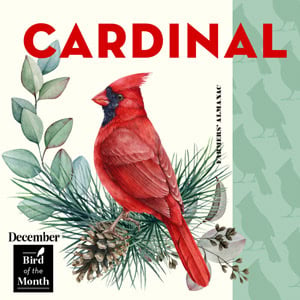
December: Cardinal
Cardinals, with their vibrant red plumage, are often associated with the winter months, a fitting symbolic birth month bird for December. Their bold color stands out against the winter landscape, symbolizing warmth, passion, and vitality.
Cardinals are also known for their strong family bonds and monogamous nature, reflecting the values of loyalty, commitment, and love often associated with December birthdays. As a symbol of hope and resilience, the cardinal inspires those born in December to push through challenges and come out stronger. For more on this bird’s symbolism, see our piece on cardinals, legends, lore, and spiritual symbolism.
Where to spot one: Northern cardinals do not migrate, so December backyards from the eastern United States into southern Canada often host a pair year round. The male’s flash of red against snow is one of the easiest spots in birding.
Related: 12 Days of Christmas Birds
Birding Your Birth Month
Once you know your birth-month bird, the next step is to spot it. A few habits make that easier no matter where you live:
- Learn the call first. Most birds are heard before they are seen. The Cornell Lab of Ornithology has free recordings for every species in this list.
- Walk at dawn or dusk. Songbirds, owls, and hawks are all most active in the soft-light hours on either end of the day.
- Feed the yard year round. Sunflower seed, suet, and a clean water source bring chickadees, cardinals, woodpeckers, and doves close enough to study.
- Keep a simple log. A date, a place, and a species is enough. Over a year you will see the same birds show up in the same months, which is exactly what the folk tradition is built on.

Join the Discussion
Which bird of the month is yours?
When was the last time you saw one of these birds?
Share your photos and thoughts with your community here in the comments below.
If you love birding, we recommend downloading Cornell University’s Merlin app, which helps you identify birds you hear in your neighborhood. It is free and easy to use.
Birth Month Birds FAQ
What is a birth month bird?
A birth month bird is a species linked to each calendar month, much like a birth flower or birthstone. The pairings draw on folklore, the bird’s habits, and the season in which it stands out most.
Are birth month birds the same as zodiac birds?
No. Zodiac signs follow astrological dates that cross months. Birth month birds map one bird to a full calendar month. They sit closer to birth flowers and birthstones than to a horoscope.
Where do these birth-month birds come from?
The list is a modern folk tradition rather than a single source. It blends older symbolism, like the owl as Athena’s bird or the dove as a sign of peace, with seasonal habits, like the chickadee braving February cold or the robin returning in March.
Is the meaning of a birth month bird scientific?
The personality traits are folklore, not biology. The habitat notes, calls, and behaviors are real and check out against sources like the Cornell Lab of Ornithology and the Audubon Society. Take the symbolism as story, and the natural history as fact.
How can I see my birth month bird in person?
Start with the call and a quiet walk near the right habitat, woods for owls and woodpeckers, water for ducks, open ridges for hawks. A backyard feeder and Cornell’s free Merlin app will cover most of the rest.
Do birth month birds differ by country?
The list we use is the one common across the United States and Canada. Some countries swap a species for a local equivalent, for example a different songbird in March or a different raptor in July, but the months and the symbolism tend to track.
What if I do not feel like my birth month bird?
Folklore is a starting point, not a verdict. Read the traits as one lens, and pick the bird whose story sounds the most like you. Plenty of people find their birth-month bird, their birth-flower, and their birthstone each tell a slightly different story.


Melissa Mayntz
Melissa Mayntz is a writer who specializes in birds and birding, though her work spans a wide range—from folklore to healthy living. Her first book, Migration: Exploring the Remarkable Journeys of Birds was published in 2020. Mayntz also writes for National Wildlife Magazine and The Spruce. Find her at MelissaMayntz.com.

Natalie LaVolpe
Natalie LaVolpe is a freelance writer and former special education teacher. She is dedicated to healthy living through body and mind. She currently resides on Long Island, New York, with her husband, children, and dog.
-
Natalie LaVolpe

-
Natalie LaVolpe
-
Natalie LaVolpe
-
Natalie LaVolpe




We have all of these birds where I live. I’m hearing the barred and great horned owls hooting at night. We see turkeys every day. Two hens, one with 6 poults and one with 4. It’s interesting to watch the changes throughout the year. Mating season in spring, toms all fluffed up and strutting, then come the babies, then hens getting together with hens who have poults, for protection, in my opinion. They know there’s safety in numbers. The vultures are gliding high up in the sky. We hear the ducks on a neighbor’s pond. We’ve seen eagles in another part of the town we live in. We have all sorts of hawks. And we see the rest at our feeders. Next year, I’m putting a fountain out for the hummingbirds. They can’t enjoy a regular bird bath like the others can and they deserve a bath and a drink too!
Coolio Beans!
Hi Fletcher, Glad to hear you liked this article. If you have any questions, let us know! Best wishes 🧡