

Fall Weather Safety Tips: Floods, Wet Leaves, Visibility, and Home Checks
Fall is a wonderful time of year, but it does have its share of hazards. Read our safety tips to be prepared this season.
Quick Reference
- Floodwater rule: Turn Around, Don’t Drown. Six inches of moving water can knock an adult off their feet.
- Wet leaves: A leaf-covered road in cold weather is as slick as ice. Slow down. Leaves also hide road markings and potholes.
- Reduced visibility: Days are shorter. Foggy mornings, leaf-peepers, school zones, and active wildlife all show up at once.
- Weather changes with elevation: Sunny at the base, cold or snowy at the summit. Dress in layers and never hike alone.
- Home checklist: Service the furnace, clean the chimney, replace smoke and CO alarm batteries when you “fall back.”
- Best companion read: The Almanac 20 Signs of a Hard Winter and the Long-Range Forecast.
Fall is a wonderful time of year. The leaves are changing, the kids are back to school, there’s football to watch, apples to pick and eat, pumpkins to carve, and the weather is especially pleasant: lower humidity, fewer bugs, and better sleeping temperatures. What’s not to love?
Fall is not without its share of hazards. Here are some tips to be prepared for whatever weather challenges may come your way this season.

Floodwaters
In short, never drive through floodwaters. Fall can often bring rainy weather, and heavy rains can be a common occurrence as September and October are still part of hurricane season. So if you encounter fast-moving water or a flooded roadway as you are driving or walking, the best move is to turn around and find another route. Abide by the “Turn Around, Don’t Drown” adage. You do not know the conditions under the water. All it takes is 6 inches of moving water to make you fall. Keep children and pets from playing in floodwater.
The National Weather Service flood-safety guide walks through the same Turn Around, Don’t Drown rule with the data behind it. Twelve inches of moving water can carry away most cars. Two feet of moving water can carry away a pickup truck.
Leaf Hazards
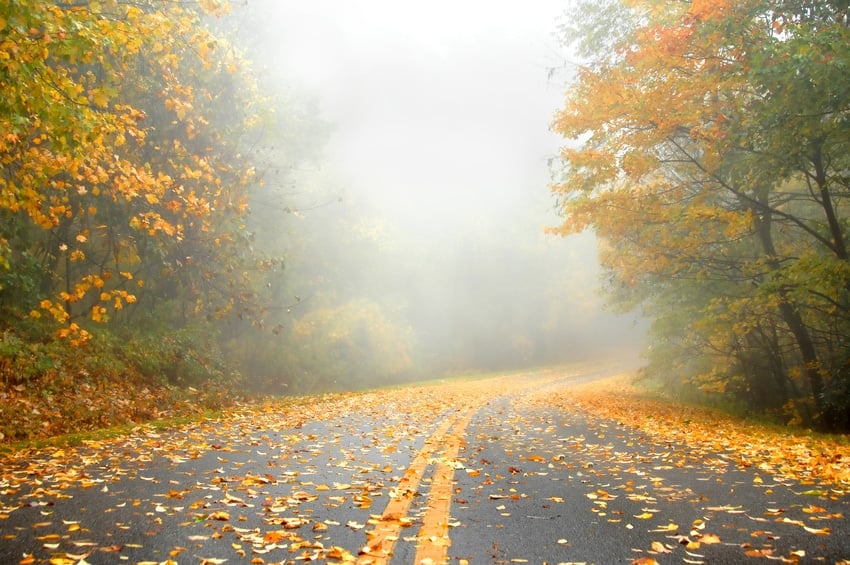
Leaves, while pretty, can pose hazards for motorists. Fallen leaves gather on roadways and when they become wet, they create very slick conditions. Add freezing temperatures to the mix and your vehicle will have zero tracking, similar to driving on an icy road. Leaves can also cover important road markings, like double yellow lines, or hide deep potholes. Slow down when driving on a leaf-covered roadway. Give yourself plenty of room between you and the cars around you in case anyone has to stop short.
- Children often play in leaf piles. Never drive through a pile of leaves.
- Many “leaf peepers” are out on the roadways and can be distracted by foliage vistas. Stay alert to what other motorists are doing.
- Keep your windshield free of leaves to avoid obstructing your view.
- If you see dried leaves peeking out from under the hood of your car, take a moment to pop it and clear them. Leaves can obstruct ventilation holes and cause your vehicle to overheat.
Reduced Visibility
With the days getting shorter, visibility when driving in the fall can be a challenge. Many people walk along the side of the road at dusk with dogs, on horses, or riding bicycles, and they can be difficult to see. School is also in session, so kids are out playing. Mornings tend to be foggy. Fall is a time when wildlife is more active and on the move. Slow down when driving, especially on curvy or narrow roads where visibility around corners is hard. Pay attention to postings for animal crossings, and obey school zone speed limits.
Weather Changes
Fall foliage hikes are fabulous. If you take a hike, be prepared for weather changes as you increase elevation. It may be sunny at the base of the mountain but cold and rainy or even snowy at the summit. Dress in layers, bring a windbreaker or waterproof shell, plenty of water, and never hike alone.
Water Safety
Many people like to take fall boat rides to see peak foliage. Even if things seem calm on the water, everyone on board should wear a life jacket. Being submerged in water of any temperature for any length of time can cause hypothermia, and even the strongest swimmer can be weakened.
Fall Home Maintenance Checklist
Here are a few more maintenance items to do this fall for safety:
- Get your furnace serviced. Before winter arrives, call a professional to do your annual furnace servicing now. Your furnace is the most important appliance in your home. Have the filters cleaned or replaced. Check to see if you have an annual service contract, which will reduce costs on this important maintenance step.
- Fire Safety. When we “fall back” is the time to replace the batteries in smoke alarms and carbon monoxide detectors. It is also a good idea to have a working fire extinguisher in the house, and everyone who lives there should be familiar with how it works. Hold a Fire Safety Meeting with family members and go over the steps. Do not do any outdoor burning when fire dangers are high. Flying embers can travel and start fires. Never leave candles unattended, especially in Jack-O-Lanterns or on table centerpieces.
- Fireplaces. Get your chimney inspected every fall. Hire a chimney sweep to clean out your chimney of debris, nests, and creosote before you light your first fire. Use the fireplace screen to protect from flying sparks and embers. Never pour lighter fluid, kerosene, or gasoline on a fireplace, and never leave a fireplace unattended.
Fall Weather Hazards by Region
| Region | Most common fall hazard | What to plan for |
|---|---|---|
| Northeast (US) | Heavy leaf cover, hurricane remnants, peak foliage traffic | Slick leaves, flood warnings, distracted drivers |
| Midwest + Great Lakes | First hard freezes, rapid temperature swings | Furnace service, frost-protect outdoor plants |
| South (US) | Late hurricane season, sudden cold fronts | Flood awareness, fire-weather pre-burn checks |
| Mountain West | Sudden snow at altitude, wildfire risk | Layered hiking gear, fire bans, water safety in cold lakes |
| Pacific Northwest | Atmospheric rivers, early dark | Flooding, slick wet roads, headlight checks |
| Southern Canada | Early snowfall, hunting-season wildlife on roads | Snow tires by November, deer-strike awareness |
Fall Driving Quick-Take
- Test headlights and tail lights on the first chilly morning. Bulbs that worked all summer often die at the first cold snap.
- Keep tire pressure up. Cold air drops PSI by about 1 pound for every 10 degrees Fahrenheit drop.
- Top off windshield washer fluid with the winter formula in northern states.
- Carry a small kit: blanket, flashlight, jumper cables, water, snack.
- Watch for black ice on bridges and overpasses on the first cold morning, especially over creeks and shaded valleys.

Frequently Asked Questions
How deep is too deep to drive through?
Six inches of moving water can knock an adult off their feet. Twelve inches can carry away most cars. Two feet can carry away a pickup truck. The National Weather Service rule is Turn Around, Don’t Drown for any amount of moving water across a roadway.
Why are wet leaves so dangerous on the road?
A wet leaf layer reduces tire-to-pavement friction by up to a half. Add a freeze and the layer behaves like ice. Slow down, leave space, and avoid hard braking on leaf-covered curves.
When should I service my furnace?
Before the first cold week of fall, ideally September or early October in the northern tier. Annual servicing keeps the burner clean, the filters fresh, and the carbon-monoxide risk low. Many HVAC companies offer service contracts that include winter emergency calls at a lower rate.
When should I replace smoke and CO detector batteries?
When you “fall back” at the end of daylight saving time. Pair the date with the calendar so it never gets skipped. Battery-only units should be replaced every nine to ten years.
Why is wildlife more active in fall?
Deer enter the rut in October and November. Other mammals are storing food and moving more before winter. Hunting season pressure also pushes animals across roads. Slow down at dawn and dusk, and pay attention to crossing signs.
What should I bring on a fall foliage hike?
Layered clothing, a windbreaker or waterproof shell, plenty of water, a snack, a small first-aid kit, a fully charged phone, and a paper map for trails with no cell service. Tell someone your route and your expected return time. Never hike alone.
Is fall a good time to clean the chimney?
Yes. Inspect the chimney every fall before the first fire. Have a chimney sweep clean out debris, nests, and creosote. Use a fireplace screen, never pour lighter fluid or gasoline on a fireplace, and never leave a fire unattended.
Tell Us
What is your single most useful fall safety tip? Drop a comment with the one your household runs through every September. We are collecting reader notes for the next round of the Almanac.


This article was published by the Staff at FarmersAlmanac.com. Any questions? Contact us at [email protected].
- Farmers' Almanac Staff

- Farmers' Almanac Staff

- Farmers' Almanac Staff

- Farmers' Almanac Staff

Fall is my FAVORITE time of year – grew up in PA – live in CA now. I miss the “fall” smell, being able to burn leaves curbside with my dad, going for walks in the woods and spotting deer with my dad at dusk……..those were wonderful memories. Plus i LOVE the wonderful fall colors – it’s just the absolute BEST time of year – lucky i was born in October.
I love the smell of the Fall weather,the color changes,the cool air,the people change as the air changes from hot to colder. Fall is a season to get going.
Thank you, Jose A. for your input and tips!
Thank you, Uncle Albert, great tips!
Wow you must be really excited for fall! Lol! Before I say my feelings for the fall, though, let me say mine for the summer now that it’s ending. I am so a summer person. Summer is just full of joy and can’t get enough of it! Wildfires and mosquitoes are the major things I dislike about the summer, and only a few I dislike about the season. I am going to enjoy the last official weekend of summer 2014, tomorrow and the day after tomorrow. I already am missing the summer a little. I always look forward to summer. Not that I don’t like any other weather, but summer is what I just get excited for. I know nine months will fly and summer will come again. I’m sad to say goodbye to the summer. 🙁 Already I look forward to summer 2015! Well, fall is like an extended summer though. Movie and music hits can happen in the fall like in the summer. Fall traveling is good, though I think summer traveling is more fun. Hiking is for summer and fall. This is partly why I love fall as much as summer! But I am also happy for fall. I love green trees and the leaves of trees changing color. Weather wise, I love almost anything. Only firestorms, hurricanes, severe blizzards, strong winds, and tornadoes are what I don’t like about the weather. Anything moderate. But the fall is beautiful. I love the landscape of summer and fall. I am not much of a football watcher, though. Winter is what I find so gloomy. I love the holidays of the beginning and end of the year but not much else about the winter. Well, nice safety tips. Use low beams when it’s foggy. And drive more slowly when precipitation falls as well. As the first time of precipitation after a dry summer comes, the roads are the most slippery. (I live where summers are dry and the fall starts to get wet.) And also, this means being careful when the weather conditions make it harder to drive. Because fall changes things in terms of the weather from the summer.
Early morning sun on a cold foggy windshield is dangerous, warm up your ungaraged car before heading to work or school. Wipe off side mirrors too. You may be lucky and avoid an accident but may get a ticket from the police for “obstructed vision”.
Beware of deer early evenings and mornings during hunting season too. The deer are running away from hunters and may jump into the road-way.
Just a few tips from Uncle Albert.