

Four Thieves Vinegar: The Legendary Herbal Tonic Recipe
This herbal concoction supposedly protected people from the plague. The recipe has many variations, is it magic elixir or the stuff of legends?
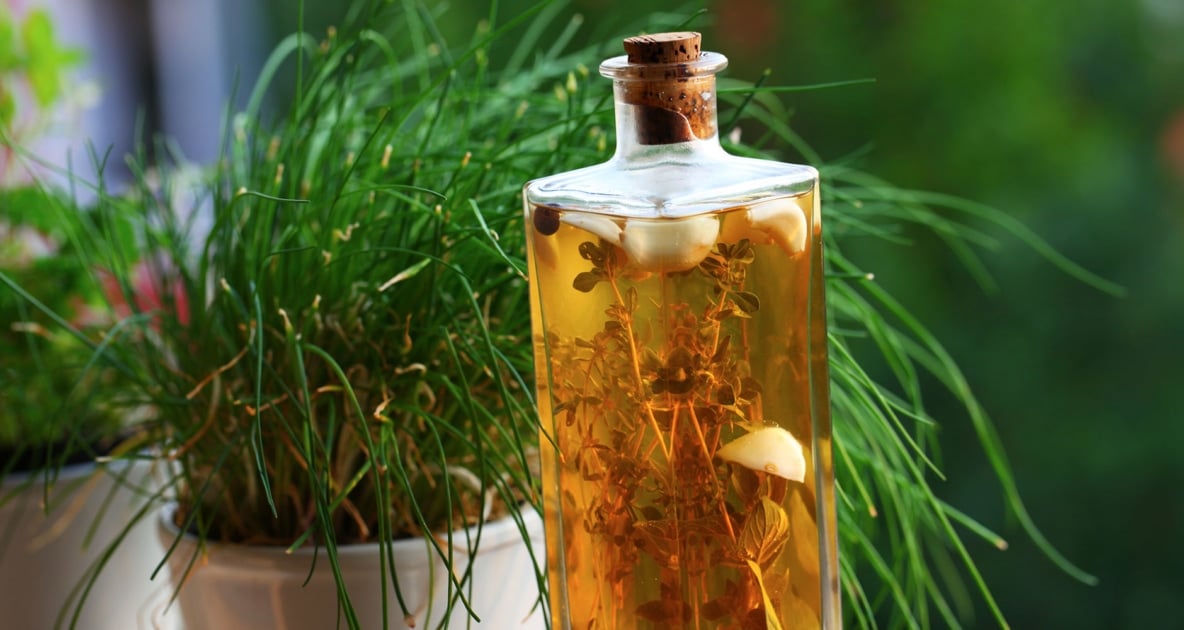
Quick Reference: Four Thieves Vinegar
- What it is: an old herbal tonic, herbs and garlic steeped in vinegar, tied to an 18th-century plague legend.
- Old recipe: wormwood, meadowsweet, wild marjoram, sage and more, steeped in white wine vinegar for fifteen days.
- Modern recipe: four or more dried herbs, one for each thief, plus garlic, in apple cider vinegar.
- Steep: 2 to 4 weeks in a warm spot, then decant and bottle.
- Dose: about 1 tablespoon in water a day for an adult, 1 teaspoon for a child.
The story has been told around kitchen tables for generations. During the 18th-century plague that swept through Europe, a band of thieves robbed the homes and graves of the sick and the dying yet never fell ill themselves. Their secret was an herbal tonic now known as Four Thieves Vinegar. When the authorities finally caught them, the thieves traded the recipe for their freedom, and it was written up and posted on the city walls so every man could make it for himself. Whether you treat it as folk medicine or simply a good story, the recipe has survived for centuries, and this 2026 it is still worth knowing.
Over the years many versions of the tale have circulated, and just as many versions of the recipe. The original called for several herbs and roots steeped for days in white wine vinegar. One reason the old timers believed it worked against the plague is that it repelled insects, including the fleas that actually spread the disease. There is a grain of science there too. Researchers at the National Institutes of Health have shown that the acetic acid in vinegar is an effective antimicrobial agent, which is part of why vinegar has been a household preservative and cleaner for so long.
The Legend and the Original Recipe
French chemist and scholar Rene-Maurice Gattefosse published the “original” recipe, the one said to have hung in the museum of Old Marseille, France, in his 1937 book, Gattefosse’s Aromatherapy. Here it is in his own words:
Take three pints of strong white wine vinegar, add a handful of each of wormwood, meadowsweet, wild marjoram and sage, fifty cloves, two ounces of campanula roots, two ounces of angelic, rosemary and horehound and three large measures of champhor. Place the mixture in a container for fifteen days, strain and express then bottle. Use by rubbing it on the hands, ears and temples from time to time when approaching a plague victim.
Read that list and you will notice the old recipe leaned on more than four herbs. The “four thieves” in the name is the storyteller’s touch. The modern versions you will see below trim the list down and swap in ingredients that are easier to find on a 2026 grocery shelf.
Modern Recipes
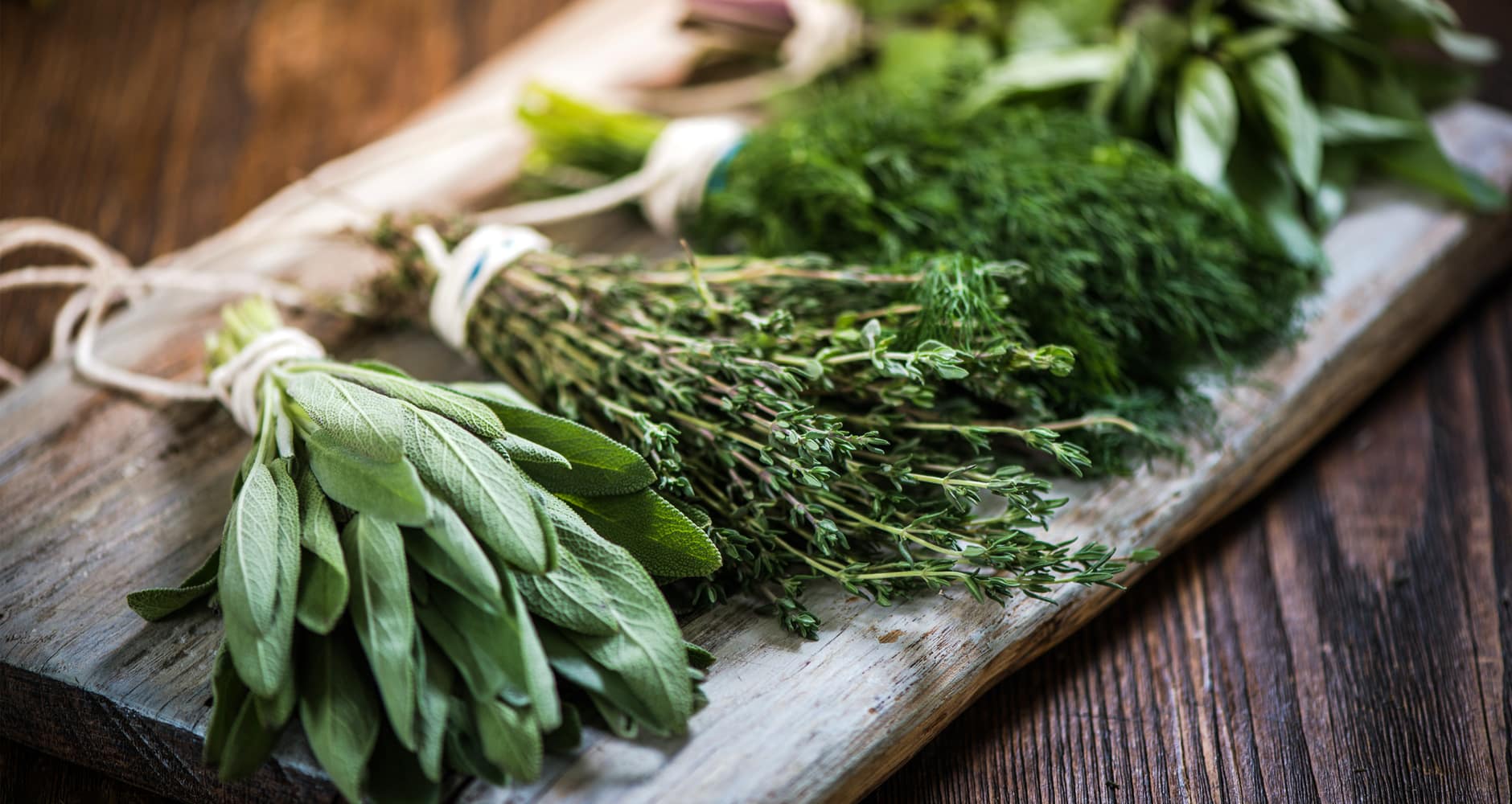
Modern versions of the recipe generally include four herbs, one for each thief, plus garlic, a strong antiviral and antibacterial in its own right, infused in apple cider vinegar. Some herbalists recommend the Four Thieves tonic as a preventative to ward off communicable sickness like the common cold and influenza.* That makes a certain sense when you look at the health-promoting properties of the individual herbs you will find in most of today’s recipes.
If you want to read more about why vinegar earned its place in the medicine cabinet and the cleaning cupboard alike, our guide to the powers of vinegar covers the everyday uses that have nothing to do with the plague.
Herbs Used in Four Thieves Vinegar Recipes
Garlic. Garlic not only smells wonderful in cooking, it promotes health as well. Beyond its positive effect on cardiovascular disease by lowering cholesterol and blood pressure, garlic has been used for centuries to fight infectious diseases. Scientists now know that its principal compound, allicin, has strong antibacterial and antiviral properties.
Rosemary. Rosmarinus officinalis is one of the most popular culinary herbs around the world, and it has been widely studied for therapeutic use. A few of the validated medicinal uses of rosemary include antibacterial, anticancer, antioxidant, and anti-inflammatory effects.
Clove. For centuries people have used clove as a food preservative because of its antioxidant and antimicrobial properties. Studies have shown clove oil is effective against staph, E. coli, and pseudomonas.
Sage. Sage, or Salvia officinalis, has a wide range of traditional uses, from relieving digestive disturbances to easing bronchitis, cough, and a sore throat brought on by inflammation. The flavonoids and compounds in sage have strong antioxidant and antibacterial properties.
Juniper Berries. Studies show that juniper possesses anti-inflammatory, antimicrobial, and antibacterial properties, among others.
Thyme. Thanks to the phenols thymol and carvacrol, thyme has the highest level of antioxidants of any herb. Thymol is a proven antimicrobial and antibacterial that is effective against staph, E. coli, and salmonella infections.
Cinnamon. Not just for cookies, cinnamon possesses antimicrobial, antifungal, antioxidant, and anti-inflammatory properties. Its historical uses include promoting oral health and improving blood coagulation and circulation.
- Old herbalists favored gathering and putting up herbs on the Best Days for the task.
- The Best Days Calendar lists the favorable days each month for drying herbs, brewing, and canning.

Four Thieves Vinegar Recipe
To make your own Four Thieves Vinegar health tonic, you will need:
- 1 bulb of garlic, cloves separated, skins removed, and crushed
- 2 tablespoons each of four or more dried herbs, chopped. Choose herbs with the properties you want, from those listed above or from the original recipe.
- 1 bottle, 32 oz, of organic apple cider vinegar
Directions: Place the herbs in a wide-mouth quart jar and cover them with the vinegar. Cap the jar and set it in a warm spot, such as the back of the stove or a sunny window. Let it steep for 2 to 4 weeks, then decant and bottle.
Herbalists have recommended a dosage of around 1 tablespoon diluted in a glass of water a day for an adult, and 1 teaspoon in water for a child. Because the flavor is close to a salad dressing, you may want to use it as one, or add it to juice. Let us know if you give this recipe a try.
*This recipe is not intended to take the place of regular medical care or advice.
Tips for a Better Batch
A few small habits make the difference between a cloudy, off-smelling jar and a clean, bright tonic you will actually reach for.
- Use dried herbs. Fresh herbs carry water that can dilute the vinegar and shorten how long the finished tonic keeps. If you do use fresh, wilt them first.
- Mind the lid. Vinegar corrodes metal. Use a plastic lid, or slip a square of parchment between a metal lid and the jar.
- Keep everything submerged. Any herb poking above the vinegar can mold. Press the solids down and top off with vinegar if needed.
- Shake it daily. A quick swirl once a day during the steep helps pull more from the herbs and garlic.
- Label the jar. Note the herbs and the date you started so you know when the 2 to 4 weeks are up.
How to Use and Store It
Once strained, the tonic does double duty. Many folks take it as a daily preventative in the cold-weather months, a tablespoon in water for an adult, a teaspoon for a child, as noted above. It also makes a sharp, herby base for a vinaigrette, so a batch rarely goes to waste even if no one in the house catches a sniffle.
Store the bottled vinegar in a cool, dark cupboard. Because vinegar is naturally acidic and self-preserving, a well-made batch keeps for several months. Trust your senses: if it ever smells wrong, looks slimy, or grows anything fuzzy, pour it out and start fresh.

Four Thieves Vinegar: Frequently Asked Questions
What is Four Thieves Vinegar?
Four Thieves Vinegar is an old herbal tonic, a blend of herbs and garlic steeped in vinegar. The name comes from an 18th-century legend about thieves who robbed plague victims without falling ill, and who traded the recipe for their freedom. Modern versions use four or more dried herbs plus garlic infused in apple cider vinegar.
What herbs go in Four Thieves Vinegar?
Gattefosse’s 1937 original called for wormwood, meadowsweet, wild marjoram, sage, cloves, campanula roots, angelica, rosemary, horehound, and camphor in white wine vinegar. Common modern choices are rosemary, sage, thyme, clove, cinnamon, and juniper berries, with garlic added for its antibacterial and antiviral properties.
How do you make Four Thieves Vinegar?
Crush 1 bulb of garlic and combine it with 2 tablespoons each of four or more dried herbs in a wide-mouth quart jar. Cover with one 32 oz bottle of organic apple cider vinegar, cap the jar, and set it in a warm spot to steep for 2 to 4 weeks. Then decant and bottle.
How much Four Thieves Vinegar should you take?
Herbalists have recommended about 1 tablespoon diluted in a glass of water a day for an adult, and 1 teaspoon in water for a child. The flavor is close to a salad dressing, so you can also use it as a vinaigrette or stir it into juice. This is a folk remedy, not a substitute for regular medical care or advice.
Does Four Thieves Vinegar actually work?
The plague story is legend, not proof. There is some real science behind the ingredients, though: the acetic acid in vinegar is a documented antimicrobial, and herbs like garlic, thyme, and clove have measurable antibacterial and antiviral compounds. Treat it as a traditional tonic rather than a cure, and keep up with regular medical care.
How long does homemade herbal vinegar keep?
Vinegar is naturally acidic and self-preserving, so a well-made batch stored in a cool, dark cupboard keeps for several months. Use dried herbs, keep the solids submerged while steeping, and use a plastic or parchment-lined lid. If it ever smells wrong, turns slimy, or grows mold, throw it out and start fresh.
Keep Learning
- Make Your Own Herbal Supplements
- Ease Stress With An Herbal Bath
- 5 Herbal Remedies To Have On Hand
- 20 Strange Home Remedies That Work
Join The Discussion!
Have you ever made this vinegar tonic before? How about any other kind of herbal tonic? Let us know in the comments below. We look forward to hearing from you.


Carol J. Alexander
Carol J. Alexander is a Virginia writer specializing in sustainable/green living, home remodeling, and lifestyle topics. She has written for over 100 national, regional, and local print publications, as well as online. She is the author of Homestead Cooking with Carol: Bountiful Make-Ahead Meals, available on Amazon Kindle and in paperback.
- Carol J. Alexander

- Carol J. Alexander
- Carol J. Alexander



I have made this before. I used an older version of the recipe, but didn’t add the camphor. I did use the wormwood, though. I wonder if there were certain of the original ingredients that were essential for the recipe to work…like maybe the camphor, as this was never used to consume, just wash and apply to the body… I say this as the camphor is quite a large amount. Just makes you wonder…….
I too, feel that ancient remedies are given to us four our benefit and often work much better and are actually safer than many medications.
I have made several Organic, raw ACV remedies from Fire Cider, Queen of Hungary’s Water and this, four Thieves Vinegar as well as the essential oil blend I make myself.
Thank you for this recipe.
Carmen Thomas, your wellness shot looks very good: but why the Baking Soda? Is that to alkalize your system, or just to neutralize the ACV? May I suggest trying adding freshly ground Black Pepper, and local, raw Honey if you’re able to tolerate fructose. Add the Honey before the Baking Soda so that the Vinegar will dissolve it. The Black Pepper combined with Ginger, Turmeric, and Cayenne makes one of the best over-the-counter pain relievers I’ve come across. I made a “candy” out of those four ingredients last year after I injured the peripheral nerves along one side, and all my several doctors wanted to do was feed me opiates, which don’t work for me and don’t stay in my system for more than an hour.
After months of severe pain, my son bought me some CBD oil, legal where I live. It didn’t work, either, until I started drinking a ‘tea’ of Cinnamon and Cloves along with the CBD.
For people worried about Rx interactions, ask your Pharmacist for a copy of “Facts and Comparisons” for each drug you take. That should tell you what you need to know. And you don’t have to tell your Pharmacist why you want it. If s/he insists on knowing, find another Pharmacist.
As for the Four Thieves recipe above, I would go ahead and add the Garlic. However, to allow the Allicin time to “bloom”, develop its full potency, chop or mince first and let it rest undisturbed for about 15 minutes. Or, you could do as D. Smith suggested, and add the Garlic, “bloomed”, of course, just before using. Drink it, gargle with it, splash it on, spray your plants/animals/their living quarters.
Gee, now you’ve all got me excited.
Should be noted that all herbs should be looked into before ingestion. Large amounts of camphor (the original recipe) can cause seizures, or worse, when taken internally. Also breastfeeding/pregnant woman should be weary of certain herbs mentioned above. Otherwise, a great recipe!
My family has been using something similar for at least 60-65+ years. We owned a Hereford Cattle Ranch and there were flies and other bugs galore, as there usually are around animals. We did not add the garlic, and if we did it wasn’t until just before we were ready to use it. We used the sage, cloves, juniper berries and cinnamon – always – and sometimes if my grandmother had other useful herbs in her garden, we would use them as well. It was used externally only. Today there are people who actually use this stuff internally. I don’t think I’d be that brave. Too many people are on MULTIPLE Rx medications (which is a cryin’ shame) and mixing them with herbal things can sometimes be dangerous, and asking your “doctor or pharmacist” is of little help because they have not the first clue about these things. And besides, they pooh-pooh all this “legendary” stuff, because they don’t understand it and they don’t WANT to understand it. But I say, just keep on learning about it because some day you may be glad you know about other ways to help yourself, rather than depending on a “doctor” for every little thing.
Better off using it only externally, especially on the hands, arms, face (careful of your eyes though), feet if exposed in sandals or whatever, and lower legs. Actually, any exposed skin. And always wear a hat or cap but you can also run your fingers through your hair with this mixture and it really helps keep bugs off the top of your head (important for bald guys!!!).
There really is much more truth to this story than there is fiction or “legend”. Some of these “old time” remedies are coming back into fashion because they made sense and they actually worked.
I plan on trying this 4 thieves vinegar I already have 3 of the 4 herbs. Thank you for sharing
I enjoy your site, very interesting and informative. I was particularly drawn to this article regarding the Four Thieves Vinegar. I was intrigued by the legends and stories surrounding the recipe. I too have a recipe I use that is somewhat similar to the recipes sited using herbs and spices. I generally take a daily organic apple cider vinegar shot infused with what I refer to as my wellness blend. The blend consist of ground ginger, turmeric, cayenne pepper, garlic powder, and baking soda.
This looks like something to try.