

Caring for Christmas Cactus and Poinsettia: Year-Round Rebloom Guide 2026
Just because Christmas is over, it doesn't mean your Christmas cactus and poinsettias have to be retired. With a little information and care, you can keep these beautiful plants thriving year after year.
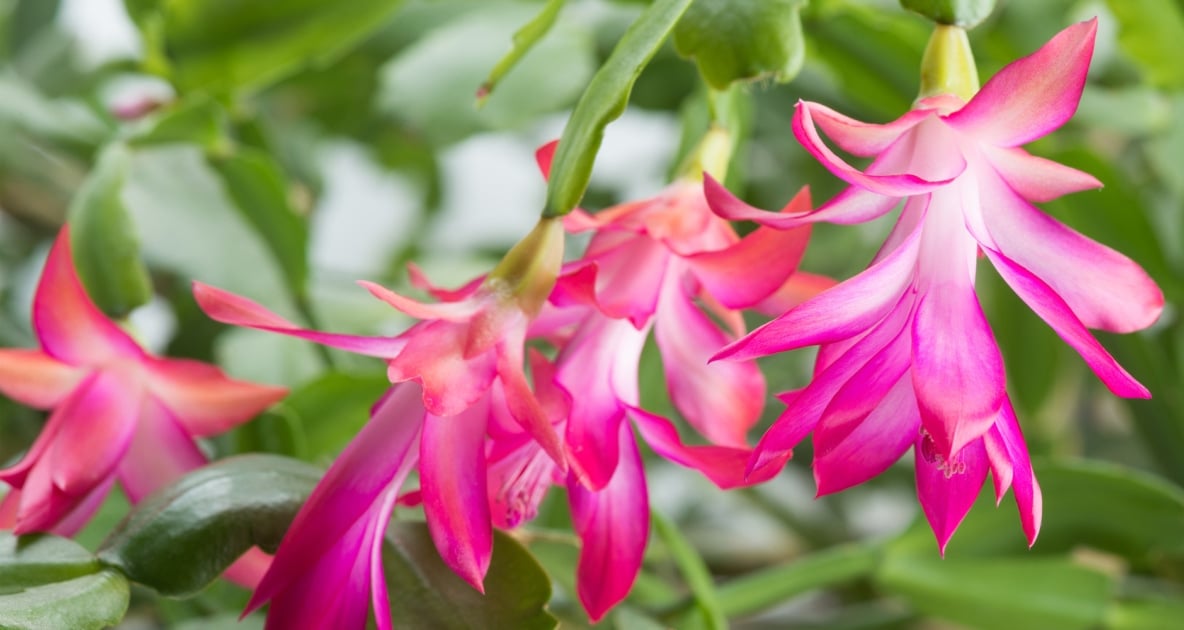
Quick Reference: Christmas Cactus and Poinsettia Care
- Christmas cactus watering: water when the top inch of soil is dry, about once every 7 to 14 days. Never let it sit in a saucer of water.
- Poinsettia watering: keep soil moist but never soggy. Water until it just drains, then empty the saucer.
- Light for both: warm, well-lit room, indirect sunlight, away from drafts and heat vents.
- Rebloom trigger (Christmas cactus): 12 hours of complete darkness nightly starting mid-September, plus temperatures around 50 to 60 degrees F.
- Rebloom trigger (poinsettia): 14 hours of complete darkness nightly starting October 1, plus indirect daytime sunlight for 6 to 8 hours.
- Fertilizer: basic houseplant fertilizer once a month for Christmas cactus (only in summer); every two weeks for poinsettia (spring through summer).
- Lifespan: a well-cared-for Christmas cactus can live and rebloom for 30 to 100 years; poinsettias, 20 to 30 years.
Even after the holidays are over, your Christmas cactus and poinsettia plants do not have to be retired. With a little information and care, you can keep these beautiful plants thriving year after year. Both are on the University of Minnesota Extension’s “easy to rebloom” list for home gardeners, and the University of Illinois Extension reports poinsettias and Christmas cacti kept properly can live for 20 to 40 years.
Why These Two Plants Deserve to Stay
The Society of American Florists estimates US consumers spend more than 250 million dollars on poinsettias each holiday season, and roughly 90 percent land in a trash bag before Valentine’s Day. That waste is unnecessary. Christmas cactus (Schlumbergera bridgesii) is native to the coastal mountains of southeastern Brazil and lives 30 to 100 years in the right conditions; heirloom Christmas cacti passed down three generations are common in New England households, and one at the New York Botanical Garden traces to 1900.
Poinsettias (Euphorbia pulcherrima), native to Mexico, were named for Joel Roberts Poinsett, the first US Ambassador to Mexico, who brought cuttings home to South Carolina in 1828. In their native climate they grow as 10 to 15 foot shrubs. Indoors in the US they live 20 to 30 years with the right dark-night trigger. Skipping the trigger produces green leaves and no color; getting the trigger right produces the trademark red bracts on time for Christmas year after year.
Caring For Your Christmas Cactus
Place your Christmas cactus in a warm, well-lit room away from drafts and direct sunlight, which can burn the leaves. Remember that Christmas cacti are not true cacti, and do need regular watering. Be careful not to oversaturate it, though. When the soil becomes dry, it is time to water again. Because it is a tropical plant, your Christmas cactus will enjoy humidity. If the air is dry where you live, keep a plate or bowl of water nearby. The evaporating water will add moisture to the air.
In the summertime, you can place the plant outdoors in a shady location and feed it a basic houseplant fertilizer about once a month. Move it back indoors before the first frost. To encourage the plant to bloom in time for Christmas, keep it in a closet or other dark location for 12 hours each night. A cool room, such as a basement, is ideal because temperatures of about 50 to 60 degrees F promote flower growth.
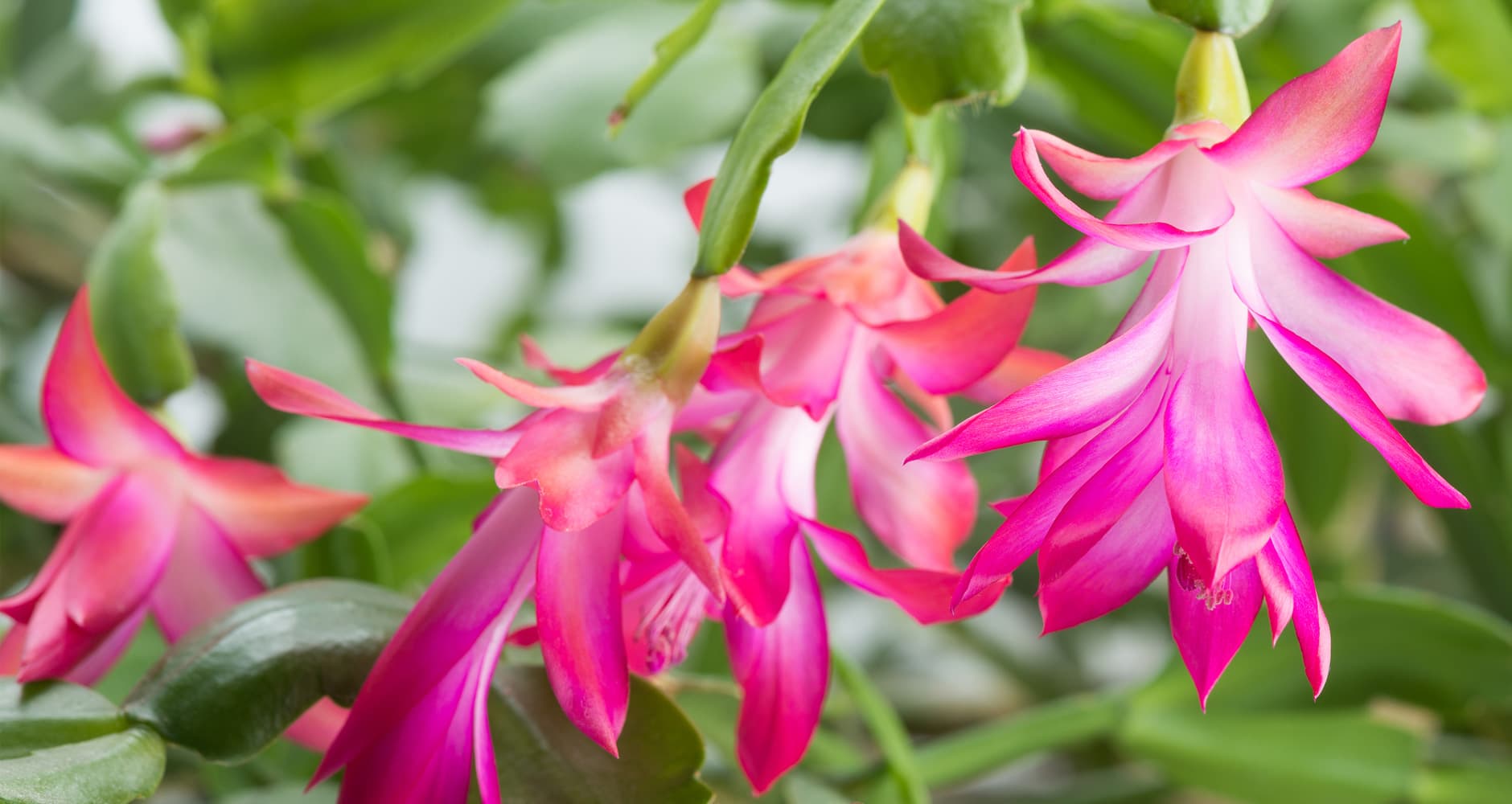
Christmas Cactus Rebloom Timeline (Month by Month)
- January to March: after flowering, cut back on water for a resting period. Water lightly every 2 to 3 weeks.
- April to May: resume normal watering. Repot every 3 to 4 years, only when roots are packed tight; Christmas cacti bloom best when slightly root-bound, per the Missouri Botanical Garden.
- June to August: move outdoors to a shady spot. Fertilize monthly with a balanced houseplant fertilizer.
- Mid-September: move indoors and start the dark-night regime: 12 hours of total darkness, temperatures 50 to 60 degrees F.
- October: continue the dark-night regime. Reduce water slightly.
- November: flower buds appear. Stop the dark-night regime and move to normal light. Resume regular watering.
- December: full bloom, usually the last week of November through the third week of December, hence the name.
And do not forget about your poinsettias! These tips will help keep them blooming long after the holidays are over.
Caring For Your Poinsettias
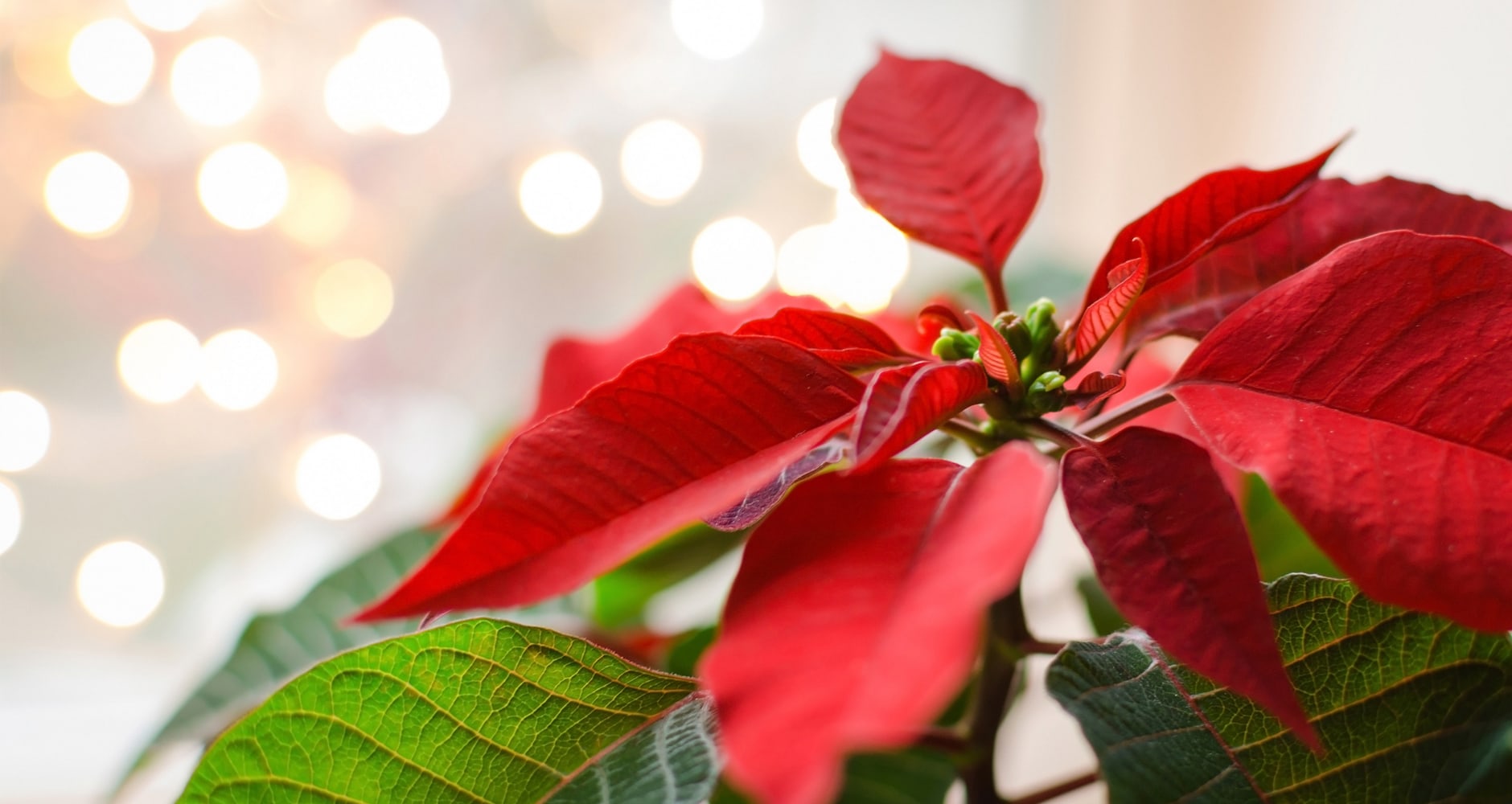

For the rest of the winter, keep your poinsettia in a warm, well-lit room away from drafts, and water it regularly. The soil should be kept moist, but never wet. Water it just until the water begins to drain out, and do not allow the pot to sit in the water.
Once the nighttime temperatures reach 55 degrees F, transplant your poinsettia into a larger pot with a loose, fast-draining soil, and set it outside in indirect sunlight. Fertilize about once every two weeks.
Once the weather becomes consistently warm, in about mid-April or May, cut the poinsettia back to about six inches. Continue to prune it throughout the summer to prevent it from becoming sparse and spindly, but do not prune it once September begins.
Move the plant indoors before the first frost, and keep it in a dark closet each night for at least 14 hours. Take it out in the morning and leave it in indirect sunlight for up to 10 hours. These long, dark nights will promote blossom growth, giving you a festive plant in time for next Christmas.
Poinsettia Rebloom Timeline (Month by Month)
- January to March: keep in warm, well-lit room. Water when top inch of soil is dry.
- April: reduce watering, allow the plant to dry out. When leaves drop, cut stems back to 6 inches.
- May: repot in fresh potting mix. Resume regular watering.
- June: move outdoors to a partially shaded spot. Fertilize every 2 weeks.
- July to August: pinch or prune tips to encourage bushiness. Do not pinch after September 1.
- September: move indoors before first frost.
- October 1 to November 30: start the dark-night regime. 14 hours of complete darkness in a closet or under a box, 10 hours indirect daylight. Any light break during the dark period resets the countdown.
- December: bracts turn red (or pink or white, depending on cultivar) on schedule for Christmas.
Common Christmas Cactus and Poinsettia Problems
- Yellow leaves on Christmas cactus: overwatering. Let soil dry out for 2 weeks then resume lighter watering.
- Christmas cactus dropping buds: temperature or moisture shock. Keep in one spot from bud set through bloom.
- Poinsettia leaves dropping: cold draft or dry heat. Move away from doors, vents, and radiators.
- Poinsettia stays green, never turns red: the dark-night regime failed. Any light break (including a lamp turning on) during the 14-hour window resets the plant. Start over next year.
- Christmas cactus blooms too early or too late: the closest indoor light source is triggering an off-schedule bloom. Start the September dark-night regime a week earlier for a Thanksgiving cactus, a week later for a February bloom.

Christmas Cactus and Poinsettia Care FAQ
How long does a Christmas cactus live?
A well-cared-for Christmas cactus (Schlumbergera bridgesii) can live and rebloom for 30 to 100 years. Heirloom plants passed down three generations are common in long-term New England households, per the University of Minnesota Extension.
How often should I water a Christmas cactus?
Water when the top inch of soil is dry, roughly every 7 to 14 days depending on how warm and dry your home is. Never let the plant sit in a saucer of water. Christmas cacti are epiphytes native to Brazilian rainforest trees, not desert cacti.
Are poinsettias poisonous to pets?
Poinsettia toxicity has been widely overstated. Ohio State University’s veterinary school reports the milky sap can cause mild mouth irritation and stomach upset in cats and dogs, but is not seriously toxic. Christmas cactus is not toxic to pets.
Why did my poinsettia not turn red this year?
The dark-night regime failed. Poinsettias need 14 hours of complete uninterrupted darkness from October 1 for about 8 to 10 weeks to trigger color change. Any light break, including a lamp that turns on briefly, resets the countdown.
When should I start the dark-night regime for my Christmas cactus?
Mid-September. Move the plant to a spot that gets 12 hours of complete darkness every night and daytime temperatures around 50 to 60 degrees F. Continue for 6 to 8 weeks until flower buds appear, then return to normal light for the December bloom.
Should I repot my Christmas cactus?
Only every 3 to 4 years, and only when it is genuinely root-bound. Christmas cacti bloom best when slightly cramped, per Missouri Botanical Garden guidance. Repot in May after the plant has finished its rest period.
Can I plant my poinsettia outside?
In USDA zones 9 to 11 (Florida, southern Texas, coastal California) poinsettias will grow into 4 to 10 foot outdoor shrubs. In zones 8 and colder, keep as a houseplant and move outside only for the summer.


Jaime McLeod
Jaime McLeod is a longtime journalist who has written for a wide variety of newspapers, magazines, and websites, including MTV.com. She enjoys the outdoors, growing and eating organic food, and is interested in all aspects of natural wellness.
- Jaime McLeod

- Jaime McLeod
- Jaime McLeod
- Jaime McLeod





Mine is starts to bloom right now, the secret is to stressed them, do not water it for a long time.
I have placed my cacti is the dark 12 hrs and brought it out during the day ( but not direct sun) I have been doing this for over a month and it does not look any different and will not bud. How do I get it to bud and bloom?
I have had my Christmas cacti for about 20 years now moved to different places and it still blossoms at least 2 to 3 times a years at one time it blossomed every other month it is so big don’t know where to put it when company comes I get afraid it will get broke I almost killed it for I did not know you could not put them in bigger pots found out they love to be close an hug each others roots every one loves it trying to grow more but it is hard to do love my cacti its all most done blossoming now hope it blossoms for Christmas again my daughter has a baby one I trying to bring back for her this year it also has 3 blossoms on it so she will have hers back soon we are all happy
Simply place the piece that falls or breaks off in another pot of dirt and they usually start a new plant. I treat them just like any other house plant. They’re very easy to start
My Christmas Cactus is over 30 years old. We have many descendants sitting on various stands and sills. The oldest is in a sun room that is about 68 degrees Sept thru June, it starts blooming in Nov. and continues till Easter. The 2 that are kept warmer in a west facing room look a little sad and rarely have more than a couple of blooms. We have on in our cabin, the heat wasn’t even on till last weekend and she has blooms all over her. The cabin is just north of Gaylord, we’ve had several weeks with sub freezing temps, 6″ of snow last weekend.
I live in Sayre PA, I am not from here, I moved from Lynchburg, VA two years ago. I’ve had several Christmas cacti in the past and I always kept them indoors in bright light near a cool window in the fall. I had some lovely blooms too!
Currently, I inherited a Christmas cactus and because I’m not native to this part of the country, I need advice. It has always been on the front porch (see below for details) but I put it under the carport all summer out of direct sun and it has a lot of new growth now. A week or so ago I put it in the enclosed front porch with walls to walls windows of bright northeastern sunlight because I the squirrels kept hiding their walnuts in the soil. This porch does not have heat or air conditioning or shades. Today I noticed a couple tiny buds and I am ecstatic! But here is my dilemma, the night temps are steadily dropping and the day temps are staying 60-40s. But next week it will probably frost and then I’m sure it’ll be even colder. Where do I put my pretty plant to ensure it’ll bloom? Leave it on the front porch? Bring it inside to a brightly lit bedroom where temps are 65ish? And as far as watering, I haven’t had to water it too much because it isn’t in a draining pot so I don’t want to saturate it too much, it stays damp. Please help me figure out where to keep it! Oh and where to keep it after it blooms too!
Thank you so much for the help, love and light to you all. Carrie.
I live in northeastern Alberta, Canada. I have a Christmas Cacti that I cannot get to bloom. I bought it 3 years ago at Christmas, it was in full bloom. Now I cannot get it to bloom. I had it on my deck all summer that faces east, brought it in and kept it in a bedroom with very little sun and still no blooms. What am I doing wrong.
Hi Joyce Pankew: try limiting the amount of water the plant receives. The soil should be slightly moist — only water when the top layer of soil is dry to the touch. This will enable the plant to enter dormancy. Dormancy is critical for getting a Christmas cactus to bloom. Then move it to a spot where it will receive about 12-14 hours of darkness. Indirect light during the day is Ok, just make sure it gets at least 12 hours of darkness at night. Next, it also need cool temperatures of about 50-55 F. to encourage dormancy and blooming. Good luck!
I have my mother’s Christmas Cactus which is over 50 years old! It begins blooming in mid November through May. Also have my Aunt’s which sometimes blooms into July! Have given away many plants from my Mother’s. And a tiny Poinsettia I purchased at our local Lowe’s 3 years ago is now in full bloom!
[email protected]
Honest to goodness, I have a Christmas cactus in WATER!!! That’s all! No dirt, just water and she blooms every Christmas. Wish I could post a photo on here. It blooms a beautiful salmon color. I nave two others in water only also. My plant that stays inside is in the dining room window all year round. Lots of sun. I Love my cactus! She’s big and beautiful!!
I received my Christmas in 1957. The lady that gave it to me just passed away at 106. Just last year I had to repot it It was huge. It sits on my front porch from May to late September.