
How to Pick a Christmas Tree: What to Look for on the Lot
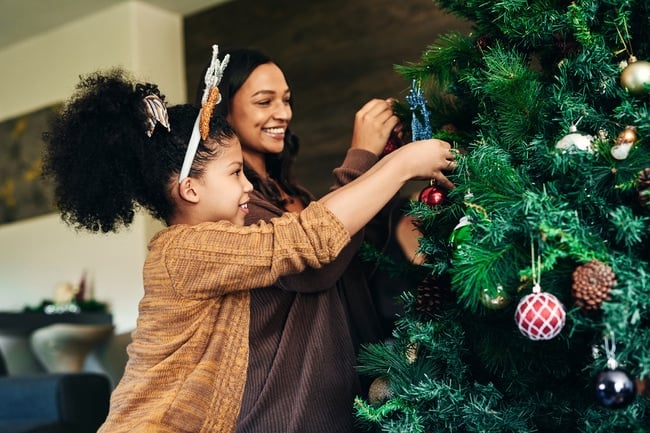
Quick Reference: How to Pick a Christmas Tree
- Best time to buy: Late November to mid-December, right after Thanksgiving weekend.
- Freshest source: A cut-your-own local tree farm; more than 350 million real trees are growing on U.S. farms right now, according to the National Christmas Tree Association.
- Kid-safe needles: Firs, Leyland Cypress, and white pines (soft, flexible).
- Heavy-ornament trees: Noble fir and Douglas fir (sturdy branches).
- Freshness test: Grip a branch, pull toward you gently; needles should stay attached.
- Space rule: Ceiling height minus half a foot for the topper; 80% taper means a 10-foot tree is 8 feet wide at the base.
- Water intake: A fresh-cut tree can drink up to a gallon in the first 24 hours.
You want a Christmas tree that still smells like a Christmas tree on New Year’s morning. That takes three decisions made in the right order: buy local, pick a species that suits your household, and check freshness before it leaves the lot. Do those three things and the tree earns its keep for the full holiday stretch, no premature needle carpet, no sad droop by December 20.
Here at the Farmers’ Almanac we treat a Christmas tree the way our grandparents did: as a fresh piece of the outdoors brought inside, chosen with the same care you would give a fruit at market. Below is the field guide, from lot to living room.
Buy Local Trees
Finding a tree that will still look alive at Christmas is tough, especially if you like to start decorating the moment the turkey plates are cleared. For the freshest, healthiest option, head to a reputable tree farm and cut your own. No farms nearby? Find a lot that stocks local trees.
Locally grown trees almost always beat those harvested early and hauled across the country. Don’t be shy on the lot. Ask the attendant when and where the tree was cut. According to the National Christmas Tree Association, the average real tree takes 7 years to reach a sellable 6 to 7 feet, so a good farm has real answers to that question.
Familiarize Yourself With Local Types
Before you head to the farm or lot, know which species grow in your area and which ones handle your climate best. Choices may be limited, but knowing the differences means you pick the tree that fits you and your family, not just the tree closest to the entrance. Trees vary on foliage fullness, branch stiffness, needle length, and climate preference. There is no right or wrong variety. It comes down to what is local, your taste, and how you plan to decorate.
A few types to weigh, and why:
- Firs, Leyland Cypress, and white pines have soft, flexible needles and suit households with young kids. Leyland Cypress is also worth a look if you are allergic to pitch; it produces less scent and less sap.
- Spruces and Scotch pines are handsome, but sharper needles are not friendly to bare hands and feet.
- Noble and Douglas firs have branches sturdy enough for heavy ornaments; softer-needle trees are better for lighter decorations. Check out our 5 Favorite Fragrant Christmas Tree Varieties.
US and Canadian Growing Regions: What You Are Likely to See
Real Christmas trees are grown in all 50 states and across every Canadian province. USDA agricultural census data puts Oregon, North Carolina, Michigan, Pennsylvania, and Wisconsin as the top five U.S. producers, and Statistics Canada lists Quebec, Nova Scotia, New Brunswick, and Ontario as the country’s biggest growing areas. The species on the lot near you tracks that geography.

Measure Your Space Before You Pick a Christmas Tree
Trees always look smaller outdoors than they do in the living room. Before you head out, measure the space so you know what size tree you are looking for. The tree should sit at least half a foot below the ceiling to leave room for your topper. Include the stand height when you do the math.
Measure width too. Most trees are trimmed at an 80% taper, so a 10-foot tree is roughly 8 feet wide at the bottom. Make sure the trunk fits your stand. Do not shave bark to shim it in; that damages the tree’s ability to draw water.
How to Check Christmas Tree Freshness
Picking a tree is a lot like picking a piece of fruit. You have to touch it and smell it. A healthy Christmas tree looks shiny and gives off a pine scent. Excessive needle loss, discolored foliage, wrinkled bark, dry branches, and a musty odor are all reasons to pass. If every tree on the lot looks dry, walk out and try another lot.
- Shake or bounce the tree. All conifers shed interior needles as they prepare for winter. Interior loss is normal. If exterior needles fall, choose another tree.
- Test the branches. The easiest freshness check is a branch pull. Outer branches should be pliable. If they snap, the tree is too dry. Grab a branch gently and pull toward you. A handful of needles means the tree is done.
- Check the scent. Crush a few needles between your fingers. If it does not smell, do not buy it. A fresh tree gives off a clean pine smell.
Last Steps: From the Lot to the Living Room
Once you have chosen the winner, you need a fresh cut on the bottom, at least an inch off, so the veins open and pull water up to the branches. A cut tree glazes over with pitch quickly, which blocks water uptake. If you are heading straight home, ask the lot to do it. If the drive is four or more hours, use a pruning saw at home. USDA researchers at the U.S. Forest Service confirm that a fresh cut plus plain cold water outperforms every sugar-and-aspirin folk remedy tested.
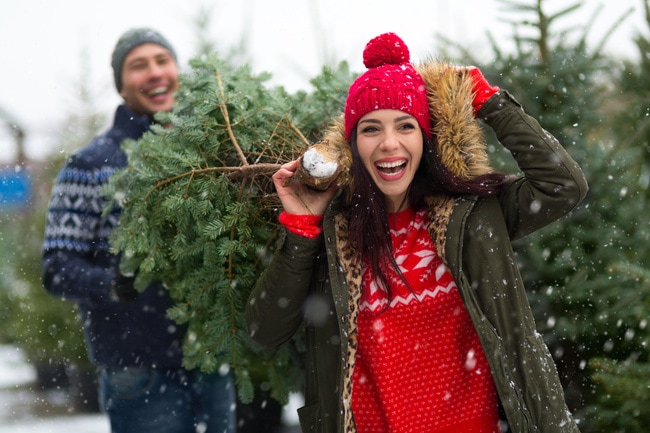
Check for bugs. Snip off any branches with egg sacks or cocoons. A hearty shake dislodges tagalongs. Some tree lots have attendants known as shakers for exactly this purpose. Leaving the tree in the yard or garage for a couple of days helps. You can also dust with diatomaceous earth or spray with neem oil to knock out anything still hiding before it comes indoors.
Once the tree is secured in its stand, add plenty of clean, cold water. Never let the level drop below the cut end or pitch can seal it off. Do not be surprised if the tree drinks a gallon in the first day or two.
After you cut the netting, wait a couple of hours for the branches to settle before you start on lights and ornaments.
Place the tree away from heat sources like radiators and fireplaces. Lowering the thermostat a few degrees slows the drying process and keeps the tree fresher longer. The National Fire Protection Association reports that Christmas tree fires, while uncommon, are more likely with dry trees; keeping the reservoir full is the single most effective prevention.
Editor’s Note: What Almanac Readers Ask Every December
The Farmers’ Almanac editorial team has fielded the same three questions from readers for years: when to buy, how long a tree lasts indoors, and whether a real tree is better than an artificial one. The short answers: buy the first weekend after Thanksgiving through mid-December for peak selection, expect 4 to 5 weeks of freshness if you keep the reservoir full, and a real tree, cut locally and composted after the holiday, has a lower carbon footprint over its life than a reused artificial tree used fewer than 10 years, according to an independent life-cycle assessment.
Related Articles
Keep Your Christmas Tree Safe and Healthy: Here’s How
Budget-Friendly Ways To Celebrate The Holidays This Year

Frequently Asked Questions About How to Pick a Christmas Tree
When is the best time to buy a Christmas tree?
The weekend after Thanksgiving through the second week of December is the sweet spot. That window gives you the best selection at farms and lots, and a fresh-cut tree kept in water will hold up through New Year’s Day. Trees bought too early can dry out even with careful watering.
How long does a real Christmas tree last indoors?
A properly cared-for tree lasts 4 to 5 weeks. That means a fresh diagonal cut on the trunk, a stand with a reservoir topped up daily, and placement away from radiators, fireplaces, and heat vents. Trees can drink a gallon of water in the first 24 hours; do not let the water level fall below the cut.
What is the freshest Christmas tree species?
Fraser fir, balsam fir, and noble fir are the top three for needle retention. Fraser fir in particular is prized for holding its needles well past the four-week mark. If you want the classic Christmas smell, balsam fir is the strongest scent per branch.
How do I check if a Christmas tree is fresh?
Three tests: bounce the trunk on the ground and watch for exterior needle drop (interior drop is normal); pull a branch gently toward you and see if needles stay attached; crush a few needles and smell for a clean pine scent. A tree that fails any of these three is past its prime.
Do I need to add anything to the water in the tree stand?
Plain cold water is enough. U.S. Forest Service testing found that sugar, aspirin, bleach, soda, and every other popular folk additive did not outperform plain water. The one thing that matters is that the water level never drops below the cut end of the trunk.
What size Christmas tree should I buy for my room?
Subtract at least half a foot from your ceiling height for the topper and the stand. For width, use the 80% taper rule: a 10-foot tree is roughly 8 feet wide at the base, an 8-foot tree is about 6.5 feet wide. Measure your space before you leave the house.
Is a real Christmas tree better for the environment than an artificial one?
An independent life-cycle assessment found a real, locally grown tree that is composted after use has a lower carbon footprint than an artificial tree unless the artificial tree is reused for 10 years or more. Real trees also support local farms, most of which are family-run operations.
Join the Discussion
How did this article help you pick a Christmas tree?
Is there something you always look for that is not listed here?
Let us know in the comments below!


Natalie LaVolpe
Natalie LaVolpe is a freelance writer and former special education teacher. She is dedicated to healthy living through body and mind. She currently resides on Long Island, New York, with her husband, children, and dog.
- Natalie LaVolpe

- Natalie LaVolpe
- Natalie LaVolpe
- Natalie LaVolpe