

6 Different Types of Fog: How Each One Forms
Who knew that there were so many different types of fog, each forming under different conditions? Learn about them here!
Quick Reference
- Radiation fog: Forms on clear, calm nights. Stays put.
- Advection fog: Warm damp air over cold ground. Drifts.
- Evaporation fog: Cool air over warm water, or rain through cold air.
- Upslope fog: Damp wind pushed up a slope until it condenses.
- Freezing fog: Supercooled droplets that freeze on contact.
- Hail fog: Rare patchy fog right after a heavy hailstorm.
“The fog comes on little cat feet. It sits looking over harbor and city on silent haunches and then moves on.” Carl Sandburg wrote those lines in 1916. Fog has carried that mystery for centuries. The trick is, there is not just one fog. There are at least six different types of fog, each forming under different conditions. Knowing which one you are looking at tells you what the weather is doing and what to expect next.
Radiation Fog
Radiation fog needs clear skies and calm winds to form. It builds only at night as the surface of the earth cools. Moisture gathers in the air until humidity reaches 100 percent, at which point fog forms. Radiation fog can be three feet thick or 1,000 feet thick, and it always stays in one place rather than drifting. It is usually dense enough to reduce visibility to near zero. Sometimes called ground fog, though true ground fogs do not obscure the sky above them.
Valley fog is a special type of radiation fog. It forms when air along ridges and high slopes cools and flows into the valleys below. As it mixes with the air in the valley, the moist valley air condenses and turns into fog. Both radiation fog and valley fog burn off as the sun rises and evaporates the moisture.
Advection Fog
Advection fog looks like ground fog but forms differently. Where ground fog rises from the cool earth, advection fog forms when warm, damp air flows over cold ground. The giveaway is motion: ground fog sits still, advection fog drifts along the ground in slow waves.
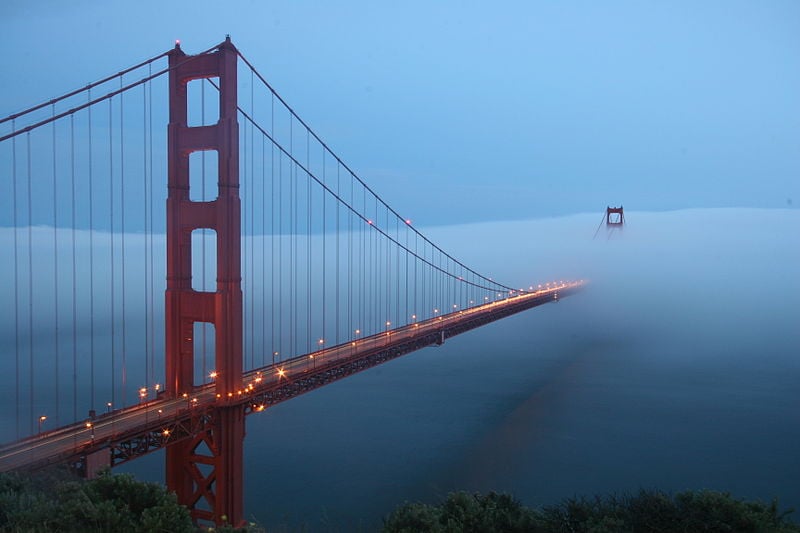
Advection fog is also common over water. The fogs that seem to roll in from the ocean, including the famous San Francisco summer fog and the Grand Banks fog off Newfoundland, are advection fogs. On lakes and rivers, either advection or evaporation fog can form. Dense fog pouring off a body of water is usually advection; wispy steam-like mist is usually evaporation.
Evaporation Fog
Evaporation fog forms in two ways. The first happens when cool air moves over warm water. The warm moist air above the water mixes with the cooler air, the moisture condenses, and you get a steamy, smoky-looking fog. New England lakes and the Mississippi at dawn in fall produce some of the most photographed examples.
The second type of evaporation fog forms when raindrops evaporate as they fall through a cool layer of air near the ground. Once the lower air is saturated, a heavy fog forms. This is the fog you see hanging in the trees after a summer thunderstorm cools the air below it.

Upslope Fog
Upslope fog forms when light winds push damp air up a slope or mountainside until it chills enough to condense. The fog typically settles below mountain peaks and ridgetops and tends to cover vast areas. In the U.S. it is most common in the Rockies, the Appalachians, and the Pacific Coast Range. Where temperatures are cold enough, upslope fog can turn into freezing fog and coat trees, fences, and power lines in rime ice.
Freezing Fog
Freezing fog is rare because it requires a precise set of conditions. It is made of “supercooled” water droplets, water that stays liquid despite below-freezing temperatures, that freeze on any surface they touch. Roads become invisibly slick. Tree branches build feathery white rime ice that can snap them under the weight. It most often occurs on mountaintops and in damp Arctic regions like northern Canada and Antarctica.
A related form is ice fog, made of ice crystals suspended in midair instead of supercooled water. Ice fog requires air at or below 14°F. The higher the humidity, the denser the ice fog. Fairbanks, Alaska, sees ice fog in deep winter when stove and car exhaust adds humidity to the deeply cold air.
Hail Fog
Hail fog is the rarest of the six. It forms directly after a heavy hailstorm, when the hailstones melt and chill the warm, humid air near the ground down to the dew point. It needs very light winds and produces a patchy fog that looks like steam rising off the lawn. Hail fog only lasts as long as the hail takes to fully melt, usually under an hour.
Fog Type at a Glance

Frequently Asked Questions
What is the difference between fog and mist?
Both are airborne water droplets. The boundary is visibility. If you can see less than one kilometer (about 5/8 of a mile), it is fog. If you can see further than that, it is mist.
Why does fog burn off in the morning?
Sunrise warms the ground. The warm ground heats the air immediately above it. As the air warms, it can hold more water vapor, so the suspended droplets evaporate and the fog clears. Radiation and valley fogs typically burn off within two hours of full sun.
Is freezing fog dangerous?
Yes. It coats roads in invisible ice in minutes and is one of the leading causes of multi-car pileups in mountain regions. Treat any visibility loss in freezing temperatures as a freezing-fog hazard and slow down accordingly.
What is the foggiest place in the United States?
Cape Disappointment, Washington, averages about 2,552 hours of fog per year, more than any other U.S. weather station. The Grand Banks off Newfoundland is the foggiest spot in North America overall.
Can fog form indoors?
Yes, briefly. Steam from a hot shower in a cold bathroom is technically a type of evaporation fog. The same principle applies outdoors over a warm pond on a cold autumn morning.
What is the foggy reputation behind San Francisco?
San Francisco’s signature summer fog is advection fog. Cold ocean water off the California coast cools the warm humid Pacific air above it, and the resulting fog gets pushed inland through the Golden Gate when inland temperatures rise. Locals call it Karl.


Amber Kanuckel
Amber Kanuckel is a freelance writer from rural Ohio who loves all things outdoors. She specializes in home, garden, environmental, and green living topics.
- Amber Kanuckel

- Amber Kanuckel

- Amber Kanuckel
- Amber Kanuckel





Very cool to learn, thank you! Now I know what kind of fog I drive in!
Hello amber so what can u tell me about electro gardening ?
How about; Marine layer, May gray, June gloom