

25 Strangest Names for Groups of Animals (a Murder of Crows, a Parliament of Owls, and 23 More)
Check out this list of some of the craziest names for groups of common animals!
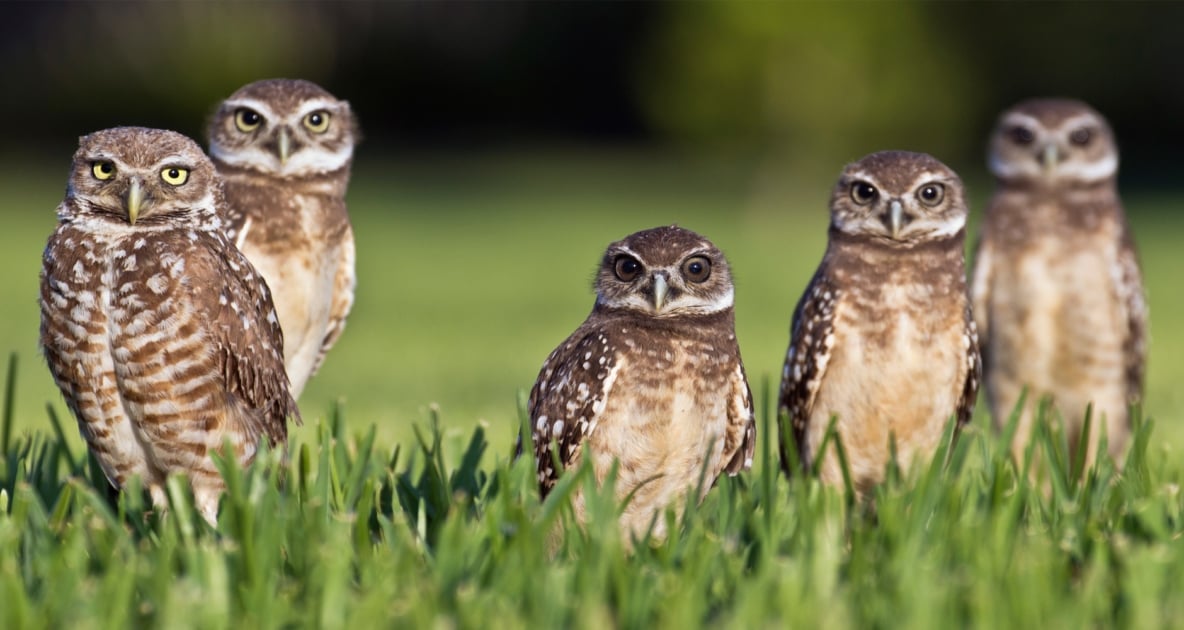
Quick Reference: Animal Group Names
- Where they came from: 15th century English Books of Courtesy, especially the 1486 Book of Saint Albans.
- Most-cited examples: a murder of crows, a parliament of owls, a pride of lions, an unkindness of ravens.
- Are they real? Real linguistic history, yes. Used by hunters and gentry. Almost never used by modern biologists in scientific writing.
- The category name: these are called “terms of venery” or “collective nouns.”
- Tool: the Almanac’s Best Days calendar for nature observation.
On this page
Related Almanac guides
A group of crows is a murder. A group of owls is a parliament. A group of lions is a pride. These strange names are called terms of venery (or collective nouns) and they have a single bizarre source: a 15th century English hunting manual called the Book of Saint Albans. This guide is 25 of the most colorful collective nouns, what each one literally means, and the medieval social-status game that invented them.
Where These Names Actually Come From (Book of Saint Albans, 1486)
Per the Oxford English Dictionary and the British Library’s digitized 1486 edition, almost every strange animal-group name traces to one source.
- The Book of Saint Albans (1486). A printed English manual of hunting, hawking, and heraldry. Compiled by Juliana Berners (a prioress and avid hunter).
- Section on “Compaynys of beestys and fowlys.” A list of 165 collective nouns, many invented for the book, including “murder of crowes” and “parliament of fowles.”
- The social game: nobility and gentry of the late medieval period used the correct collective noun as a marker of refinement. Getting it wrong marked you as a commoner.
- Why they survived: they were quoted, anthologized, taught in schools, and have been part of English literary tradition for 500+ years even though most are not in everyday use.
Real vs Invented vs Modern-Coined Terms
Britannica’s terms-of-venery entry splits collective nouns into three categories.
- Real medieval venery terms. A bevy of quail, a pride of lions, a murder of crows, a parliament of owls. Used continuously since the Book of Saint Albans.
- Invented in the Book itself. Many terms (an exaltation of larks, an unkindness of ravens) were coined by Berners specifically for her list, and never had broad pre-1486 usage.
- Modern coinages. A flamboyance of flamingos (1970s), a tower of giraffes (mid-20th century), a crash of rhinos. Modern poets and nature writers continue to invent new ones; many circulate widely without formal acceptance.
The 25 Strangest Animal Group Names (Full List)
Below is the original Almanac collection of 25 strange collective nouns with brief notes on each.
25 of the Strangest Names For Groups of Animals
- Alligators – a congregation
- Apes – a shrewdness
- Bats – a colony or cauldron
- Bears – a sleuth
- Cats – a clowder
- Crows – a murder
- Donkeys – a pace
- Ferrets – a business
- Fox – a skulk or leash
- Gerbils – a horde
- Giraffes – a tower
- Hippopotamuses – a bloat
- Hyenas – a cackle
- Leopards – a leap
- Martens – a richness
- Owls – a parliament
- Porcupines – a prickle
- Raccoons – a nursery or gaze
- Rats – a mischief
- Rhinos – a crash
- Skunks – a surfeit
- Squirrels – a dray
- Toads – a knot
- Turtles – a bale
- Whales – a pod
One more: Don’t believe what you read on the internet, a group of baboons is not a “congress” as has been circulating widely. The correct term is a “troop” of baboons. Now you know!

Animal Group Names FAQ
What is a group of crows called?
A murder of crows. The term traces to the 1486 Book of Saint Albans and was likely chosen for its dramatic sound and (folkloric) the association of crows with bad omens. It has been continuously used in English since.
What is a group of owls called?
A parliament of owls. The name is associated with the symbolism of owls as wise and contemplative, and was popularized in modern times by CS Lewis’s Narnia books. The original Book of Saint Albans recorded “parliament of fowls” more generally.
What is a group of lions called?
A pride. Used continuously since the medieval Books of Courtesy and now also the standard scientific term for a lion social unit. One of the few medieval collective nouns adopted by modern biology.
Are collective nouns for animals real?
Historically yes; they are real linguistic terms used by hunters, courtiers, and writers since the 15th century. Scientifically usually no; modern biologists rarely use them in scientific writing, preferring “group” or “flock” or “herd.”
Who invented these strange animal group names?
Juliana Berners, a 15th century English prioress and hunter, compiled the most influential early list in the 1486 Book of Saint Albans. Many of the strangest terms (an exaltation of larks, an unkindness of ravens) were either invented or first recorded by her.
What is the strangest collective noun?
Subjective, but popular candidates include: an exaltation of larks, an unkindness of ravens, an ostentation of peacocks, a tower of giraffes, a crash of rhinos, a leap of leopards, and (modern coinage) a flamboyance of flamingos.

This article was published by the Staff at FarmersAlmanac.com. Any questions? Contact us at [email protected].
- Farmers' Almanac Staff

- Farmers' Almanac Staff

- Farmers' Almanac Staff

- Farmers' Almanac Staff

Ostentation of peacocks
An exaltation of meadowlarks
A putrification of attorneys
You win the internet for today!
this is totally wacky and wild!!!
A fever of stingrays
Good one!
Fennec foxes are found in North Africa from Morocco to Egypt, south to north Niger and Sudan, east to Sinai Peninsula and Kuwait. A male fox is called a ‘reynard’, the female is called a ‘vixen’ and young are called ‘kits’. A group of foxes is called a ‘skulk’ or a ‘leash’.
Hi Caydee, that’s what we say in the article?
A group of pandas is known as an embarrassment.
a pandemonium of parrots
a loveliness of ladybirds
a flamboyance of flamingoes
Mynah birds? A rage of mynahs (suggestion)
A Flamboyance of Flamingos!
Politicians???
A box of chocolates for the best answer!
A Squabble
Sh*tload ?
Embarrassment
A stench of politicians
A liar of politicians