

How to Get Rid of Groundhogs in Your Yard and Garden
Groundhogs are cute, but they can be destructive to your lawn and garden. Learn a few tips to send them packing!
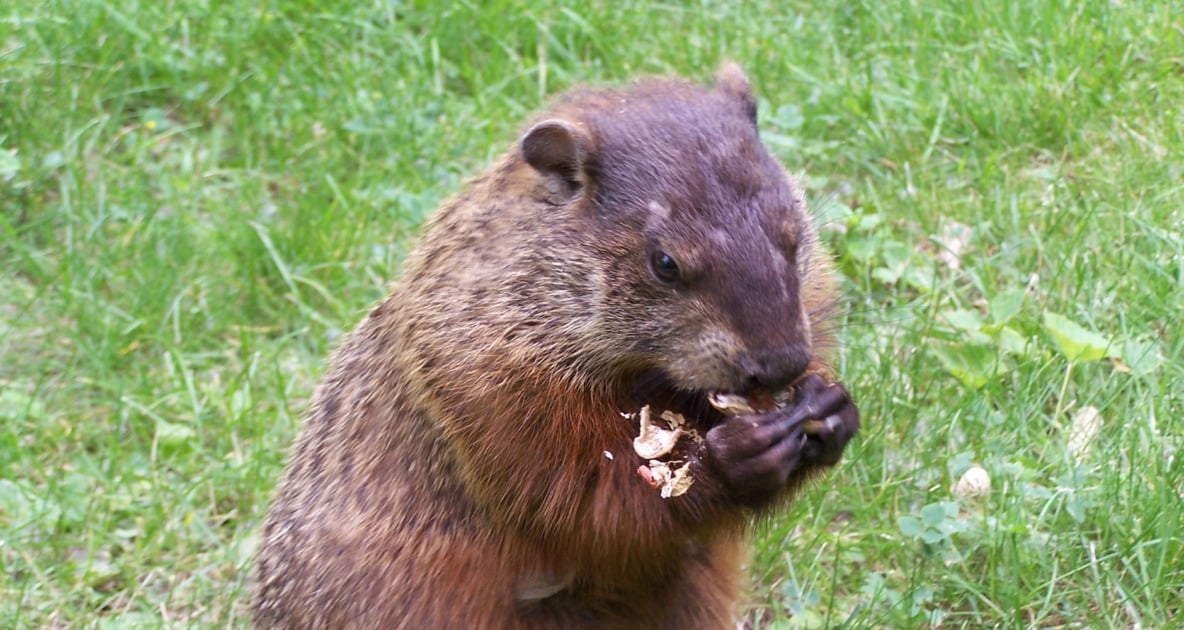
Quick Reference: Groundhogs in the Garden
- What they are: groundhogs, also called woodchucks, whistle pigs, or marmots, are five to ten pound rodents related to squirrels and beavers.
- The damage: they eat garden vegetables and dig burrows that weaken soil and can undermine barns, garages, and home foundations.
- Best fence: wire mesh buried at least two feet into the ground, with a one foot section angled outward at the top.
- Natural deterrent: ammonia soaked rags or used kitty litter set a few feet from the garden, which read to a groundhog like a predator’s scent.
- Last resort: live trapping and removal, but check your state wildlife agency first, since relocation is illegal in some states.
Wild animals are part of what makes nature so magical, and watching them can be highly enjoyable. While it is important to coexist with animals in relative peace, they can cause countless problems when they take up residence in our homes or gardens. In this series, our Wildlife Management Specialist, Shawn Weeks, will educate us about some common household pests, and share some strategies for keeping them under control without dangerous chemicals or poisons.
By midsummer, one hungry groundhog can flatten a row of beans overnight and leave a burrow mouth wide enough to turn an ankle. If you are watching your 2026 garden disappear a bite at a time, the animal doing it is worth understanding before you try to move it along. Here is who the groundhog is, how it lives, and the natural, poison free ways to keep it out of your beds.
Habitat and History
Groundhogs, also known as woodchucks, whistle pigs, or marmots, are stocky mammals with strong, short legs and short bushy tails. Their fur ranges from dark to light brown with very light guard hairs, which can make them look frosted. Their front feet carry long, curved claws built for digging burrows. Groundhogs generally weigh between five and ten pounds, and males are usually slightly larger than females.
Groundhogs range from eastern Alaska through most of Canada and the eastern United States, as far south as Georgia. For the most part they are absent west of the Great Plains, though their close relative, the prairie dog, ranges farther west. Groundhogs are classified as rodents and are related to animals such as mice, porcupines, squirrels, and beavers.
They are also excellent diggers. Dens run from simple, shallow dwellings to extensive tunnel systems twenty-five to thirty feet long and two to five feet deep, with two entrances. The nesting chamber usually sits at the end of the main tunnel, and a groundhog also keeps a separate toilet chamber somewhere in the system, which helps keep the living space clean.
Groundhogs seldom venture more than a few hundred yards from their burrows. They have a keen sense of smell and hearing that helps keep them safe from predators. They are also fierce fighters and can hold their own against their enemies, which include humans, dogs, coyotes, foxes, bears, bobcats, mink, hawks, weasels, and owls. When startled or frightened, a groundhog will emit a loud whistle or shrill, which is how it earned the nickname “whistle pig,” then carry on with a “chuck chuck” chatter until it settles.
During pre-colonial times, groundhogs lived in forested areas. Once the land was cleared for farms and towns, they moved to fields and “edge,” the border between a forest and a town. Today they turn up throughout many suburban areas where that edge is common. They are very adaptable mammals.
This fascinating mammal is also a true hibernator. It fattens up for the winter, gorging itself as best it can each fall. Once winter temperatures set in, it enters its sleeping chamber, shuts down its metabolism, and begins its long sleep. That deep hibernation is the reason a groundhog stars in Groundhog Day every February 2, when folklore says an early emergence and a visible shadow point to six more weeks of winter. The Pennsylvania State University Extension keeps a plain-English profile of the animal in its guide to woodchucks if you want to read more about their biology.
Diet
Grasses and forbs are the primary diet of groundhogs, which makes them true herbivores. Forbs are any plants other than grass whose growth dies back after flowering and setting seed. Groundhogs will also eat fruit, tree leaves, garden vegetables, clover, and alfalfa. That taste for tender garden vegetables is exactly why a groundhog and a home gardener so often end up on opposite sides of the same fence.
Reproduction
As a general rule, groundhogs breed in their second season, although some have been known to breed as yearlings. They breed in March or April, and a litter of two to six young arrives about a month later. The young are born blind, naked, and helpless, then grow and wean at a fast pace, seeking out their own den and range by mid-summer. That mid-summer scattering is why a single burrow near your garden in June can become several hungry mouths by August.
Groundhog Activity by Season
A groundhog’s year runs on a predictable clock, and knowing where it sits on that clock tells you when to expect trouble and when to close off a burrow. The table below lines up the seasons with what the animal is doing and what it means for your garden. To gauge when spring will actually arrive in your region, check our long-range forecast.
| Season | Groundhog activity | What gardeners should do |
|---|---|---|
| Late winter (late February to mid-March) | Males emerge briefly to scout for mates; females emerge shortly after; mating occurs in early March | Inspect and close any empty burrow entrances (safest window: the burrow is still unoccupied) |
| Spring (March to May) | Active above ground; 2-6 pups born in April; feeding resumes on new growth | Install hardware-cloth fencing buried 12 in below grade and bent outward; set decoys early |
| Summer (June to August) | Peak feeding activity; most active in early morning and late afternoon; can consume over 1 lb of vegetation daily | Monitor garden perimeter daily; live-trap if damage is heavy; check fence integrity |
| Late summer to early fall (August to October) | Hyperphagia: dramatically increased eating to double body weight before hibernation; raids fruits and legumes aggressively | Most damaging period for bean, pea, and squash crops; reinforce fencing; harvest early if possible |
| Mid to late fall (October to November) | Entering hibernation; activity drops sharply; retreat to deeper winter den | Last safe window to close burrows after confirming the animal has left; never seal an occupied den |
| Winter (November to late February) | True hibernation; heart rate drops from about 80 to 5 beats per minute; body temperature near ambient | No garden threat; repair fencing and prepare for spring emergence |

Signs You Have a Groundhog
Before you decide on a fence or a trap, confirm the culprit. Groundhog damage has a signature that sets it apart from the deer and rabbits that also raid a garden. Look for these signs:
- A burrow entrance five to ten inches wide with a fan of fresh dirt at the mouth, often near a shed, deck, or garden edge.
- Low plants and vegetables eaten cleanly to the ground rather than nipped high, since groundhogs feed at ground level.
- Wide, flattened runways worn through grass and beds between the burrow and the feeding area.
- Daytime sightings, especially in early morning and late afternoon, when groundhogs do most of their feeding.
Problems, Solutions and Health Concerns
Groundhogs can cause major damage to farmers and home gardeners. They love to eat vegetables, and they leave the soil weak in the areas where they burrow, which can damage farm equipment and injure horses and livestock. In extreme cases, groundhog burrows have even been known to damage the foundations of barns, garages, or homes.
Rabies can also be a concern for people who have groundhogs on their property. They are mammals, which makes them susceptible to the disease. Keep pets and children away from any groundhog that is active in daylight but behaving oddly, staggering, or unusually aggressive.
There are a few solutions available to folks who are having a problem with groundhogs. Installing a wire mesh fence can deter groundhogs from browsing your gardens and crops. You must, however, make the fence extend down into the ground at least two feet. Because groundhogs are excellent diggers, a simple fence from the ground up may not do the trick. You should also extend a one-foot, angled section from the top of the fence. Some groundhogs have been observed climbing short, vertical fences.
Ammonia soaked rags are another good groundhog deterrent. Groundhogs will mistake the ammonia for a predator’s urine and steer clear of your property. Place the rags close enough to your garden that the groundhog can smell them, but not so close that the ammonia will leach into the soil around your crops. A few feet from the perimeter of your garden is a good rule of thumb. If you are worried about the ammonia burning your lawn, you can set the rags on pieces of wood. If you have a cat, used kitty litter will serve the same purpose.
If all else fails, you can also live trap and remove groundhogs from your property. Always check with your state wildlife agency before relocating any animals. There may be laws in your area that prohibit it. Relocating groundhogs is illegal in some states, due in part to fears of spreading rabies.
See some of these other natural ways to keep groundhogs out of your garden!
Plants Groundhogs Tend to Avoid
A fence does the heavy lifting, but the plants you choose can help. Groundhogs tend to pass over strongly scented herbs and plants with a bitter or fuzzy leaf. Ringing a vegetable bed with a border they dislike will not stop a determined animal, though it can steer a casual one elsewhere.
- Aromatic herbs such as lavender, sage, rosemary, mint, and basil.
- Sharp-tasting alliums like garlic, chives, and ornamental onion.
- Plants with fuzzy or bitter foliage, including many the deer skip as well.
Many of these overlap with our list of deer-resistant plants, so a single border can earn its keep against more than one pest. For pairing crops that support each other and crowd out trouble, see our companion planting guide.

Groundhogs in the Garden: Frequently Asked Questions
What is the difference between a groundhog and a woodchuck?
There is none. Groundhog and woodchuck are two names for the same animal, which also goes by whistle pig and marmot. It is a stocky rodent, related to squirrels and beavers, that weighs between five and ten pounds and digs the burrows gardeners know so well.
How do I keep groundhogs out of my garden?
Start with a wire mesh fence buried at least two feet into the ground, with a one-foot section angled outward at the top, since groundhogs both dig and climb. Back it up with ammonia soaked rags or used kitty litter set a few feet from the perimeter, which read like a predator’s scent. If those fail, live trapping and removal is a last resort. Check your state wildlife agency first.
Do groundhogs carry rabies?
They can. Groundhogs are mammals, which makes them susceptible to rabies, though most animals you see are healthy. Keep pets and children away from any groundhog that is active in daylight but staggering or unusually aggressive, and never handle one bare-handed. Fear of spreading the disease is one reason relocating groundhogs is illegal in some states.
What do groundhogs eat?
Groundhogs are true herbivores. Grasses and forbs make up the primary diet, and forbs are any plants other than grass that die back after flowering and setting seed. They also eat fruit, tree leaves, clover, alfalfa, and, to a gardener’s frustration, garden vegetables.
When do groundhogs hibernate?
Groundhogs are true hibernators. They gorge through the fall to fatten up, then enter the sleeping chamber of their burrow once winter temperatures set in, shut down their metabolism, and sleep through the cold. That deep winter sleep is behind Groundhog Day every February 2, when the animal is said to emerge briefly and check for its shadow.
Is it legal to trap and relocate a groundhog?
It depends on where you live. Relocating groundhogs is illegal in some states, due in part to fears of spreading rabies. Always check with your state wildlife agency before you live trap and move any animal, and follow whatever rules apply in your area.


Shawn Weeks
Shawn is a lifelong New Englander. He lives in Canton, Conn., with his wife Tami, mother, sister, and her three children. He and his wife have two grown children and two grandchildren. Shawn is an avid hunter, fisherman, and gardener. He is also a writer, a nuisance wildlife professional, small scale farmer, and scout leader. You can email him at [email protected].
- Shawn Weeks

- Shawn Weeks
- Shawn Weeks
- Shawn Weeks





I have a Groundhog that used to live in my Garden we used to have overgrown trees and bushes. Since we cut down trees cleared shrubs. Put up a fence dug up his hole. Now He comes over from the empty house in our back your .He was going after my little trees I put Cheyenne pepper around them and marigolds seems to be leaving them alone . I just put lime down across perimeter of fence will that help
I live in Nebraska and it’s illegal to trap the woodchucks and you will be fined if you do. I have them under my shed, with two holes. The Humane Society told me to put down cans filled with with soapy ammonia or regular ammonia with holes in the lids around the holes. After 3 days lay down a thick layer of hay.If it isn’t disturbed you know the woodchucks have left, if not you have to repeat the process. I’m pretty sure the hay method would let you know if any your natural methods had worked. I don’t yet because I just literally just gone done talking to them and it is supposed to rain tomorrow. I will also try some of the other methods also if this fails. I will let you know if I have luck with this
Did the ammonia work for you?
I bought 8 gallons of ammonia. I got a gallon jug,and mixed the ammonia to hot water 50% – 50%. I needed to pour the mixture along the side of my garage because they had burrowed under the cement foundation. I knew, because of the time of the year, that there was a litter of young groundhogs too. So I mixed two gallons of ammonia with hot water, and shook the jug for 30 seconds.I got down on my knees, behind a hummingbird bush, and crawled along the foundation. Boy, is was strong! I emptied two gallons day one, waited a day, repeated on day 3, waited a day, and hit it a fourth time on day five. I haven’t seen one groundhog in a week. I know they’re gone because I always saw them in the early A.M. and early evening. This really works. To make sure they didn’t come back, I found urinal cakes at WalMart for $0.47 each. I bought two dozen. I put them every six inches under the foundation. And for good measure, a few inside the garage near the wall where they had burrowed outside. Other than a slight smell in the garage ( not bad at all ) this REALLY works. I may have all of $10.00 in this, but they aren’t coming back here.
A groundhog climbed, yes I said climb my 5′ garden fence last year to eat my prized cantalopes. These creatures serve no purpose for existing except to destroy all that is good in nature.
God don’t make mistakes
Laura, we’ve had the same issue, they are living under our porch, tunneled under a deep fence and chopped my crops, and eat my flowers. We’ve tried Shake Away and Animal-B-Gone with initial success but you have to reapply. If they’re really hungry or if they figured out its not real (I swear) it doesn’t help honestly. We live trapped 3 and it had been 3-4 since we saw the others. The remaining 2 we knew of just reared their oddly cute heads. Live trapping and harassment has honestly been the most effective for us so far.
Please please help ! We have ground hogs completely taking over our property they are under are porch n carriage house. Our home is over 130 yrs we have tried trapping them but they just come back . They are destroying everything ! Our pest control guy has suggested fox urine does it really help ? We are willing to try anything!
At night, burn sulfur sticks into their holes and cover them, everything inside dies, nothing comes back.
I was wondering if rock chucks are dangerous to other small animals? We have rabbits in a pen outside and we have noticed the local rock chucks have been trying to get into their pen. Will they kill our rabbits?
I know it’s not politically correct to advocate this approach, but the only easy and sure fire way to get rid of them, is to pour concrete in their burrows. Go to the hardware store, get some mix and be done with it. Yes – they are living creatures….. so what? So are chickens, cows and pigs. We kill them, don’t we? So are mice and rats. Most people don’t feel guilty about exterminating them.
Why would you torture them?
If you’re gonna kill them, at least shoot it so it doesn’t get cemented, starve, injured etc…
Wtf
Please consider a more humane approach. While other animals are killed, it’s usually quick.
I use a 22 mag rifle. Works great. My neighbor eats them.
Lol eeewww
I spotted my first ground hog in my fenced back yard. We we went out to see we’re it went . Sooo I have two gardens chicken wired under and around. I don’t want it around. Any suggestions
Hi,
We found a groundhog and put a trap for him we caught him and decided to put him away from us. Would y’all think that’ll work? How many miles far do we have to take him?
Hi Sandy, we say “Always check with your state wildlife agency before relocating any animals from your property. There may be laws in your area prohibiting you from doing so. Relocating groundhogs is illegal in some states, due in part to fears of spreading rabies.” You might want to check with them about what a safe distance is, depending on where you live.
I too have a resident ground hog destroying the foundation under our shed. I read you have to take them 20 miles +. Before I read this we caught her, took it about 2 miles and it beat us home. Barb in Missouri
Here in Central Oregon they are called rock chucks and they have overrun this area of the state. At my Mom’s house (in town) they have eaten all the flowers off all her plants, but the most frustrating thing is, they LOVE to crap up and down the wheel chair ramp to her front door. I clean it up and in a few days it’s as though I did nothing. This morning, after the clean-up, I generously sprayed the ramp (covered with outdoor carpet) with ammonia as suggested in the article above. Here it is, two hours later and there’s six new pieces of poop! I think the ammonia trick doesn’t work. Everyone I talk to would like to shoot them but, of course, that’s not an option in town.