

How to Clean a Gravestone: Safe Materials, Cemetery Permission, and the Less-Is-More Rule
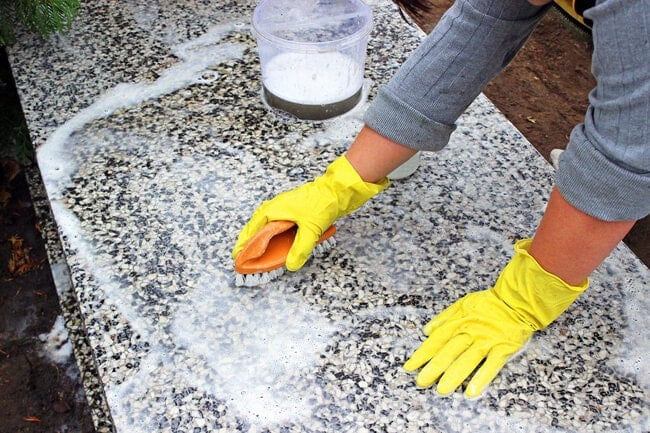
Quick Reference: Cleaning a Gravestone
- First step: get cemetery permission. Many cemeteries restrict who can clean stones.
- Safe materials: distilled water, soft natural bristle brushes, plastic scrapers, D/2 Biological Solution.
- NEVER use: bleach, vinegar, household cleaners, wire brushes, pressure washers.
- Best season: spring or fall when biological growth is most active.
- Tool: the Almanac’s signs from deceased loved ones guide.
On this page
Related Almanac guides
Cleaning a family gravestone is one of the most-asked questions in cemetery preservation, and the most common mistakes (bleach, vinegar, pressure washing, wire brushes) cause permanent damage that no conservator can reverse. Per the National Center for Preservation Technology and Training, less is more is the rule. This guide is the materials and methods used by professional gravestone conservators, what to never use, and how to clean a 100+ year old marble or limestone marker safely.
Get Permission First (Why It Matters)
Per the National Park Service cemetery preservation guidance, the first step is always permission, not technique.
- Many cemeteries require it. Volunteer cleaning is often restricted because well-meaning amateurs cause irreversible damage.
- Who to ask: the cemetery office, the church (if church-affiliated), or the township historical commission for older town cemeteries.
- What they may require: a written request, demonstration of approved materials, a release of liability.
- Family-marked grave on private land: permission still applies if the cemetery is on someone else’s property. Ask the landowner first.
- Do not assume. Cleaning without permission can be vandalism in some jurisdictions.
Safe Materials and Methods (Conservator-Approved)
Per NCPTT and Smithsonian gravestone conservation guidance, the safest method uses only four materials.
- Distilled water. Tap water can contain minerals that deposit on the stone.
- Soft natural bristle brushes. Toothbrushes for fine detail; nylon or natural fiber for larger areas.
- Plastic scrapers (popsicle stick, plastic putty knife). For lifting lichens; never use metal.
- D/2 Biological Solution. The professional-grade biocide approved by NCPTT and used by the National Park Service. Apply, let dwell 24+ hours, rinse with distilled water. Continues working for months.
- NEVER use bleach, vinegar, household cleaners, wire brushes, or pressure washers. All cause irreversible damage to historic stone.
Gravestone Cleaning: Method, Solutions, Materials (Detail)
Below are the original detail sections covering pre-cleaning assessment, supplies, cleaning solutions and usage, and the less-is-more guideline.
Less Is More
Cleaning helps to preserve the stone and is not intended to make the marker look like new. Improperly or unnecessarily cleaning a grave can accelerate its deterioration. Always choose the least invasive method and materials. Some basic cleaning supplies and a little elbow grease are often all you need to safely make a drastic difference to a gravestone. Before attempting to freshen up a loved one’s resting place, consider these steps and methods.
Note: Gravestone cleaning is best done in moderate temperatures. We do not advise cleaning gravestones before your area’s last frost dates. (Average Frost Dates here.) Adding water to a gravestone before a frost will cause water to expand and may cause cracks. Alternatively, if it’s hot outside, please allow your water to warm in the sun before using. Cool water on the hot stone may cause cracking.

Gravestone Cleaning FAQ
Can I clean a gravestone myself?
Yes, with permission from the cemetery and using only the materials approved by conservators (distilled water, soft natural brushes, plastic scrapers, and D/2 Biological Solution). Avoid bleach, vinegar, and pressure washing, which permanently damage historic stone.
What is the best gravestone cleaner?
D/2 Biological Solution is the professional-grade biocide most often recommended by the National Park Service and used by conservators on national monuments. Plain distilled water with a soft brush works for light cleaning.
Can you use bleach on a gravestone?
No. Bleach permanently damages stone by reacting with the calcium carbonate (limestone, marble) and other minerals. It also leaves residue that continues to deteriorate the stone after cleaning.
How often should you clean a gravestone?
Per NCPTT, no more than once every several years. Over-cleaning is more damaging than under-cleaning. The less-is-more rule applies.
What time of year is best for cleaning?
Spring or fall, when temperatures are mild and biological growth is most active (so cleaning has the biggest visible effect). Avoid freezing temperatures (cleaning solutions can crystallize in the stone) and intense summer heat (rapid drying can leave deposits).


Peter Geiger
Peter Geiger is the Editor Emeritus of the Farmers' Almanac. Read his full biography.
- Peter Geiger

- Peter Geiger
- Peter Geiger
- Peter Geiger


How do you safely clean a Masonic Emblem which has turned into a mess with it has turned to looking like the metal has detreated, it was silver colored and now is rusty looking. I have sprayed mine with clear coating spray.
It may be pewter if it was silver. I’m trying to remember what is on my grandpa’s, I believe it was made out of pewter. I’d try to figure it out and use that to clean it, then coat it as you said. Good luck!
I use Wet&Forget. Canadian Tire. It is also used in Arlington. Google to find US supplier.
What dish soap is recommended for cleaning a tombstone as I have read that dawn is not to be used.
Oh no ..Portage Marble in Ohio told me to use DAWN and I have! Why
Is it best to seal a marble marker after it is cleaned?
just moved into a new house that has a huge graveyard (20ish graves) from the 1800’s. wanted to bring them life since they are all broken or covered in vines since they have been forgotten
What a wonderful way to honor that space and those that are buried there. We hope the articled helps.
When are gravestones at their worst.
Cleaned a grave and it left a chalk residue on the marble how do you get it off please thanks
Richie
WE SPRAY WITH WET & FORGET AND THEN LET THE ELEMENTS “WASH IT DOWN”
Do you have any tips for the flat brass markers how to care for them ? i heard someone say they even applied a coat of TurtleWax to them !
I have a question. The lettering on my fathers headstone is completely faded. Is there a certain type of paint I could use to repaint the lettering.
We recommend contacting the manufacturer of the headstone to see what they recommend for the particular stone and finish.