How to Preserve Herbs: Drying, Freezing, and Cooking with Every Leaf
Herbs are great year-round. Here are some easy ways to preserve your herb crop this summer.
Quick Reference
- Best drying candidates: bay leaves, tarragon, thyme, rosemary, oregano, savory.
- Best freezing candidates: dill, parsley, basil, chives, mint.
- Air-dry time: 1 to 2 weeks in a warm, dry, shaded room.
- Oven-dry: 100 degrees F, about 3 hours, turn once for even drying.
- Microwave: low power, 3 minutes total, watch closely.
- Substitution rule: use 1/3 to 1/2 the dried amount of what a fresh recipe calls for.
- Shelf life: dried herbs lose potency after 12 months; freezer holds full flavor for 6 to 12 months.
Fresh herbs are best in July, but a well-tended windowsill or garden bed can outproduce a family by August. According to the University of Minnesota Extension, the two long-storage methods that hold flavor for a year with the least effort are drying and freezing. This guide keeps every original tip from the Almanac herb file and adds an oven-and-microwave timing chart, a freeze-in-oil trick that beats plain ice cubes, and a kitchen chart for what goes with what. For year-round supply, most home cooks harvest herbs in late morning after the dew has burned off but before the midday sun bakes the oils out. That is the single biggest lever on final flavor, whichever preservation method you pick.

Drying Herbs
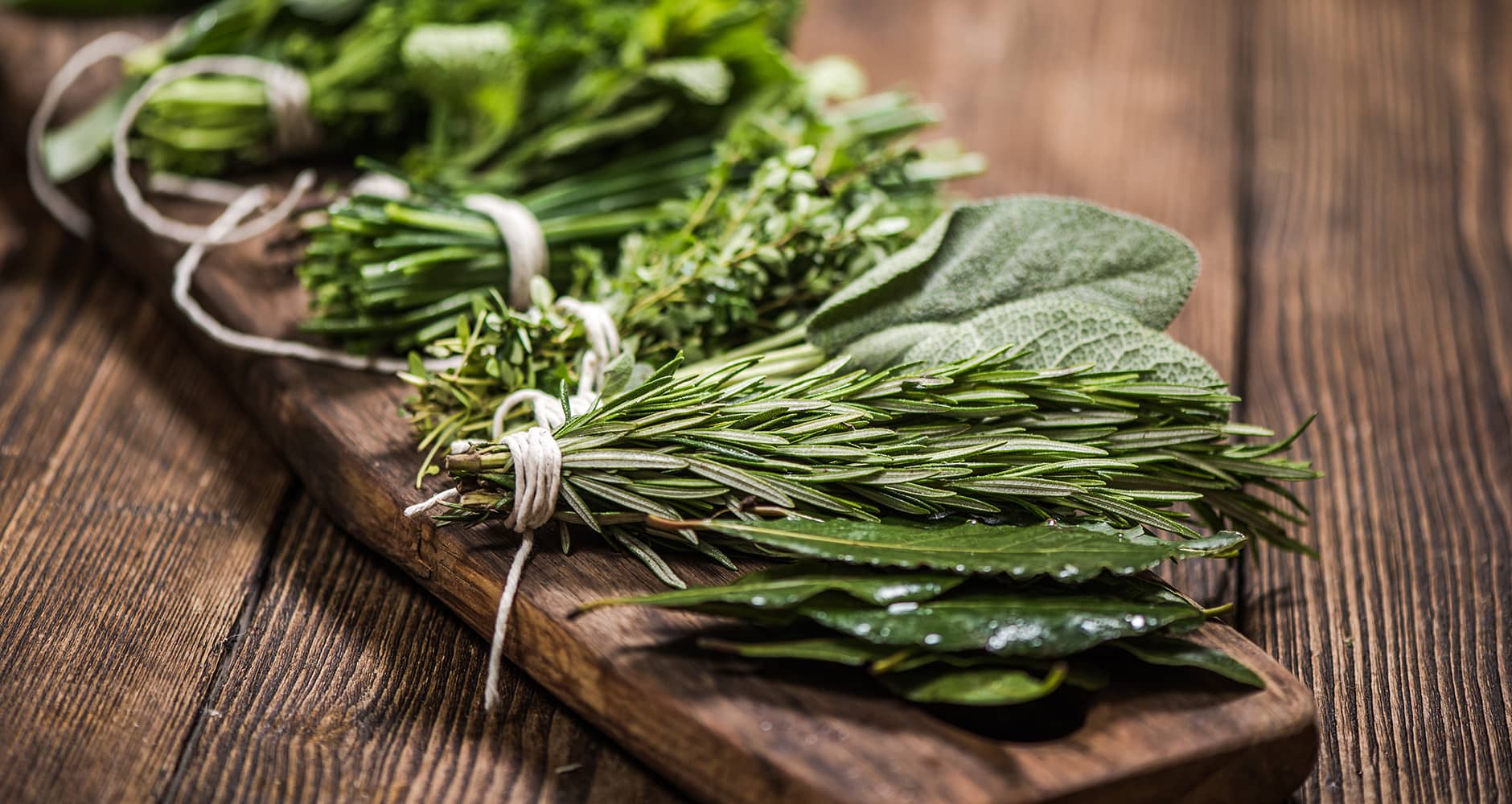
To air-dry fresh herbs, tie a small bunch together at the stem and hang them upside down from a wire or rack in a warm, dry room out of direct sunlight. Air-dried herbs finish in 1 to 2 weeks.
Dried herbs are much stronger than fresh ones, so adjust when cooking. A good rule of thumb is to use 1/3 to 1/2 of the amount called for. Dried herbs lose flavor after one year, so label the jar with the date.
For faster drying, use the oven or microwave. Spread the herbs out on a tray, place the tray in an oven set at 100 degrees, and “bake” for about 3 hours. Turn the herbs partway through for even drying. In a microwave, use low power and cook for three minutes.
Once the herbs are completely dry, store them in a clean glass jar with a tight lid, away from light and heat.
Good drying herbs include bay leaves, tarragon, thyme, rosemary, oregano, and savory.
Freezing Herbs
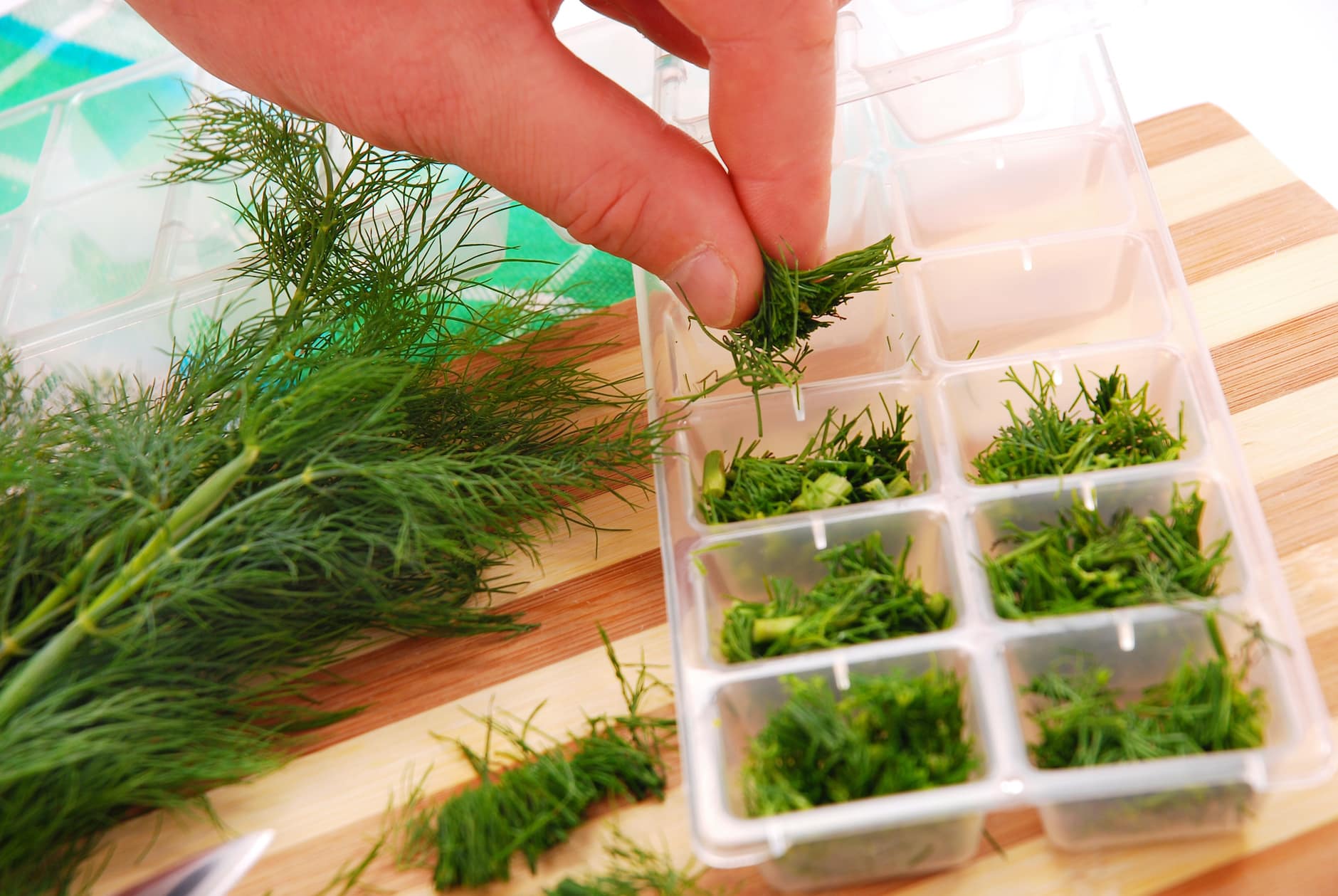
Freezing is a great preservation method, especially for herbs bound for a soup or stew. It has real advantages over drying: it is easier to do, and it does not affect the herb flavor, so you can use the same amount as if it was fresh.
Before freezing, wash and dry the herbs thoroughly. Freeze whole, or chop into an ice cube tray sprayed with non-stick spray. You do not need to add water, but you can freeze the herbs with a splash of water or coconut oil to create herb cubes. Once solid, remove from the tray and store in airtight bags, containers, or freezer jars with tight fitting lids. Label with the type of herb and the current date. Drop a cube into any dish that calls for fresh herbs.
Good herbs to freeze include dill, parsley, basil, chives, and mint. Homemade pesto made with fresh basil freezes especially well.
Freeze-in-oil trick: pack the tray cavities two-thirds full with chopped herbs and top up with olive oil instead of water. The oil coats the leaves so the enzymes that oxidize flavor cannot reach them. According to the Michigan State University Extension, olive-oil cubes hold flavor longer than water cubes and drop straight into a hot pan.
Which Herb, Which Method: A Quick Chart
Not every herb belongs on a drying rack, and not every herb belongs in the freezer. This chart is drawn from the University of Minnesota Extension and Michigan State University Extension guidance, matched to the herbs the Almanac gardens grow.
Regional Harvest Windows for Preserving
The best flavor comes off plants that were cut just before flowering. That window varies by USDA hardiness zone, according to the USDA Plant Hardiness Zone Map. This is a rough regional guide for the classic culinary herbs.
Using Herbs in the Kitchen
Here is a brief list of popular herbs with suggestions on ways to use them when cooking. Every link opens a fuller Almanac guide with growing tips and recipes.
Basil
Italian, Asian, and Mediterranean dishes
Tomato recipes
Spaghetti sauce
Pesto
Lamb
Fish
Poultry
Veal
Potatoes
Soups
Seafood dishes, especially salmon
Cilantro
Mexican recipes
Fish
Guacamole
Rice dishes
Mint
Fruit salad
Vegetables (carrots, green beans, spinach, potatoes)
Jelly
Tea
Tabouleh salad
Oregano
Italian dishes
Egg and cheese dishes (omelets, quiches)
Vegetable soup
Veal stuffing
Marinated vegetables
Rosemary
Meats, especially ham
Halibut, salmon
Rice dishes
Bland soups
Potato dishes
Eggplant
Tarragon
Fish
Vinegar
Salads
Butter sauces (tartar, bearnaise)
Thyme
Meats
Vegetables
Soups
Eggs
Stews
Fish
Clam chowder
Parsley
Tomato sauce and Italian dishes
Meatballs
Tabouleh salad
Fattoush salad

Frequently Asked Questions About Preserving Herbs
What is the best way to preserve herbs long term?
It depends on the herb. Woody, low-moisture herbs (rosemary, thyme, oregano, bay, savory) hold their flavor when air-dried. Soft, high-moisture herbs (basil, dill, parsley, chives, mint) hold better in the freezer, especially in olive-oil ice cubes. The University of Minnesota Extension recommends freezing for herbs headed into cooked dishes and drying for herbs headed into rubs, teas, and long-store spice mixes.
How long do dried herbs last?
About one year at full strength. Store in a clean glass jar with a tight lid, out of direct light and away from the stove. After 12 months, most dried herbs lose their essential oils and start tasting like dust. Label every jar with the harvest date and rotate at the same time you rotate the spice drawer.
How do you dry herbs in the oven?
Spread the herbs on a baking tray in a single layer. Set the oven to 100 degrees F. Bake for about 3 hours, turning the herbs once for even drying. They are done when the leaves crumble between your fingers.
Can you dry herbs in the microwave?
Yes. Use low power and run for three minutes, watching closely. Spread the herbs in one thin layer on a paper-towel-lined plate. Stop before they scorch. Microwaved herbs are best used quickly since they can pick up moisture back in the pantry.
How do you freeze fresh basil without it turning black?
Chop the basil, pack it into an ice cube tray, and top the tray with olive oil instead of water. The oil seals the leaves from air so they hold color and flavor. Drop a cube straight into a hot pan when you cook.
When is the best time of day to harvest herbs for preserving?
Late morning after the dew has burned off but before the sun heats the leaves. That is when the essential-oil concentration in the leaves is at its peak, which means the fullest flavor after drying or freezing.
How much dried herb replaces fresh in a recipe?
Use 1/3 to 1/2 the amount. If a recipe calls for one tablespoon of chopped fresh thyme, use one to one and a half teaspoons of dried thyme. Add dried herbs earlier in the cooking so they have time to rehydrate.


This article was published by the Staff at FarmersAlmanac.com. Any questions? Contact us at [email protected].
- Farmers' Almanac Staff

- Farmers' Almanac Staff

- Farmers' Almanac Staff

- Farmers' Almanac Staff