

Lefse: The Norwegian Potato Flatbread That Crosses Generations
This traditional Norwegian staple is easy to make and delicious to eat, served a variety of ways. Get the recipe here, no special equipment needed!
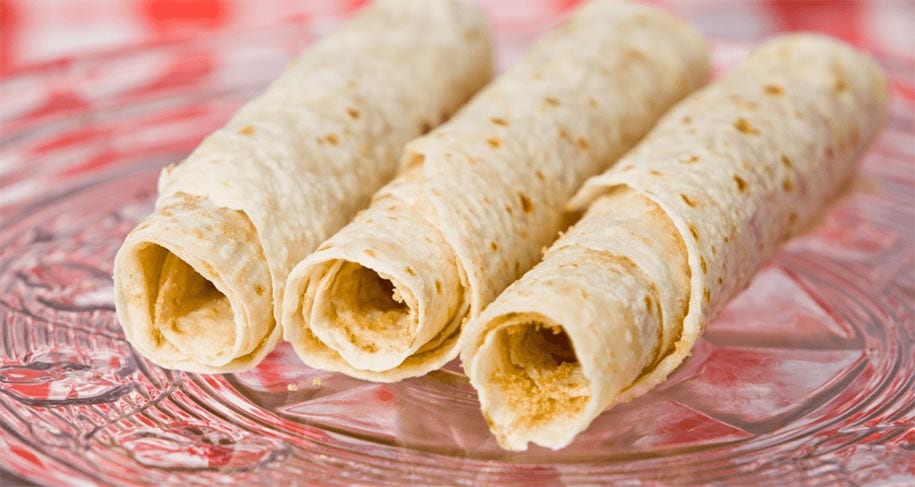
Walk into a Lutheran church basement in northern Minnesota two weekends before Christmas and you will find a lefse circle: a row of women (and increasingly men) rolling out paper-thin rounds of potato dough, flipping them onto well-seasoned griddles, and stacking the finished sheets between towels. Lefse is the most distinctive Norwegian baked good in the Norwegian-American kitchen, and the technique has survived nearly unchanged since the immigrants brought it across in the 1800s.
Quick Reference
- What it is: a thin, pliable Norwegian potato flatbread similar to a tortilla but made from cooked potato instead of dough.
- Three main ingredients: riced cooked potato, flour, butter (with cream and sugar in many recipes).
- Tools: a lefse griddle (or a large electric or cast-iron griddle), a long thin stick, and a grooved rolling pin (or smooth pin).
- How it is served: buttered, sprinkled with sugar and cinnamon, rolled into a quarter-fold; or wrapped around lutefisk, kjøttkaker, or smoked salmon.
- Tradition: a Norwegian Christmas staple in Norway and across the upper Midwest (Minnesota, North Dakota, Wisconsin, Iowa).
- Origin: centuries old, traced to medieval Norway when wheat was rare and potato was a winter staple.
The History of Lefse
Lefse goes back to medieval Norway. Wheat would not grow well in the cold north, so cooks relied on whatever starches they had. Potatoes arrived in Norway in the 1700s, and within a generation the lefse recipe was reformulated to use cooked potato as its main bulk, with just enough flour to hold the dough together. The thin, foldable bread became a Norwegian household staple for celebrations: Christmas, weddings, and harvest. Norwegian immigrants brought the recipe to the United States in the great late-1800s wave that settled the upper Midwest. Today Minnesota and North Dakota host annual lefse-making events with hundreds of participants and tens of thousands of sheets made in a weekend.
Making Lefse At Home
Two pieces of equipment make a real difference. A lefse griddle (electric, flat, around 16 inches wide) heats evenly and holds steady at the right temperature. A long thin stick (lefse stick) is the tool for transferring the paper-thin round from the rolling surface to the griddle and for flipping it. If you do not have a lefse griddle, a large cast-iron or electric griddle will work. A regular spatula will not flip a 14-inch lefse without tearing it; the stick is worth the $5.
The other equipment that matters is a potato ricer. Lefse depends on smooth, lump-free potato; a ricer gives you that texture in 30 seconds. A masher does not work.
Traditional Norwegian Lefse Recipe
Ingredients:
- 5 pounds Russet potatoes (about 7-8 large potatoes)
- ½ cup unsalted butter, melted
- ½ cup heavy cream
- 2 tablespoons sugar (optional, traditional in many recipes)
- 1 teaspoon salt
- 2 to 2½ cups all-purpose flour, plus more for dusting
Instructions:
- Cook potatoes the day before. Peel and boil whole until very tender. Drain, then put through a ricer into a large bowl. Mix in melted butter, cream, sugar, and salt while warm. Cool completely, then refrigerate overnight. Cold potato is crucial; warm dough sticks and tears.
- Add flour just before rolling. Work in 2 to 2½ cups flour, just enough to make a soft, workable dough. Do not knead; you want to keep it tender.
- Form portions. Roll into 2-ounce balls (a heaping ¼ cup each). Keep covered while you work.
- Roll thin. On a generously floured surface, roll each ball into a 14-inch round, as thin as possible. A grooved lefse pin helps; a smooth pin works if floured well.
- Cook. Heat lefse griddle to 500°F (or cast-iron skillet to medium-high). Transfer the round to the griddle with the lefse stick. Cook 45 to 60 seconds until light brown speckles appear, then flip with the stick and cook the second side another 45 seconds.
- Stack. Place cooked lefse between clean kitchen towels to keep soft.
- Repeat. A good batch yields 18 to 24 rounds.

How To Eat Lefse
The most common American serving: spread with butter, sprinkle with sugar and cinnamon, and fold into quarters. Eat with coffee in mid-afternoon or after a Christmas meal. The Norwegian tradition is more varied. Lefse wraps around lutefisk (cured cod), kjøttkaker (Norwegian meatballs), and smoked salmon. Some families fold it like a taco with potato salad inside. A Christmas Eve dinner often serves it as both bread and dessert.
Storage
Cooled lefse, stacked between sheets of parchment, freezes beautifully for up to 3 months. Thaw at room temperature for 10 to 15 minutes before serving. The texture stays soft and pliable. Refrigerated, lefse keeps about a week. Avoid leaving it open to air; it dries out fast.

Frequently Asked Questions
What does lefse taste like?
Mild, slightly sweet from the potato, with a light buttery richness. The flavor is gentle enough to pair with sweet fillings (butter, sugar, cinnamon) or savory ones (smoked salmon, meatballs, lutefisk).
Do you need special equipment to make lefse?
A lefse griddle and a long thin lefse stick make the process much easier, but you can substitute a large cast-iron skillet for the griddle and a wooden dowel or even a long spatula handle for the stick.
Why do you have to cool the potato dough overnight?
Cold dough is firm enough to roll paper-thin without sticking or tearing. Warm potato dough is too soft and will not hold its shape.
Can you freeze lefse?
Yes. Cooked lefse keeps in the freezer for up to 3 months, stacked between sheets of parchment in a freezer bag or wrapped tightly in plastic. Thaw at room temperature for 10 to 15 minutes before serving.
Where can I buy a lefse griddle?
Bethany Housewares makes the standard model, sold by Scandinavian specialty stores in the upper Midwest and online. The Norwegian American Center in Minneapolis and Sons of Norway lodges often sell them at fundraisers.


Amber Kanuckel
Amber Kanuckel is a freelance writer from rural Ohio who loves all things outdoors. She specializes in home, garden, environmental, and green living topics.
- Amber Kanuckel

- Amber Kanuckel

- Amber Kanuckel
- Amber Kanuckel





I’ve grown up with all the various scadanavian foods. It was normal in Minnesota to have your freezer full of goodies for your quests. Now living in Colorado my parents brought all the Norwegian gifts here and I now incorporate them with my husbands German goodies. We both bake and our holidays are full of such wonderful heritages. Thank you for sharing.
Sorry, Donald Moffat, but Decorah, Iowa is the home of Luther College, not Concordia.
My grandmother on my father’s side was from Norway. We made lefsa at Thanksgiving and Christmas. I still do, it just would be the holidays with out it. My sons and my father fight over who is going to eat the most. We eat it still warm with just butter on it. Every time I make it I think of her and all the wonderful memories.
For a person from Western Norway this is a recipe for potato cakes, and they have nothing to do with traditional lefse that have been made for ever so long.The lefse could be stored for a long time.The potato came to Norway in the begining of the 1800s.The potato cakes will mold pretty quickly.
I have been eating lefse as long as I can remember. Last year, for a new twist, I made homemade honey butter (honey, cream, powdered sugar) and put on the lefse and rolled. Everyone just LOVED it! Give it a try 🙂
When I was child and mom made lefse she fried it on top of a cast iron stove It was much better that way because it got hotter.Now I have a griddle.Some kept their stoves just to make lefse.We make 10lbs of potatoes for the holidays my girls help.
I make and prefer the hardanger lefsa. The other lefsa was called potato cakes at home and my sister makes this. My Norwegian family comes from the Hjelmeland Rogaland area.
My grandma on my dads side would make this and my aunt would make this also every Christmas! As kids we would help. After my grandma passed away I got all her Lefse making items! I was super excited! I’m not blood I was adopted when I was two and I’m full Korean and my husband is Guatemalan and Mexican so he has never had it. I made it for the first time by myself in 6th grade for my Econ class for a project and came out great my mom and sister couldn’t stop eating it! I now make it every Christmas and I make about 7 pounds for moms side and dads side of the family! This recipe is a little different then what I grow up with! We only use white or yellow potatoes and no salt and sugar inside the mixture but we use a stick of real butter. I love the fact that my father side is real full Norwegian !!!!
We still eat it every Xmas and have as long as I can remember. 57 now. My Grandmothers, I always thought hers was the best, but my sister, who used to make it with her and now that grandma has been gone now a few years, I can honestly say is fantastic. Butter and white sugar is our family tradition, in most cases, but there are a few that like brown sugar instead.
My Grandma used to make this but she used lard instead of butter. It was fantastic!!! Had it when I was a child. I am thinking about making it myself. Yummmm