

What Is Colcannon? The Irish Mashed Potato Dish Every St. Patrick’s Day Needs
These traditional Irish mashed potatoes combine cabbage or other greens with lots of melted butter and cream, it will become your new favorite side dish to serve any time of year!
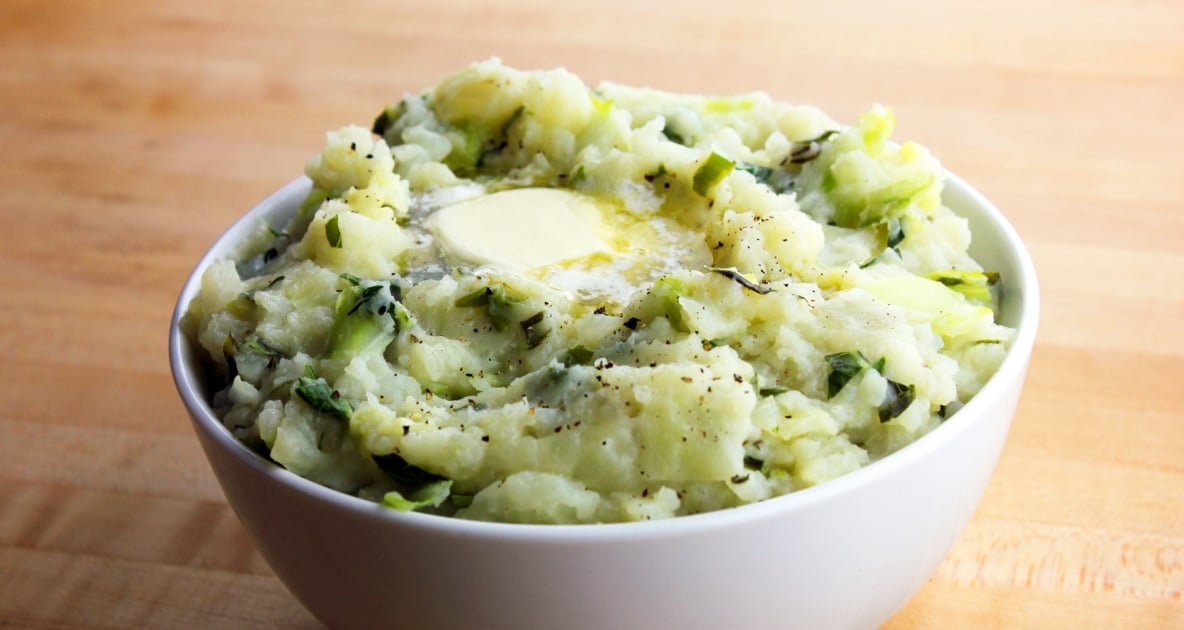
Colcannon is Ireland’s most famous home-cooked dish that nearly every Irish kitchen still makes. The recipe is simple: floury mashed potatoes folded with cooked kale or cabbage, scallions, butter, and milk, finished with a generous well of melted butter in the center. The result is one of the most satisfying side dishes on any winter table, and a fixture of St. Patrick’s Day across the Irish diaspora.
Quick Reference
- What it is: Irish mashed potatoes folded with cooked kale or cabbage and finished with scallions, butter, and milk.
- Origin: Ireland, traceable to the 1700s. Originally a peasant dish, now a national tradition.
- Traditional serving: St. Patrick’s Day, Halloween (with charms hidden inside), and alongside Sunday roast.
- The name: from Irish “cál ceannann,” meaning “white-headed cabbage,” in reference to the cabbage that traditionally went in.
- Best potatoes: floury varieties (Russet, Yukon Gold, Maris Piper). The fluffier, the better.
- Best greens: kale (curly or lacinato) or savoy cabbage. Avoid red cabbage; the dish turns purple.
Where Colcannon Came From
The name comes from the Irish cál ceannann, meaning “white-headed cabbage,” a reference to the cabbage that traditionally went into the dish. Recipes date to the 1700s, when potato and cabbage were the staple foods of rural Ireland. Colcannon was a frugal way to stretch a winter pantry: cook the cabbage, mash with potato, finish with what milk and butter the family had. The dish survived the Great Famine because both potato and cabbage were grown by nearly every Irish household and both were dependable through winter.
By the 19th century, colcannon was tied to Halloween (called Samhain in older Irish tradition). Cooks would hide charms in the dish to predict the diner’s fortune: a ring meant marriage, a coin meant wealth, a thimble meant spinsterhood. The Halloween version still appears in some Irish households. Today, colcannon is most associated with St. Patrick’s Day.
How Colcannon Is Different From Champ or Bubble and Squeak
Three closely related dishes get confused often. Champ is mashed potato with scallions, butter, and milk; no greens. Colcannon is champ with cooked kale or cabbage folded in. Bubble and squeak is the British leftover dish of yesterday’s roast vegetables and potatoes, fried until crispy. All three use cabbage and potato; only colcannon is specifically Irish.
Traditional Irish Colcannon Recipe
Ingredients (serves 4-6):
- 2 pounds Russet or Yukon Gold potatoes, peeled and cut into chunks
- 1 small head savoy cabbage or 1 large bunch curly kale, chopped (about 4 cups)
- 4 scallions, white and green parts, finely sliced
- 1 cup whole milk
- 6 tablespoons unsalted butter (4 for mixing, 2 for the well)
- 1 teaspoon kosher salt, plus more to taste
- Black pepper to taste
Instructions:
- Boil potatoes. Place potatoes in a large pot. Cover with cold water by 1 inch. Add 1 teaspoon kosher salt. Bring to a boil, reduce to a simmer, and cook 15 to 20 minutes until fork-tender.
- Cook the cabbage or kale. While potatoes cook, bring a smaller pot of salted water to a boil. Add cabbage or kale and cook 5 to 7 minutes until tender. Drain well, pressing out extra water.
- Warm milk and scallions. Combine milk and sliced scallions in a small saucepan. Heat gently for 5 minutes (do not boil) to infuse the milk with scallion flavor.
- Mash and combine. Drain the potatoes. Return them to the warm pot. Mash thoroughly (or push through a ricer for the smoothest result). Stir in 4 tablespoons of butter and the warm milk-scallion mixture. Fold in the cooked cabbage or kale.
- Season. Add salt and pepper to taste.
- Serve. Transfer to a warm serving bowl. Make a well in the center and place the remaining 2 tablespoons of butter in the well to melt as you serve. Each spoonful gets a swipe through the buttery well.
When to Serve Colcannon
Beyond St. Patrick’s Day, colcannon is a Sunday roast side, pairs with corned beef and cabbage, sits next to Irish stew, and accompanies any sausage (bangers and colcannon is a household staple). For breakfast, leftover colcannon can be pressed into a hot skillet with butter until crisp on the bottom, then flipped onto a plate as a colcannon cake.

Tips for Best Results
- Squeeze the greens. Cooked cabbage or kale holds water that can turn the mash watery. Press it firmly in a colander before folding in.
- Floury potatoes only. Waxy potatoes (red, fingerling) turn gummy when mashed.
- Warm the milk. Cold milk shocks the potatoes and seizes the starch.
- Generous butter. Colcannon is not a low-fat dish. The butter well at the center is the signature.
- Use a ricer for the fluffiest mash. The same trick that makes lefse work makes colcannon better.

Frequently Asked Questions
What’s the difference between colcannon and champ?
Champ is just mashed potato with scallions, milk, and butter. Colcannon is champ with cooked kale or cabbage folded in.
Can you make colcannon with sweet potatoes?
You can, but it is no longer traditional colcannon. The dish depends on the floury, neutral flavor of Russet or Yukon Gold potatoes.
Why is butter important in colcannon?
Tradition. The butter well in the center is a defining presentation, and the richness balances the slight bitterness of the greens.
Can I make colcannon ahead?
Yes. Make through step 5 up to a day ahead. Reheat covered in a 300°F oven, then finish with the butter well right before serving.
Is colcannon eaten outside St. Patrick’s Day?
Year-round in Ireland. It accompanies Sunday roast, Irish stew, sausages, and other home cooking. The St. Patrick’s Day association is mostly American.


This article was published by the Staff at FarmersAlmanac.com. Any questions? Contact us at [email protected].
- Farmers' Almanac Staff

- Farmers' Almanac Staff

- Farmers' Almanac Staff

- Farmers' Almanac Staff





Wondering if instead of potatoes you can use cauliflower since we are on the Keto eating plan?
If it tastes good, why not “)
I use green onions (scallions) in my potato soup – adds much more flavor than white or yellow onions – I’ll use a few leaves of cabbage for my homemade vegetable beef soup though – scoop them out before serving as the kids never liked cooked cabbage in any form, but love cole sale.
I have been making colcannon for years. It is a cheap and yummy meal that makes it easy to feed kids their veggies. We add crispy, crumbled pieces of bacon and often use sour cream or buttermilk instead of cream. It tastes like a big bowl of loaded mashed potatoes. So good! And good for you.
Tiffany, that sounds delicious! And who needs to wait for St. Patrick’s Day? No one. We’re going to make some tonight! Yum!