

How to Stop Weeds: 7 No-Fail, All-Natural Strategies
Tired of duking it out with weeds in your garden beds? Be victorious with these all-natural strategies!
Quick Reference
- Best pre-emergent weed control: corn gluten meal, applied before seed germination.
- Best long-term barrier for perennial beds: landscape fabric plus mulch topcoat.
- Best plastic-free barrier for vegetable beds: non-glossy newspaper or plain cardboard, topped with mulch.
- Best mulch: bark, wood chips, straw, grass clippings, or shredded leaves; 2 to 4 inches deep.
- Best structural tactic: go no-till and pack plantings tightly.
- Best rescue tactic when you fall behind: clip seed heads before pulling (“one year’s seeds, seven year’s weeds”).
- Timing rule of thumb: apply pre-emergents when forsythia blooms in your region.
Year after year, the same fight. No sooner do you pull all the weeds than new ones sprout right behind them. If you are tired of the frustrating battle against the weeds popping up in your gardens, here are seven all-natural strategies to keep your beds weed-free all year long. The seven methods below are drawn straight from the original Farmers’ Almanac guide, then expanded with regional timing notes and evidence from the Michigan State University Extension, whose corn-gluten-meal trials underpin most of the pre-emergent guidance you will see below.

Try These 7 No-Fail Strategies
1. Corn Gluten Meal
This is one time you may not want to go gluten free. Many university studies show corn gluten meal to be an effective pre-emergent herbicide (a pre-emergent prevents seed germination). It is an all-natural alternative to synthetic pre-emergents, with no known ill effects on human health or the environment. Because corn gluten stops seeds from sprouting, make sure you do not use it in any spot where you would like to plant seeds within the next year or two.
Where to buy: any garden center or online.
2. Weed Barriers
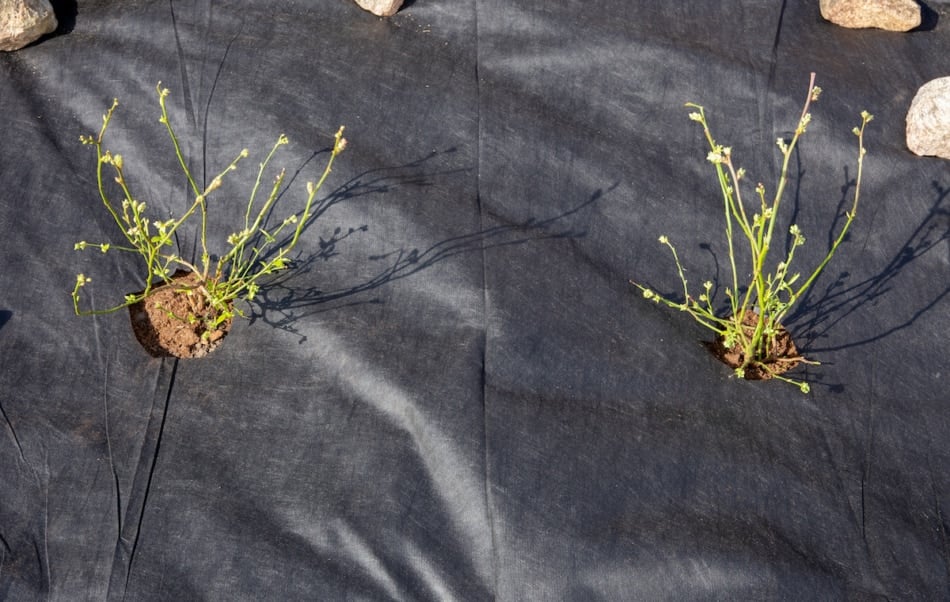
Weed barriers are a no-fuss way to keep weeds out of the garden for years to come. You can use weed barriers in vegetable gardens, but because you might change your plantings around from year to year, you may have to replace the weed barrier annually.
Where weed barriers really stand out is in permanent perennial beds. Lay the sheeting down, making sure to cut holes wherever you plan to place landscape perennials, then cover the fabric with mulch, grass clippings, fall leaves, or something else to hide the plastic or fabric sheets.
Where to buy: any home improvement store, garden center, or hardware store.
3. Newspaper and Cardboard

Many gardeners would rather keep plastics out of their gardens. If that sounds like you, try recycling newspapers and cardboard as a weed barrier instead. The advantage of these two materials is that they are readily compostable, so you can easily till them into your vegetable gardens and reapply each year.
If you decide to use newspaper, avoid toxins by using non-glossy pages and black-and-white ink. Today, the vast majority of newspapers use organic soy-based black ink, which is safe for your gardens.
4. Mulch
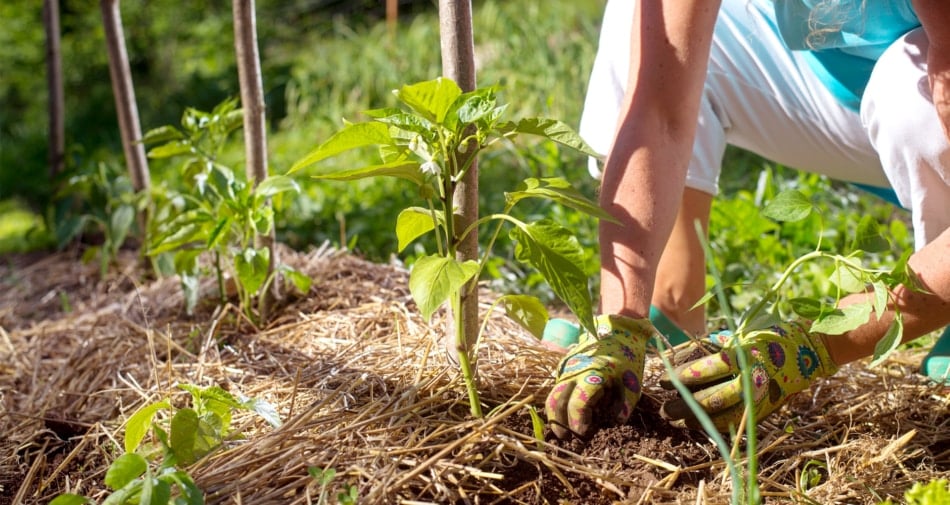
Tree-bark mulch and wood chips are old standbys for weed management, and they can be used on their own or as a covering for your weed barrier of choice. Store-bought bark and wood mulch is not your only option. Grass clippings and straw work as mulch, so long as the source is relatively free of weed seeds. Whole or shredded tree leaves work too.
A couple of particularly stubborn weeds may still grow through your mulch of choice, but far fewer than will grow on bare soil. In addition, no matter which type of mulch you use, you will be adding nutrients to your garden beds and improving the soil’s ability to retain water.
5. Go No-Till
When you till the soil, you are essentially planting weed seeds that were lying on the surface of the bed. You are also exposing previously buried weed seeds to the ray of sunlight they need to sprout. No-till gardening is a great way to reduce weeds in your garden, and it saves you the countless hours you spend tilling each spring.
No-till gardening works especially well when you allow a layer of organic material to cover the surface of your beds. This layer can be mulch, or it can be last year’s foliage. Either way, if you adopt this method, you will wind up with fewer and fewer weeds each year.
6. Pack Plantings Tightly
One of the best ways to keep weeds out of your gardens is to not give them any room to grow. We all love to see some space between our plantings, but if you can pack your plants instead, or use groundcovers to choke weeds, you will barely need to weed at all. As a general rule, this tactic works best in landscape plantings, since many vegetable plants need quite a bit of space to mature.
7. Off With Their Heads!
It happens to the best of us. Life gets in the way, and before you know it, weeds have grown up and long since bolted. As the old saying goes, “one year’s seeds, seven year’s weeds.” Before you start ripping them out of the garden, gently clip off the seed heads so that you do not scatter the seeds as you pull the weeds.
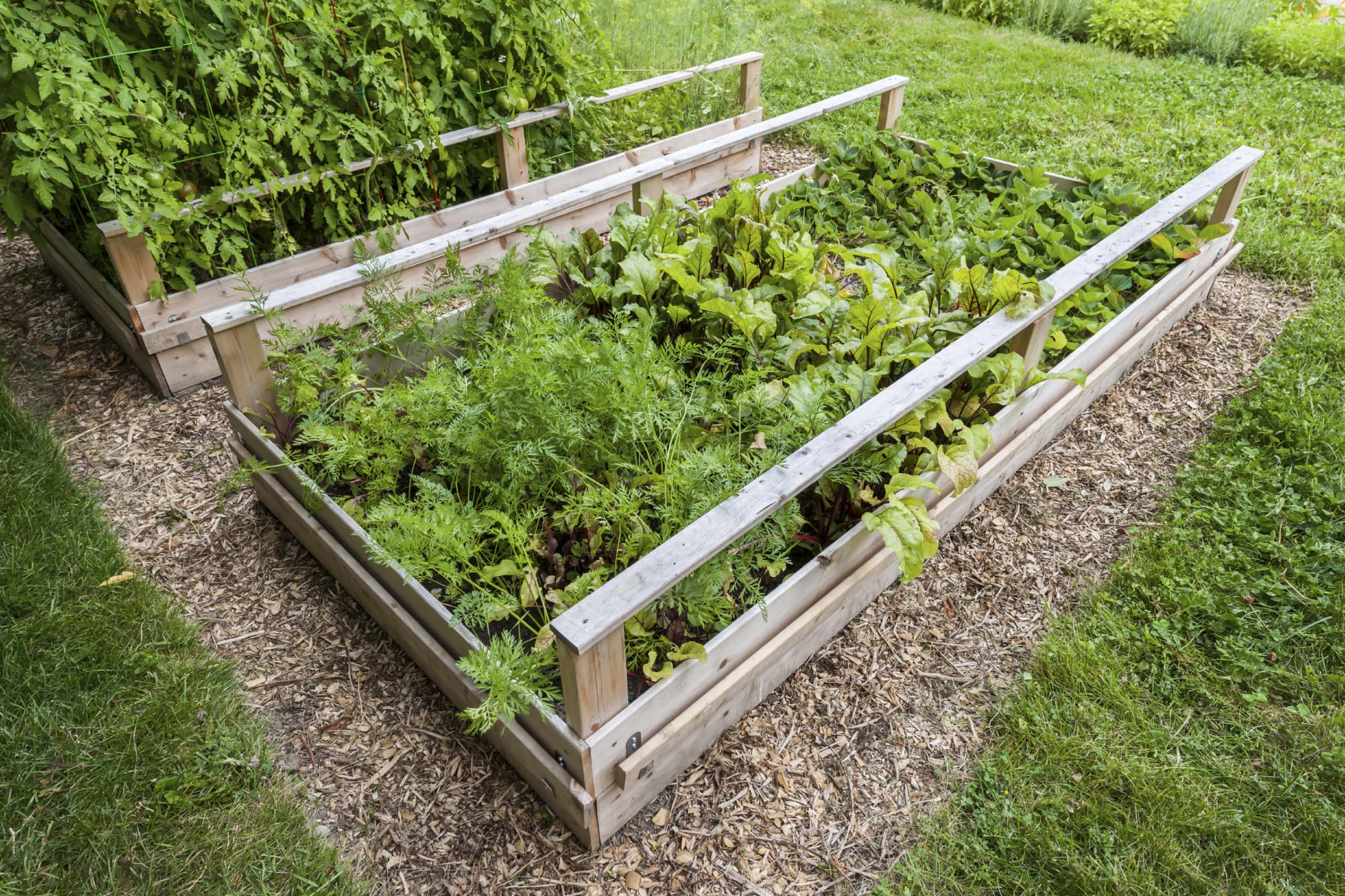
Many weed-busting strategies exist. These seven are among the most effective. Give them a try, and you will find yourself spending a lot less time weeding and a lot more time enjoying your gardens.
Regional Timing: When to Apply Pre-Emergents in the U.S. and Canada
The single most common reason corn-gluten-meal and other pre-emergent applications fail is timing. They must go down before weed seeds start germinating. Extension services from Michigan State to the Royal Horticultural Society use forsythia bloom as a rough phenological signal. Here is the practical version by region:
Pair these dates with the Farmers’ Almanac planting calendar and the Best Days Calendar to schedule mulching, weeding, and seedbed prep in the moon phase where they take best.
Join the Discussion
Do you have an all-natural weed strategy you want to share? Tell us in the comments below.

Frequently Asked Questions About Stopping Weeds
How do I stop weeds from growing without chemicals?
Layer the tactics. Apply corn gluten meal as a pre-emergent in early spring when forsythia blooms in your region. Lay landscape fabric or plain cardboard under a 2 to 4 inch mulch topcoat in perennial beds. Go no-till in vegetable beds. Pack plantings tightly so weeds have no room. When weeds do slip through, clip seed heads before pulling.
Does corn gluten meal really work as a weed killer?
It works as a pre-emergent, which means it stops seeds from sprouting. It does not kill existing weeds. Michigan State University Extension trials show 50 to 80 percent reduction in seedling weeds when application is timed correctly and the meal is watered in. Timing is everything.
What is the best mulch for stopping weeds?
Bark chips and wood chips give the longest-lasting weed suppression, 6 months to a year per application at 2 to 4 inch depth. Straw, grass clippings, and shredded leaves work too, and they add more nutrients to the soil as they break down. Avoid dyed mulches in vegetable beds.
Is landscape fabric or cardboard better for a weed barrier?
Landscape fabric lasts multiple years and is the better choice for permanent perennial beds. Cardboard and non-glossy newspaper decompose in a season and are the better choice for annual vegetable beds because you can till them in and start again each spring. Cardboard is also plastic-free.
Why is no-till gardening better for weeds?
Tilling exposes buried weed seeds to sunlight, which triggers germination. Leaving the soil undisturbed under a mulch or foliage layer keeps those seeds in the dark, and each year you leave the soil alone, the seed bank shrinks. Yields often hold steady or rise.
What does the saying ‘one year’s seeds, seven year’s weeds’ mean?
It is an old gardening rule of thumb: a single mature weed can drop enough seed to keep a bed producing weed seedlings for roughly seven years. That is why clipping seed heads before pulling matters. It cuts off the seed bank at the source.
When should I apply a pre-emergent weed control in my region?
Time it to forsythia bloom. In the U.S. mid-Atlantic and southern Midwest, that is typically mid-March to early April. In the Northeast and Great Lakes, early to mid-April. In the Upper Midwest and southern Canada, late April to mid-May. See the regional timing table in this guide.


Amber Kanuckel
Amber Kanuckel is a freelance writer from rural Ohio who loves all things outdoors. She specializes in home, garden, environmental, and green living topics.
- Amber Kanuckel

- Amber Kanuckel

- Amber Kanuckel
- Amber Kanuckel





Check out “Square Foot Gardening” . Mel Bartholomew had some great ideas. Little to no weeding. Great for areas with poor soil.
We love the idea of gardening in close quarters! Thank you for the recommendation!
How do you get rid of the dreaded Bamboo!
Jacqueline,
We had a bamboo problem several years ago and we found that if we let it come up and get between 6-9″ high we could then go “kick” it out of the ground and get roots and all. It will take over quickly if you don’t stay on top of it, as I am sure you well know. Good luck!
What kind of weed is it that attacks trees and drain all the life out of them? How do you get rid of them?
Hi Melony,
This sounds like more than a weed, but your best bet would be to go to your county’s extension center or to contact a local nursery. Hope they can help.
Probably winter creeper…
What about Canadian Thistle? Every time I pull it up more comes up. Last time (a few weeks ago) I cut it instead of pulling it and covered it with cardboard, but it is now pushing up the cardboard.
Hi Janice,
Here is a great article that may offer some tips –https://www.gardeningdream.com/how-to-get-rid-of-canadian-thistle/ Some weeds do seem indestructible! Good luck!
I bought a ground cover and planted it between the rows of my raised beds. it’s taken several years but it has spread and looks beautiful and NO WEEDS!!
I found that during or after a rain when the ground is good and soaked, I can get out there and start hand pulling weeds and grasses mostly with ease. They seldom break off leaving a buried root behind. I also plant staggered double rows about 18” apart. This allows me to get between my rows with a tiller if I need to. I do this early in the day so the sun will dry out the newly exposed weed roots. Some people I know just mow between the rows to keep the weeds and grasses trimmed down.
I generally use vinegar for weed control, cardboard or newspaper covered with mulch renewed each year. Dish soap can be added to make it “stick” to leaves a little better. I also utilize shredded paper when I have it. It breaks down easily.
My biggest problem in my back yard has been Bermuda grass. I have been fighting it for a while. I have shrub, small trees and perennial beds in the backyard with zoysia grass in several areas. I have one area of Bermuda that I have sprayed several times and recovered with cardboard and plastic each time. This has been the most successful, but it is tedious and I doubt that the Bermuda is eradicated. I believe getting rid of it will always be an ongoing battle.
Anyone have a magic bullet to destroy Bermuda?
The only way to kill Bermuda grass is glyphosate .I hope I got that right. Even if I didn’t it is the active ingredient in round-up. Keep in mind it will kill everything it’s sprayed on. I have used it in close proximity to shrubs and flowers without harming them,but be sure there is NO wind. If u do this in the fall u can reseed your grass after a couple of weeks. There is a %limit of glyphosate that will kill Bermuda and still allow you to reseed. I cannot remember what it is. Contact your local county extension office. They can give u all the info u need !
Wish u success!!! I hate Bermuda grass!
How do you kill old English ivy naturally
Vinegar will usually kill just about any plant and it’s usually harmless to most animals. It will kill most plants if you spray it on the leaves. Tear out what you can and keep spraying the sprouts. If you have to cover it with plastic to keep the vinegar from dissipating too fast, put some weight on it as well. If you have to resort to concentrated vinegar or more drastic means, replacing your soil or adding clay, baking soda, and cornmeal gluten can change the PH enough to discourage growth. Don’t add baking soda while the vinegar is active. Maybe wait until next year to see if you’ve got it under control.
* If you add cornmeal gluten, don’t plan on growing any seed there for a couple of years.
Thanks I have a lot of ivy and heavenly Chinese tree starts to kill. They’re very prolific they grow from roots and seeds.
Thanks for the info really appreciate it❤️
Glad you found the information useful, Catherine. Thanks for taking the time to write.
Clipping invasive Alyssum is a chore for us on acreage, any benefit to continuous weed removal by hand for Alyssum? Or beneficial removal alternatives? In spring it is ‘fun’ to see them come alive like the dandelions but soon won’t have the time.
Urban Gardens love Alyssum. Why not use Craigslist to invite folks out to get free seed and transplants? Have them bring their own shovel and container, extra plants or preserves for trade. Daisies in a pasture that may give livestock a tummy ache may be a delight in the city, so point to any you want them to dig if they like em!
Goat Rental is a craze in Western TN. We have lots of privet, kudzu, honey suckle that is growing in farmlands.
“Goats for Hire” has helped several around here to rid.