

10 Major US Cities Shut Down by Weather: Storms That Stopped Cities
Ten major US cities brought to a complete halt by snow, ice, hurricanes, and floods. From Snowmageddon to Hurricane Katrina, with dates and storm details.
Quick Reference
- Most catastrophic shutdown: New Orleans during Hurricane Katrina, August 29, 2005. Levee failure flooded 80 percent of the city.
- Largest single-storm snow: Washington, DC, Snowmageddon, February 5, 2010. 32 inches at Dulles.
- Most ironic shutdown: Atlanta on January 28, 2014. Just 2.6 inches of snow stranded thousands and stuck 99 school buses.
- Most named storms: Buffalo. Lake-effect snow events from 1977 through 2014, including the Six-Pack Blizzard of 1985.
- Sources: National Weather Service archives and NOAA / NWS climate data.
Ten major American cities have been brought to a complete halt by weather in living memory. Some you would expect, like Buffalo and Boston. Others you would not, like Atlanta and Los Angeles. Below are the ten cities that have shut down because of weather, the storms that did it, and what residents and city governments learned (or did not learn) from each one.
The 10 US Cities That Shut Down Because of Weather
1. Washington, DC
The capital region has seen heavy snowfalls in living memory, but they tend to be few and far between. The legendary Knickerbocker Storm of 1922 dropped 28 inches and caused the collapse of the Knickerbocker Theater, killing 98 people. The Presidents’ Day storms of 1979 and 2003 each dropped about two feet of snow. According to the National Weather Service, the DC area had seen more than a foot of snow only 13 times since 1870 prior to the events of 2009 and 2010.
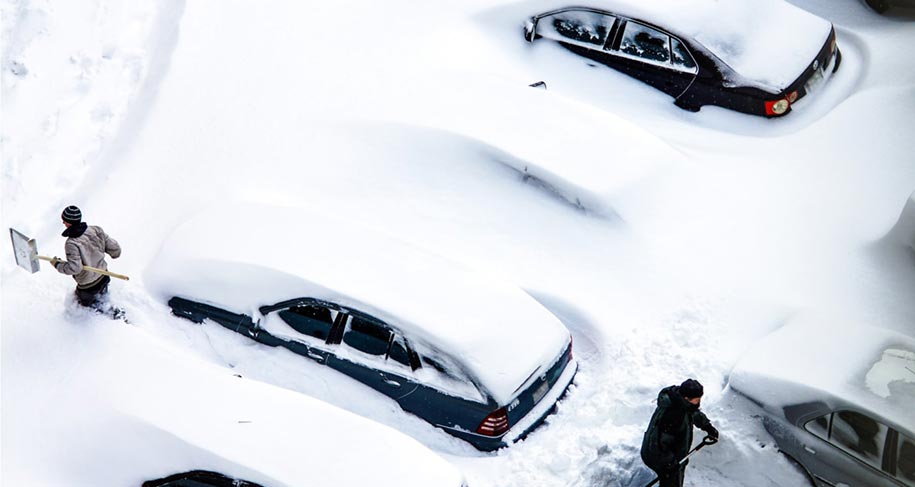
That changed quickly. On December 19, 2009, a severe storm dropped 18 inches on the city, a portent of things to come. In early February of the same winter, two major storms combined to shut Washington down for several days. On February 5, the city was hit by its fourth heaviest snowfall on record, with nearly 18 inches at Reagan National Airport. At nearby Dulles International Airport, the record was shattered by a 32-inch total. President Obama called the storm “Snowmageddon.” Others named it “Snowpocalypse.”
Just four days later, another massive snowfall hit, dropping 12 to 18 more inches across the region and earning the nicknames “Snoverkill” and “Snomageddon 2.0.” The result was a complete shutdown of the nation’s capital: flights canceled, schools closed, and the federal government sent workers home where they were stuck for several days because the region was simply not equipped for so much snow.
2. Chicago, Illinois
Natives of the Windy City are used to wintry weather. Typical Chicago winters average 38 inches of snow, falling in light accumulations across the season. About every three years a storm deposits 10 or more inches over a few days. It is rare when snow freezes Chicago to a standstill, but a few notable events have done it.
On January 26, 1967, 23 inches of snow stranded thousands in offices, schools, and on buses. About 50,000 abandoned cars and 800 buses littered the streets and expressways. On January 13-14, 1979, a blizzard left 19 inches of snow followed by a long stretch of bitterly cold weather. Much of the snow remained unplowed for weeks, causing transit delays and significant problems with trash collection. Just as had happened to New York’s Mayor John Lindsay ten years earlier, Chicago’s inadequate response was blamed primarily on Mayor Michael Blandic.
On February 1, 2011, over 20 inches of snow fell, accompanied by 70 mph winds, causing hundreds of cars to be abandoned along Lake Shore Drive and bringing Chicago, a city that prides itself on conquering any snowstorm, to a complete stop.
3. Atlanta, Georgia
The Big Peach sits in the foothills of the southern Appalachians, and the mountains to the north tend to obstruct southward-moving frigid polar air masses. Atlanta winters are usually rather mild. Cold spells are not unusual but tend to be short-lived. The average annual snowfall varies widely from year to year, with a snowfall of 4 inches or more occurring about every five years.
Heavy snowstorms on January 12, 1982 (six inches at the afternoon rush hour), March 13, 1993 (a rare blizzard), and January 9, 2011 (snow mixed with ice) all brought the city to a halt. Ice storms and freezing rain occur in this Georgia city two out of every three years, causing hazardous travel and disrupting utilities. Severe ice storms occur about every ten years, with major business and utility disruptions and significant property damage. The worst was the severe ice storm of January 8, 1973, when 300,000 people went without power for more than a week.
A December 15, 2010 storm left a leaf-thin sheet of black ice coating the roads at the height of rush hour, causing more than 1,000 accidents as motorists slid off roads or crashed into each other. In many cases people simply abandoned their cars. A similar story unfolded on January 28, 2014. The city only received 2.6 inches of snow, but hundreds of people had to abandon their cars on the interstate and seek shelter in nearby stores as everyone tried to head home at once. Ninety-nine school buses were stuck in traffic until midnight while 2,000 students were forced to spend the night at school.
4. New York, New York
For all that the Big Apple is the city that never sleeps, a good snowstorm can shut down a big portion of the nation’s largest metro. Two storms in particular stopped life in New York.
The first was the Lindsay Storm of February 9, 1969. Local forecasters expected the storm to fall primarily as rain after a brief start as snow. It began early Sunday morning as snow and never changed over, falling at better than an inch per hour. The NY Sanitation Department was slow getting plows out, and major thoroughfares clogged. Some locations, particularly the borough of Queens, received more than 20 inches and were nearly paralyzed. Mayor John Lindsay ran into political misfortune after some sections of the city remained unplowed for a week.
On the day after Christmas in 2010, also a Sunday, a blizzard enveloped the city, dropping about two feet of snow. The storm was anticipated; the Daily News blared “BLIZZARD COMING!” on its front page. City officials, for unknown reasons, failed to declare a snow emergency and were unprepared for the snowfall, which reached two feet in some areas. Trains froze to platforms, the major airports were shut until six o’clock the next evening, and many minor streets went days without plowing.
5. Los Angeles, California
In the City of Angels the weather can be anything but angelic. The city sits between mild sea breezes from the Pacific Ocean and hot or cold winds from the interior, which results in a wide variety of weather patterns. Like most other Pacific Coast areas, Los Angeles receives most of its rainfall in winter, with nearly 85 percent of the annual total occurring from November through March. Winter is also the season for destructive flash floods.
A standout event was the pre-Christmas storm of December 23, 2010. The storm caused tremendous flooding across Los Angeles and much of southern California. The amount of rain that fell on the city in one week equaled half the annual rainfall typical for the region (7.96 inches in downtown Los Angeles). In outlying communities homes and cars were awash in mud, hillsides slid onto major highways, urban streets flooded, and countless homes faced threat. The Pacific Coast Highway was closed and tens of thousands lost power. Sound familiar? The winter of 2017-2018 in southern California nearly repeated, with mudslides causing the deaths of at least 19 people and forcing the closure of the 101 Freeway for over a week.

6. Dallas, Texas
It is hard to believe that any town in Texas would have winter worries. Dallas is categorized as humid-subtropical, with hot summers. Winters are usually mild, and snowfalls average only 3 or 4 inches about two or three times each month from late December through mid-March. But the region can be invaded by Blue Northers, sharp cold fronts that sweep north to south across Texas and cause a sudden temperature drop, sometimes up to 25 degrees F within one hour. Brief periods of extreme cold , temperatures plummeting through the 20s, the teens, even single digits , are followed by deep blue skies.
If a storm emerges from the Gulf of America and happens to interact with such a sweep of cold air, the result can be a devastating winter storm. An excellent example came on January 10, 2011, when just such a combination crippled the Dallas-Fort Worth Metroplex. Up to a half-foot of snow and ice shut down a majority of the school districts and severely disrupted businesses. Thousands of residents were affected by power outages, schools and businesses closed, and thousands of flights were canceled.
7. Boston, Massachusetts
In almost 100 years of National Weather Service records, Boston had not experienced a single snowfall of 20 inches or more, until February 24-28, 1969, when a long-duration 100-hour storm dropped 26.3 inches. Even that storm did not completely stop the city.
On February 6-7, 1978, one of the most intense storms of the 20th century hit the Northeast US, accompanied by hurricane-force winds and record-breaking snowfalls. Boston was already recovering from a mammoth snowstorm 17 days earlier that had dropped 21.5 inches. The newer storm ultimately dropped 27.1 inches. Some parts of nearby Rhode Island recorded an incredible 50 inches. Across all of southern New England, including Boston, businesses and schools shut down for a week or more by the Blizzard of 1978.
During the winter of 2015, Boston saw back-to-back storms that wreaked havoc on the city. New snowfall records were broken from multiple storms during the month of February alone. The Valentine’s Day blizzard caused the city’s transit system, one of the oldest in the country, to shut down after 22 inches fell.
8. New Orleans, Louisiana
No list of weather-driven city shutdowns is complete without Hurricane Katrina and New Orleans. The metro area is virtually surrounded by water. Lake Pontchartrain borders the city on the north; in other directions, bayous, lakes, and marshy deltas. A massive levee system surrounding the city and along the Mississippi River seemingly offered protection against river flooding and tidal surges. That was before Katrina.
Hurricane Katrina was the costliest natural disaster, and one of the five deadliest hurricanes, in the history of the United States. On August 29, 2005, the Category 3 hurricane, with winds of 125 m.p.h., made landfall in southeast Louisiana, near the city of Buras-Triumph. It caused severe destruction along the Gulf Coast, much of it from storm surge.
The surge was pushed into New Orleans, where the levee system catastrophically failed, in many cases hours after the storm had moved inland. The surge caused more than 50 breaches in the levee system. Eventually, 80 percent of the city and large tracts of the neighboring parishes flooded. With some parts under 15 feet of water, the floodwaters lingered for weeks. Many who remained had to swim for their lives, wade through deep water, or remain trapped in attics or on rooftops. Years after, thousands of displaced residents in Louisiana were still living in temporary accommodations.
9. St. Louis, Missouri
In a city where 18 to 21 inches of snowfall is typical for an entire winter, January 30-31, 1982 brought a once-in-70-years event. 18 to 21 inches of snow blanketed St. Louis in a single storm. According to the National Weather Service, the snowstorm was “remarkable and crippling to the St. Louis metropolitan area.”
The snow paralyzed the area. Government offices, many businesses, and schools canceled work or classes for as long as a week after the snow ended. The airport, Amtrak, and bus services were shut down. As many as 4,000 motorists were stranded on highways because of blizzard-like conditions. Many people became stranded for days, with hospital and emergency workers picking up two and three shifts because their coworkers could not make it to work. The Missouri National Guard was eventually called in to ease a disastrous situation, while residents of the Gateway City helped each other dig out from their worst snowstorm since February 20, 1912.
10. Buffalo, New York
If any city knows snow, it is Buffalo. The City of Good Neighbors sits on the eastern shore of Lake Erie. When winter settles in, cold winds blowing across the lake pick up moisture and deposit it onshore in the form of heavy snow showers and squalls. If the winds are persistent and blow for hours, snow amounts can become substantial and measured in feet. Even so, only a few cases have brought the city to a complete halt.
During January 28-31, 1977, it was not the snow (only 10 inches fell) but the sustained winds that did the damage, blowing at the near-hurricane force of 69 m.p.h. Lake Erie was actually frozen over but covered with 33 inches of puffy snow that the winds picked up to create whiteout conditions which brought everything to a complete standstill. Eight years later, on January 18, 1985, Buffalo was hit by the Six-Pack Blizzard. The city was buried by 33 inches of snow combined with winds gusting to over 50 m.p.h. Why the Six-Pack name? Because at the height of the storm, Mayor Jimmy Griffin urged his constituents to “Stay inside, grab a sixpack, and watch a good football game.”
On November 20-23, 2000, a 60-hour lake-effect snowstorm dumped nearly 3 feet of snow. The storm produced frequent lightning and thunder. The most intense snowfall coincided with the afternoon drive home, and area workers leaving early clogged the roads. Thousands of people spent the night in autos or stores. In November 2014, the Buffalo area was hit by a ferocious lake-effect snow storm that dropped 5 feet of snow in a 24-hour period. Read our full piece on what lake-effect snow is and how it works.
Patterns Across the List
Three patterns repeat across these ten shutdowns. The first is the snow-on-a-southern-city effect: Atlanta, Dallas, and Washington routinely come to a halt after relatively modest snowfalls because the infrastructure is not built for it. Two or three inches that a Buffalo resident would shrug at can shut Atlanta down for two days. The second is the lake-effect or hurricane edge case: Buffalo and New Orleans live with extreme weather systems that can simply overwhelm any preparedness plan. The third is the prepared-city stumble: Chicago, New York, and Boston all have the budget and equipment to handle big snow but have repeatedly been caught flat-footed by political missteps in declaring emergencies and dispatching plows.
For more on extreme regional weather, see the 10 worst weather cities, 10 worst weather states, and America’s stormiest cities.
For our broader weather rankings, see our 10 worst weather cities list (year-round, by NOAA climate normals), and our 5 snowiest places in the US list (which features mountains, not metros). Both pair nicely with this one if you are tracking why a particular city stops moving when a storm arrives.
If You Live in One of These Cities, Plan for the Outage
The pattern is consistent enough that residents of these ten cities can plan around it. Keep a few days of food and water on hand through storm season. Charge devices and stage flashlights before the watch becomes a warning. If your city has a history of declaring snow emergencies late, decide your own threshold for staying off the road. The Farmers’ Almanac long-range forecast publishes seasonal outlooks for the months ahead, which can help you decide when to stock up on salt, when to check the generator, and when to schedule a flexible work-from-home week.
Cold-snap events covered in this list line up with phenomena explained in our polar vortex guide, while atmospheric-river floods are detailed in the Pineapple Express explainer. Hail-driven shutdowns are covered in how to identify hail damage.

The National Weather Service and NOAA NCEI publish region-by-region storm climatology and event records that back up the rankings used in this post.
Frequently Asked Questions
Which weather event most completely shut down a US city?
Hurricane Katrina’s flooding of New Orleans on August 29, 2005. The Category 3 storm with 125 mph winds caused over 50 levee breaches and flooded 80 percent of the city under up to 15 feet of water. The flooding lingered for weeks and many residents were displaced for years.
What is the worst recorded snowstorm in Washington, DC?
By measured snowfall, the February 5, 2010 Snowmageddon, which delivered 18 inches at Reagan National Airport and 32 inches at Dulles International. Historically, the deadliest was the Knickerbocker Storm of 1922, which dropped 28 inches and caused the Knickerbocker Theater collapse, killing 98 people.
Why did 2.6 inches of snow shut down Atlanta in 2014?
Atlanta’s infrastructure is not equipped for snow events because they happen rarely (snowfall of 4 inches or more occurs about every five years). On January 28, 2014 the snow arrived during the afternoon commute, and everyone tried to leave at once. Hundreds of people abandoned their cars on the interstate, 99 school buses were stuck in traffic until midnight, and 2,000 students spent the night at school.
What was the Six-Pack Blizzard?
A Buffalo lake-effect storm on January 18, 1985 that buried the city under 33 inches of snow with winds gusting over 50 mph. The nickname comes from Mayor Jimmy Griffin’s on-camera advice during the height of the storm: “Stay inside, grab a sixpack, and watch a good football game.”
Has Los Angeles ever shut down because of weather?
Yes, but it tends to be flooding rather than snow. The pre-Christmas storm of December 23, 2010 dropped 7.96 inches of rain on downtown LA in one week, half the typical annual rainfall. The Pacific Coast Highway closed and tens of thousands lost power. The 2017-2018 winter mudslides killed at least 19 people and closed the 101 Freeway for over a week.
Why does snow paralyze Boston less often than Buffalo?
Boston has more snow-clearing infrastructure per square mile, more salt-truck routes, and stronger drainage. Buffalo gets more total snow, but the city handles routine lake-effect events without disruption. The few storms that do shut Buffalo down tend to be either extreme wind events (1977, 69 mph) or extreme snowfall (1985, 2014, 5 feet in 24 hours).
What is a Blue Norther?
A sharp cold front that sweeps north to south across Texas, causing a sudden drop in temperature, sometimes up to 25 degrees F within an hour. When a Blue Norther interacts with a Gulf-borne moist storm, Dallas and the surrounding region can see ice and snow events that shut the metro down, as on January 10, 2011.


Caleb Weatherbee
Caleb Weatherbee is the official forecaster for the Farmers' Almanac. His name is actually a pseudonym that has been passed down through generations of Almanac prognosticators and has been used to conceal the true identity of the men and women behind our predictions.
- Caleb Weatherbee

- Caleb Weatherbee
- Caleb Weatherbee
- Caleb Weatherbee


So far I haven’t seen anyone mention the Upper Peninsula of Michigan. Lived on K.I. Sawyer AFB for 8 winters and it was literally horrible. Our winters lasted at least 6 months. We seen snow while we were up there every month except July. The blizzards were almost every week. The temps were horribly frigid. We had to get an engine heater just so we could start our car. There were tons of days every winter where the base just shut down except for emergency personnel only. Beautiful area but horrible winters. I hear that they aren’t that bad anymore. We left in 1990.
Don’t forget San Diego’s strange weather of will it be 68F or 81F LOL!
I think this should have been more aptly named: Cities Shut Down Due To Weather. Hurricanes, blizzards, tornadoes, floods, etc., are catastrophic events that no Human can predict. It doesn’t make a town wimpy just unlucky. If you want to talk about wimpy, then most anything south of the Mason/Dixen line like Tennessee shuts down at the threat of snow. We have already had a week of snow days here and only actually got our first snow flake today, along with 3 inches more of them. Looks like an extended school year for us.
Your story about “weather wimp cities” suggests that somehow people are expected to handle iced roads, frigid temps, or catastrophic flooding due to a hurricane as everyday occurances. The South, as in Mississippi, is not equipped to handle this type of weather. Not enough resources for salting roads, nor do we have the experience driving in snow, sleet, or ice. If they didn’t shut things down more people would die than they already do. It’s not something that should be shameful or made fun of at all. Honestly it’s really not appreciated. Do you seriously think people should be shamed for simply living in an area that experienced a cat 5 hurricane? How about all the people who died? ALL the ones who lost family due to this hurricane? Seeing this article I’m sure doesn’t make them very happy, nor make them chuckle at their “wimpiness”.
Don’t know where they come up with some of these. Then there’s ones that aren’t on here that definitely should be! Incomplete list for sure regardless of the all different dates of these comments…
Erie, PA 2.5 – 3 feet of snow in 48 hours. Just another day in paradise.
Hurricaine Ike. Houston, Texas. ‘Nuff said.
Houston TX shuts down at the threat of weather. Either stay home an hour or three and wait for it to pass, or sit in your car in traffic for those same hours.
West Virginia here. Just received 2 feet of snow this past weekend and we keep going and going ….. expecting more tomorrow. I live 1/2 mile from Saints training facility and The Greenbrier Classic PGA Tour. Love my mountains!!! We experience all seasons! Plus you couldn’t meet nicer people than country folk. We are survivors!
I live in the Indianapolis area. Even when the streets are declared emergency use only… Employers still expect you to go to work. Even if it means you leave for work 2 hours early and may have to spend the night at work because it’s too dangerous to try to drive back home. Indianapolis NEVER closes.