

How to Grow Shamrocks: True Irish Shamrock vs Oxalis, Care, and St. Patrick’s Day Tradition
By following these helpful hints, a potted shamrock plant should yield those charming clover leaves and lovely petite blooms for years to come!
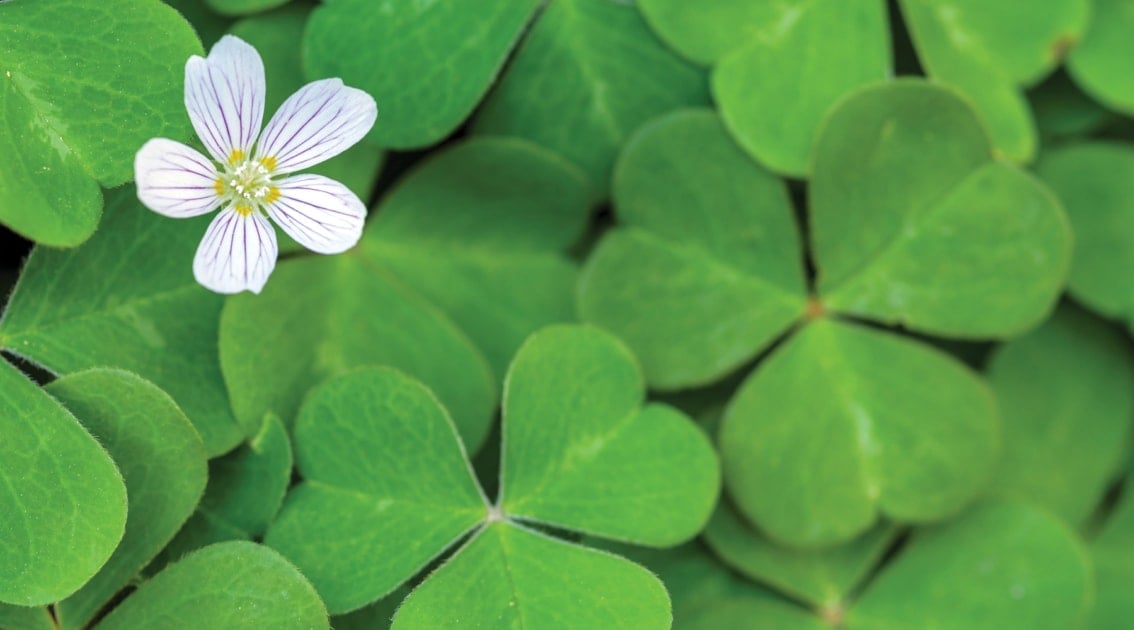
Quick Reference: Shamrocks
- True Irish shamrock: white clover (Trifolium repens). The plant Patrick used to teach the Trinity.
- Florist shamrock: Oxalis triangularis (purple-leaved) or O. acetosella. NOT the same plant; same symbolic role.
- USDA zones: white clover hardy 3 to 10. Oxalis tender, mostly grown as houseplant.
- Light: partial shade for both. Direct hot sun fades the leaves.
- Tool: the Almanac’s Irish superstitions guide.
On this page
Related Almanac guides
Sources cited in this guide
Shamrocks are the symbol of Ireland and the traditional plant of St. Patrick, but the plant in your March supermarket pot is almost never the true Irish shamrock. The true shamrock is white clover (Trifolium repens), the same nitrogen-fixing legume that grows in countless North American lawns. The florist shamrock is Oxalis (a different family entirely), bred for the purple-leaved triangular look. This guide is the difference, the symbolism, and how to grow each.
True Irish Shamrock vs Florist Shamrock
Per Britannica’s shamrock entry and USDA NRCS records, the name shamrock has covered several different plants over the centuries.
- True Irish shamrock. White clover (Trifolium repens). Three-leaved, green, the plant Patrick traditionally used. Hardy across USDA zones 3 to 10. Same plant in most North American lawns.
- Florist shamrock (purple). Oxalis triangularis. Striking deep purple leaves, white or pink flowers. Tender; grown as houseplant in most of North America.
- Florist shamrock (green). Oxalis acetosella (wood sorrel) or Trifolium dubium (lesser yellow trefoil). Either may appear in supermarket pots.
- Why the confusion: all are three-leaved (or four for four-leaf clover). The folk shamrock is more about the three-leaf symbol than the specific species.
How to Grow Each Shamrock
Per USDA NRCS growing data and standard houseplant care.
- White clover (true shamrock). Sow seeds in spring or fall in partial shade or full sun. Tolerates poor soil, fixes nitrogen. Mow lightly to keep low. Self-seeds.
- Oxalis triangularis (purple). Indoor houseplant in zones 3 to 8, can summer outdoors. Bright indirect light. Water when top inch dry. Goes dormant in summer or winter; rest is normal.
- Both: avoid waterlogged soil and intense afternoon sun. Both prefer cool temperatures (60 to 70 F).
Growing Shamrocks (Detail)
Below is the original Almanac coverage of shamrock growing instructions.
How To Grow Shamrocks
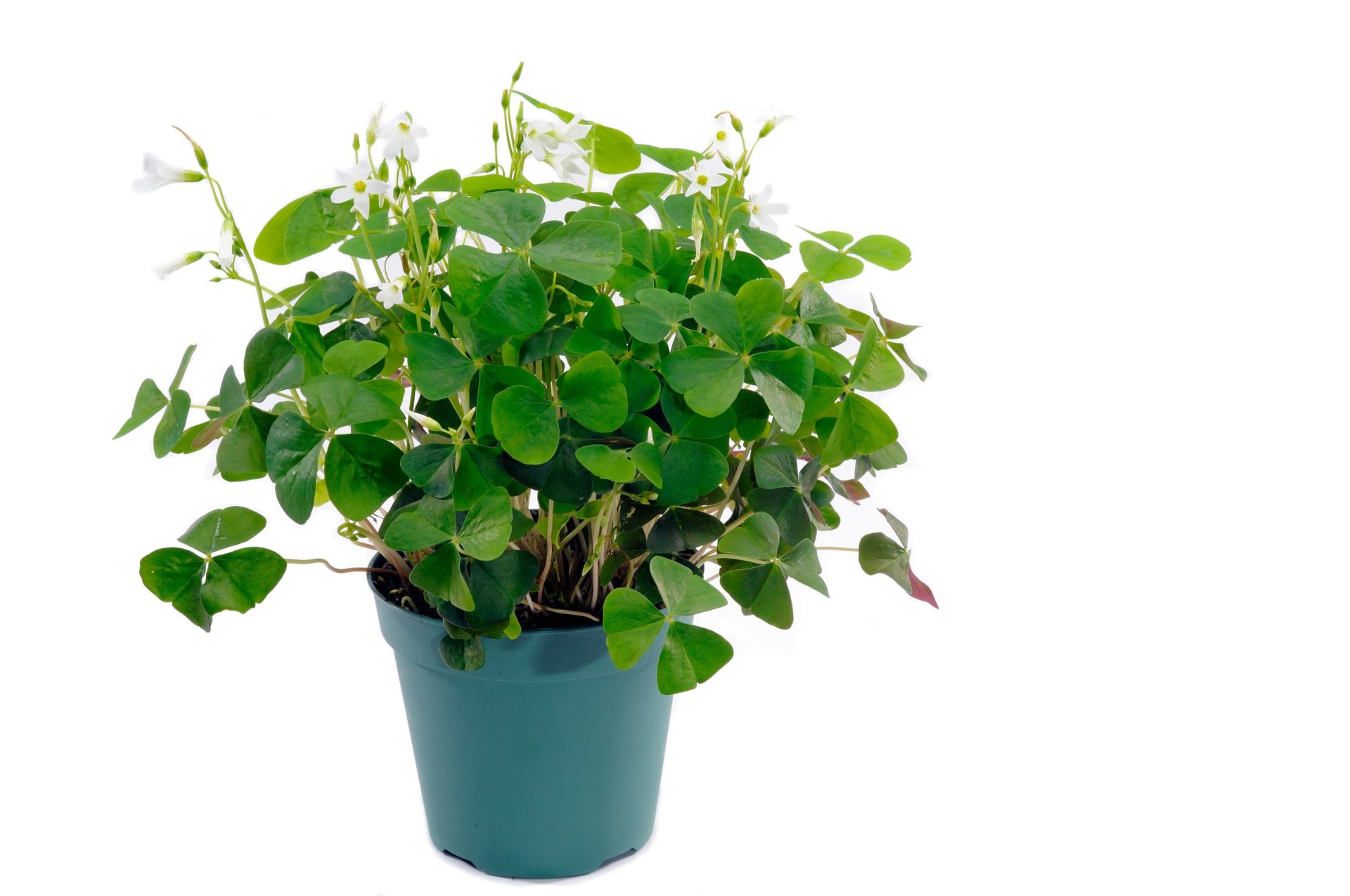
What Does the Shamrock Have To Do With St. Patrick’s Day Find out?
- During the growing cycle, fertilize the plant every 2 to 3 weeks with a basic houseplant fertilizer. Keep the potted soil damp, but well drained.
- The shamrock plant flourishes best in a 70° to 75° daytime environment. Night temperatures should be ten degrees cooler.
- Shamrock plants like light and can be kept near a window in winter, but not during the summer.
- Shamrock plants will go into a dormancy period after about 3 months of blooming. The time of dormancy usually occurs in the summer. During the time of dormancy the plant should not be watered or fertilized. It should be moved to a cool and dark place. A basement or cellar would be the ideal location to store a dormant shamrock.
- Shamrock plants can be divided during the dormant stage and repotted.
- After 2 to 3 months of dormancy, bring the shamrock back out, repot into a larger container, if necessary and begin watering regularly again.
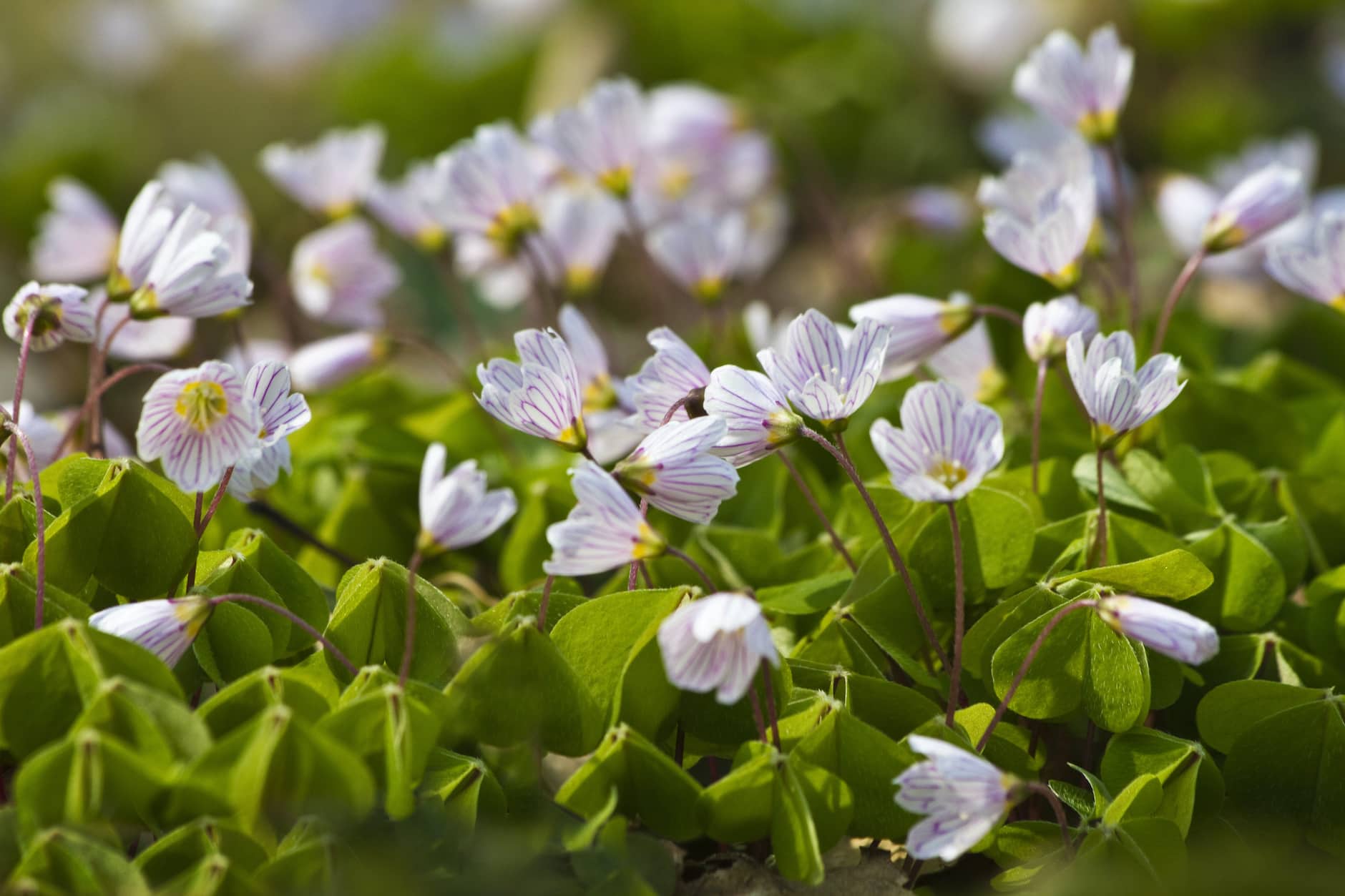
By following these helpful hints for growing shamrocks in a pot, the plant should yield those charming clover leaves and lovely petite blooms for years to come!


Shamrocks FAQ
What is a real shamrock?
Most authoritative sources (including Britannica) name white clover (Trifolium repens) as the true Irish shamrock. It is the same nitrogen-fixing legume that grows in North American lawns. The florist shamrock sold around St. Patrick’s Day is usually Oxalis, a different family with a similar three-leaf appearance.
What is the difference between clover and shamrock?
Shamrock is the symbolic name; clover is the botanical group. True Irish shamrock is one specific clover (Trifolium repens, white clover). Other clovers (red clover, sweet clover) are not called shamrock. Florist ‘shamrock’ is usually Oxalis, not a true clover at all.
Why are shamrocks associated with St. Patrick?
Per Smithsonian Folklife Irish symbols research, the tradition holds that St. Patrick used the three leaves of the shamrock to explain the Christian Trinity (Father, Son, and Holy Spirit as three parts of one whole) to 5th century Irish converts. The plant became symbolic of Ireland and Irish identity by the 17th century.
Can you grow shamrocks indoors?
Yes for Oxalis triangularis (the purple-leaved florist shamrock). Bright indirect light, water when top inch dries, expect a dormancy rest period each year. White clover (true shamrock) generally does better outdoors.
What does a four-leaf shamrock mean?
A four-leaf clover is a genetic rarity (about 1 in 5,000 to 10,000 plants). Folk tradition holds that the four leaves represent faith, hope, love, and luck. Finding one is considered lucky across Irish, Welsh, and North American folk traditions.


Deborah Tukua
Deborah Tukua is a natural living, healthy lifestyle writer and author of 7 non-fiction books, including Pearls of Garden Wisdom: Time-Saving Tips and Techniques from a Country Home, Pearls of Country Wisdom: Hints from a Small Town on Keeping Garden and Home, and Naturally Sweet Blender Treats. Tukua has been a writer for the Farmers' Almanac since 2004.
- Deborah Tukua

- Deborah Tukua
- Deborah Tukua
- Deborah Tukua





My shamrock is huge and falling over no new growth . what shall I do? can I cut if off?
I love my clover plant. Recently I brought it into the house because it was so so hot out doors, even in the shade where it was. So it has been a few days now and it’s leaves are gradually turning yellowish color and it looks like it’s dying, although it has had plenty of moisture. It does still bloom and does not look wilted. Is there anything I can do for it? I hate to lose this plant due to something I should have done. Thanks for any help.