

Top 10 Myths and Superstitions for Friday the 13th (2026 Guide)
Myths and superstitions are all around us! We compiled a list of 10 of our most popular articles on the subject. Some are really "out there!" Take a look.
Quick Reference
- Next Friday the 13th: February 13, 2026, then November 13, 2026 (two per year, the yearly average).
- Fear name: paraskevidekatriaphobia (fear of Friday the 13th); triskaidekaphobia (fear of the number 13).
- Estimated cost to the U.S. economy: the Stress Management Center of Asheville, North Carolina long estimated $800 to $900 million in avoided travel and business every Friday the 13th.
- Odds a month starts on a Sunday and has a Friday the 13th: exactly 1 in 7 (any month starting Sunday will land the 13th on a Friday).
- Most-shared FA superstitions post: “10 Superstitions You Might Still Believe,” followed by our Friday the 13th luck guide.
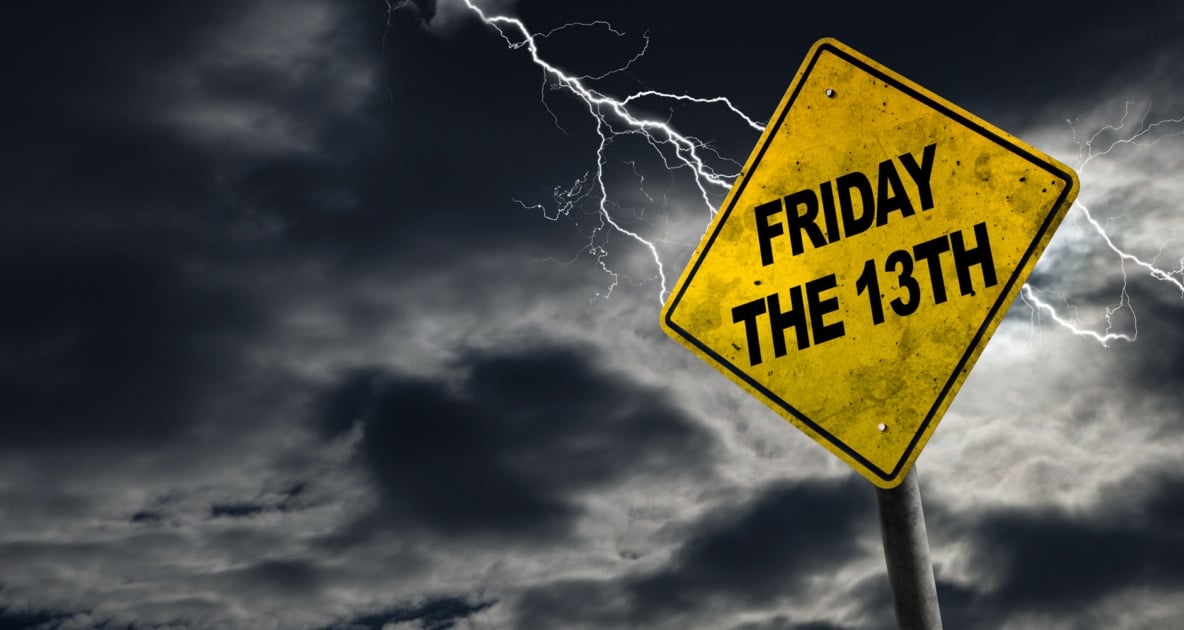
Friday the 13th lands twice in 2026, first on February 13 and again on November 13. Every time it rolls around (there are on average two per year), the staff at the Farmers’ Almanac hears the same questions: why is this day considered unlucky, which myths and superstitions are worth knowing, and does any of it stand up to a second look? This roundup answers all three, with the top 10 pieces our readers share most.
Even folks who say “I’m not superstitious” have been caught picking a four-leaf clover, knocking on wood, or wearing a lucky cap during the World Series. Belief in luck runs deep. A 2019 YouGov poll found that 13 percent of Americans consider Friday the 13th unlucky, and roughly one in ten avoid activities like flying or signing a contract on the date. That is a lot of everyday people quietly holding the line on old folklore.
Why Friday the 13th Got Its Reputation
The unlucky reputation comes from two threads braided together. The number 13 has been treated as awkward for centuries because it sits just past 12, the number our ancestors used to organize the zodiac, the months of the year, the hours of daylight, and the tribes of Israel. Anything one past a tidy count feels out of order. Friday picked up bad press through Christian tradition, since the Crucifixion is remembered on a Friday, and through the arrest of the Knights Templar on Friday, October 13, 1307.
The two ideas were only stitched into the Friday-the-13th superstition we know today in the 1800s. Historian Nathaniel Lachenmeyer, in his book 13: The Story of the World’s Most Popular Superstition, traces the earliest clear mention to 1869. The phobia even earned its own tongue-twister of a name: paraskevidekatriaphobia. Fear of the number 13 alone is called triskaidekaphobia, a term coined in 1911 by American psychiatrist Isador Coriat.

Top 10 Myths and Superstitions Our Readers Share Most
Here are the ten pieces we get asked about again and again. Each one lives on the Farmers’ Almanac site, so tap through for the full origin, the folklore, and the plain-English take on whether there is anything to it.
Top 10 Myths and Superstitions
- 10 Superstitions You Might Still Believe: the everyday classics (broken mirrors, black cats, spilled salt) and where each one really comes from.
- 13 Ways to Improve Your Luck This Friday the 13th: a countdown of traditional luck boosters if the date has you on edge.
- Home Buying Superstitions: the old rules about closing dates, house numbers, and burying a St. Joseph statue.
- Lunar Eclipse Superstitions and Myths From Around the World: what pregnant women, farmers, and sailors were told to do when the moon went dark.
- Solar Eclipse Myths, Folklore, and Superstitions: sky-dragon legends and the beliefs that still shape eclipse viewing rituals today.
- Can Leaves Predict A Storm?: the old rule about leaves turning belly-up, and the honest science behind it.
- Superstitions to Digest: kitchen and table beliefs, from spilled salt to New Year’s black-eyed peas.
- Halloween Superstitions and Symbols: the meaning behind jack-o’-lanterns, black cats, and bobbing for apples.
- New Year’s Folklore and Superstitions: first-footing, lucky foods, and what you should and should not do on January 1.
- Chinese New Year Superstitions and Beliefs: the sweeping, red-envelope, and lion-dance customs and what each one is meant to invite.
Myths and Superstitions Around the World
Friday the 13th is only unlucky in some places. In much of Latin America, Greece, and Spain, the unlucky day is Tuesday the 13th (martes 13). In Italy, Friday the 17th carries the dread, because the Roman numeral XVII rearranges to VIXI, “I have lived,” which read as past tense on a tombstone. Here is a snapshot of what to watch (and what to skip) in a handful of traditions.
What the Data Says About Friday the 13th
Belief is one thing; measurement is another. A widely cited 1993 study in the British Medical Journal titled “Is Friday the 13th bad for your health?” compared hospital admissions from traffic accidents on Friday the 6th versus Friday the 13th in one region of England, and found a small uptick on the 13th. The authors were careful to note the sample was tiny and the effect could be down to driver anxiety rather than any real jinx. Larger studies since, including a 2008 Dutch insurance review, have found the opposite: slightly fewer accidents and fires on Friday the 13th, likely because more people stay home.
The dollar figure most people quote (roughly $800 to $900 million in lost business every Friday the 13th) comes from Donald Dossey of the Stress Management Center in Asheville, North Carolina, who spent decades studying phobias. His estimate is old, but it captures the real point: whether or not the day is unlucky, enough people act as if it is that they change their plans. And any calendar month starting on a Sunday will land the 13th on a Friday, which is why some years give us three (2015 and 2026 give us two, 2015 had three).
For a peer-reviewed look at the psychology behind lucky charms and rituals, see the 2010 Psychological Science study by Damisch, Stoberock, and Mussweiler, which found that activating a lucky charm improved participants’ actual performance on skill tasks. Belief, it turns out, can nudge behaviour.
How to Read Friday the 13th Like an Almanac Editor
You do not have to believe a myth for it to be worth knowing. Every generation carries small rituals forward, and the good ones (touching wood, throwing spilled salt over the left shoulder, wishing on a first star) cost nothing and give a moment of pause on a busy day. Here is how we suggest holding it: take the folklore seriously as a piece of cultural memory, take the science seriously when there is any, and let the two live side by side.
- Mark the dates. February 13 and November 13, 2026. Note them in your planner, the same way you would a full moon or a first frost.
- Pick your rituals. Knock on wood, carry a lucky penny, wear the cap. Small, cheap, and part of the family archive.
- Check the calendar. Our Best Days guidance covers weddings, moving, haircuts, and dozens more. Traditional dates are a useful second opinion.
- Respect the honest skeptic. If the day worries you, do not fly, do not sign, do not marry. Give yourself a quiet Friday and try again on Saturday.

Friday the 13th and Superstition FAQ
How many Friday the 13ths are there in 2026?
Two. Friday, February 13, 2026, and Friday, November 13, 2026. On average, a year has between one and three, and every year has at least one.
What is the fear of Friday the 13th called?
Paraskevidekatriaphobia. It combines the Greek words for Friday (Paraskevi) and thirteen (dekatria) with phobia. The narrower fear of the number 13 alone is triskaidekaphobia, a term coined in 1911 by American psychiatrist Isador Coriat.
Are Friday the 13th myths and superstitions the same everywhere?
No. In Spanish-speaking countries and Greece, Tuesday the 13th carries the bad luck. In Italy it is Friday the 17th. In China and Japan the number 4 is the one people avoid because it sounds like the word for death.
Is there any real evidence Friday the 13th is unlucky?
Not really. A small 1993 British Medical Journal paper found a slight uptick in traffic accidents on Friday the 13th, but larger studies since (including a 2008 Dutch insurance review) found the opposite, with fewer accidents on the day, likely because more people stay home.
Why do buildings skip the 13th floor?
Because enough tenants and guests preferred not to live or stay on it. A 2007 Otis Elevator survey estimated that around 85 percent of buildings with elevators skip a 13th floor label. The floor is still there, it just gets called 14.
Are lucky charms actually useful?
Belief in a lucky charm can nudge behaviour. A 2010 Psychological Science study by Damisch and colleagues found that activating a lucky charm improved participants’ performance on skill tasks like putting and memory. The charm did not change the world; it changed the person holding it.
Which myths and superstitions do most Americans still believe?
Knocking on wood, avoiding walking under a ladder, picking up a heads-up penny for luck, saying “bless you” after a sneeze, and not opening an umbrella indoors are the ones our reader mail turns up most. A 2019 YouGov poll found 13 percent of Americans still consider Friday the 13th itself unlucky.
What should I do on Friday the 13th if I am worried?
Keep the day simple. Move big decisions (contracts, travel, weddings) a day either way, carry a small charm if it settles you, and check our Best Days calendar for a traditional read on the date. And treat yourself to something small; the folklore says a little joy on the day breaks the jinx.
Plan around the dates. Keep the small rituals. And if you are curious about the origin of a belief we did not cover here, write in. Half of the folklore we know at the Farmers’ Almanac came in on a reader’s postcard.


This article was published by the Staff at FarmersAlmanac.com. Any questions? Contact us at [email protected].
- Farmers' Almanac Staff

- Farmers' Almanac Staff

- Farmers' Almanac Staff

- Farmers' Almanac Staff




King Friday, the puppet on Mr. Rogers, celebrated his birthday every Friday, the 13th!