

When Will the Fireflies Light Up Your Backyard? Weather Tells You
Wondering when you'll see fireflies (or "lightning bugs") glow on these warm summer nights? Watch for this backyard clue!
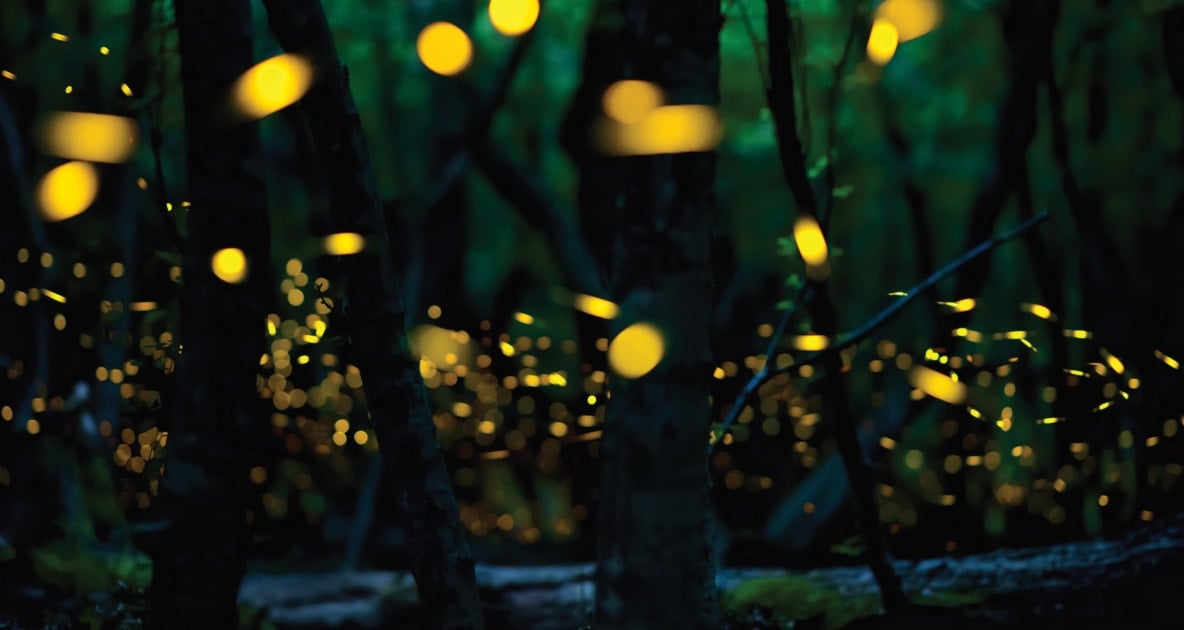
Quick Reference
- Typical emergence window: Third week of May through the third week of June across most of the eastern United States.
- What advances the flashes: A mild winter, a warm wet spring, and damp leaf litter that feeds the larvae.
- What delays them: Drought, heatwaves, late hard freezes, and tidy yards with no leaf litter.
- Best viewing nights: Warm humid evenings with air temperatures in the upper 70s to 80s and little wind.
- Famous event: Synchronous fireflies (Photinus carolinus) in Great Smoky Mountains National Park, late May into the first week of June.
- Folk read: Lots of fireflies in June often points to a wet summer ahead, since the same damp soil that grows their prey grows everything else.
The folk read is simple: a warm wet spring brings a big firefly summer, and a dry spring delays the show. Almanac readers have used the first June flashes as a weather sign for generations, and the science behind it matches the folklore almost line for line. This guide walks through when fireflies (also called lightning bugs) emerge across the United States, how the weather decides the timing and brightness, what the folk forecasters watched for, and how to read your own yard for the season ahead.
Watching fireflies is a backyard summer rite. When the first flashes show up depends almost entirely on the weather. Their summer solstice timing is real, but it shifts year to year with rainfall, soil moisture, winter mildness, and June temperatures. Here is what to watch for, and the dates the Almanac has tracked since 1818 for the start of the firefly season.
Fireflies are not flies. They are beetles in the family Lampyridae. Their larvae live underground through winter, mature in spring, and emerge anywhere from the third week of May to the third week of June. The exact day in your backyard shifts with the weather, but air temperature and rainfall do most of the work. The Xerces Society for Invertebrate Conservation tracks more than 170 firefly species across North America, and notes that local emergence dates can swing two to three weeks year to year depending on spring conditions.
Muggy Bugs: Why Weather Matters
Fireflies love warm humid weather. It helps them survive and reproduce. When summery weather arrives before June does, fireflies appear earlier than usual, sometimes in late spring. Warm early seasons and mild winters fool the lightning bugs into thinking the season is further along than it is. Mild winters also mean a bigger firefly population in your yard, since more larvae survive the cold underground.
Wet springs also push emergence earlier. Firefly larvae feed on snails, slugs, and pill bugs, all of which boom after rain. Damp soil grows more of those prey, more food sustains more larvae to adulthood, and more adults means more flicker in your yard. It is the adult fireflies that flash, mostly to attract mates.
Damp weather creates a wonderland for fireflies. Dry weather is hard on them. During droughts and heatwaves, firefly eggs and larvae get stressed and often die before they emerge. After a dry spring, the magic of summer evenings is delayed, sometimes by weeks. Researchers at the Smithsonian and partner institutions have documented those drought-driven declines in long-term monitoring sites, and the pattern is consistent: dry years produce thinner displays the same summer and a smaller breeding pool the next.
Expect the Brightest Fireflies on the Warmest Nights
Weather not only decides when fireflies appear, but also how much they flash on any given night. On warm and humid evenings, a field can light up like a Christmas tree. On cooler nights when temperatures dip into the 50s, you may wait a full minute or more for a single flash. The reason is biology. Fireflies are cold-blooded. Their metabolism, including the light-producing reactions, depends on the heat in the air around them. The warmer the night, the brighter and more frequent the display.
For the best backyard show, watch for evenings that stay above 70 degrees Fahrenheit an hour after sunset, with high humidity and very little wind. Calm air keeps the chemical signal close, so females in the grass can answer the males overhead. A breezy night scatters the conversation, and the flashes thin out. Almanac readers who pay attention to dew on the porch rail can usually predict the show by 9 p.m.

Firefly Emergence by U.S. Region
Firefly emergence runs on a south-to-north clock, the same pattern almanac readers know from planting zones and migration windows. The Gulf Coast lights up first, the New England woods light up last, and the Pacific Coast mostly skips the show because most western species do not flash visibly. Use the breakdown below to plan a porch night, a stargazing trip, or a Smokies lottery entry.
Synchronous Fireflies of the Great Smoky Mountains
One of the most extraordinary firefly events in the Western Hemisphere happens each spring in Great Smoky Mountains National Park, on the Tennessee and North Carolina border. There, a population of Photinus carolinus fireflies flash in unison, producing waves of light across the forest. The synchronous display typically runs from late May into the first week of June, with peak viewing usually around the new moon. The Park Service runs a lottery for parking permits each spring because the event draws thousands. See the National Park Service page for current dates and the permit lottery.
Researchers at the University of Tennessee and partner institutions have studied the Smokies population for more than 25 years, and the timing has shifted earlier by roughly five to seven days since the early 1990s, tracking with regional spring warming. The peak still falls in a tight two-week window, which is why the Park Service uses a lottery rather than a fixed date.
Fireflies as a Weather Sign: Folklore and What It Gets Right
Almanac readers, farmers, and country children have read fireflies as a weather sign for generations. Three folk rules show up again and again in the records:
- “A heavy firefly June means a wet summer.” The damp soil that grows the slugs and snails that feed firefly larvae also grows the corn and the hay, so a big firefly year and a good growing year often line up.
- “Lightning bugs low in the grass mean rain by morning.” Fireflies flash lower when the air pressure drops and the humidity climbs, both signs of an approaching front. The observation is folk; the mechanism is real atmospheric chemistry.
- “No flashes by Father’s Day, late corn this year.” A delayed firefly emergence almost always tracks with a cold dry spring, which in turn delays planting and slows early-summer crops. Almanac readers in the Midwest still use this one.
None of these rules carry the kind of certainty a barometer reading does. They are observational shortcuts built on long memory in a fixed place. Used alongside the Almanac long-range forecast and your own rainfall log, the firefly clock is a useful third opinion, and a more pleasant one to gather than most weather data.
How to Encourage Fireflies in Your Yard
- Leave grass tall in one corner. Larvae need leaf litter and tall stems for cover.
- Skip the broad-spectrum pesticides. They kill the larvae and their prey alike.
- Reduce outdoor lighting. Porch lights and streetlamps wash out firefly signals so they cannot find mates.
- Water moderately. Damp soil hosts slugs and snails, the larvae’s main food.
- Leave fallen logs and brush piles. Larvae overwinter in this kind of habitat.
- Plant native ground cover. A patch of native plants near a damp edge feeds prey species year round.
Results show up the following summer, not the same week you mow less. Larvae spend one to two years underground before they emerge as flashing adults. Patience is part of the deal, and so is the reader’s own judgment about how wild a corner of the yard can stay before the neighbors notice.

Frequently Asked Questions
When will fireflies appear in my backyard?
Most U.S. backyards see the first flashes between the third week of May and the third week of June. The exact date depends on how warm and wet the spring has been. Mild winter plus warm wet spring equals early emergence, sometimes two weeks ahead of the average.
Why are fireflies brighter on some nights than others?
Fireflies are cold-blooded. Their light-producing chemistry runs faster when the air is warm and humid. Hot muggy evenings produce the brightest, most frequent flashes. Cool nights below 60 degrees Fahrenheit slow them way down, and breezy nights scatter the signal between males and females.
Where are the synchronous fireflies?
Great Smoky Mountains National Park, on the Tennessee and North Carolina border, hosts the largest synchronous firefly population in the Western Hemisphere. The display runs from late May into the first week of June. The Park Service holds a parking-permit lottery each spring because the event draws thousands.
Are fireflies in decline?
Yes, in many regions. The drivers are habitat loss, pesticide use, light pollution, and drought stress on larvae. The Xerces Society lists several North American firefly species as threatened. Leaving part of a yard untreated, untrimmed, and dark each summer is the single best thing a homeowner can do.
What is the difference between a firefly and a lightning bug?
None. They are the same beetle, family Lampyridae. ‘Lightning bug’ is more common in the Midwest and South. ‘Firefly’ is more common in the Northeast and West. See the regional naming map for the country-by-country split.
How can I attract more fireflies to my yard?
Leave one corner of the yard untrimmed and unsprayed. Turn off outdoor lights at dusk. Keep a damp area for slugs and snails (the larvae’s food). Leave fallen logs and leaf litter where larvae can overwinter. Results show up the following summer, not the same week.
Can you predict the weather by watching fireflies?
In rough terms, yes. A heavy June firefly year often signals a wet summer ahead because both depend on the same damp soil. Lightning bugs flashing low in the grass often precede rain within a day because they respond to falling air pressure. The folklore is observational, not a substitute for a forecast, but it lines up with the science more often than not.
What is the best time of night to see fireflies?
About 30 to 60 minutes after sunset, on warm humid evenings with little wind. The display usually peaks for about an hour, then thins out before midnight. Standing still and letting your eyes adjust to the dark for five minutes is more useful than carrying a flashlight.
Have you seen fireflies yet in your backyard? Leave a comment and enlighten us. More fascinating facts about fireflies.


Tiffany Means
Tiffany Means is a freelance writer and a degreed meteorologist. She specializes in weather forecasting and enjoys making the subject of weather (and the science behind it) more relatable. She currently resides in the Blue Ridge Mountains of North Carolina.
- Tiffany Means

- Tiffany Means
- Tiffany Means
- Tiffany Means


In the Eagan evening of July 3rd, we had fireflies in our backyard.
What a treat to have a spectacular light show without fire crackers.
Karen, that is one of the best kinds of Fourth of July light shows. Eagan sits right in the sweet spot for peak firefly activity in early July, and warm, humid evenings after a wet spring usually mean a bumper year for them. Hope the show kept going all week.
So many fireflies tonight in Minneapolis! Incredibly special. We’ve never seen them this early!
Tonight! First in NORTHERN NH
I saw several on my window this afternoon and am waiting for the sun to set too see the first flash 📸📸📸!!!
We just saw fireflies for the first time this year last night in Wichita, Kansas.
Fireflies are lighting up the treetops right now here in Clinton Tennessee.
It’s mid March in middle Georgia and I just witnessed the woods behind my house engulfed in fireflies. A storm is about to come through and it’s unseasonably warm, but it’s way too early to see them! We are going to dip below freezing this week and I hope that doesn’t hurt the population 😥
Two nights in a row
Muggy night
Simcoe ON
My husband and I are fishing off our dock and we just saw a SINGLE firefly.
SO very sad knowing our grandchildren may never see them.
It’s June 21, we’re in CT.
I almost feel responsible for their decline. As kids we used to catch them and squish them when they lit up 😞 We’d put the guts on our fingers like diamonds.
Having a June birthday I have many memories of going lay in the grass and watch them light up my nights. When I was stood up on my 30th birthday I sat outside and just cried and cried. Then the fireflies appeared and INSTANTLY put a smile on my face
I thank God for the amazing gifts many people never experience, or take for granted.
Could you maybe purchase them online like you can honeybees and earthworms.
over the years we have seen the fireflies, then not so many, the last 6 years we have left a lot of our land go back to the wild. The fireflies are back, so many of them, it is wonderful to see, we have bobcats, deer’s and so much more coming to drink from our pond and walk through and eat the apples or grass, more coming than ever. We watch the fireflies and the wildlife from our deck by the pond.