

The Persimmon Forecast: How to Read Winter From a Seed
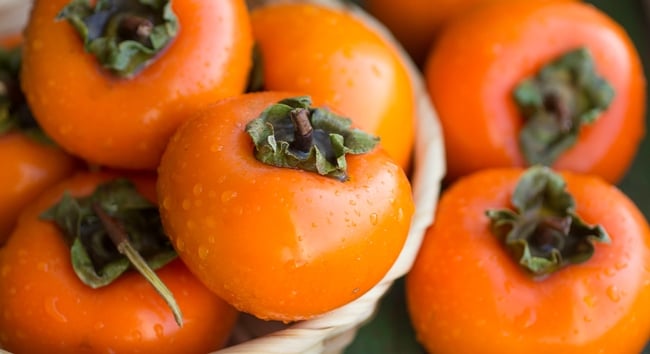
Quick Reference
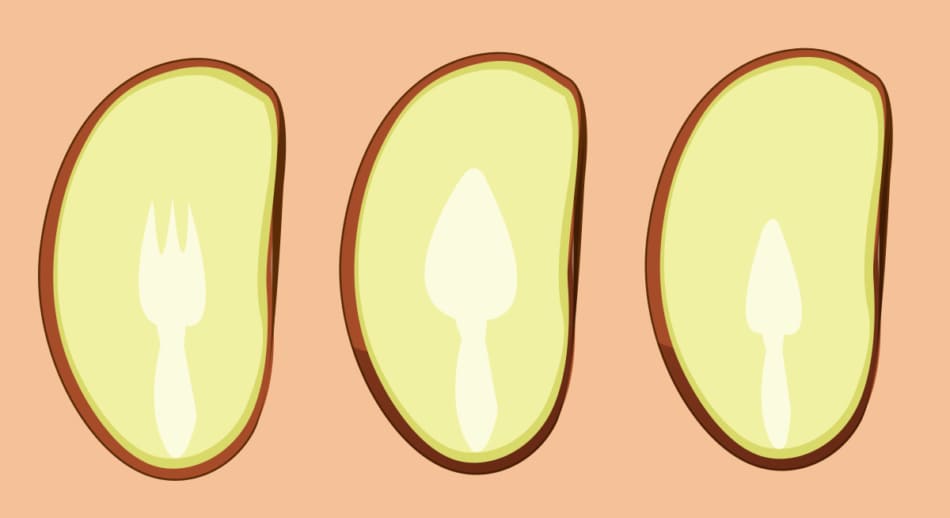
- The rule: Split a locally grown persimmon seed and read the white pattern inside.
- Fork: Mild winter ahead.
- Spoon (shovel): Snowy winter, enough to need a shovel.
- Knife: Harsh, biting cold that “cuts like one.”
- Named expert: Melissa Bunker, “The Persimmon Lady,” reads persimmons for the Farmers’ Almanac from North Carolina.
The persimmon forecast is one of the oldest weather-prediction methods in American folklore. According to Appalachian and Ozark tradition, you can read the coming winter inside the seed of a locally grown persimmon. Split the seed lengthwise and look at the pale shape inside. A fork means a mild winter. A spoon (sometimes called a shovel) means heavy snow. A knife means a winter so cold it cuts. The method has been published in the Farmers’ Almanac for over a century, and the Almanac’s Persimmon Lady, Melissa Bunker, has been reading seeds for our readers since 2018.
How to Make a Persimmon Forecast, Step by Step
- Find locally grown ripe persimmons. The fruit must be from your region. A seed from California cannot forecast a Pennsylvania winter. Diospyros virginiana (the American persimmon) is the species used, common from southern New England south to Florida and west to Texas.
- Wait for soft ripeness. A persimmon that is still hard is astringent and the seed will not split cleanly. Soft, almost jelly-like fruit is what you want, usually after the first frost.
- Pull out the seed. Each persimmon usually holds one to six flat brown seeds. You only need a few from different fruits to read a forecast.
- Slice the seed lengthwise. Use a sharp paring knife. Hold the seed flat on a cutting board and split it along the widest edge.
- Read the shape inside. The white pattern at the center of the seed forms one of three shapes:
- Fork: A mild winter. The fork’s tines fan apart, like an easy season.
- Spoon (or shovel): A snowy winter. You will be shoveling.
- Knife: A harsh winter with biting cold. The pattern is straight and sharp.
- Read several seeds. One seed is a guess. Ten or twelve gives you a useful pattern. If most show spoons, expect snow.
Where the Persimmon Tradition Comes From
The method is rooted in Appalachian, Ozark, and Cherokee tradition. American persimmon trees grow wild across the eastern half of the country and were a winter staple for indigenous communities and early settlers. Reading the seed before winter set in was a way to anticipate firewood needs, livestock feed reserves, and travel risk. The Farmers’ Almanac has been carrying the forecast since the early 1900s, treating it the same way we treat any old farm sign: respect the tradition, name the method, let the reader decide.

The Persimmon Lady and Her Track Record
Melissa Bunker, known to readers as “The Persimmon Lady,” has been reading persimmons for the Farmers’ Almanac since 2018. Her readings are local to North Carolina, where she grows and harvests her fruit. Over recent years, her seed readings have lined up surprisingly well with regional outcomes:
- 2022-2023: Spoon. The Southeast saw notable snow and ice events.
- 2023-2024: Mostly forks. Mild winter across the region, as called.
- 2024-2025: Spoon, with one large-shovel reading. Heavy snow returned to parts of the Carolinas.
Watch our annual persimmon-forecast video for the latest reading. Bunker’s results are released each fall ahead of the Almanac’s Extended Winter Forecast so readers can compare the two side by side.
What Is Inside the Seed
The white shape inside the seed is part of the embryo’s cotyledons, the first leaves the seedling will unfold in spring. Persimmon trees respond to the same long-range climatic signals that shape a hard winter, and a dry, cold summer can change how the seed develops. The method has been carried for 200 years and more across the Ozarks and the Appalachians. Try it yourself with a dozen local seeds. Make a note in your calendar and check back in March.
Frequently Asked Questions
What does each persimmon seed shape mean?
Fork means a mild winter. Spoon (sometimes called a shovel) means a snowy winter, enough to require shoveling. Knife means a harsh, bitter winter that “cuts like one.” Read several seeds and follow the dominant shape.
Does the persimmon have to be locally grown?
Yes. The whole point is to read the local climate signal. A persimmon grown in California cannot forecast a Pennsylvania winter. Use fruit from a tree within your home region.
Who is the Persimmon Lady?
Melissa Bunker, a North Carolina based persimmon reader who has provided the Farmers’ Almanac with annual seed-shape forecasts since 2018. Her readings are regional to the Carolinas, but the method works anywhere persimmon trees grow.
When should I open a persimmon seed?
After the first frost, when the fruit is soft and ripe. Hard persimmons are astringent and the seeds will not split cleanly. Late October through November is the common window.
Is there any science behind the persimmon forecast?
The seed pattern is part of the plant’s embryo, shaped by genetics and the growing season. Botanists are skeptical that it forecasts next winter directly. The method has persisted because persimmon trees do respond to long-range climate signals, and because the readings have lined up often enough across generations to be passed down. Try it yourself and make a note.
What if I cannot find persimmons where I live?
American persimmons grow across the eastern half of the U.S. If they do not grow naturally in your area, the method will not give a local signal. Try other regional folklore signs: wasp nest height, woolly bear caterpillar banding, acorn yield.

This article was published by the Staff at FarmersAlmanac.com. Any questions? Contact us at [email protected].
- Farmers' Almanac Staff

- Farmers' Almanac Staff

- Farmers' Almanac Staff

- Farmers' Almanac Staff


Harvested my first ripe persimmon and cut one of the three seeds open. It showed a spoon and we live in North Central Arkansas
Did this for the first time in the fall, saw a lot of knives! And we certainly have had a cold, windy winter. Just outside Atlanta.
It can be amazing how accurate these methods of forecasting can be!
Will Westfield nc see any snow or any winter weather
Found a wild persimmon tree in the neighborhood and after opening ten are more seeds everyone of them had a spoon!
I believe it is pretty accurate from the folks I have seen do them in their areas. They usually show you the results as winter moves through and let you know if it is correct or was it off. But most people I have seen swear by it and agree it is correct.
The entire persimmon tree AND its fruit open or unopened……. tells the weather. So do all my other trees, lol…….. This year all our trees had hardly any fruit on them at all. The fruit that was on the tree, were small and un-ripe. The blossoms came late as the early blossoms died and this is the cause of the limited fruit. I have some fruit that are still not ready and it is the second week of october! Tomatoes are just now ripening on the porch. Being porch plants we have saved some of our food from the weather (heat, rain, wind etc). I do expect the tomatoes to not freeze as i expect a LATE winter arrival but when it does hit, it will hit with a vengeance. It will also last longer, then all of a sudden, summer will be here. Spring is getting shorter and shorter as is fall. but summer and winter fill in the gaps. We will be having 2 crops a year and planning is already in process on my farm.
Here in the deep south foothills of the Appalachian area we see a Fork in the persimmon seeds.
Oct. 6, 2022. From what I understand about winter 2022-23 it is (in our part of the nation; which is Southeastern IL) for unbelievably cold weather with a lot of snow. Naturally, we are hoping this isn’t true, but the persimmon seeds (knives and spoons) and the black willy worms state otherwise.
Hi,
Winter is always an interesting season – did you see our forecast? In your area we are calling for some very cold days… will be interesting to see if the seeds, worm, or our forecasts prove to be more accurate than the other. Stay warm and thanks for reading our article here.
where can I find that heater you once had on a email
Hi Doris,
Not really sure which heater you are referring to. If you could find the newsletter and screenshot and then send to [email protected] we might be able to help you.