

10 Easiest Fruits, Vegetables, and Herbs to Grow in Pots (With Pot Size and Yield)
Container gardening makes weeding, watering, and harvesting easy. These picks are the easiest to grow if you're limited on space.
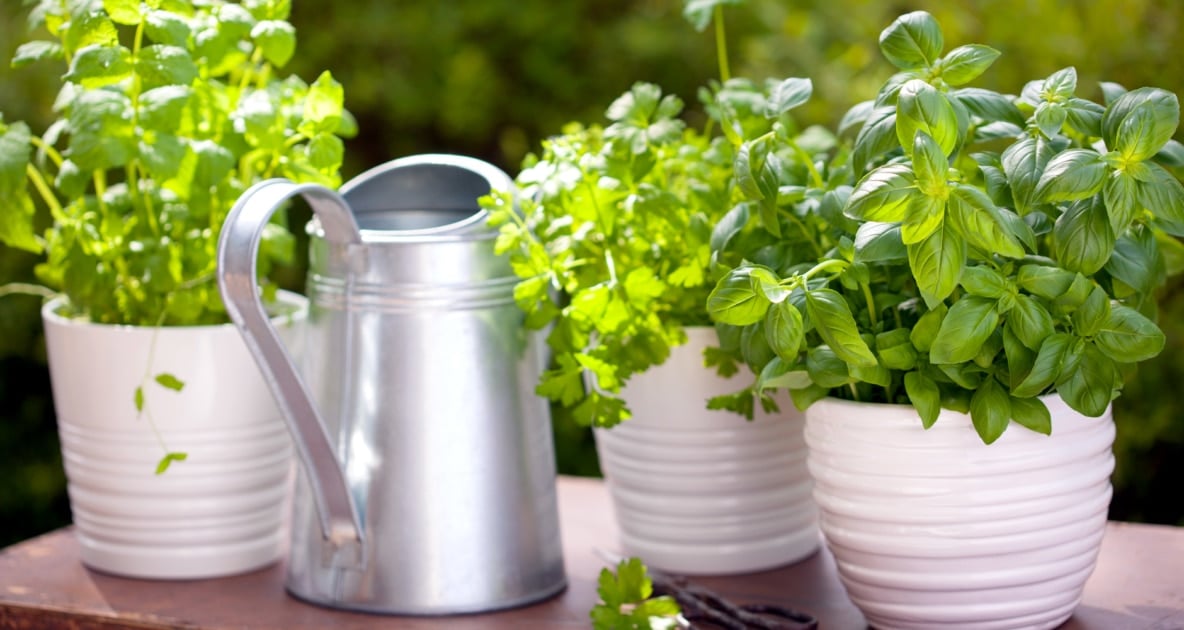
Quick Reference: Easiest Container Plants
- Easiest 3: lettuce (4 to 6 weeks to harvest), basil (continuous), microgreens (10 to 14 days).
- Highest-yield per pot: tomatoes (cherry, 100+ fruits), peppers (40+ fruits), zucchini (20+ fruits).
- Minimum pot size: microgreens 4 in deep; lettuce/herbs 6 in deep; root crops + tomatoes 12+ in deep.
- Universal soil mix: 60% coir + 30% compost + 10% perlite.
- Tool: the Almanac’s Best Days planting calendar.
On this page
Related Almanac guides
Container gardening removes the biggest barrier to growing your own food: you do not need a yard. A balcony, a fire escape, a sunny windowsill, even a parking strip works for the 10 easiest edible plants. This guide is what each one needs (pot size, soil mix, sun, water), the realistic yield to expect, and the most common failure modes per UMN and Penn State extension research.
The 4 Universal Container-Garden Rules
Per UMN Extension’s container vegetable gardening research, four rules apply to every plant on this list.
- Bigger pots are easier. Larger soil volume holds more water and nutrients, masking your watering mistakes.
- Drainage is non-negotiable. Every container needs holes. Stand pots on saucers or trays.
- Container soil dries out fast. Plan to water every 1 to 2 days in summer; daily for clay or terracotta pots.
- Liquid feed every 2 weeks. Container plants exhaust soil nutrients faster than ground-grown plants. Compost tea or dilute fish emulsion works.
Pot Size by Plant (the Minimum That Works)
Per Penn State Extension’s container guidance.
- Microgreens: 4 in deep tray.
- Lettuce, chives, basil, parsley: 6 in deep, 8 in wide.
- Radish, scallion, baby kale: 8 in deep, 8 in wide.
- Pepper (small), strawberry, snow pea: 10 in deep, 10 in wide.
- Tomato (determinate), pepper (large), zucchini (compact varieties): 12+ in deep, 14+ in wide.
- Tomato (indeterminate): 18+ in deep, 18+ in wide.
10 Easiest Container Plants (Full Profiles)
Below are the original profiles of all 10 container-friendly plants with planting and care notes.
1. Lettuce
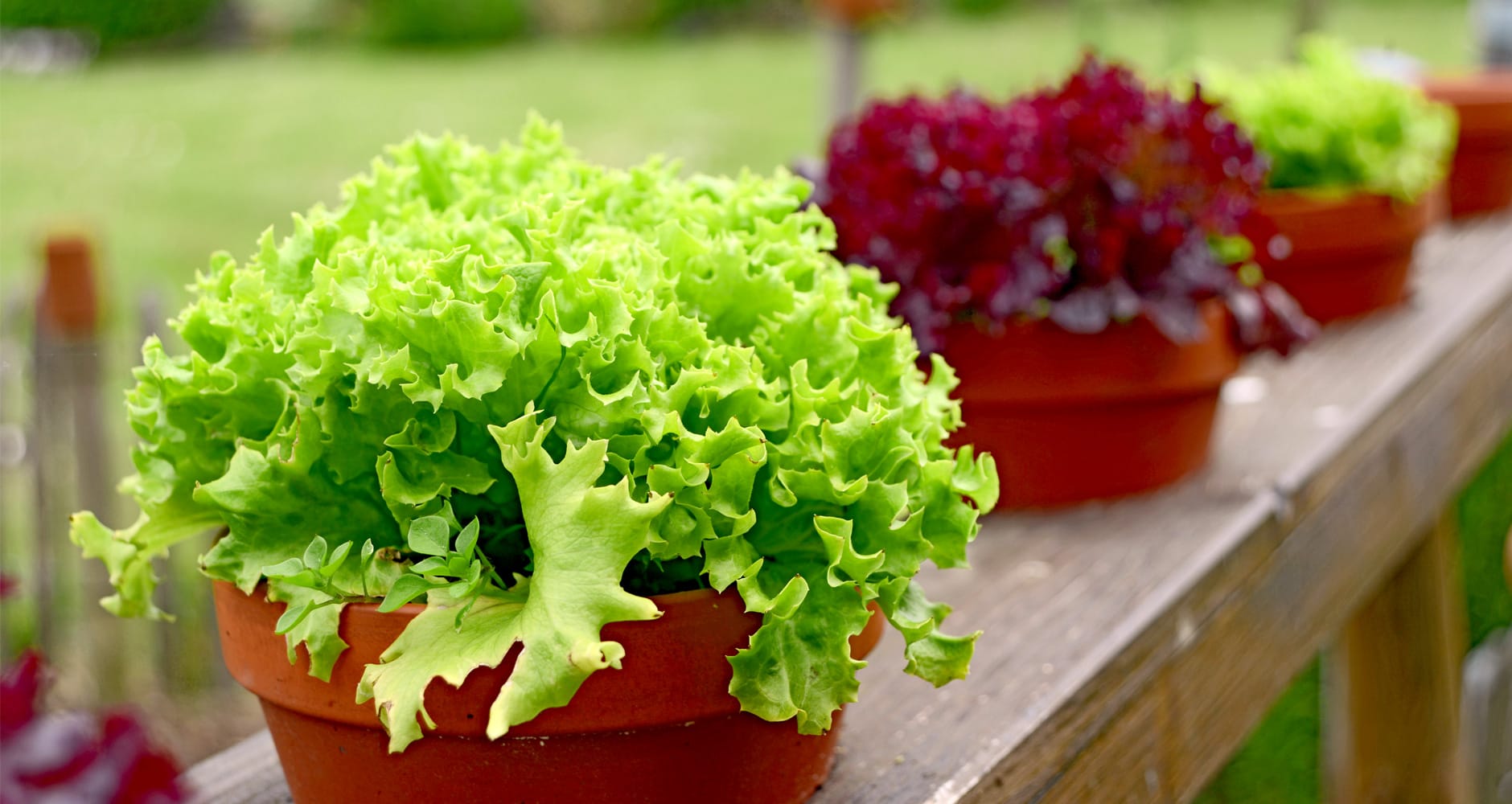
Looseleaf and romaine are the best lettuce varieties to plant in containers since they need less growing space than head or stalk lettuces. The ideal soil mix to use when growing lettuce in pots contains peat or compost, soil, and perlite to keep it from drying out. Sow seeds shallow, no more than one-half inch deep. Keep the soil moist, but not wet.
2. Basil
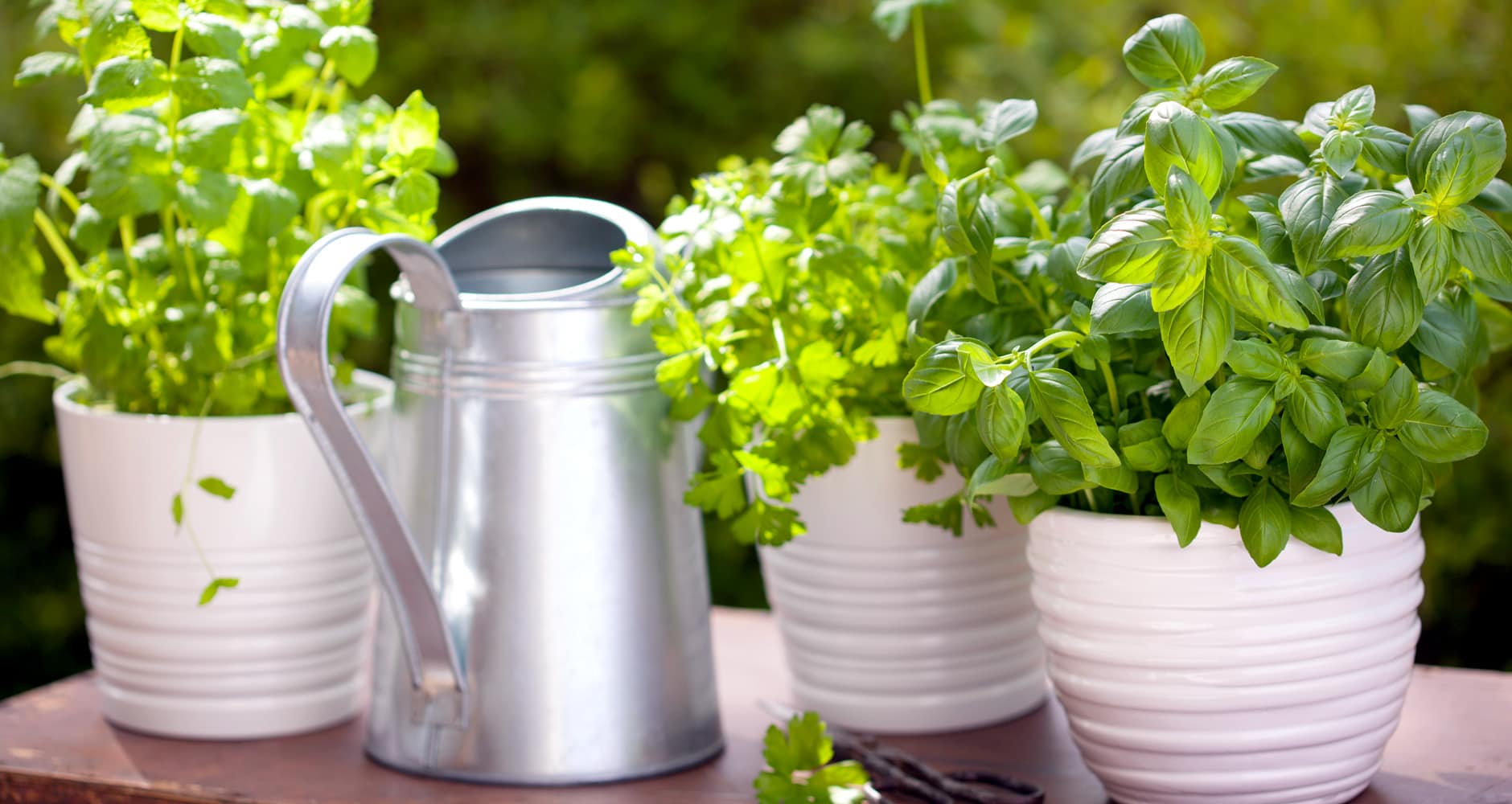
Good news pesto lovers! This culinary herb is easy to grow in a pot. Basil can be grown from seed or young seedlings outdoors once all chance of frost has passed. Add extra compost to your pot, as basil thrives in rich organic matter. Place your potted basil plant in full sun and water weekly in dry weather. Pinch off the blooms or tips of each stem before it flowers, to extend the length of harvest.
3. Chives
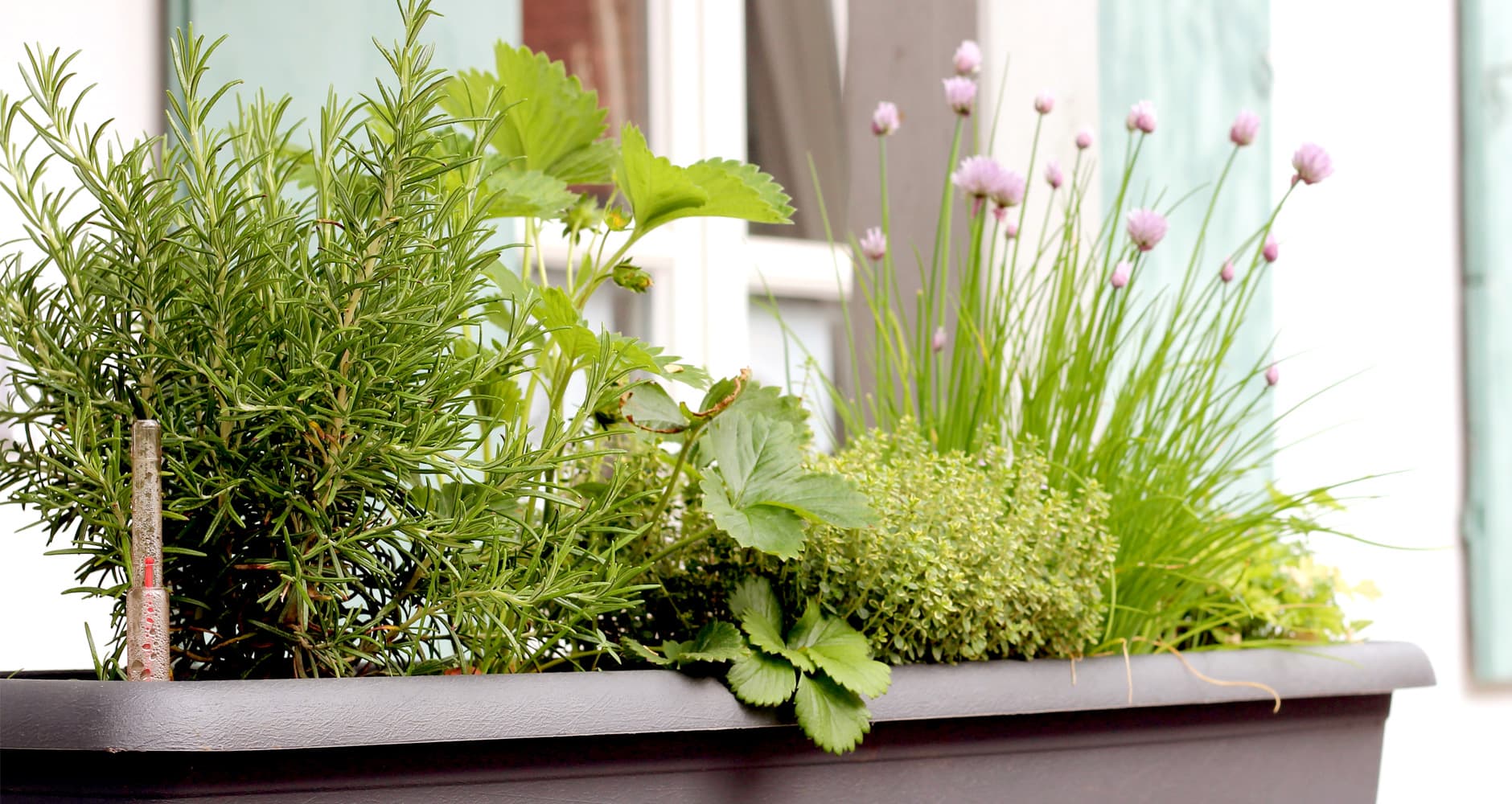
This mini onion-flavored plant is ideal to start by seed in a pot. Chive seeds should be planted at a depth of ¼ inch. Space the seeds 4 to 5 inches apart. The seeds will take about 10 to 15 days to germinate. Chives can grow 10 to 12 inches long if not clipped. When fresh chives are needed, using kitchen scissors, snip an inch or two from the tips. During winter or any time there is a chance of frost, bring the pot indoors. Chives grow nicely inside on a sunny windowsill.
4. Tomatoes
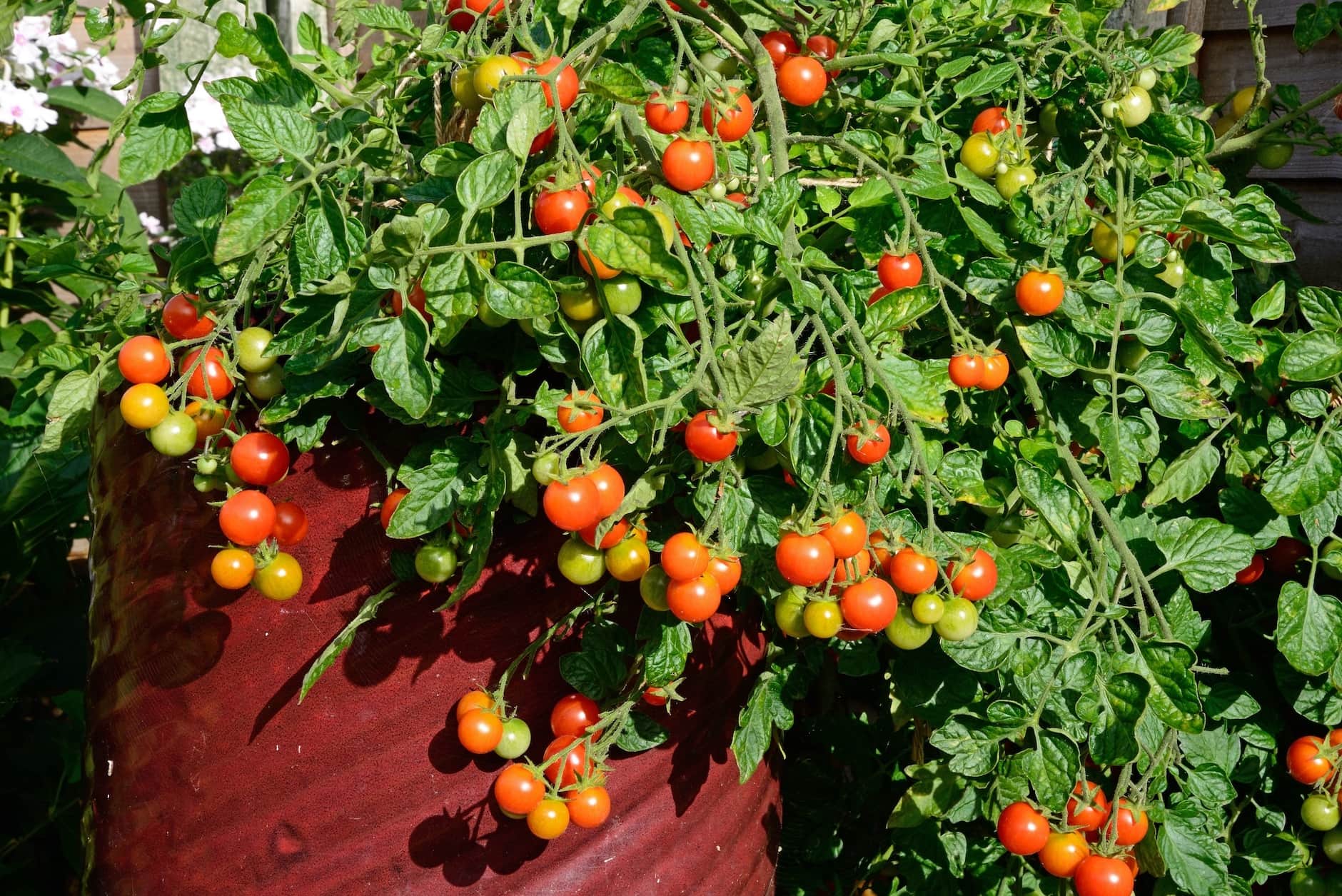
Whether you’re planting seeds or young seedlings, tomatoes can be grown in pots outdoors once nighttime temperatures reach the mid 50s. Cherry and grape tomatoes and smaller varieties, like patio hybrid, Small fry, and Tiny Tim are well suited for container growing. One small variety plant can be grown in a 5-gallon container. When growing larger tomato varieties be sure to use either stakes or tomato cages. Plant full-size varieties in a 25-gallon container such as a half-barrel. Add fertilizer to the soil when planting and water the plant right away. Afterward, only water the plants that show wilt. Tomatoes love the heat. After planting in a large half-barrel container, mulch after four to six weeks. Delayed mulching gives the soil time to warm up. See the different tomato varieties you can grow!
5. Snow Peas/Sugar Snap Peas
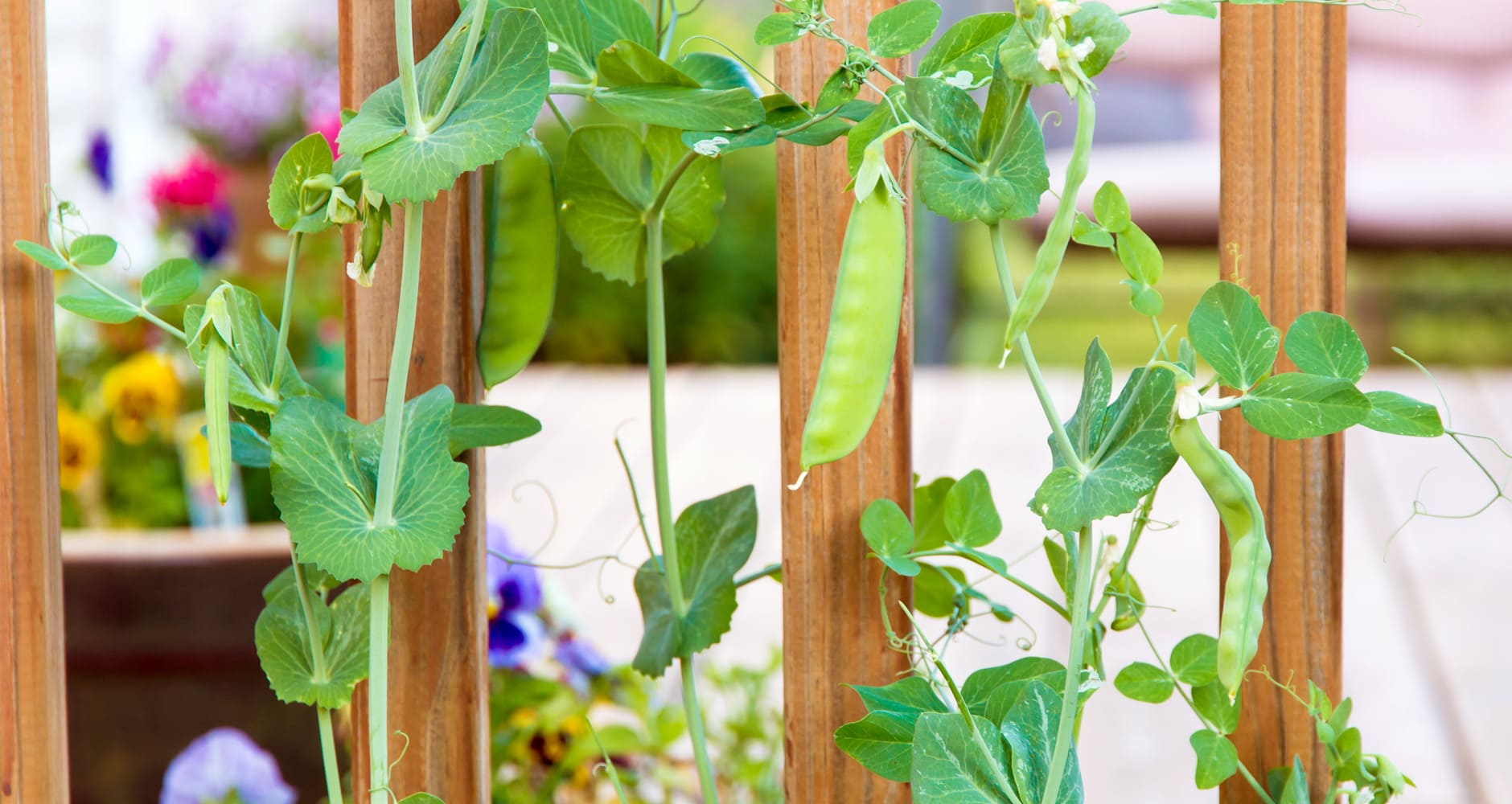
A big plus to growing these peas is that the pod of both plants are edible, which means more yield, and no shelling. Select a sunny location for your window box, half barrel, or other container. Plant seeds at a depth of about 1-inch, 3 to 4 inches apart in well-drained soil. These vining plants will need support throughout the growing process. You can use a trellis in a container, a tomato cage, or a bamboo teepee anchored in the soil for the vines to grow up on, keeping them off the ground, and at eye level. In spring, check often for caterpillars. The vines may reach a height of 5-feet.
6. Peppers – Bell or Chili
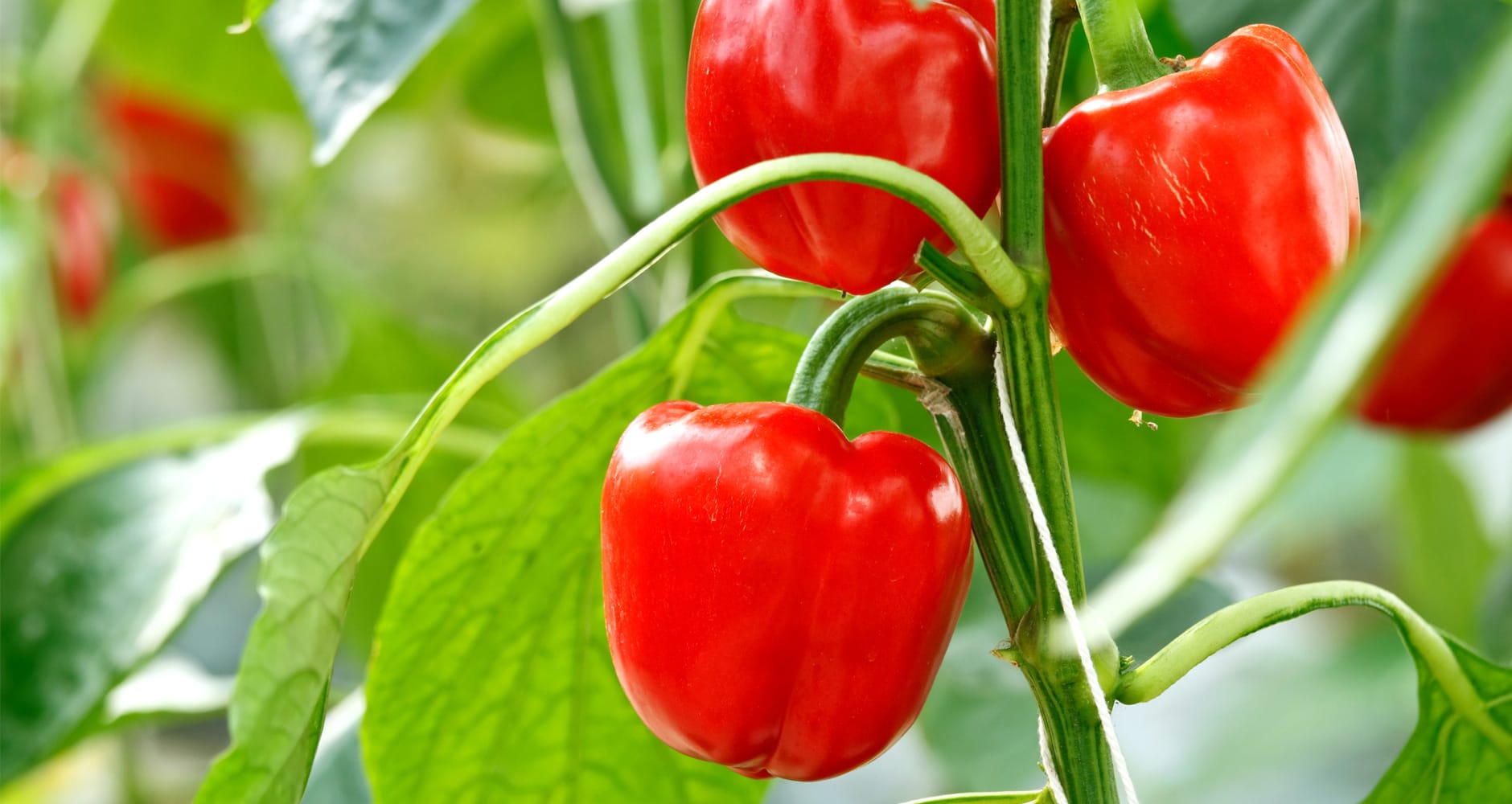
Sweet bell peppers and hot chili peppers not only add visual appeal to culinary dishes, but they add vibrant color to your patio garden. Peppers are easy to grow in pots — they grow upright and produce good yields while taking up minimal space on your balcony. Select compact varieties of bell peppers for container growing or incorporate tomato cages into a deep 14-inch pot to support taller plant varieties. Hot peppers typically grow more compact in size and are highly suitable for container gardening.
7. Zucchini
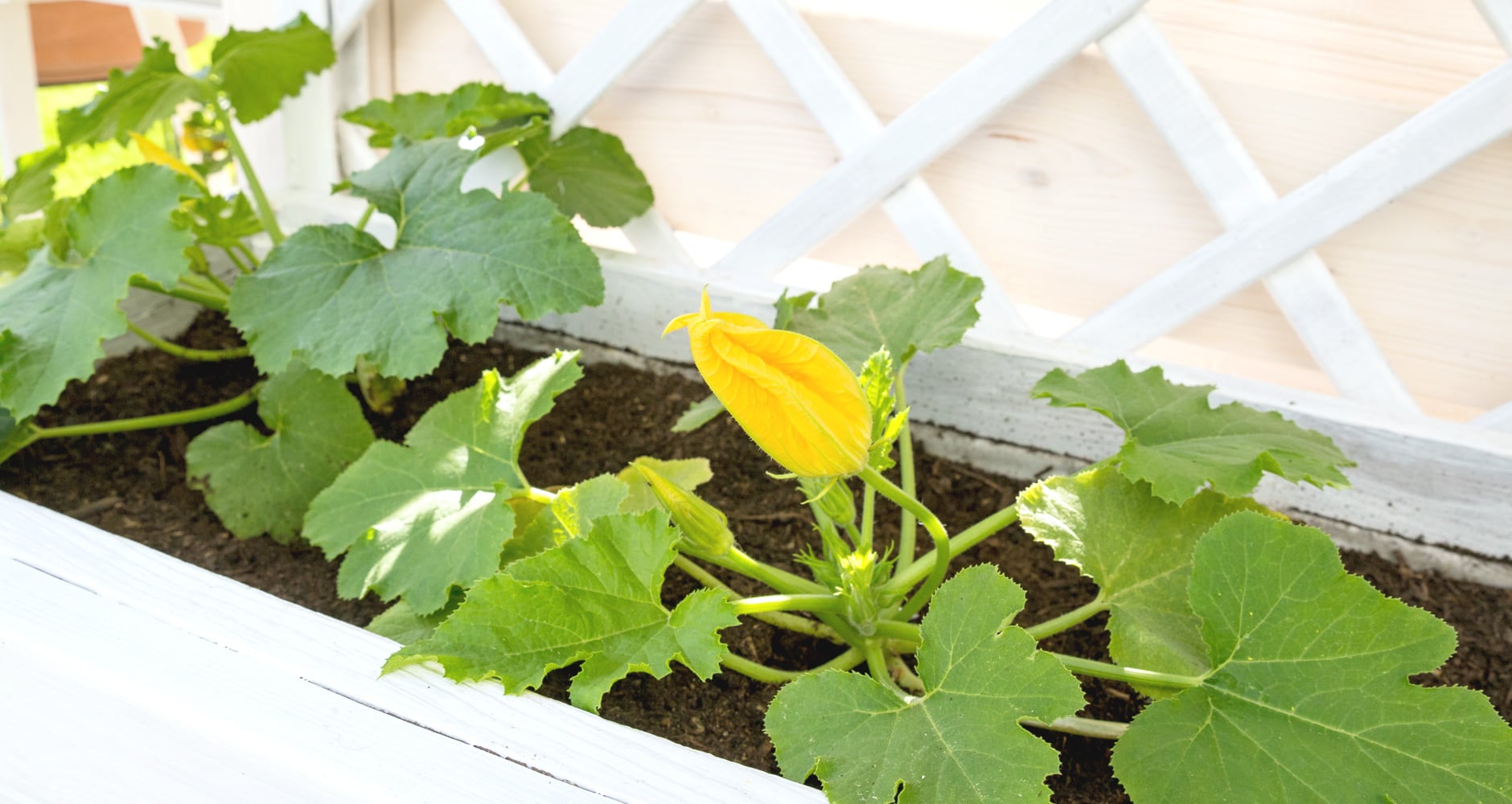
This one’s a surprise, isn’t it? You might think you need a lot of room to grow zucchini but planting them in pots is a great solution if you’re short on space — dwarf varieties work especially well for this purpose. Use a lightweight potting soil and avoid regular garden soil, which can smother the roots. Plant 2 to 3 seeds directly into the center of the pot, about an inch deep and 3 inches apart. Water the soil and keep it moist (but not soggy) until the seeds sprout (about 1-2 weeks). If all of your seeds sprout, thin them and leave the strongest seedlings. Make sure the plants have a lot of sun, 10 hours per day is ideal, and support the vines with stakes or tomato cages. Feed plants every 4 weeks.
8. Strawberries
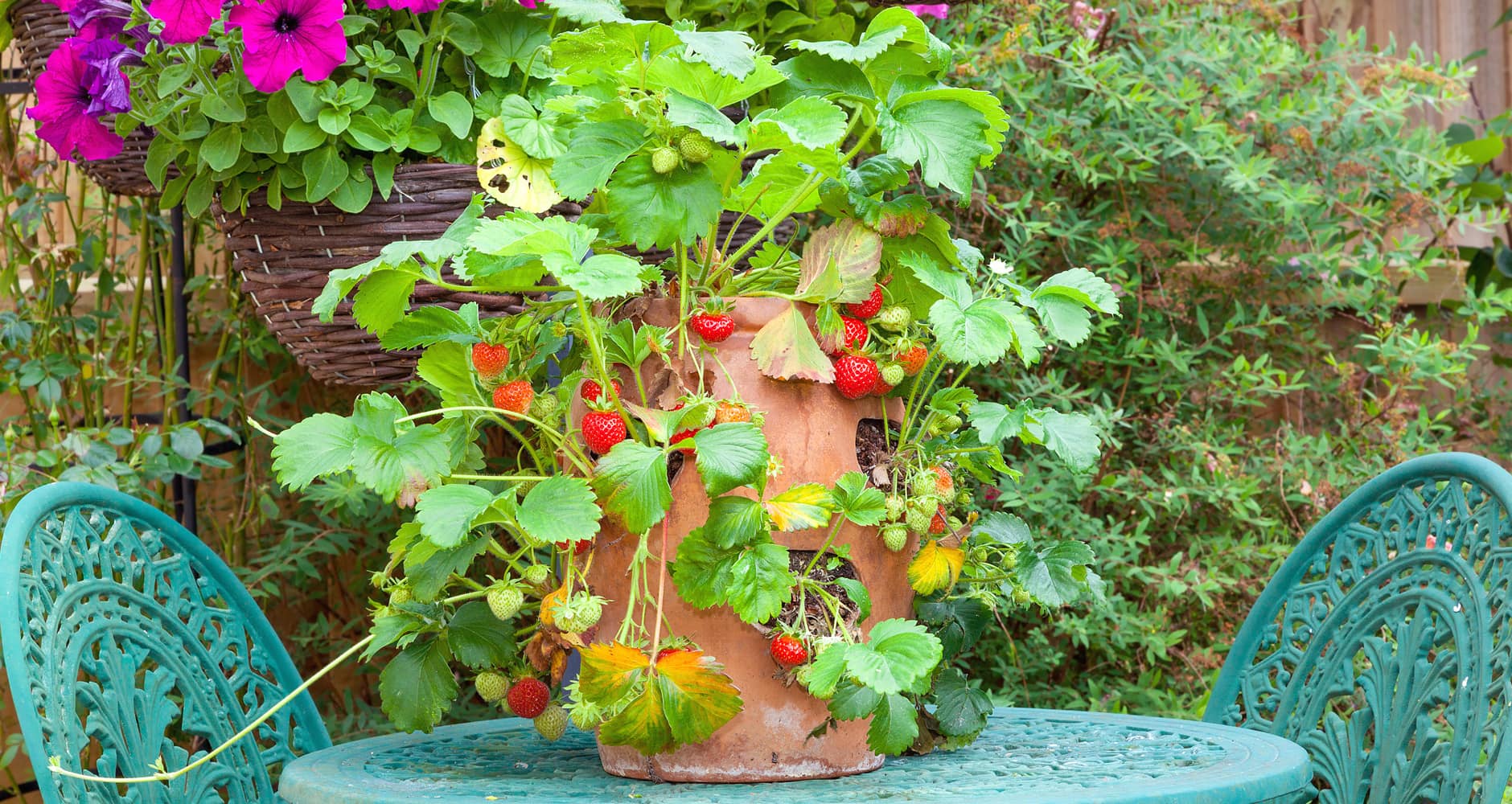
This beautifully delicious berry can be successfully grown in attractive terra cotta pots, barrels, tiered planters, and hanging baskets on your deck or patio. A 3- to 4-inch pot will hold one strawberry plant. A hanging basket can hold three to five plants. Two ways to avoid heat damage to roots: add a layer of mulch on top of the soil, and avoid planting strawberries in dark containers. Strawberries have small root balls that extend in every direction, so be sure to completely bury the roots. Adequate drainage is important, too, as strawberries do not thrive in soggy soil. Learn more about growing strawberries in containers here.
9. Radish
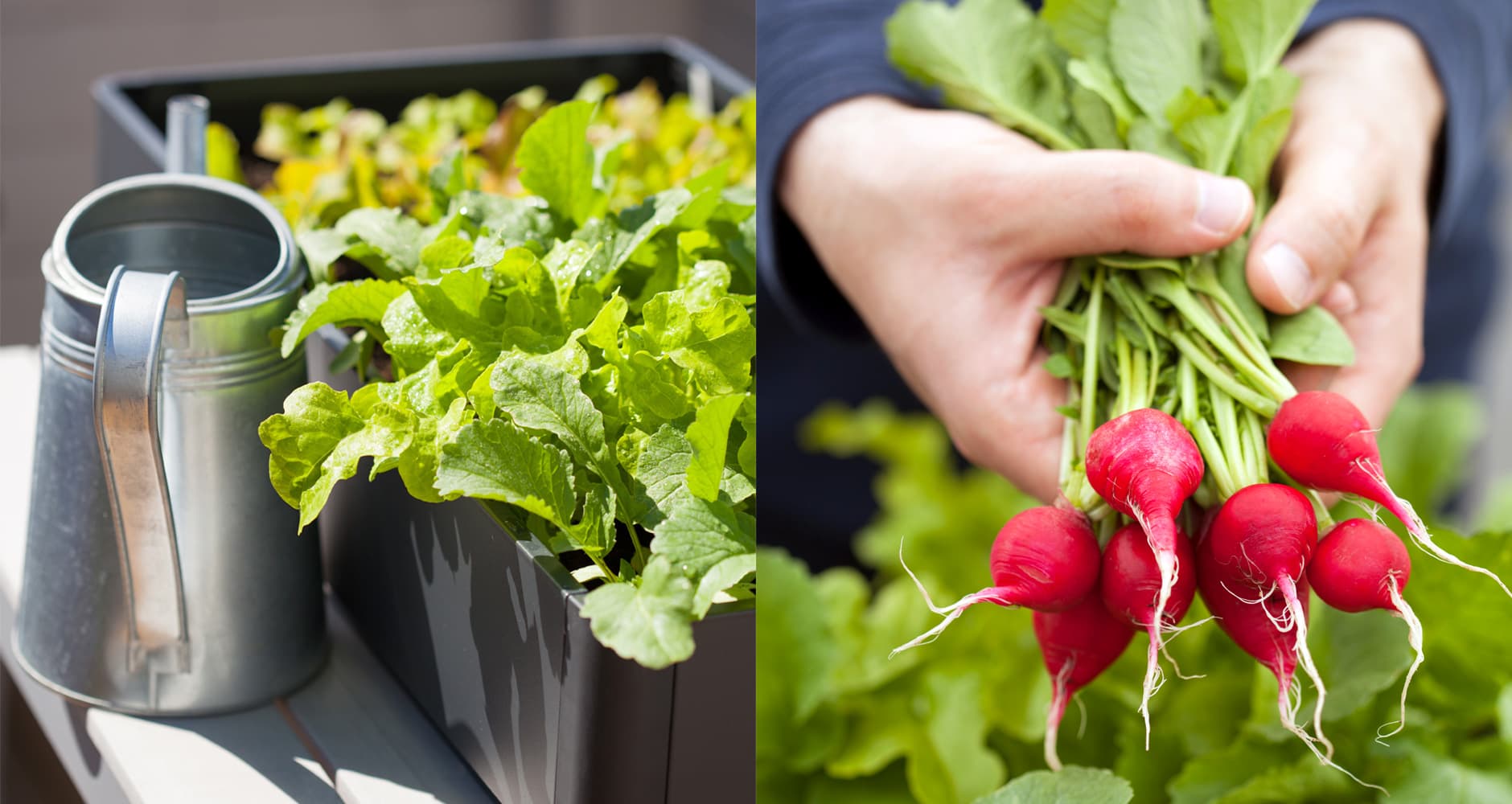
New to container gardening? This quick-growing vegetable is so easy to grow from seed and grows well in full sun in most any size pot. To avoid bolting, never let the soil dry out — keep it moist. Radishes generally do not require fertilizing. Select deep pots to allow roots to freely grow beneath the soil. Sow seeds at a depth of one-half to one-inch deep.
10. Microgreens
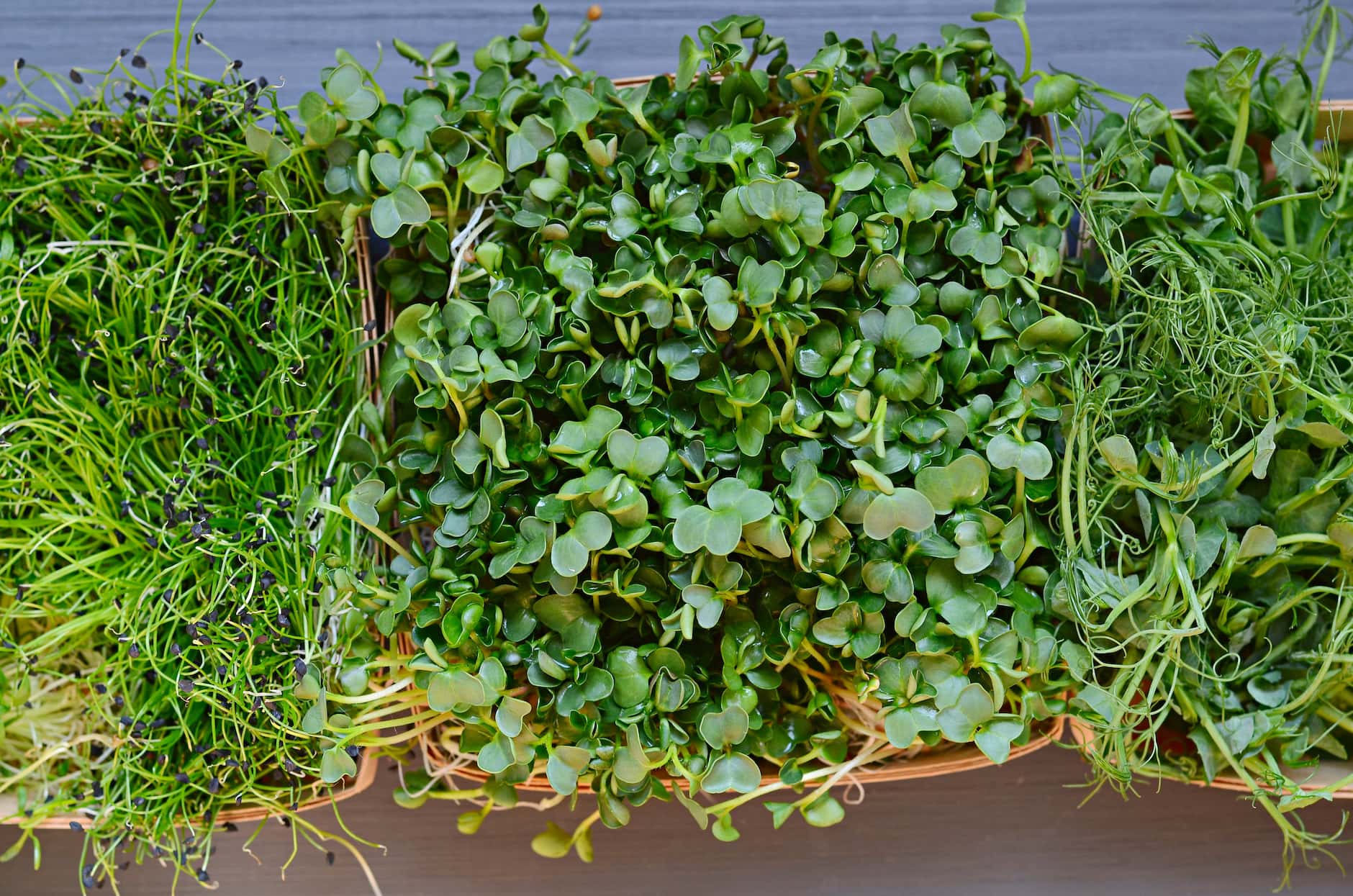
Your collection of edible container plants must include this fast-growing combination of highly nutritious and intensely flavorful greens. Microgreen seeds should be broadcast on the surface of a soil mix containing vermiculite in growing trays with domed lids. Cover seeds lightly with a soil mix and keep on a covered porch or patio that offers protection from direct wind and extreme weather. Microgreens are ready to harvest in 2-4 weeks after germination depending on the seed variety and growing conditions. Harvest at first or during the early leafing stage using scissors when the young tender plants reach a height of 1-3 inches. Add them to salads and sandwiches!
Container Gardening FAQ
What is the easiest vegetable to grow in a container?
Lettuce. Sow directly in a 6 in deep container, water daily, harvest baby leaves after 4 to 6 weeks. Continue cut-and-come-again for 6 to 8 weeks before the plant bolts. Microgreens are easier still if you count those as a vegetable (10 to 14 days from seed to harvest).
How big a pot do I need for tomatoes?
12 inches deep and 14 inches wide minimum for determinate (bushy) tomatoes. 18 inches deep and 18 inches wide for indeterminate (vining) tomatoes. The bigger pot means more soil volume, more stable moisture, and dramatically fewer blossom-end-rot problems.
What soil should I use in containers?
Never use straight garden soil; it compacts and waterlogs in pots. Use a mix designed for containers: 60% coconut coir or peat-free potting mix + 30% finished compost + 10% perlite for drainage. UMN Extension provides several recipes per crop.
How often should I water container plants?
Every 1 to 2 days in summer for most pots; daily for clay or terracotta in full sun. Stick your finger into the soil; if dry 1 inch down, water. The most common container failure is inconsistent watering.
Do container vegetables need fertilizer?
Yes, more than ground-grown plants. Container soil exhausts fast. Apply diluted compost tea or fish emulsion every 2 weeks during the growing season. Avoid concentrated synthetic fertilizers in containers; they burn roots easily.
What vegetables grow best in small pots?
Lettuce, microgreens, radishes, chives, basil, parsley, baby kale. All thrive in containers of 6 to 8 inches deep and require minimum sun and space. Excellent for balconies, fire escapes, and indoor windowsill growing.


Deborah Tukua
Deborah Tukua is a natural living, healthy lifestyle writer and author of 7 non-fiction books, including Pearls of Garden Wisdom: Time-Saving Tips and Techniques from a Country Home, Pearls of Country Wisdom: Hints from a Small Town on Keeping Garden and Home, and Naturally Sweet Blender Treats. Tukua has been a writer for the Farmers' Almanac since 2004.
- Deborah Tukua

- Deborah Tukua
- Deborah Tukua
- Deborah Tukua



Can Pomatoes be grown in pots?
Anamitra, bags are recommended for potatoes since you have to get to the roots to harvest. Check out our story that mentions “potato grow bags.”
I have yet to get the answer I am looking for. No matter how I ask the question. I simply want to know process of growing watermelons at home in dirt outside.
Just plant the ?seeds about 2′ apart.
I may not eb the best to answer this, but I think you just grow it like any other melon. I’ve had luck with melons and cucumbers and squashes by planting the seeds directly into the ground right after the last frost of the season in well tilled dirt. I’m in a 7b climate if that helps. Just try it!
I want to grow tarragon. what is the easiest way? The seeds are so small – can’t see – help.
With super tiny seeds that I cannot see, I mix them with sand and I toss them out together like I’m feeding chickens scattering with your hand.
This is a great sight full of great ideas and information
How is this a Kitchen Scrap Garden?
because they are from scraps from your kitchen