What Are Prebiotics? 9 Best Prebiotic Foods for Gut Health and Immunity
Stay well with prebiotics! But what are they exactly, and how do they differ from probiotics? We explain, plus provide a list of 9 great sources.
Quick Reference
- Prebiotics feed probiotics. They are non-digestible plant fibers that reach the colon and nourish beneficial bacteria.
- Top 9 prebiotic foods: apples, asparagus, bananas (slightly green), chicory root, dandelion greens, garlic, Jerusalem artichoke, leeks, and onions.
- Daily fiber target: 25 grams (women) or 38 grams (men), per the U.S. Dietary Guidelines. Most American adults get about half that.
- Raw wins for most. Cooking degrades some prebiotic fibers; when cooking is needed, choose light steaming or quick sauté.
- Best pairing: a prebiotic food plus a probiotic food (yogurt, kefir, sauerkraut, kimchi) at the same meal.
- Start slow. Ramping fiber too fast can cause bloating; add one new prebiotic food per week.
We are all wondering what we can do to keep our immune systems strong these days. Enter prebiotics, another line of defense for lasting wellness. You may have heard the word tossed around and wondered, what are prebiotics? How do they differ from the more familiar probiotics? And most importantly, how do prebiotic foods actually help boost immunity?
The short version: prebiotics feed the good bacteria that already live in your gut, and those bacteria run a surprising share of your immune system. The National Institutes of Health Office of Dietary Supplements and a 2017 consensus statement from the International Scientific Association for Probiotics and Prebiotics both note that many prebiotic fibers reach the colon intact and get fermented into short-chain fatty acids that support gut lining, immune signaling, and even mood.
What Are Prebiotics?
In simple terms, prebiotics (a term coined and adopted by the scientific community in the late 1990s) refer to the non-digestible dietary fiber that nourishes the beneficial bacteria, or flora, in your gut. More is now known about how healthy gut flora is vital to your overall well-being and immune function.
For probiotics to do their job, they need prebiotics. Probiotics and prebiotics work in synergy to promote a healthy, well-functioning digestive system. Probiotic foods like yogurt, apple cider vinegar, sauerkraut, and other fermented foods contain live beneficial bacteria. When you add high-fiber prebiotic foods, they feed and enhance those beneficial bacteria (the probiotics) in your gut.
In a nutshell, probiotics eat prebiotics. Prebiotics have the important job of keeping the probiotics alive and active. You do not need prebiotics to make probiotics work, but when you add them, they make your probiotics more effective.
Studies have shown that increasing your intake of prebiotics offers many health benefits. If you have gastrointestinal issues such as colitis or irritable bowel syndrome, prebiotics may help. They can lower your risk for heart disease, colon cancer, and obesity, and they may curb appetite. Prebiotics also help the body absorb minerals better, which supports bone health.
How Much Prebiotic Fiber Do You Actually Need?
The U.S. Dietary Guidelines for Americans (2020-2025) recommend 25 grams of total fiber per day for women and 38 grams for men. Prebiotic fibers are a subset of that. The average American adult manages 15 to 17 grams total, which is a large deficit and one of the reasons gut-health advice keeps coming back to plants.
A cup of cooked leeks, one raw Jerusalem artichoke, a medium banana just before full ripeness, and two cloves of raw garlic will collectively deliver 8 to 12 grams of prebiotic-rich fiber, most of it inulin and fructo-oligosaccharides. That is a realistic day’s start, not a stretch.
9 Best Prebiotic Foods
Here is a list of foods that are champion prebiotic sources. To receive the maximum prebiotic benefits contained in each food, it is best to eat them raw. During the cooking process, some beneficial fiber is lost. If you prefer not to eat some of these foods raw, cook them minimally by steaming, grilling, or sautéing.
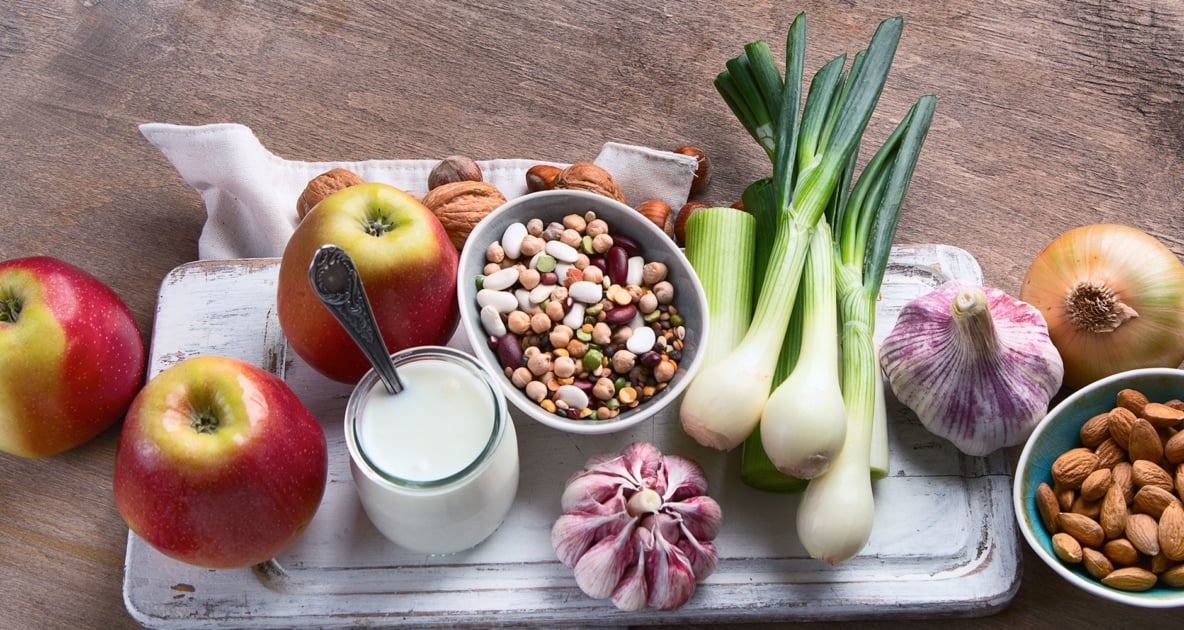
Apples are naturally high in pectin fiber. Pectin has prebiotic properties that promote optimal digestive function and improves overall health. Apples also have anti-inflammatory and antioxidant properties, which makes them a healthy snack food. Add diced apples to a cup of Greek yogurt for a nutritious dose of prebiotics and probiotics in the same bowl.
Asparagus is a popular spring vegetable and a good prebiotic choice. This antioxidant-rich food is high in dietary fiber, vitamins, and minerals. Fresh asparagus tips can be cut and tossed raw into your choice of green salads. If you prefer, grilled asparagus spears are quick to make and still keep most of their prebiotic benefits.
Bananas are a great source of prebiotics, but only before any brown spots appear. Slightly under-ripe bananas are especially rich in resistant starches, a soluble fiber that resists digestion and moves slowly through the digestive tract into the colon, where it feeds the friendly bacteria. Slice slightly green bananas into smoothies, fruit salads, or yogurt.
Chicory is an herb that grows wild throughout this continent along roadsides. It is recognized by its dandelion-like blue flowers, but it is best known for its roots, from which the caffeine-free coffee substitute is derived. For centuries, in Europe and North America, especially during times of war and hardship, chicory root was roasted, ground, and blended with coffee to stretch supplies. The deep roots of this perennial plant yield an excellent quantity of prebiotics. Chicory root is rich in inulin, a soluble fiber that bypasses the small intestine and travels to the lower gut where it feeds the friendly bacteria. Bags of ground chicory coffee are available online and in grocery stores.
Dandelion greens are rich in prebiotics, antioxidants, vitamins, and minerals. If you are not growing dandelions in your kitchen garden, you can pick those that pop up in your lawn and flower beds, as long as the area has not been chemically treated. You can also find them at health food stores and certain grocery stores. Chop the fresh greens and add to your favorite tossed salad.
Garlic is rich in gut-health-bolstering prebiotics. It also has antiviral, anti-cancer, and anti-inflammatory properties. Use raw garlic in guacamole, homemade sauces, and hummus for the strongest prebiotic effect.
Jerusalem artichoke, also called sunchoke, belongs to the sunflower family (not related to the globe artichoke). Uncooked Jerusalem artichokes taste like water chestnuts: sweet and crunchy. In appearance, these tubers resemble ginger. They are a perfect crunchy ingredient for a layered salad.
Leeks are a versatile vegetable that tastes sweeter than an onion and can be added to many entrees and side dishes. Slice thin or dice raw leeks and stir into cooked beans, salad dressing, or as a topping for soup, stew, quiche, or mashed potatoes. Many recipes require leeks to be cooked, but they are stronger prebiotic sources when eaten raw.
Onions are a good source of prebiotics, raw or cooked. Some minerals and vitamins, such as vitamin C, quercetin, chromium, and sulfur, are diminished when onions are cooked, so eat onion both ways for its full nutritional benefit.
More Sources of Prebiotics
Almonds, oats, beans, and cocoa are also good prebiotic sources. If your local market carries these less common prebiotic-rich foods, you may want to try adding them to your diet as well: jicama, konjac root (elephant yam), yacon root, and seaweed.
Prebiotics vs Probiotics: A Side-by-Side Cheat Sheet
- Prebiotics = plant fibers your body cannot digest. They pass through the small intestine and become food for gut bacteria. Examples: inulin, fructo-oligosaccharides, resistant starch, pectin.
- Probiotics = live beneficial bacteria you ingest. They add to the population already living in your gut. Examples: yogurt with live cultures, kefir, sauerkraut, kimchi, miso.
- Synbiotics = a meal or supplement that pairs both, like Greek yogurt with sliced banana or kefir with rolled oats. Deliver the fuel and the microbes together.
- Postbiotics = the beneficial compounds (short-chain fatty acids like butyrate) that gut bacteria produce after they eat prebiotics. This is where a lot of the immune benefit actually comes from.
How to Add Prebiotic Foods Without the Bloating
If your diet is currently low in fiber, jumping to raw garlic, Jerusalem artichoke, and dandelion greens on day one is a fast route to gas and cramps. Gut bacteria need a couple of weeks to shift their populations to match a new food supply, and the Almanac’s kitchen editors have seen readers give up on prebiotics after one uncomfortable day.
- Week 1: add one prebiotic food a day (a slightly green banana, a clove of raw garlic in dressing, a small serving of leeks).
- Week 2: layer in a second prebiotic food per day (asparagus at dinner, apple with yogurt at breakfast).
- Week 3: introduce the stronger sources (Jerusalem artichoke, chicory-root coffee, raw onion). By now, your gut bacteria have adjusted.
- Every day: drink extra water; fiber pulls water into the colon, and hydration is what keeps the whole system moving comfortably.
Pair Every Prebiotic Meal With a Probiotic
The simplest kitchen habit that pays off is pairing. If you are eating a prebiotic food, add a probiotic food to the same meal:
- Sliced apple + Greek yogurt.
- Diced raw onion + sauerkraut on a sandwich.
- Grilled asparagus + a small side of kimchi.
- Overnight oats with slightly green banana + kefir.
- Raw garlic in guacamole + a spoonful of miso in the accompanying broth.

Frequently Asked Questions
What is the difference between prebiotics and probiotics?
Prebiotics are plant fibers your body cannot digest; they feed the bacteria already living in your gut. Probiotics are live beneficial bacteria you eat in fermented foods like yogurt, kefir, sauerkraut, and kimchi. The two work together: probiotics arrive, prebiotics feed them.
Which prebiotic food is strongest?
By concentration of inulin (the most-studied prebiotic fiber), chicory root is at the top, followed by Jerusalem artichoke, raw garlic, and raw leeks. Slightly green bananas lead on resistant starch. For most people, the strongest single food they will realistically eat is raw garlic or slightly green banana.
Do prebiotics really improve immunity?
The link is well-established but indirect. Prebiotics fuel gut bacteria; those bacteria produce short-chain fatty acids (mainly butyrate) that support the gut lining and modulate immune signaling. The 2020 review in Nutrients found consistent evidence that regular prebiotic intake reduces markers of chronic inflammation. It is not a same-day cold cure; it is a long-run buffer.
Can I get enough prebiotics without a supplement?
Yes. Two servings of prebiotic-rich vegetables (leeks, onions, asparagus, garlic, or Jerusalem artichoke) plus one under-ripe banana or a dose of chicory-root coffee cover the range. Supplements (inulin powder, FOS) are useful if your diet is limited or you have specific gut concerns; talk to a doctor before starting one.
Are prebiotic foods safe for people with IBS?
Some are, some are not. Inulin-heavy foods (chicory, Jerusalem artichoke, raw garlic, raw onion) can worsen bloating in FODMAP-sensitive people. Slightly green bananas, oats, and cooked leeks tend to be gentler. If you have IBS, phase prebiotics in with a dietitian who knows the low-FODMAP approach.
Do I have to eat prebiotic foods raw?
Not always, but raw preserves the most fiber. Steaming and quick sauté keep the majority intact; long boiling and deep frying lose the most. Onions, garlic, and leeks are worth eating both raw and cooked because they deliver different nutrients each way.
How long does it take to feel a difference from prebiotics?
Bloating usually improves within 2 to 4 weeks as gut bacteria adjust to the new fiber load. Regularity often improves inside a week. Immune and inflammation benefits are longer-arc; think months of consistent intake, not days.


Deborah Tukua
Deborah Tukua is a natural living, healthy lifestyle writer and author of 7 non-fiction books, including Pearls of Garden Wisdom: Time-Saving Tips and Techniques from a Country Home, Pearls of Country Wisdom: Hints from a Small Town on Keeping Garden and Home, and Naturally Sweet Blender Treats. Tukua has been a writer for the Farmers' Almanac since 2004.
- Deborah Tukua

- Deborah Tukua
- Deborah Tukua
- Deborah Tukua